News Lithium Battery-school
Used LiFePO4 Cells Sold as New: The 2026 Second-Life Battery Problem

Q. Is the B-grade and used-cell problem still real in 2026?
A. YES. The risk is lower than it was a few years ago, but the problem has not disappeared. It has changed.

New LiFePO4 cell prices have fallen. Manufacturing quality has improved. Large manufacturers are producing more cells, better traceability is coming, and genuine new cells are easier to buy than they once were.

At the same time, the first enormous wave of electric vehicles, buses, trucks and commercial battery packs is getting older. Packs only a few years old are being damaged, written off, dismantled, tested and split into modules and individual cells. Some of those cells are perfectly suitable for an honest second-life application.

But some are being cleaned, rewrapped, relabelled and sold into another supply chain without the buyer being told that they are used.

SECOND-LIFE CELLS ARE NOT THE PROBLEM.

SELLING SECOND-LIFE CELLS AS NEW IS THE PROBLEM.

This article is not an attack on battery recycling. Proper reuse is good engineering and good environmental practice. It is also not a claim that every low-cost battery contains used cells. The point is simple: buyers must be told what they are buying, and claims such as new, Grade A, matched and automotive grade must be supported by real evidence.

What Has Changed Since the Original QR-Code Problem?

In the earlier article, The LiFePO4 QR Code B-to-A-Grade Problem, I explained why a QR code does not authenticate a cell. A QR code is data. It can be copied, printed, engraved or replaced.

In 2026 the bigger question is no longer only, “Was this B-grade cell made to look like A-grade?”

The new question is: “Was this cell already inside another battery?”

The International Energy Agency’s 2026 battery analysis says flows of used and end-of-life EV batteries are beginning to increase and used-battery prices have fallen sharply. The same report says China hosts more than 85% of global battery-recycling capacity. That does not mean 85% of used cells are being misrepresented. It means an enormous dismantling, reuse and recycling industry now exists around these batteries.

China introduced stronger rules from 1 April 2026, including a digital identity for EV power batteries and a national traceability system. The Chinese Government said the volume of retired batteries is growing significantly. A national lifecycle traceability platform now aims to follow batteries from production and installation through use, retirement and recycling.

Governments do not build national tracking systems for an imaginary product flow.

First, Stop Mixing Up Four Different Things

TermWhat it should meanWhat the buyer must be told
New cellUnused cell supplied through a traceable manufacturing and distribution chain.Manufacturer, model, production batch, test data and warranty source.
B-grade or factory-second cellA new cell that did not meet one or more first-grade production or matching criteria.That it is B grade, why it was rejected if known, and what testing has been completed.
Second-life or repurposed cellA cell that has already been used in a vehicle, module or another battery and is being used again.Its previous use, test method, measured state of health, limitations and second-life warranty.
Recycled materialLithium, copper, aluminium or other materials recovered and processed for manufacturing again.This is material recovery—not the same thing as selling an intact used cell.

A used cell can be better than a poor new cell. A properly tested automotive cell at 85% state of health may be excellent for a low-rate, stationary project. But it is still used. Its value, warranty, expected life and suitable application are different.

What I Have Personally Seen

I have watched hundreds and probably thousands of videos on Chinese social-media platforms showing businesses that specialise in this work.

  • Complete EV and commercial battery packs arriving on pallets.
  • Packs opened and modules separated.
  • Cells removed, cleaned and tested.
  • Old insulation, films, busbars and labels removed.
  • New wraps, terminal covers and labels fitted.
  • Cells sorted into different piles according to voltage, capacity or what the workshop believes it can sell them for.
  • Modules and cells advertised into completely different markets.

Recycling and repurposing businesses are not hiding the fact that they do this work. Many are proud of it. It is a large and legitimate industry when the product remains identified as used or repurposed.

The issue is what happens further down the sales chain. A video cannot prove where every cell eventually goes, and I will not pretend that it can. But once a cell has been cleaned, wrapped and separated from its original BMS data and pack identity, the next buyer may have no simple way to know its history.

A 2026 report based on a Yicai investigation described an unlicensed workshop where retired packs were dismantled, cells were tested and higher-capacity cells were re-filmed for resale into two-wheelers, power banks and energy-storage products. Read the reported investigation into China’s informal battery-recycling market. Caixin separately reported in June 2026 that less than 30% of retired power batteries were being collected through formal channels. These are reported estimates, not a measurement of every battery or seller.

Why a Used Cell Can Look Brand New

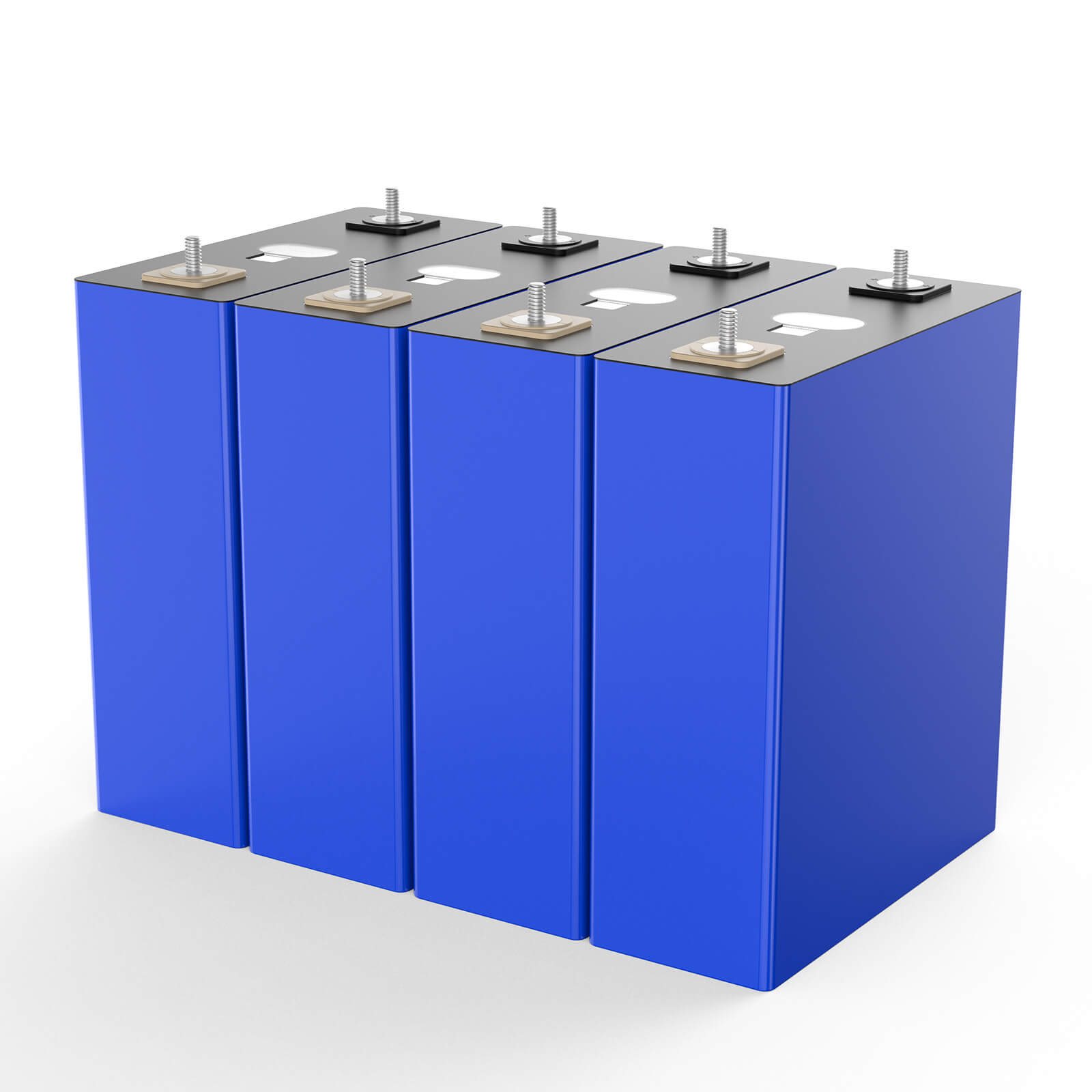
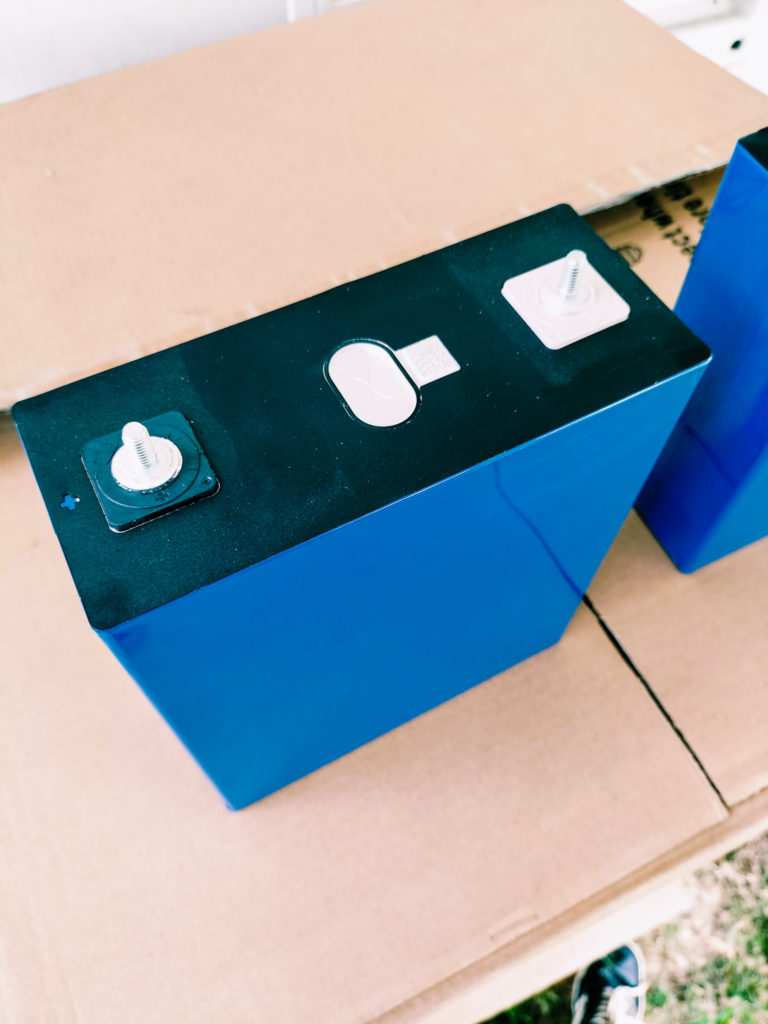
A prismatic cell is an aluminium can with terminals, a vent, a plastic top and a thin outer film. Most of what a buyer sees can be cleaned or replaced.

  1. The old pack is tested as a complete unit.
  2. The pack is dismantled into modules or cells.
  3. Obvious failures are separated from cells that still hold useful capacity.
  4. Residue, adhesive and old film are removed.
  5. Terminals can be cleaned or resurfaced and new covers fitted.
  6. A new wrap, label or QR mark gives the cell a uniform appearance.
  7. The cells are boxed with new busbars and sold into another market.

None of this changes what is inside the can. It does not put the lithium back. It does not undo heat exposure. It does not remove calendar ageing, high-current use, deep discharge, overcharge, vibration, compression damage or years of self-discharge history.

A NEW WRAP IS NOT A NEW CELL.

A NEW QR CODE IS NOT A NEW CELL.

A VOLTAGE OF 3.29V IS NOT A STATE-OF-HEALTH TEST.

Why the QR Code Still Does Not Save You

A QR code may tell you what the code claims the cell is. It may include a manufacturer identifier, model and production date. That can be useful for detecting an obvious mismatch.

It cannot tell you:

  • whether the mark is original;
  • whether the cell spent three years inside a bus or commercial battery;
  • how many amp-hours it can deliver now;
  • its self-discharge rate;
  • its DC internal resistance at a controlled state of charge and temperature;
  • whether it was exposed to excessive heat or damaging voltage limits; or
  • whether sixteen cells came from the same original batch, or even the same pack.

If you want the background, read our LiFePO4 QR vendor-code guide and the original explanation of why QR codes do not verify authenticity.

The Technical Problem Is Cell History and Cell Mismatch

Second-life engineering is not just “charge it and see if it reaches 3.65V.”

A peer-reviewed study of cells harvested from a retired LiFePO4 hybrid-vehicle pack found high state-of-health variation and mismatch within modules. Depending on the acceptance criteria, the proportion considered suitable for reuse changed significantly. That is the entire problem in one result: the answer depends on what was measured and what standard was applied.

Another second-life assessment of commercial LFP batteries retired from EVs evaluated capacity, impedance, balance state and consistency. Research using 920 retired-LFP datasets was needed to develop a faster method of estimating residual capacity. If a simple voltage check or QR scan were enough, this research would not be necessary.

UL’s standard for repurposing batteries makes the same point in practical language. UL 1974 covers examination, BMS-data analysis, disassembly, sorting, grading, rejection procedures, markings and instructions. Proper repurposing is a process, not a sticker.

One Weak Cell Still Controls the Whole Series Pack

Let us use a current 16-cell, 51.2V battery example.

  • 15 cells can deliver 314Ah.
  • One used or damaged cell can deliver only 240Ah.
  • The cells are in series.

Theoretical nominal energy with properly matched 314Ah cells:

16 × 3.2V × 314Ah = 16.08kWh

Energy limited by the 240Ah cell:

16 × 3.2V × 240Ah = 12.29kWh

That single weak cell can remove about 23.6% of the usable capacity before allowing for inverter losses, BMS limits and reserve settings. It may also reach the charge or discharge limit first, causing the BMS to disconnect the entire battery.

This is why a pack can appear normal at rest, charge to the expected voltage, and still perform badly under load.

Is a Properly Disclosed Second-Life Battery Bad?

NO.

A proper second-life battery may offer excellent value. Retired EV batteries can retain substantial usable capacity. The IEA, NREL, CATL, UL and many researchers are all investigating or supporting reuse because the idea is technically valid.

A legitimate second-life product should be sold as second-life.

It should have traceable origin, a defined screening and rejection process, measured state-of-health data, an application-appropriate design, a realistic warranty and a clear future recycling pathway.

CATL says traceability makes second life and recycling more viable, and describes battery passports as a way to retain lifecycle identity. Its formal battery-health service uses extensive online and offline inspections. See CATL’s circularity and traceability overview and its battery inspection and lifecycle service.

The honest second-life seller is not the enemy here. In many cases that seller is doing more testing and providing more information than a seller hiding behind the words “A Grade.”

How to Reduce the Risk Before You Buy

1. Ask who supplied the cells

“Direct from the factory” is not a document. Ask for the legal supplier name, invoice trail, manufacturer batch information and who will honour the warranty in Australia.

2. Ask whether the cells have ever been installed

Do not ask only whether they are “new.” Ask whether they have ever been installed in a pack, vehicle, test system, demonstration unit or another product.

3. Ask for the original factory data—not a seller spreadsheet

A spreadsheet can be copied just like a QR code. The value comes from a traceable connection between the manufacturer, the batch, the individual cells and the business accepting responsibility for the claim.

4. Demand test conditions

  • Capacity in amp-hours and watt-hours.
  • Charge and discharge current.
  • Upper and lower voltage limits.
  • Cell temperature during testing.
  • DC internal resistance measured at the same state of charge and temperature.
  • Self-discharge observation period.
  • Acceptance and rejection limits.

5. Look for physical evidence

  • Uneven or freshly replaced wraps.
  • Adhesive residue or marks where old separators were attached.
  • Scratched terminals or signs of previous busbar contact.
  • Sanded, polished or resurfaced terminal faces.
  • Inconsistent vents, terminal covers, heights, weights or case finish.
  • QR codes with different depth, alignment, font or surface finish.
  • Swelling, dents, corrosion or electrolyte residue.

Physical clues can raise questions, but they are not a complete state-of-health test. A carefully refurbished cell may look perfect, and a genuine new cell can have minor cosmetic marks.

6. Compare the price with reality

New-cell prices have fallen, so a low price is not automatic proof of fraud. But a claimed premium, fully matched, automotive-grade product still needs a supply chain and testing process capable of producing that result. If the price cannot pay for the product, dangerous-goods transport, GST, testing, warranty and local support, ask which part is missing.

7. Buy from someone who will still answer the phone

The most useful certificate is worthless if nobody accepts responsibility when one cell develops high self-discharge six months later.

For more background on how we describe cell quality, see our separate LiFePO4 battery-grades guide and the earlier report on B-grade EVE QR markings.

What Australian Sellers and Buyers Should Know

The ACCC says claims about a product’s quality, history and whether it is new must be accurate and based on reasonable grounds. It also says silence can be misleading when important information is withheld. Read the ACCC’s guidance on false or misleading claims.

This is not theoretical. The ACCC previously took action involving electronics advertised as new when they were refurbished or made with used parts. See the ACCC’s refurbished-electronics enforcement example.

Battery safety is also more than chemistry. The ACCC’s lithium-ion battery safety guide tells consumers to buy from reputable suppliers and not use dented, swollen, leaking, overheated or damaged batteries. Australia’s battery-reuse industry is legitimate and growing, but used batteries need proper systems. The 2026 ABRI and Standards Australia transport guidance exists because used lithium batteries require specific handling, packaging, labelling and risk controls.

This article provides general information, not legal advice. The principle is still plain enough: if a product is used, say it is used.

The Bottom Line

The risk of receiving old stock or obvious factory rejects may be lower than it was several years ago because genuine new LFP cells are cheaper and easier to source.

But another supply is growing at the same time: cells recovered from EVs, buses, commercial storage systems, damaged packs, insurance write-offs and early battery projects.

Many of those cells still have useful life. They should be tested, graded, matched and sold honestly for an appropriate application.

USED IS NOT A DIRTY WORD.
UNDISCLOSED IS THE DIRTY WORD.

Do not pay new-cell money for an unknown history. Do not accept a QR scan as proof. Ask for evidence, test data, traceability and somebody in Australia who will stand behind the product.

Sources and Further Reading

How these sources are ranked: official and peer-reviewed sources support factual and technical claims. Investigations describe current market behaviour. Forum posts are individual reports and discussions; they are useful for recognising patterns but are not treated as independently verified proof against a seller.

Tier 1 — Official, primary and standards sources

  1. IEA — Global EV Outlook 2026: Electric vehicle batteries
  2. IEA — Battery Circularity (2026)
  3. Government of China — management of used NEV power batteries
  4. China MIIT — power-battery recycling and utilisation measures
  5. China SASAC — national battery traceability platform
  6. UL Solutions — UL 1974 and repurposed batteries
  7. CATL — battery recycling and closed-loop utilisation
  8. CATL — traceability, battery passports and circularity
  9. CATL — formal battery-health assessment and lifecycle service
  10. ACCC — false or misleading claims
  11. ACCC Product Safety — selling second-hand products
  12. ACCC Product Safety — lithium-ion battery guide
  13. CSIRO/ACCC — Lithium-ion battery safety report
  14. ABRI — Used Lithium Batteries safety guidance (2026)

Tier 2 — Peer-reviewed and institutional research

  1. Statistical state-of-health assessment of LFP cells from a retired vehicle pack
  2. Second-Life Assessment of Commercial LiFePO4 Batteries Retired from EVs
  3. State-of-health estimation of second-life LiFePO4 batteries
  4. Rapid residual-capacity estimation using 920 retired-LFP datasets
  5. NREL — A Second Life for Electric Vehicle Batteries
  6. Health diagnosis and recuperation of aged lithium-ion batteries
  7. UTS — state-of-health estimation for second-life batteries
  8. Formal and informal EV-battery recycling channels (2026)

Tier 3 — Current reporting and investigations

  1. Caixin — China’s retired-battery wave and illegal recycling crackdown
  2. CarNewsChina/Yicai — reported investigation of an unlicensed dismantling workshop
  3. Caixin — safety and testing concerns for retired batteries in energy storage
  4. SCMP — China’s retired-battery circular economy

Tier 4 — Specialist testing and buyer resources

  1. EVreporter — spotting counterfeit LFP cells
  2. Akkudoktor — documented inspection of B-grade cells
  3. Tüftler und Heimwerker — tested cells carrying a B mark
  4. Power Forum — high-current automotive-grade cell comparison
  5. Wistek — decoding EVE QR serial numbers

Tier 5 — Community reports and discussion

  1. DIY Solar Power Forum — Second Life Lithium Batteries
  2. DIY Solar Power Forum — buyer discussion involving claimed re-lasered cells
  3. DIY Solar Power Forum — second-life CALB cells reportedly represented as new
  4. DIY Solar Power Forum — battery disassembly and capacity report
  5. DIY Solar Power Forum — cells advertised as new/original that did not test accordingly
  6. DIY Solar Power Forum — recovery of cells from an older EV pack
  7. Reddit SolarDIY — listing changed from new to refurbished after purchase
  8. Reddit SolarDIY — openly sold used CATL battery pack discussion
  9. Reddit SolarDIY — buyer discussion about Grade A and Grade B cells

Published in 2026. This article distinguishes verified technical information, reported market estimates and the author’s own observations. External forum links are supplied for further reading and do not constitute an endorsement of every statement made by their users.

News Manufacturers
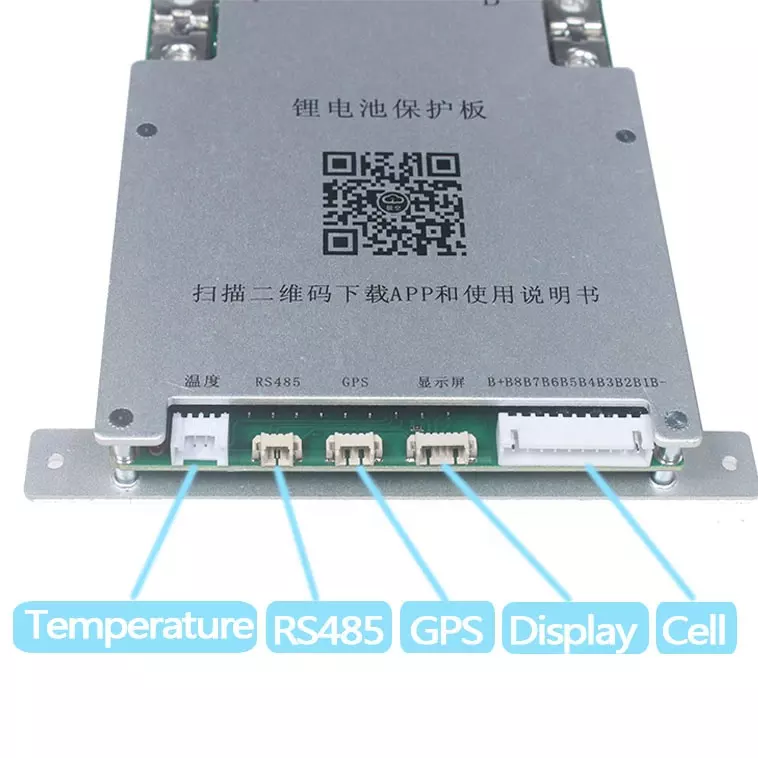
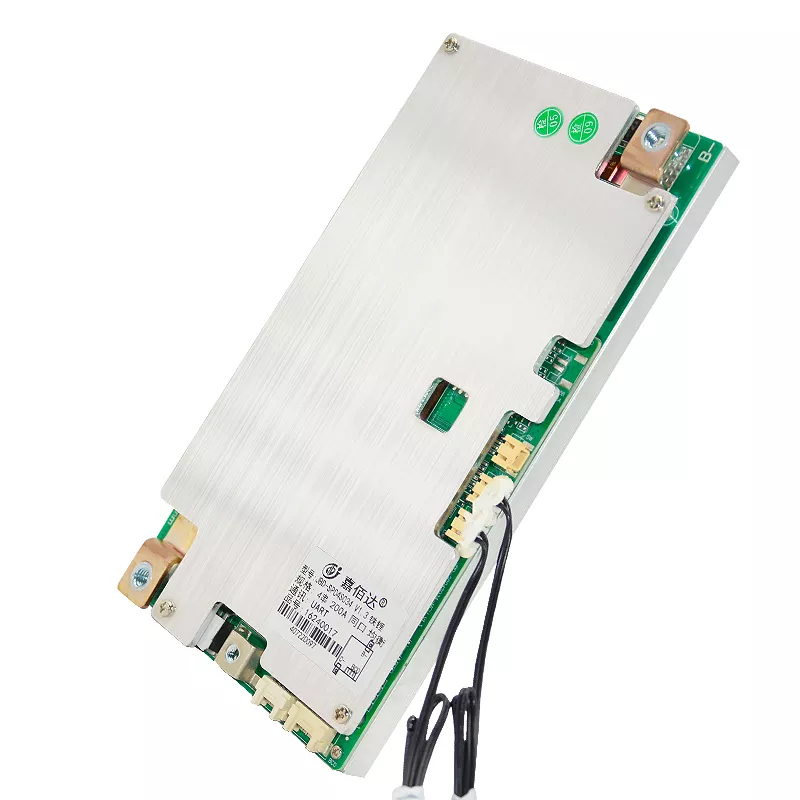
Comprehensive Guide to Battery Management Systems (BMS): Comparing JBD, JK, PACE, Daly, and More

In today’s rapidly expanding energy storage market, Battery Management Systems (BMS) play a critical role in the health, safety, and performance of lithium batteries. Whether you are building a battery for a solar setup, electric vehicle (EV), or DIY energy storage system, choosing the right BMS is essential for managing battery performance, extending lifespan, and protecting against potential hazards.

This guide will delve into some of the most popular and well-regarded BMS options available in the market, including JBD, JK, and Daly, analyzing their features, reliability, and overall performance. We’ll also highlight the pros and cons of each system to help you make an informed decision based on your specific requirements.

What is a Battery Management System (BMS)?

A BMS is an electronic system that manages a rechargeable battery, such as lithium-ion or lithium iron phosphate (LiFePO4), by controlling key functions like charging, discharging, temperature, and overall safety. The BMS ensures that the battery operates within safe limits and helps prolong its lifespan by balancing the cells and protecting against issues like overvoltage, undervoltage, and overheating.

Popular BMS Brands Overview

The BMS market is vast, with many different manufacturers offering various models ranging from budget-friendly basic protection systems to advanced smart BMS options with sophisticated features like Bluetooth connectivity and active balancing. Let’s explore some of the most popular brands:


1. JBD BMS (Jiabaida BMS)

Overview:
JBD is a popular choice among DIY battery builders and professionals alike. Known for its reliability and affordability, JBD offers a wide range of BMS products suitable for everything from small battery packs to large energy storage systems. It also features smart BMS options with Bluetooth, providing real-time monitoring and control through mobile apps.

Support for Victron, DEYE, Growatt and many other inverters.

Key Features:

  • Available in 12.8V to 48V(51.2V) configurations, with various amp ratings.
  • Both Smart BMS with Bluetooth connectivity for monitoring battery status via an app and Regular BMS, set and forget!
  • Robust passive and active balancing models to keep cell voltages even.
  • Comprehensive protection against overcharge, over-discharge, and over-temperature.
  • Configurable parameters via PC software or mobile app.

Pros:

  • Cost-effective with very reliable performance.
  • Smart features like Bluetooth monitoring and mobile app control.
  • Flexible configuration options.
    Excellent Accuracy for SOC calculations
  • Available in high current ratings, suitable for large packs.
  • Regular firmware updates improve functionality.

Cons:

  • Slightly more complex to set up compared to simpler BMS units.
  • Bluetooth connection range can be limited.
  • Lack of detailed user manual support for first-time users.
Best For:
JBD BMS is well-suited for both DIY enthusiasts and professional battery builders who need reliable, affordable BMS with smart monitoring features. Ideal for medium to large battery packs in solar, RV, and EV applications.


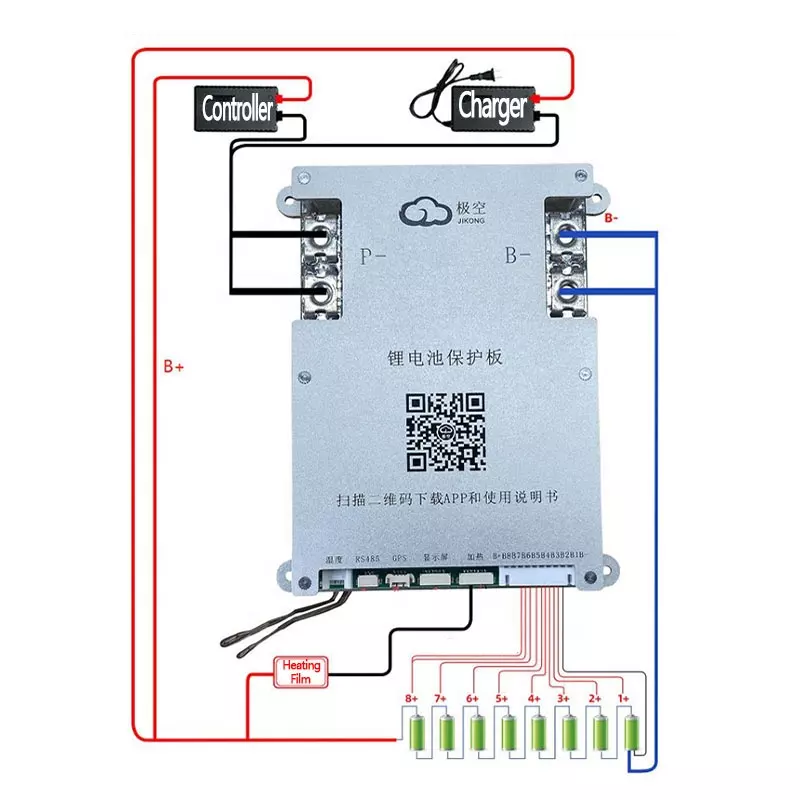
2. JK BMS (JiKong BMS)

Overview:
JK BMS is one of the most advanced BMS systems on the market, especially popular among energy storage professionals. It is known for its robust features, including active balancing, high customization options, and detailed data monitoring. JK BMS is highly regarded for its accuracy, durability, and flexibility, making it ideal for large-scale and critical battery systems. Support for Victron, DEYE, Growatt and many other inverters.

Key Features:

  • Active balancing (dynamic cell balancing) ensures cells are equalized during operation.
  • Bluetooth connectivity for real-time monitoring via a mobile app.
  • Configurable protection parameters for precise control over charging and discharging.
  • Software is good, but not perfect, and support has been poor in 2024 for the new model

Pros:

  • Excellent active balancing capabilities reduce cell degradation and extend lifespan.
  • Detailed monitoring and data logging for precise control.
  • Widely customizable for different applications off-grid systems, and commercial setups.
  • Rugged design with high current and voltage tolerance.
  • Good accuracy for professional energy storage projects.

Cons:

  • More expensive than basic BMS units.
  • Higher learning curve for those new to BMS systems.
  • Requires more time to set up and configure.
  • Quality of materials may be lower, than JBD
  • Software has been buggy.

Best For:
JK BMS is the go-to choice for large-scale, critical energy storage applications where active balancing and precise control are necessary. It is ideal for professional setups, commercial energy storage, and high-performance EVs.


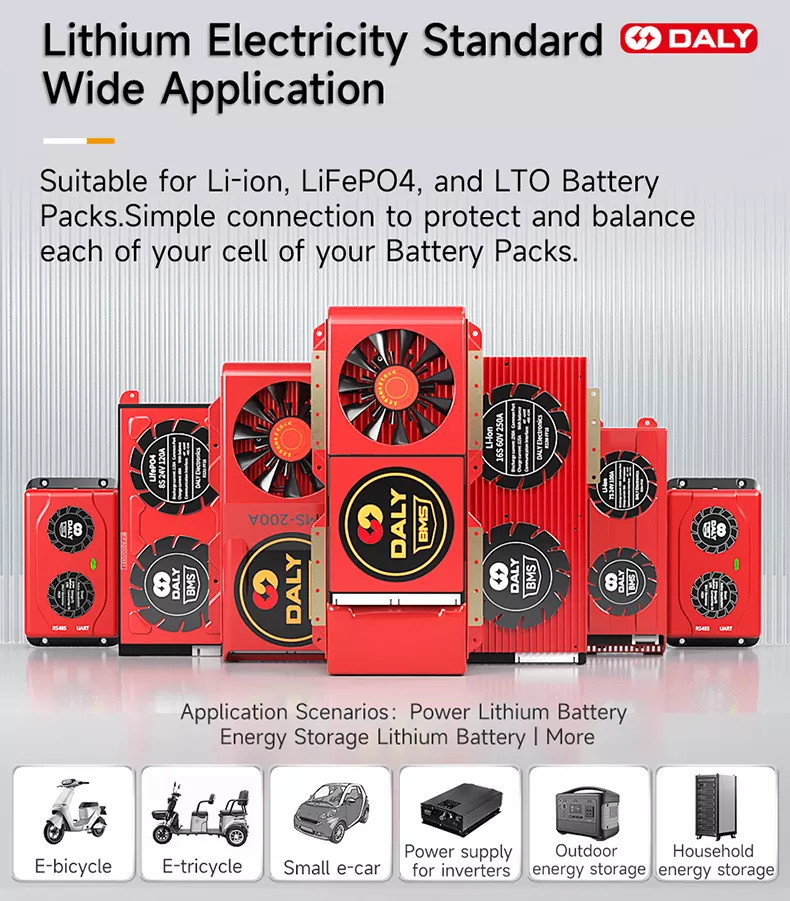
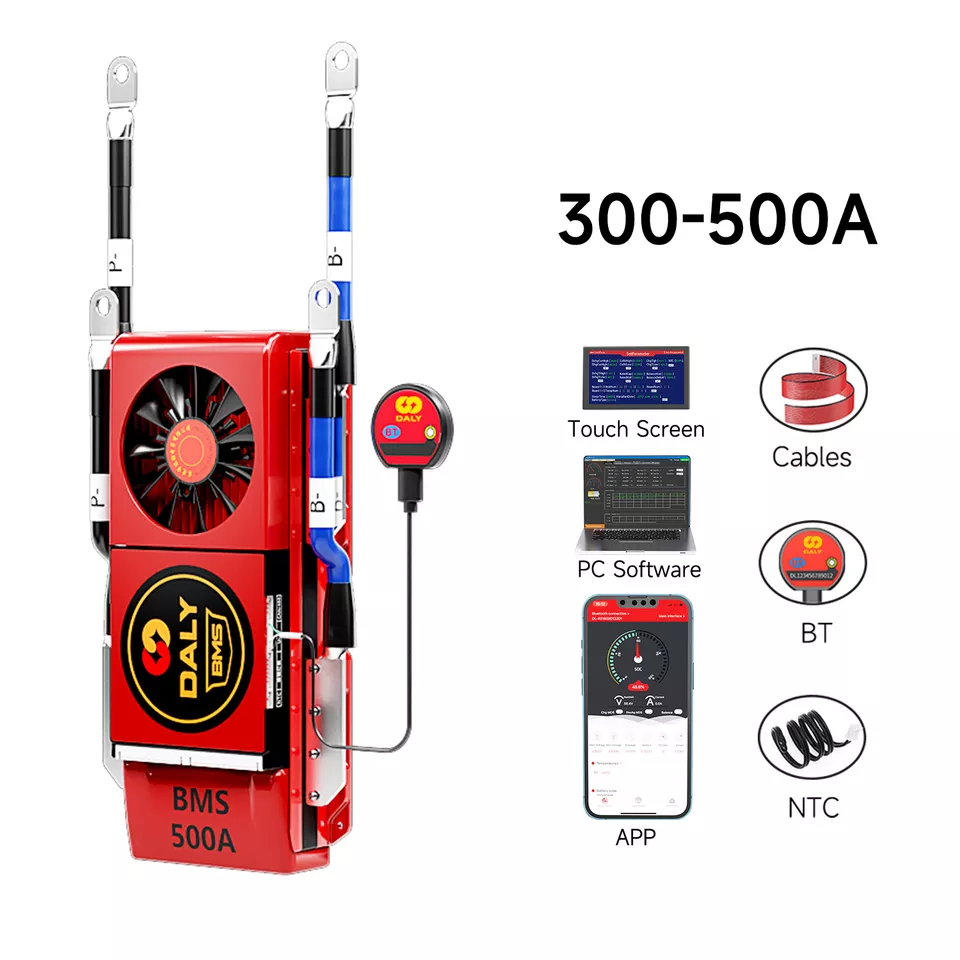
3. Daly BMS

Overview:
Daly BMS is another popular option, especially in the DIY space, due to its affordability and basic functionality. Daly BMS is often used for simple battery systems that don’t require the advanced features seen in more expensive systems like JK or JBD. It offers basic protection for lithium batteries, making it suitable for small energy storage systems or low-demand applications.

Key Features:

  • Basic protection: overvoltage, undervoltage, over-temperature, and short circuit protection.
  • Available in 12V to 48V configurations with various amp ratings.
  • Passive balancing for maintaining cell voltage consistency.
  • Compact design, easy to install, and cost-effective.

Pros:

  • Easy to buy
  • Simple to set up and use.
  • Basic cell balancing and protection features are sufficient for smaller setups.
  • Widely available with many options for different voltage and current requirements.

Cons:

  • Passive balancing is less efficient than active balancing.
  • Less suitable for large or high-performance battery systems.
  • Durability concerns for long-term use in critical applications.
  • Active Cooling is unreliable

Best For:
Daly BMS is ideal for small-scale projects, DIY enthusiasts, and applications where basic protection is sufficient, such as small solar setups, electric bikes, or RVs. However, it may not be the best choice for large or critical energy storage projects.

4. PACE BMS

PACE BMS is designed to offer precise control and management over battery packs, particularly in scenarios where safety, durability, and advanced functionality are critical. It competes with other high-end BMS solutions like JK and REC, offering features that cater to both small and large battery systems. The focus is often on high voltage and high current capabilities, active balancing, and detailed monitoring.

PACE BMS is trusted in many server rack batteries, and is very similar to many other professional grade UPS and ESS storage BMS, with communication with Inverters and other parallel batteries one of the strengths of this product. Support for Victron, DEYE, Growatt and many other inverters.

Key Features of PACE BMS:

  • Passive Balancing: Ensures cells within the battery pack remain balanced, improving the pack’s longevity and performance.
  • High Voltage and Current Support: PACE BMS is designed to handle larger battery packs, making it suitable for industrial energy storage systems and EVs.
  • Smart Monitoring: Bluetooth connectivity, Wi-Fi integration, and real-time monitoring through mobile apps and dedicated displays.
  • Scalability: PACE BMS supports a wide range of voltages and capacities, making it versatile for projects of various sizes.
  • CAN Communication: Allows integration into more complex systems and communication with other components, such as in electric vehicles or sophisticated solar setups.
  • Configurable Protection Settings: Advanced protection for overvoltage, undervoltage, over-temperature, and current surges, with configurable thresholds.

Pros of PACE BMS:

  • Advanced Features: PACE BMS offers high-end features like balancing, real-time monitoring, and CAN communication, making it suitable for professional or industrial-grade systems.
  • High Reliability: It is built with a focus on safety and durability, ensuring optimal performance even under demanding conditions.
  • Great Scalability: Suitable for both small and large battery packs, offering flexibility across different applications.
  • Detailed Monitoring: Real-time feedback on battery health and performance ensures better maintenance and control.

Cons of PACE BMS:

  • Higher Cost: PACE BMS tends to be on the more expensive side compared to options like Daly or JBD, which may not make it ideal for DIY enthusiasts or small-scale projects.
  • Complexity: Due to its advanced features and configuration options, PACE BMS has a steeper learning curve and may require technical knowledge to set up and manage effectively.
  • Overkill for Simple Systems: For small or low-demand projects, PACE BMS may offer more features than necessary, which could result in unnecessary costs.

Best For:

PACE BMS is ideal for large, complex energy storage systems, electric vehicles, or any application that demands high reliability, precision, and detailed monitoring. Its advanced features and robust safety mechanisms make it a top choice for critical systems where performance and safety are paramount.


5. Other Popular BMS Options

Overkill Solar BMS:
Specifically designed for DIY solar energy storage systems, Overkill Solar BMS is known for its user-friendly interface and detailed monitoring features. It offers Bluetooth connectivity and a built-in display for real-time stats, making it a favorite among home solar system installers. Overkill uses modified versions of the JDB BMS, in some cases the same BMS.

REC BMS:
One of the high-end options, REC BMS, is designed for advanced applications requiring detailed control, real-time data, and integration into large, complex systems. It supports both passive and active balancing and is highly customizable, often used in commercial energy storage projects.


Pros and Cons Comparison Table

BMS BrandKey FeaturesProsConsBest For
JBDSmart BMS, Bluetooth, balancing, overcharge/over-temp protectionCost-effective, smart features, reliable performanceComplex setup, low balance currentsDIY and professional setups for solar, EVs, and large battery packs
JKActive balancing, high current, customizable parametersHigh current Active balancing, touchscreen, BluetoothExpensive, steep learning curve, software issuesSmall-scale energy storage, EVs, commercial energy applications
DalyBasic protection, passive balancing, over-voltage/under-voltageEasy to buy, easy to use, basic protectionLacks advanced features, limited balancing capabilitiesSmall DIY projects, basic solar setups, electric bikes
PACEBluetooth, passive balancing, over-temperature protectionHigh price, difficult setup, Bluetooth monitoringLacks advanced features like active balancing, not DIY friendlyCommercial scale solar setups, low-voltage energy storage systems
RECActive balancing, high customization, detailed monitoringHighly customizable, integrates into large systems, active balancingVery expensive, complicated setup
overly complex
Large commercial projects, grid-connected systems, high-end EV setups

Final Thoughts: Which BMS is Right for You?

When it comes to selecting a BMS, the right choice depends on your specific project requirements. Here’s a quick summary to help guide your decision:

  • For DIY enthusiasts or small battery systems: JBD offers the most budget-friendly option with basic protection features. It’s ideal for simple projects like e-bikes or small solar setups.
  • For advanced DIY and professional setups: JBD and JK BMS is a great middle-ground option, providing smart features like Bluetooth monitoring, good balancing, and flexibility in configuration. It’s a solid choice for medium to large battery packs.
  • For large-scale or critical energy storage systems: PACE BMS is the gold standard, offering active balancing, high current handling, and extensive monitoring capabilities. It’s perfect for large energy storage projects, EVs, and commercial applications where reliability and performance are paramount.

Ultimately, the best BMS for your needs will depend on the complexity and scale of your project, as well as your budget. Each BMS option has its strengths, and understanding your specific requirements will help you choose the most suitable one for your system.


Ready to Take Your Energy Storage to the Next Level?

At LiFePO4 Australia, we specialize in helping you choose the best components for your battery systems. Whether you’re looking for a high-end BMS or just starting out with a basic battery pack, we’ve got you covered with expert advice and top-tier products. Contact us today to learn more about our range of BMS options and how we can help you build the perfect battery system!

News
Safe Installation of LiFePo4 Batteries in Australia

AS/NZS 5139-2019 Compliance Guide for a 15kWh, 51.2V, 300Ah Lithium Battery with LiFePO4 Cells

All of our LiFePro Batteries are designed to comply with IEC62619 for installation to AS/NZS3001.2:2022 standard. Our Lithium batteries are designed to comply to IEC62619 and therefore can usually be installed in most applications.
We are currently working on the application and certificate of IEC62619 for a number of our batteries. You can reach out to find out more by calling us on (07) 4191 6815

Compliance vs. Certification

Compliance:

  • When a battery complies with IEC 62619, it means that the battery has been designed and manufactured to meet the requirements and criteria set out in the IEC 62619 standard.
  • This compliance could be based on internal testing and assessments conducted by the manufacturer to ensure that the battery meets the necessary safety and performance specifications outlined in the standard.

Certification:

  • Certification, on the other hand, involves a formal process where an accredited third-party testing organization tests and verifies that the battery meets the IEC 62619 standard.
  • This process includes rigorous testing under controlled conditions and results in an official certificate or mark that indicates the battery has been independently verified to meet the standard.
  • Certification provides a higher level of assurance and credibility to customers and regulators, as it involves independent validation.

Why Certification Matters

  • Market Acceptance: Many markets, industries, and customers require certified products to ensure safety and reliability. Certification can be a requirement for selling products in certain regions or for use in specific applications.
  • Liability and Compliance: Certification can protect against liability and regulatory issues, as it demonstrates that the product has been independently verified to meet recognized safety standards.
  • Customer Confidence: Certification provides customers with confidence in the quality and safety of the product, which can be a key differentiator in the market.

1. Introduction

AS/NZS 5139:2019 sets the standards for the safe installation of battery energy storage systems (BESS) in Australia and New Zealand. Compliance with this standard ensures the safety and reliability of your lithium battery system. This guide will help you meet these standards for your 15kWh, 51.2V, 300Ah lithium battery containing LiFePO4 cells. To ensure the safety and compliance of your 15kWh, 51.2V, 300Ah lithium battery system, it’s important to adhere to both AS/NZS 5139:2019 and additional regulations specified in AS/NZS 3000:2018

2. System Design

2.1 Battery Specification

  • Capacity: 15kWh
  • Voltage: 51.2V
  • Current: 300Ah
  • Chemistry: Lithium Iron Phosphate (LiFePO4)

2.2 Key Components

  • Battery Management System (BMS)
  • Inverter/Charger
  • Safety Enclosure
  • Circuit Protection Devices (Fuses/Breakers)
  • Cabling and Connectors

3. Installation Site Requirements

3.1 Location

  • Battery Location & Restrictions:
  • Install the battery system in a well-ventilated, cool, and dry area.
  • Avoid direct sunlight and ensure the location is away from flammable materials.
  • Batteries cannot be installed in restricted locations such as near gas appliances and gas cylinders. Specifically, there are exclusion zones for electrical installations near gas relief vent terminals to prevent ignition hazards (AS/NZS 3000:2018, Section 4.18)​ (GSES)​.
  • Ventilation and Environmental Requirements:
  • Ensure the installation site provides adequate ventilation to avoid overheating and accumulation of gases. The location should maintain temperatures within the limits specified by the manufacturer and control humidity levels to prevent condensation​ (Standards.govt.nz)​​ (GSES)​.

3.2 Access and Clearances

  • Ensure clearances around the battery system for maintenance and ventilation as specified by the manufacturer.
  • Allow at least 600mm clearance around the battery enclosure.

3.3 Environmental Conditions

  • Install the system within the environmental conditions specified by the manufacturer (e.g., temperature, humidity).

4. Safety Considerations

4.1 Battery Enclosure

  • Use a non-combustible, weatherproof enclosure with an IP rating appropriate for the installation location (e.g., IP65 for outdoor installations).
  • The enclosure should have ventilation to prevent the accumulation of gases.

4.2 Fire Safety

  • Install fire-resistant barriers as required.
  • Maintain a safe distance from ignition sources.
  • Ensure the system is equipped with a fire suppression system if required by local regulations.
  • Fire Safety and Hazard Protection:
  • Install fire-resistant barriers and maintain safe distances from potential ignition sources. A fire suppression system may be required depending on local regulations​ (Smart Energy Council)​(GSES)​.

4.3 Emergency Shutdown

  • Provide an accessible emergency shutdown switch.
  • Ensure clear labeling and instructions for emergency procedures.
  • Documentation should include detailed installation, operation, and maintenance instructions, along with clear labeling for emergency shutdown procedures​ (Standards.govt.nz)​​ (Clean Energy Council)​.

5. Electrical Installation

5.1 Circuit Protection

  • Install DC fuses or circuit breakers appropriately rated for your battery system to protect against overcurrent conditions. Proper cable sizing is essential to minimize voltage drop and prevent overheating​ (Standards.govt.nz)​​ (GSES)​.

5.2 Cabling

  • Use cables rated for the maximum current and voltage of the battery system.
  • Ensure cables are correctly sized to minimize voltage drop and heat generation.
  • Secure and protect cables against physical damage.

5.3 Earthing and Bonding

  • Earth the battery system according to AS/NZS 3000:2018.
  • Ensure all metallic parts are bonded to prevent electrical shock hazards.

5.4 Inverter/Charger Integration

  • Connect the battery system to the inverter/charger according to the manufacturer’s instructions.
  • Ensure the inverter/charger is compatible with the battery’s voltage and current specifications.

6. Battery Management System (BMS)

6.1 Functions

  • Overcharge/Over-discharge Protection: The BMS monitors the state of charge and prevents the batteries from being overcharged or excessively discharged, which can damage the cells and reduce their lifespan.
  • Temperature Monitoring and Control: The BMS tracks the temperature of the cells and the environment to prevent overheating. It can shut down the system or reduce the charge/discharge rates if temperatures exceed safe levels.
  • Cell Balancing: The BMS ensures that all cells in the battery pack are charged equally, preventing any single cell from becoming a weak link and reducing the overall capacity and lifespan of the battery.
  • Communication: The BMS communicates with external systems like the inverter/charger to provide status updates, alerts, and control signals.
  • Sound Alarm: The BMS must be equipped with an audible alarm to alert users in case of critical issues such as overcharge, over-discharge, overheating, or any other condition that might lead to a hazardous situation. This is part of ensuring that the system can provide immediate alerts to prevent accidents and enable timely intervention.

6.2 Installation

  • Manufacturer’s Instructions: Follow the specific installation instructions provided by the BMS manufacturer. This includes wiring, sensor placement, and configuration settings.
  • Configuration: Set up the BMS to match the parameters of your battery system. This might involve setting voltage thresholds, temperature limits, and other protective settings.

7. Documentation and Labeling

7.1 User Manual

  • Provide a detailed user manual including installation, operation, and maintenance instructions.

7.2 Labels

  • Clearly label the battery system with the following information:
    • Manufacturer name and contact details
    • Model and serial number
    • Electrical ratings (voltage, current, capacity)
    • Safety warnings and emergency shutdown instructions

8. Testing and Commissioning

8. Testing and Commissioning

8.1 Pre-Installation Testing

  • Component Testing: Before installing, test each component (battery cells, BMS, inverter/charger, etc.) to ensure they are functioning correctly. This includes checking for proper voltage, current, and any manufacturer-specific tests.

8.2 Post-Installation Testing

  • Inspection: After installation, perform a thorough inspection to ensure all components are correctly installed, all connections are secure, and there are no signs of damage.
  • Continuity and Insulation Tests: These tests check that the electrical connections are correct and that there are no unintended paths for current that could cause short circuits.
  • Functional Tests: Verify that the BMS and protective devices (fuses/breakers) operate correctly. Simulate fault conditions to ensure they respond appropriately.
  • Inverter/Charger Operation: Check that the inverter/charger correctly charges and discharges the battery and that it communicates effectively with the BMS.

9. Maintenance and Monitoring

9.1 Regular Inspections

  • Conduct regular inspections to ensure the system remains in good condition.
  • Check for signs of wear, corrosion, or damage.

9.2 Monitoring

  • Use monitoring systems to keep track of battery performance and health.
  • Regularly check BMS data for any anomalies or alerts.

10. Compliance and Certification

10.1 Certification

  • Obtain certification from a qualified electrical inspector to ensure the installation complies with AS/NZS 5139:2019.

10.2 Documentation

  • Keep records of all installation, testing, and maintenance activities.
  • Ensure all documentation is available for inspection by regulatory authorities.

News Manufacturers
EVE Lithium LFP Cells List 3.2v

A list of cells manufactured by EVE in July 2024.
It details the capacity, energy density, estimated cycle life, weight, and Internal resistance of each cell.

Using this information you might be able to decide what cells suit your application best.
For example the LF50k cell is rated for 7000 cycles at 1C charge and discharge. But its energy density is very low. The main reason it gets such a good rating is because it can be actively cooled or heated in the right application, which can help tremendously with lifespan.
However you will also note that cycle life is now mostly spoken about at 0.5C or P. Meaning much of the information previously released has been further corrected over time.
All of these numbers are best case scenario, and usually at 25 degrees Celsius. So these numbers are basically unattainable in most cases.

ModelCapacity (Ah)Voltage (V)Cycle(time) 25°CInternal Resistance (1KHz)Weight (g)Length × Width × Height (mm)Energy Density (Wh/kg)
LF22K223.224500 (3C/3C)≤0.4mΩ628±10148.7×17.7×131.8112
LF32323.203500 (1C/1C)≤1.5mΩ730±50148.3×26.8×94.3140
LF50F503.201500 (0.5C/0.5C)≤2.0mΩ1035±100148.3×26.7×129.8154
LF50L503.205000 (0.5C/0.5C)≤0.6mΩ1090±50148.6×39.7×100.2154
LF50K503.207000 (1C/1C)≤0.7mΩ1395±50135.3×29.3×185.3114
LF80823.204000 (0.5C/0.5C)≤0.5mΩ1680±50130.3×36.3×170.5156
LF90K903.206000 (1C/1C)≤0.5mΩ1994±100130.3×36.3×200.5144
LF100MA1013.202000 (0.5C/0.5C)≤0.5mΩ1920±100160.0×50.1×118.5168
LF100LA1023.205000 (0.5C/0.5C)≤0.5mΩ1985±100160.0×50.1×118.5164
LF1051053.204000 (0.5C/0.5C)≤0.32mΩ1980±60130.3×36.3×200.5169
LF1251253.224000 (0.5C/0.5C)≤0.40mΩ2390±71200.7×33.2×172.0168
LF1501503.224000 (0.5C/0.5C)≤0.4mΩ2830±84200.7×33.2×207.0170
LF1601603.224000 (0.5C/0.5C)≤0.21mΩ3000±100173.9×53.8×153.5171
LF1731733.224000 (0.5C/0.5C)≤0.25mΩ3190±96173.9×41.06×207.5174
LF2302303.204000 (0.5C/0.5C)≤0.25mΩ4140±124173.9×53.8×207.2177
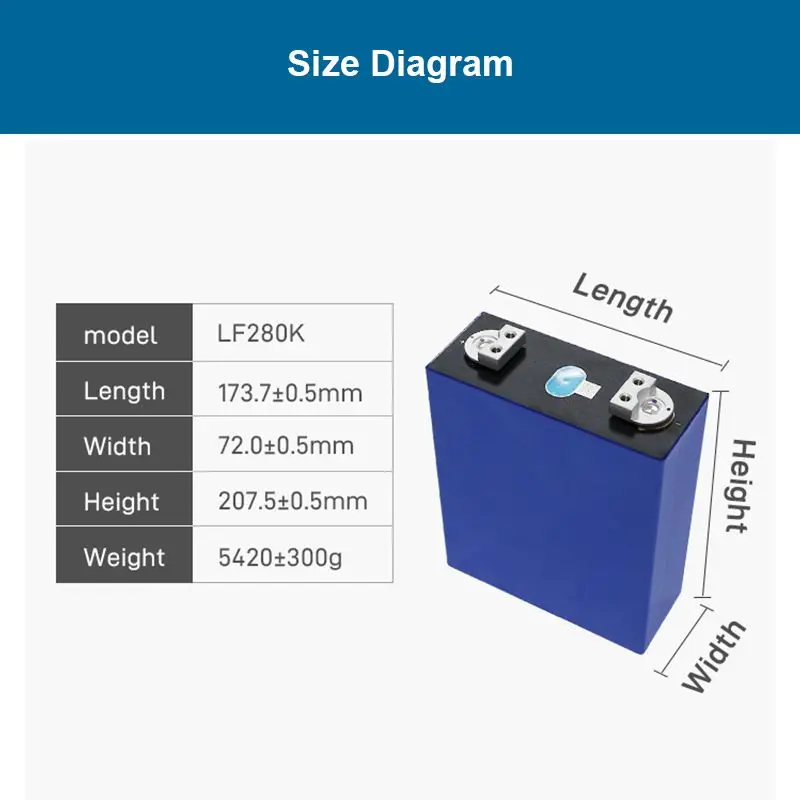
LF280K2803.208000 (0.5C/0.5P)≤0.25mΩ5490±300173.7×71.7×207.2163
LF3043043.204000 (0.5C/0.5C)≤0.16mΩ5450±164173.7×71.7×207.2178
LF560K5603.208000 (0.5P/0.5P)≤0.25mΩ10700±300352.3×71.7×207.2167
MB303063.2010000 (0.5P/0.5P)≤0.18mΩ5600±300173.7×71.7×207.2174
MB313143.208000 (0.5P/0.5P)≤0.18mΩ5600±300173.7×71.7×207.2179
V211543.222000 (0.5C/0.5C)≤0.5mΩ2755±30110.0×35.7×346.4182
A22178.13.222000 (0.33C/0.33C)≤0.3mΩ3170±230280.7×31.0×88.6180
A24172.13.222000 (0.33C/0.33C)≤0.45mΩ3160±240301.0×36.7×132.5175
A31-V1132.53.222000 (0.33C/0.33C)≤0.45mΩ2370±230194.3×50.7×112.7180
A31-V21413.222000 (Fch/1C)≤0.45mΩ2450±230194.3×50.7×112.7185
A27127.23.212000 (Fch/1C)≤0.45mΩ2220±33088.0×37.2×309.5183
A2887.53.222500 (0.33C/0.33C)≤0.57mΩ1645±30301.8×26.7×94.9171
News Lithium Battery-school
The Lifepo4 QR code B to A Grade problem

Q. What is a QR Code?
A. It’s a 3D barcode

Q. What is a Barcode?
A. A visual representation of data

Q. Can a barcode be scanned to verify authenticity of unique products?
A. NO! A QR code does NOT authenticate product genuineness because it can be easily copied or duplicated by anyone.

Put Simply, if I have some text or numbers, I can quickly and easily generate a QR code. It is static data. It does not connect to EVE or any other manufacturer.

Q. Why I keep writing these articles over and over?

Part 1

I am observing that most sellers in Australia (Melbourne, Sydney, Rockhampton, Perth, and Brisbane) sell B grade cells as A grade. They either don’t care, or they don’t know themselves. It’s really disappointing.

I have to defend our own business sometimes, yet those same people attacking me are under the impression that the other sellers are selling genuine products, but I KNOW they aren’t.

  • a) I know because I have seen their cells in person, and I have seen the packaging. I can see they are buying from QSO, Basen, Docan, or EEL by the boxes, the stickers, the busbars, and the QR CODE!
  • b) I have spoken to most of the sellers personally.
  • c) I have seen the evidence over and over again.

Part 2

I have always known what a barcode and therefore a QR code is. I have personally worked in stock control systems since I was a teenager and in IT for years. I sold and supported stock control systems. We work with barcodes all day, and we know what a keyboard wedge is. (I know that 99.8% of people do not.)

Part 3

I only recently realized that most (not all) people do not understand what they are or how they work.

I’ve watched multiple people scan the code, thinking they were connecting to an authenticity server or something. Recently, I actually watched a guy scan his “known fake” jacket, which had a QR code on it, and I finally realized that people just don’t understand this technology in general.

Let me say this in BOLD red text!

QR CODES DO NOT AND CAN NOT VERIFY AUTHENTICITY

QR Codes for DUMMIES

Below this paragraph I have given you a QR code generator. You can make it do whatever you want within a set number of characters. It can create any data, like

If I have a spreadsheet with genuine QR codes, I can then generate a QR Code. If someone gets a hold of a spreadsheet like this one, attached here. EVE uses a 24 character “string” of numbers and letters as their identifier.
1200px .xlsx icon.svg1
Click it to download the spreadsheet of real QR codes, from a real EVE spreadsheet

Use this tool in orange, to create your own EVE barcodes using the Spreadsheet.

In Depth detail of QR codes

The amount of text a QR code can hold depends on the version and error correction level. Here’s a general idea:

  • A standard QR code (Version 40, the largest version) can hold up to:
    • 7,089 numeric characters
    • 4,296 alphanumeric characters
    • 2,953 binary (8-bit) bytes

However, practical QR codes used in everyday situations usually hold much less data to ensure they are easily scannable.
For best results, it’s advisable to keep the text short, typically under 300 characters, to maintain quick and reliable scanning.

Summary

EVE and others like them use QR codes for internal tracking while manufacturing battery cells. They are not there for the end user, to verify the authenticity.

QR Code created with a QR Generator by LiFePo4 Australia

THIS QR will have the string of data “https://lifepo4.com.au” You can scan this with a camera app, or a QR Code scanner and it will take you to this website, it won’t work with the LIFEPO4 QR Scanner, because that app has been modified to interpret batteries only.

If you have the spreadsheet with genuine QR codes, You can then generate a QR codes and upload them to the Laser Engraver, and every 5 seconds you can laser engrave a new QR code onto a B grade cell, making it appear as a genuine A grade product, that even matches the spreadsheet you are looking at.

Stop thinking Chinese people are not educated, the truth is that many Chinese, over 100 Million of them hold college degrees, they are smarter than you, almost certainly. And it only takes a few to tell the others what to do. Just like an engineer would do in Australia to his subordinates. As of recent data, approximately 18.3% of Chinese people hold higher education degrees.
That means, that there are more educated people in China, than the entire population of USA and Australia combined.
It also means that there are at least 10-20 educated Chinese people for every one of us.
Make your own judgement.

image

How to use a spreadsheet to generate and print new QR codes with a laser

If someone (think shady Chinese battery mafia figure) gets a hold of a spreadsheet like this one, attached here. They can then upload the data onto the Laser Machine, then one by one, they will write over the top of the Invalid or B Grade QR Code. Thus making a Battery cell with 280ah appear to be a 330Ah cell.

It is really simple, the entire process takes a few seconds at most per cell. I have seen a video of this being done, I did not have the ability to save that video, and I cannot seem to find it no matter how hard I Google and Baidu it. The videos are private for obvious reasons. But they do exist.

The Process of QR code Re-Lasering

Q How does QR replacement take place, and who is doing it?

A. In China, there are vast warehouses full of products that did not meet specifications for use in commercial or high voltage battery pack use. They are still batteries, and they work, but for how long I hear you ask?

“how long is a piece of string”

High Voltage Module and A grade Pack disassembled

QR CODES DO NOT AND CAN NOT VERIFY AUTHENTICITY

Summary
A QR code is like a sticker. Anyone can print the same sticker and put it on anything, so it doesn’t prove the product is real. Only trusted sellers, like us, can guarantee the product’s genuineness. 

How to decode the data from EVE LFP Batteries

This is the EVE format of a QR code

How to Quickly Identify Fake Batteries Part 3 QR code parsing
Why a Lifepo4 QR Scanner app does NOT verify the Authenticity or Genuineness of Batteries

As we have discussed, a QR code is STATIC,
1. It does not connect to a database and return anything that can be used to know if the product is real or fake.

The Lifepo4 QR Scanner App, has a database, (think of it as a big spreadsheet. The database contains all the cell models, and some logical programming for the app to be able to decode all known QR codes. The user who created this app, did this to assist the community to try to know what product of battery cells, and where they were made and what capacity they were.
He has been able to gather enough data to make it work for the most popular manufacturers.

Once he has this image and others like it from the other manufacturers, he can very easily decode the important data, and that will return you a result on what that QR is supposed to be attached or printed on. (notice I said supposed)

H95df8f324b3a4959bece3fdc98ad34dbm1How to Quickly Identify Fake Batteries Part 3 QR code parsing
Why Does all this even matter?

In a high voltage battery pack, it’s crucial that the batteries in series are matched and high quality because:

  1. Balanced Performance: Matched batteries ensure consistent performance, as each battery will charge and discharge at the same rate.
  2. Safety: High-quality batteries reduce the risk of failures, such as overheating, leaks, or explosions.
  3. Longevity: Using matched and high-quality batteries extends the overall lifespan of the pack by preventing weak batteries from causing the entire pack to degrade faster.
  4. Efficiency: Ensures that the battery pack operates at optimal efficiency, providing reliable power output without losses due to imbalance.

By ensuring batteries are matched and high-quality, you maintain the safety, efficiency, and durability of the high voltage pack.

But wait there is more!

If a single battery cell in a high voltage pack is faulty, it impacts the entire pack because:

  1. Chain Reaction: In a series configuration, the current flows through each cell in the chain. A faulty cell disrupts this flow, reducing the pack’s overall performance.
  2. Reduced Capacity: The faulty cell limits the pack’s capacity to the weakest cell, causing the whole pack to discharge faster and reducing its overall capacity.
  3. Safety Risks: A single faulty cell can overheat or fail, potentially causing damage to adjacent cells and posing safety hazards like fires or explosions.
  4. Increased Wear: The healthy cells are forced to compensate for the faulty one, leading to uneven wear and shortening the lifespan of the entire pack.

In summary, a single faulty cell can degrade the performance, capacity, and safety of the whole pack, highlighting the importance of ensuring all cells are high quality and well-matched.

Now the best way to explain this using math:

If you have 16 cells in series, all of which are 330Ah, though a single cell has only 150Ah of capacity, then the entire pack will lose 55% of its capacity.

In this example the single cell, limits the pack to a total of 16 x 150Ah. Making your pack only 7.6kWh, when it should be 16.8kWh.

In dollars in today’s market, this would mean,

A $5000 investment would lose $2750 in value.

Making your battery worth only $2250

Not only this but the cell will continue to cause problems, causing your power to cut off regularly, and remain out of balance, and it will strain every other component in your pack.

Notice these are 2023-2024 cells, V3 LF280K or MB31

News Lithium Battery-school
Understanding Lithium Battery Cell Purchasing from China: Navigating Quality and Shipping Challenges

The process of purchasing from China lithium battery cells, particularly for do-it-yourself (DIY) projects, is fraught with complexities and pitfalls, largely stemming from issues of quality and shipping. As a specialist in the field with extensive experience, I aim to experienced on these challenges, providing insights that stem from my personal journey in navigating this treacherous terrain.

The Allure and Risks of Using Alibaba

Many importers continue to be drawn to platforms like Alibaba due to apparent cost savings and convenience. However, a significant risk lurks beneath the surface: approximately 90% of importers end up with subpar, or “B grade,” cells. This pervasive issue is largely attributable to the shipping practices and the inability to visually distinguish between A and B grade cells.

Why Most Cells Are B Grade

The core of the problem lies in the shipping practices employed by many Alibaba vendors. These sellers often resort to “black market shipping,” where containers filled with dangerous goods (like lithium batteries) are not properly declared. This involves using what is known in Chinese as “special line” shipping, which typically involves bribes to customs officials in both China and Australia.

This unorthodox approach allows sellers to dramatically reduce shipping costs—sometimes by half compared to reputable companies like EVE Energy, which adhere strictly to international shipping regulations for dangerous goods. EVE Energy, being a billion-dollar enterprise, cannot risk the legal and ethical implications of concealing dangerous goods in regular shipments.

The Difference Between A and B Grade Cells

From a technical perspective, A and B grade cells may appear identical, but their performance and reliability diverge significantly. EVE Energy, for instance, implements rigorous testing procedures during their 3-4 week manufacturing process. This includes specialized charging processes, capacity checks, and voltage tests, which classify cells into categories like A+, A, B, and B- grades. Up to 40% of cells are downgraded to a lower grade due to identified defects during these tests.

Our Approach: Ensuring Quality and Compliance

Given the complexities of legally and safely importing lithium cells, I have taken the route of organizing my own shipping and securing necessary certifications for transporting dangerous goods. This approach, while time-consuming and complex, ensures that I provide only A+ grade cells, unlike the prevalent B grade cells that flood the Australian market through less scrupulous importers.

The Misrepresentation by Alibaba Sellers

A common tactic among Alibaba sellers is falsely representing B grade cells as A+ grade. This misrepresentation is facilitated by the structure of the supply chain, where cells are warehoused en masse and drop-shipped by vendors who often operate merely as call centers. The consequence is a market flooded with inferior cells sold under the guise of top-tier quality.

Conclusion: Navigating the Lithium Cell Landscape

The challenges of purchasing lithium battery cells from China revolve around navigating through a murky landscape riddled with deceptive practices and regulatory challenges. My expertise and commitment to quality and safety have allowed me to overcome these barriers, ensuring that I can provide genuinely high-grade lithium cells.

This situation underscores the importance of rigorous due diligence and understanding the intricate dynamics of international shipping and quality control. By sharing my experience, I aim to enlighten potential buyers and DIY enthusiasts on the pitfalls of the market and the critical importance of sourcing from reliable and ethical suppliers.

In simpler terms, buying lithium battery cells from China can be tricky. Many buyers (importers) get tempted by lower prices on platforms like Alibaba, but often end up with lower-quality, “B grade” cells due to shady shipping practices where sellers don’t declare dangerous goods properly to cut costs. This is risky and against the law.

On the other hand, reputable companies like EVE Energy follow strict shipping rules, which makes their cells more expensive but ensures they are of high quality. I’ve gone the extra mile to organize my own shipping and make sure everything is above board, which means I only provide top-quality, “A+ grade” cells.

To put it plainly, if you’re looking to buy lithium cells, it’s crucial to understand that the cheapest option might end up costing you more in the long run due to poor quality. It’s better to pay a bit more for cells that are safely and legally shipped, ensuring you get what you pay for—reliable and effective batteries.

To clearly highlight our approach: we manage our own shipping and customs processes entirely within legal frameworks. This commitment to legality and ethical practices sets us apart from many sellers around the world who often resort to shortcuts like purchasing from Alibaba to save on shipping costs.

By purchasing in bulk and overseeing every step from customs clearance to delivery, we ensure that we provide only A+ grade cells. This direct involvement allows us to maintain high standards of quality and safety, unlike many other sellers who compromise on these aspects to reduce expenses. This unique approach ensures that our customers receive the best possible product without the common risks associated with improperly handled imports.

Probably the best information we can give you is to outline the actual practices

  1. EVE might sell a battery for $68-78 USD A+ grade
    Shipping might be $500-800 AUD for 16 cells (Its always more expensive because its legal shipping)
  2. Alibaba sellers buy B grade cells from anywhere between 50-75% of the A+ grade price.
    This means $34-56 USD
  3. The Alibaba seller will then quote you $63-$78 for that same cell
    But not only that there shipping quote to you might be $300-600.
  4. The price is not that important, BUT! they are also making profits on the shipping because its not DG shipping. Its illegal.
  5. They do not declare the Batteries as DG in Australia either, so they pay $100’s of dollars less for this shipping pathway.
  6. This is all profit. The process has been improved over a few years. So its now down to only a couple of shipping companies who handle all of the deliveries in Australia
  7. In many cases, they do not pay GST either or only a tiny fraction of what should be paid.
    This is our money, our countries money, that is supposed to go back into, schools and hospitals and such for the benefit of our country. No in the pockets of overseas companies who are also selling bad cells to us.

The total price is always lower through Alibaba sellers. The Alibaba seller makes $20-35 USD more per cell. This means they can put signinificant effort into replacing a QR code with valid data.

The Laser etching technique which is used to replace a QR code, machine is a very cheap investement when we are talking about replacing the QR code of thousands of cells a day. The investement into this machinery and process is now extremely profitable.

The cells are purhased in lots of thousand and hundreds of thousands. They are transported to a warehouse/ processing centre. where they are graded again and then relabelled with a new QR code. The QR code is from genuine A+ grade cells. A QR code is just letters and numbers. So this data is taken from a genuine batch of A+ grade cells. The spreadsheets from EVE A+ grade cells are used to create what appears to be A+ grade cells. This process costs about $1.50 USD per cell.

News Lithium Battery-school
Comparing the most popular 300AH Lifepo4 cells

Comparing the EVE LF304 to the LF280, LF280K, and LF280k v3, MB30, MB31 we can analyze the key differences and similarities among these popular Lifepo4 cells.

You can also find out why the next generation of MB (Mr Big) cells is better than the last, mostly due to the new stacking technique being employed by just a small number of LFP manufacturers. At this stage CATL, EVE have next generation cells, not yet freely available. But in the near future, you will be able to purchase these cells if you don’t buy them from the grey markets.

EVE LF304

EVE 304ah 300Ah 310Ah 320Ah
LF304 EVE

The EVE LF304 has a cycle life of 4000 at 0.5C/0.5C. Giving it an estimated lifespan of up to 11 years.
The EVE LF304 is EVE’s high power cell, with thicker coatings,

Capacity: 304Ah
Nominal Voltage: 3.2V

Production technology – Winding

LF280

LF280

The EVE LF280 has a cycle life of 4000 cycles at 0.5C/0.5C. Giving it an estimated lifespan of up to 11 years
Capacity: 280Ah
Nominal Voltage: 3.2V

Maximum Continuous Discharge 1C
Production technology – Winding

LF280K

eve lf280k 2
EVE LF280K

The EVE LF280K has a cycle life of 6000 cycles at 0.5C/0.5C. Giving it an estimated lifespan of up to 16 years
Capacity: 280Ah
Nominal Voltage: 3.2V

Cycle Life @ 0.5C : 6000 Cycles
Production technology – Winding

LF280k v3

The EVE LF280K has a cycle life of 6000 cycles (A+ Grade 8000 Cycles) at 0.5C/0.5C. Giving it an estimated lifespan of up to 16 years
Capacity: 280Ah
Nominal Voltage: 3.2V

Cycle Life: 6000 Cycles (A+ Grade 8000 Cycles)
Maximum Continuous Discharge 1C
Recommended Discharge 0.5C

Production technology – Stacking

MB30

The EVE MB30 has a cycle life of 10000 cycles at 0.5C/0.5C. Giving it an estimated lifespan of up to 20-25 years
Capacity: 306Ah
Expected Real measured capacity when new 320+AH
Nominal Voltage: 3.2V

Cycle Life: 10000 Cycles
Maximum Continuous Discharge 1C
Recommended Discharge 0.5C

Production technology – Stacking

MB31

The EVE MB31 has a cycle life of 8000 cycles at 0.5C/0.5C. Giving it an estimated lifespan of up to 20-25 years
Capacity: 314Ah
Expected Real measured capacity when new 330+AH
Nominal Voltage: 3.2V
Advertised Cycle Life: 8000 Cycles

Maximum Continuous Discharge 1C
Recommended Discharge 0.5C

Production technology – Stacking

Stacking vs Winding

Longer life span
The stacked battery cell has more tabs, the shorter the electron transmission distance, and the smaller the resistance, so the internal resistance of the stacked battery cell can be reduced, and the heat generated by the battery cell is small. The winding is prone to deformation, expansion and other problems, which affect the attenuation performance of the battery.

Comparing process of stacking battery vs winding

StackingWinding
Energy densityHigher. Higher space utilization.Lower. There is a C angle, and the larger the capacity, the lower the utilization rate.
Structural stabilityHigher. The internal structure is uniform and the reaction rate is relatively low.Lower. There is a C angle, which leads to uneven rate of internal reaction of charging and discharging.
Fast charging adaptationBetter. The multi-pole plates are connected in parallel, the internal resistance is low, and the charge and discharge of large current can be completed in a short time, and the rate performance of the battery is high.Poor. During the charge and discharge process, the degradation rate of the active material at the high temperature position is accelerated, and the other positions are rapidly attenuated.
SafetyThe risk is low. Stress distribution is more consistent, which keeps the interface flat and more stable.Lower. Potential problems such as powder shedding, burrs, pole piece expansion, and separator stretching are easy to occur at the bend.
Cycle lifeLonger. Low internal resistance, relieve battery heating during fast charging, improve battery chemical system stability and prolong service life.Shorter. It is easy to deform in the later stage, which in turn affects the cycle life of the battery.
ProductivityLarge-capacity batteries are generally low, mainly 6-8PPM.Higher, generally at 12-13PPM.
YieldLow, the glitch problem is prominent.Higher automation, higher yield rate, higher number of pole pieces.
Process maturityLow, the number of pole pieces is large, and the investment in equipment is large.Higher, fewer pole pieces, mature equipment and low investment cost.

Summary of new technology

Technologies such as low-expansion anode materials, full tab design, electrode surface treatment, and flexible electrode forming help resolve liquid infiltration challenges for large cells, enabling comprehensive safety protection and high cycle life through heat insulation, diffusion prevention, pressure relief

What to choose for a battery with the longest lifespan.

EVE MB30 Automotive A+ verified cells directly supplied from EVE, not via a third party, not via Alibaba, and not from most resellers and battery pack manufacturers including almost all battery builders in Australia and China, unless they can provide you with a) the official eve delivery report for the cell purchase, and b) evidence that the QR code is genuine and not re-lasered.
The B grade to A grade problem is going to be larger with the new models the LF280K v3 which is actually the MB30

A genuine QR code should be shiny behind the data that has been printed.

CleanQR wpp1710016061418
QR EVE LF304
Lithium Battery-school
How to Top Balance Lifepo4
  1. Hook up the LiFePO4 cells in parallel – (that means connecting all the positives together and the same for the negatives.)
  2. Charge to 3.45V with a regulated DC power supply with overvoltage protection. This part takes a long time! And your power supply should be large enough to cater to your needs. Our exclusive 30amp Lab supply is voltage and current limited here.
    IMPORTANT – DO NOT CHANGE THE VOLTAGE AFTER CONNECTION TO THE CELLS
  3. Once it hits 3.45V, then adjust the target voltage to 3.65V, keep an eye on the cells during this stage, the voltage will rise very rapidly and it’s good not to rely solely on the overvoltage protection feature of the power supply. Check with a multimeter very regularly.
  4. Once you hit 3.65V, turn off the power and leave for an hour or more. Check to see if it’s still over 3.5V. If not, charge it up to 3.65V again and leave it for another hour. Repeat until it does.
  5. Once done, reassemble the pack into your desired battery Voltage eg. 12V or 24V, and discharge
  6. Storing at a high level of charge is not good for the LiFePO4 cells. If storing for a long time, discharge down to 30-50%. If possible, keep the battery below 90% SOC and above 10% SOC. It will increase the lifespan of the cells. And definitely help with cell bloat.

    Congratulations you have successfully manually top balanced.

An alternative (not ideal or recommended) way to top balance a battery pack with a BMS, such as the JBD BMS is to connect the battery cells in series, and slowly, incrementally increase the pack voltage inside the Bluetooth app. (occasionally this will not work if the cells are at different SOC, please be aware, it could take weeks to balance if that were the case, and therefore it’s not usually recommended unless you don’t have any access to an appropriate voltage limited Lab supply)

1. Wire up the Battery in series. Eg, connect the 4 cells (positive to negative) Which will create a battery of about 13.2V for a 4s LiFePo4 Battery.
2. Charge with a charger between 14v and 14.6v. Slower is better
3. Inside the JBD Bluetooth app (XiaoXiang), set the fully charged voltage to 3.45v, and a total pack voltage of 13.8v and charge it until the BMS stops. Inside the app turn off the charge balancing feature and leave until all the cells are balanced.
4. The following day or more inside the BMS Bluetooth app settings increase the pack voltage to 14.4v (3.6v per cell) or 14.6v (3.65v) and ensure the balance on charge is turned off. The battery will then go and top balance itself. Leave here until balanced

Blog Lithium Battery-school Manufacturers
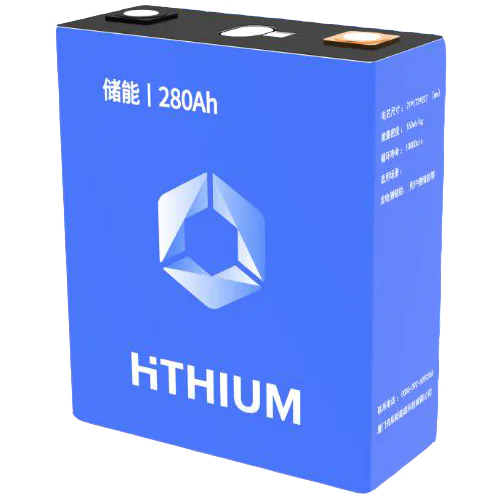
Hithium 280ah 300ah and 320ah cell Lifepo4 Review

Wondering about Hithium Lifepo4 cells quality?

Hithium 280Ah cells are a type of lithium iron phosphate (LiFePO4) battery cells. They are known for their high energy density, long cycle life, and safety features123.

Information about the cell. The cell is identical to the current reference design of a prismatic Lifepo4 cell with the dimensions of 207mm x 173mm x 71mm. These are identical in every way to the cells made by CATL, EVE, CALB, GOTION, BYD, GREAT POWER, REPT, SUNWODA and the list goes on. All of these currently manufacturer this exact same cell, with the exact same dimensions. They all use the same ingredients, with very minute differences to the cathode and anode and electrolyte mixture.

202303301648005656
290AH
Hithium 280AH
  • Product certifications:
    IEC 62619, UL 1973, UL 9540A, UN 38.3
  • Company certifications:
    ISO 9001, ISO 14001, ISO 45001
  • Environmental Compliance: ROHS, REACH

High safety

  • Hithium-developed prismatic LFP cell with high thermal stability
  • Passes crush and nail penetration test
  • Ultra wide operating temperature range


Overall this cell is modified to last longer. Although the truth is the cycle count can be manipulated such as 6000 cycles at 80% is the same as 9000 cycles at 70% and so on. So the claim of 10000 cycles is probably true. Especially considering they are made with the intention of Energy storage, so with a Hithium cell you know you are getting something that will last a very long time.

3.2V 280Ah LiFePO4 Battery Prismatic Cell With 10000cycles (evlithium.com)

News Blog
Kings vs Voltx Lithium Battery

Kings Vs VoltX Lithium Battery

Published: December 26, 2023 | Updated: March 1, 2025

Lithium Iron Phosphate (LiFePO4) batteries have become a game-changer for off-grid enthusiasts, campers, and 4WD adventurers across Australia. Among the most popular options in 2025 are the Kings 12V 120Ah Lithium LiFePO4 Battery and the VoltX 12V 100Ah LiFePO4 Basic Lithium Battery. Both are affordable, reliable, and widely available, but they cater to slightly different needs. Let’s dive into an updated comparison to help you decide which one suits your setup best.

120thumbnail1

Kings 120Ah Lithium LiFePO4 Battery Review

The Kings 12V 120Ah Lithium LiFePO4 Battery, offered by 4WD Supacentre, remains a staple for those seeking a dependable, budget-friendly energy solution in 2025. Here’s what it brings to the table:

Key Features:

  • Capacity: 120Ah – offering a bit more juice than its VoltX counterpart.
  • Chemistry: LiFePO4 with prismatic cells (approx. 3000-cycle rating individually, though pack performance varies).
  • Weight: Approximately 15kg – lightweight compared to AGM alternatives.
  • Cycle Life: Rated for 2000+ cycles at 80% depth of discharge (DoD).
  • Battery Management System (BMS): Integrated BMS with thermal protection, overload management, and high/low voltage cutoff.
  • Connectivity: Supports up to 2 batteries in parallel or 4 in series.
  • Warranty: 12 months – very short but price reflects warranty
  • Price (2025 Estimate): Around AUD $499 (up from $449 in 2023 due to inflation and supply chain adjustments).

Pros:

  • Larger 120Ah capacity means more runtime for power-hungry setups.
  • Widely available through 4WD Supacentre’s extensive retail network, offering easy customer support.
  • Solid BMS ensures safety and reliability for off-grid use.
  • Great value for the price – still one of the cheapest LiFePO4 options per Ah in 2025.

Cons:

  • No Bluetooth or app-based monitoring – a basic battery with no frills.
  • 12-month warranty is shorter than premium brands (though fair for the cost).
  • Some users report variability in long-term performance, possibly due to non-automotive-grade cells.

Best For:

Campers, boaters, or overlanders who need a reliable, no-nonsense battery for off-grid adventures without breaking the bank. In 2025, it’s still a top pick for those prioritizing capacity over advanced features.

Recommendation: We 100% recommend the Kings 120Ah for budget-conscious users who don’t need fancy extras. There are better batteries out there, but few match this price-to-performance ratio.


VoltX 12V 100Ah LiFePO4 Basic Lithium Battery Review

image

Key Features:

The VoltX 12V 100Ah LiFePO4 Basic Lithium Battery, sold by Outbax, continues to impress with its simplicity and performance in 2025. Here’s the latest rundown:

  • Capacity: 100Ah – slightly less than the Kings but still ample for most light applications.
  • Chemistry: LiFePO4 with A-grade prismatic cells.
  • Weight: Around 11kg – lighter than the Kings, making it easier to move.
  • Cycle Life: Advertised at 4000 cycles (though real-world testing suggests 2000-3000 cycles at 80% DoD).
  • Battery Management System (BMS): Integrated BMS protects against overheating, overcharging, and short circuits.
  • Connectivity: Officially not recommended for parallel/series connections, though some users report success with parallel setups.
  • Warranty: 36 months – a big step up from Kings.
  • Price (2025 Estimate): Around AUD $429 (up from $399 in 2023, reflecting market trends).

Pros:

  • Lightweight and compact – ideal for portable setups.
  • Longer 36-month warranty offers peace of mind.
  • Positive user feedback for reliability, especially with solar charging.
  • Outperforms AGM batteries in charging speed and weight.

Cons:

  • 100Ah capacity limits its use for larger setups compared to the Kings.
  • No Bluetooth or advanced monitoring – like the Kings, it’s a basic battery.
  • Mixed messaging on parallel/series connections could confuse users.

User Feedback (Updated for 2025):

  • Richard B. (Adelaide, SA): “Still faultless after 18 months. Runs my 40L and 60L fridges for days via solar. Best bang for buck in 2025.”
  • Anonymous (VIC): “Perfect for my off-grid cabin. Charges fast and weighs next to nothing compared to my old AGM.”
  • Tom H. (QLD): “Outlasts my old lead-acid by miles. Two years in, and it’s still going strong.”

Best For:

Light off-grid applications like small fridges, LEDs, or solar-powered setups where portability and warranty matter more than raw capacity.


Head-to-Head Comparison (2025)

FeatureKings 120AhVoltX 100Ah
Capacity120Ah100Ah
Weight~15kg~11kg
Cycle Life2000+ cycles2000-3000 cycles
BMSYes (basic)Yes (basic)
Connectivity2 parallel / 4 seriesNot recommended
Warranty12 months36 months
Price (2025)~AUD $499~AUD $429
Availability4WD Supacentre (online and retail stores)Outbax (online-focused)

Key Differences in 2025:

  • Capacity: Kings wins with 120Ah vs. VoltX’s 100Ah – a 20% edge for bigger loads.
  • Weight: VoltX is lighter by 4kg, a bonus for portability.
  • Warranty: VoltX’s 36 months trumps Kings’ 12 months, appealing to long-term users.

  • Price: Kings is slightly more expensive, but you get more capacity per dollar.
  • Support: Kings’ physical stores offer an edge over VoltX’s online-only model.

Which Should You Choose in 2025?

  • Choose Kings 120Ah if:
    • You need more capacity for larger fridges, inverters, or multi-day trips.
    • You value in-person support and availability at 4WD Supacentre locations.
    • Budget is tight, and you’re okay with a shorter warranty.

  • Choose VoltX 100Ah if:
    • Portability and lighter weight are priorities.
    • You want a longer warranty for peace of mind.
    • Your setup doesn’t demand more than 100Ah (e.g., small solar or camping rigs).

Final Thoughts

In 2025, both the Kings 120Ah and VoltX 100Ah LiFePO4 batteries remain solid choices for budget-conscious Aussies ditching lead-acid batteries. Neither offers Bluetooth or premium features, but they deliver where it counts: reliable power at a fair price. Kings edges out for capacity and retail presence, while VoltX shines with its warranty and portability.

For most casual users, the Kings 120Ah is our top pick unless the VoltX’s lighter weight or longer warranty sways you. Either way, you’re getting a dependable LiFePO4 battery that’ll outlast AGM options every day of the week.

X