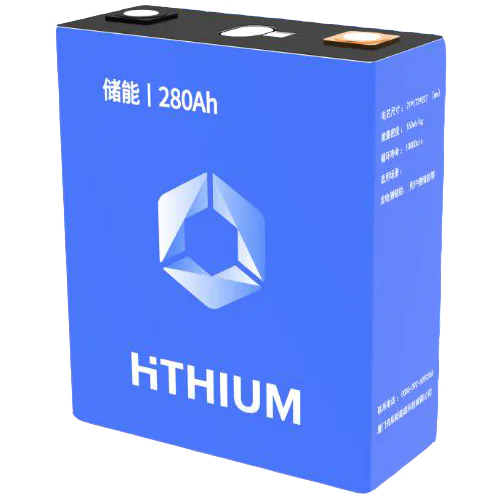
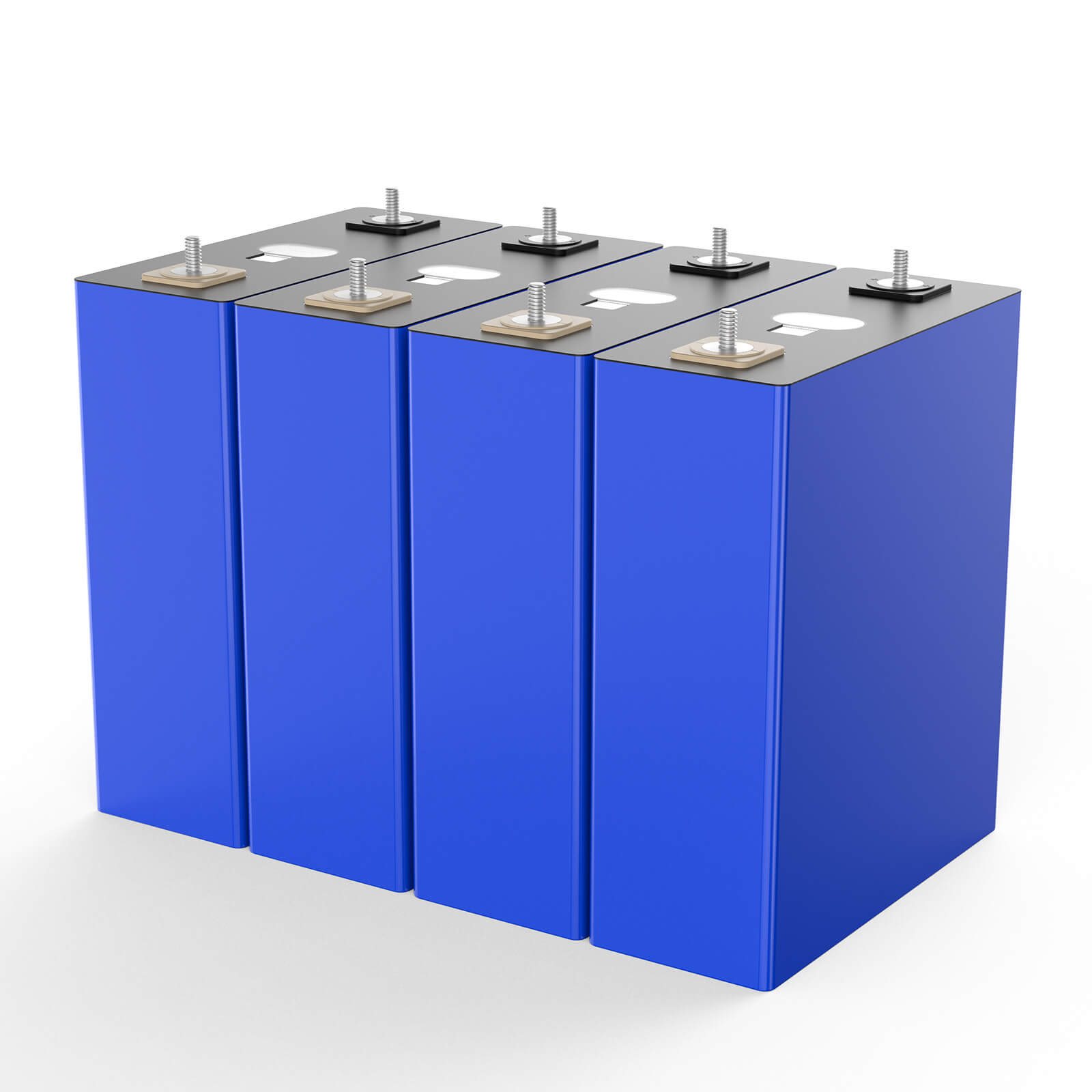
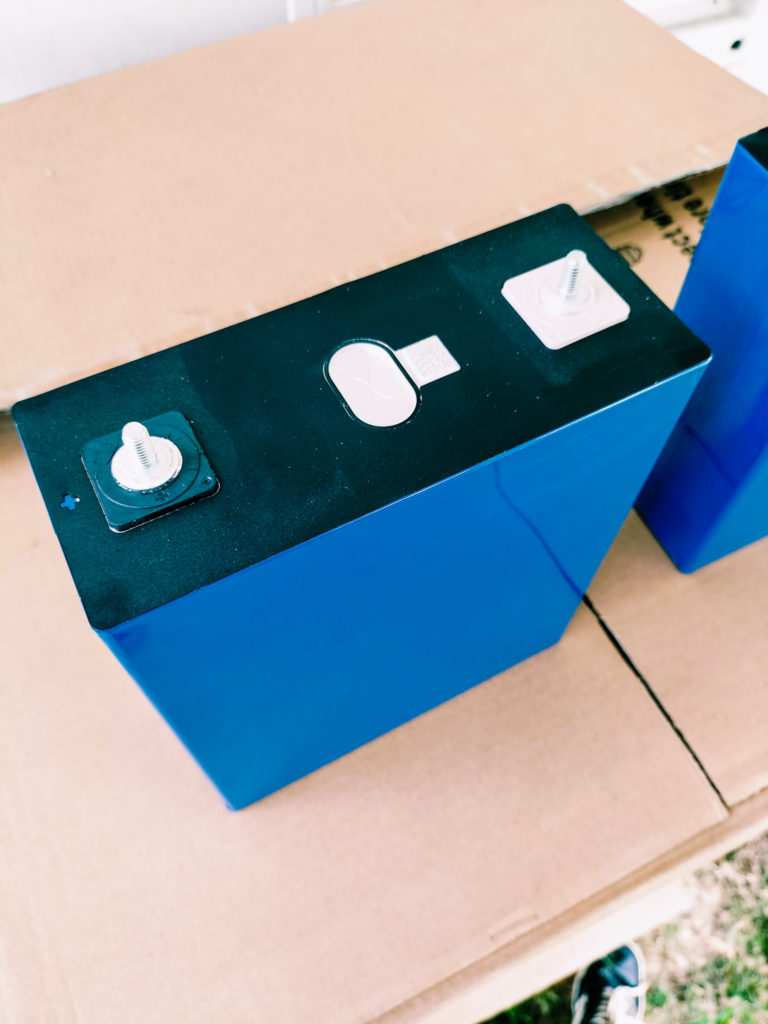
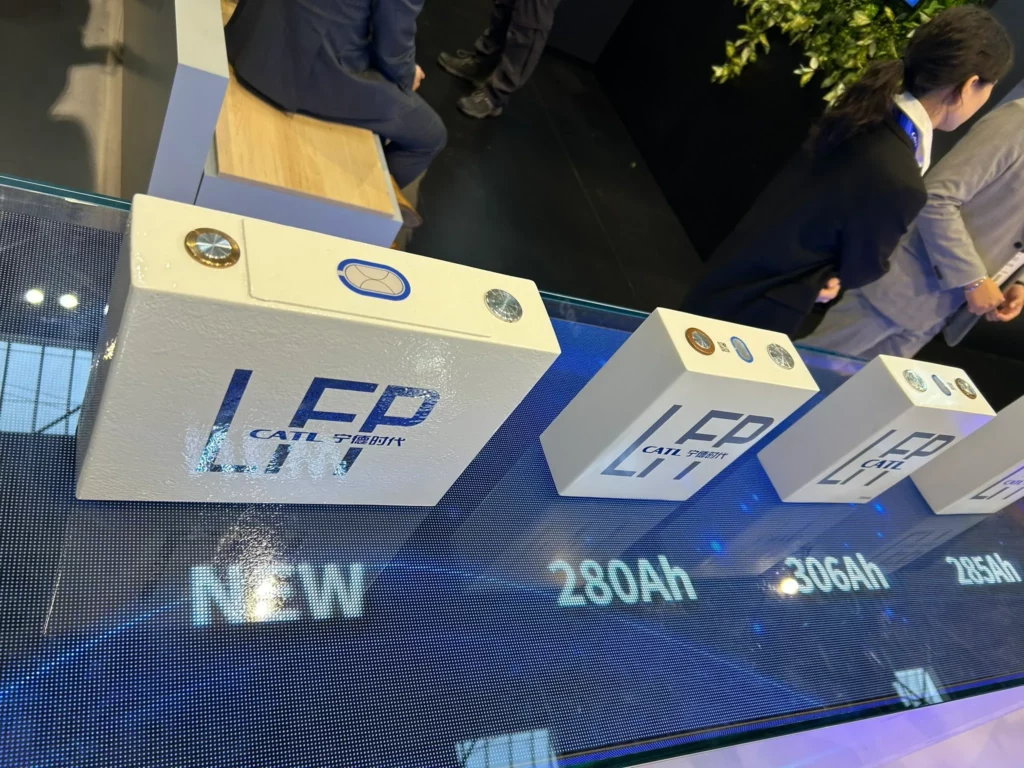
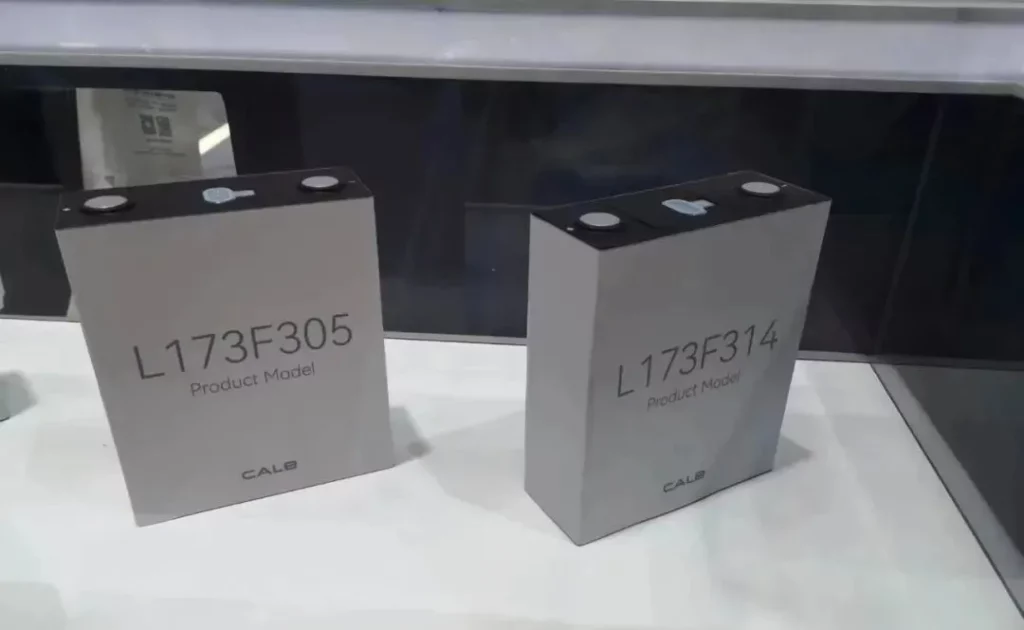
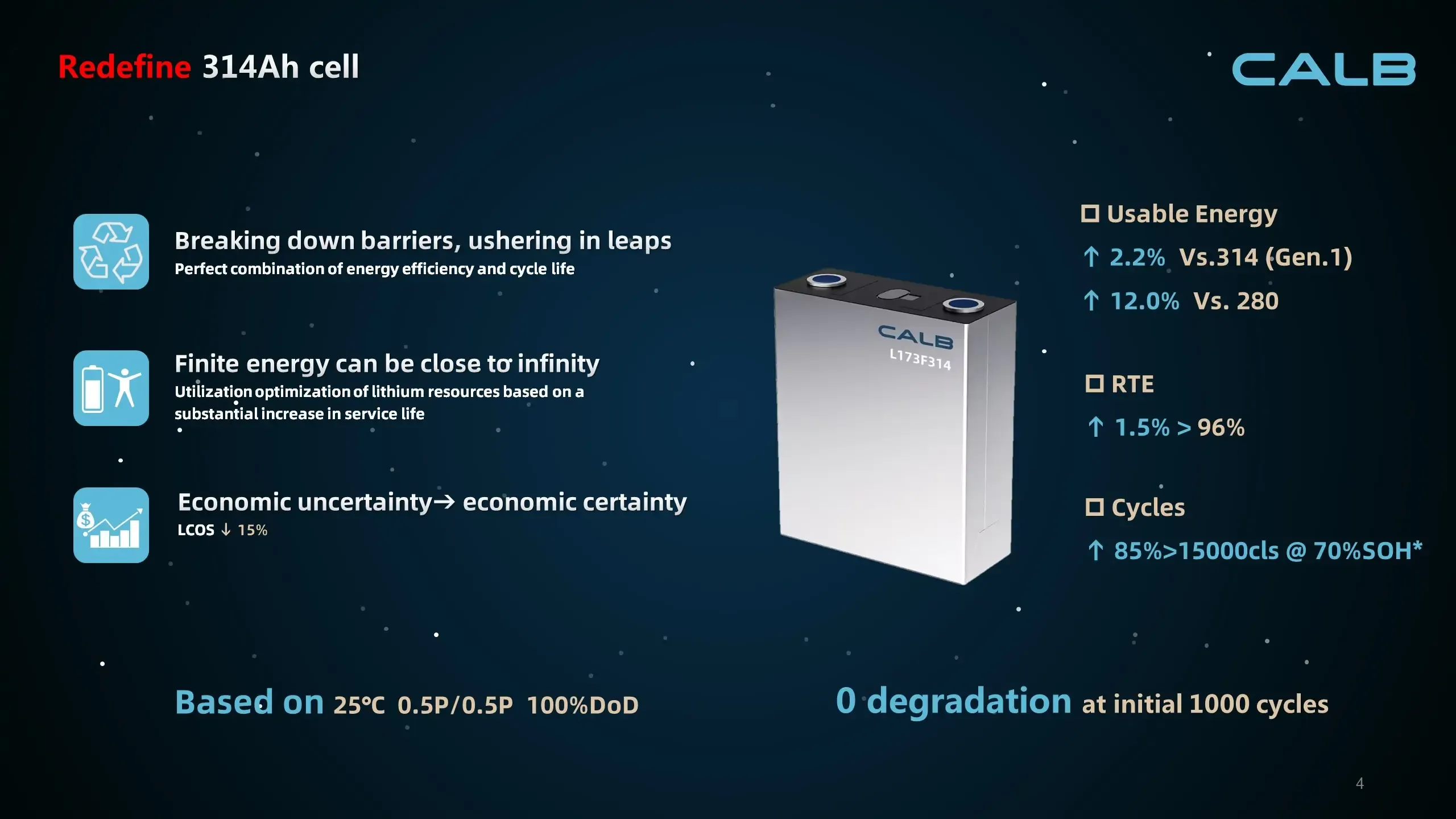
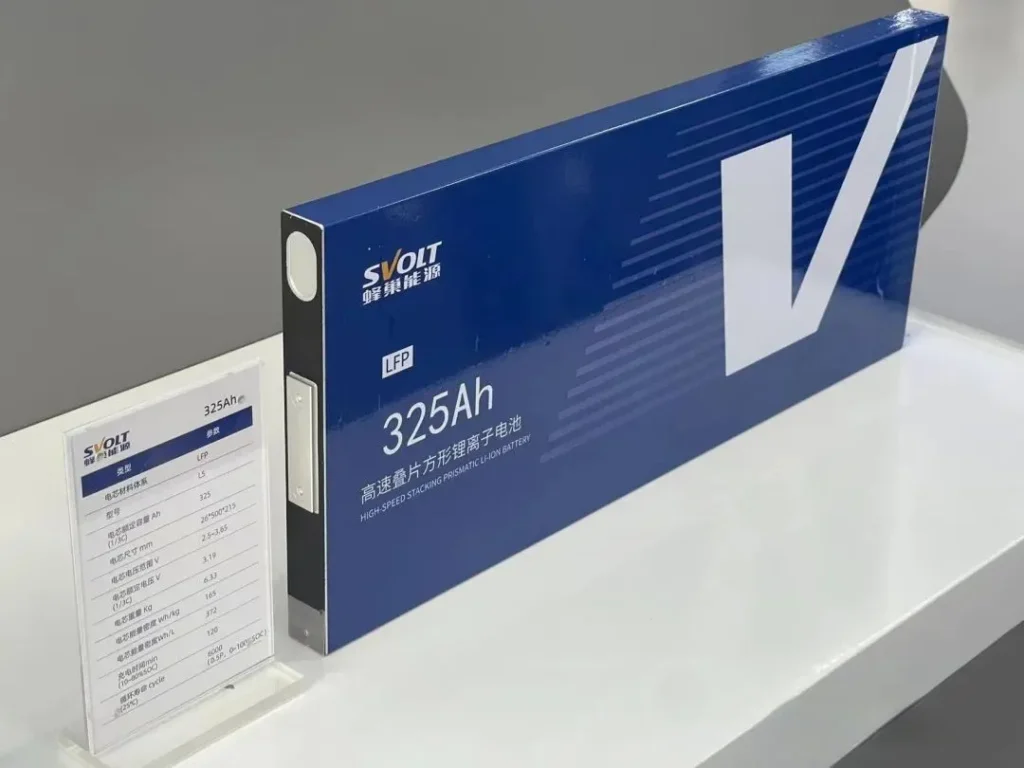
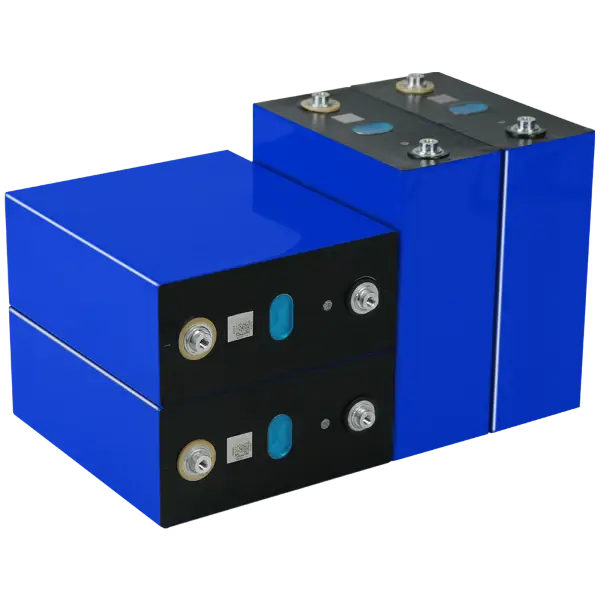
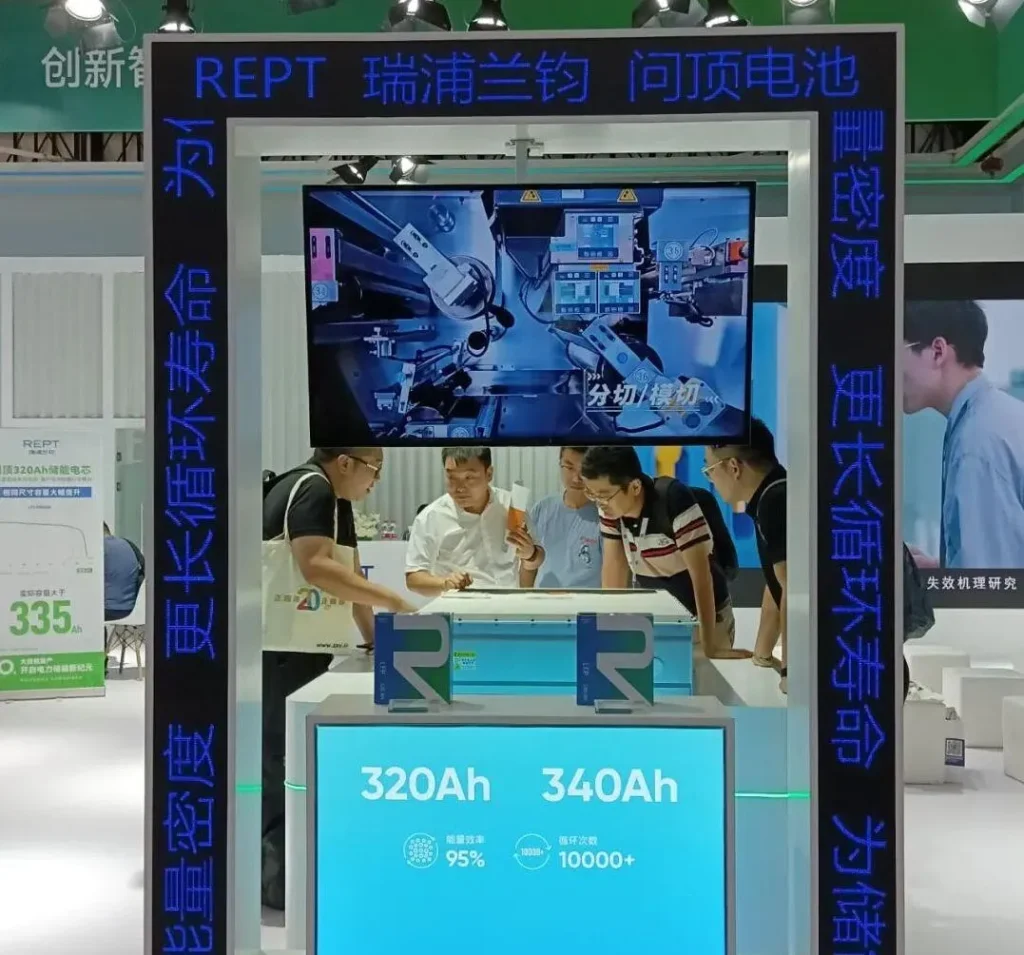
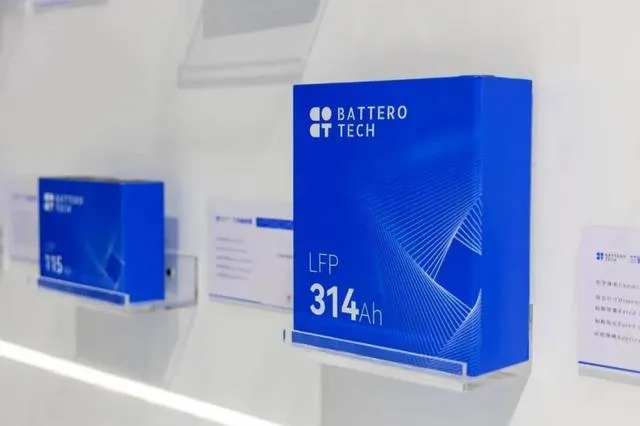
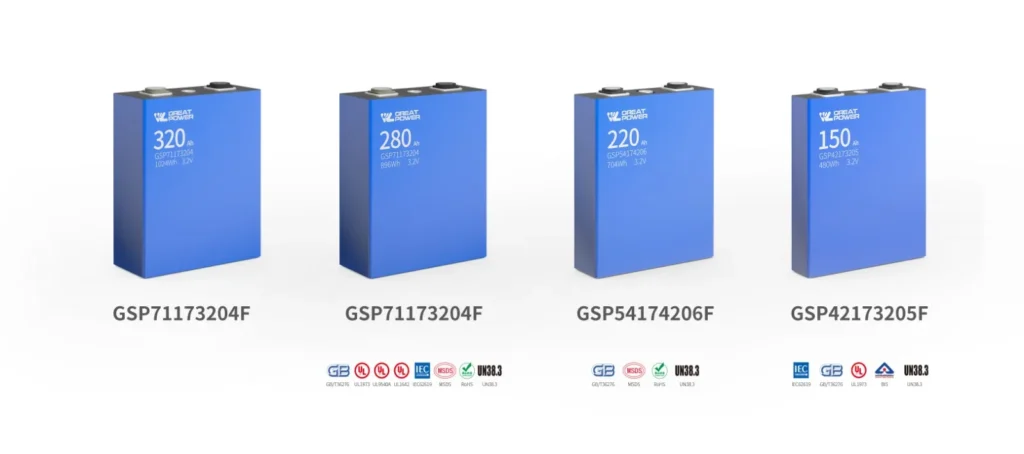
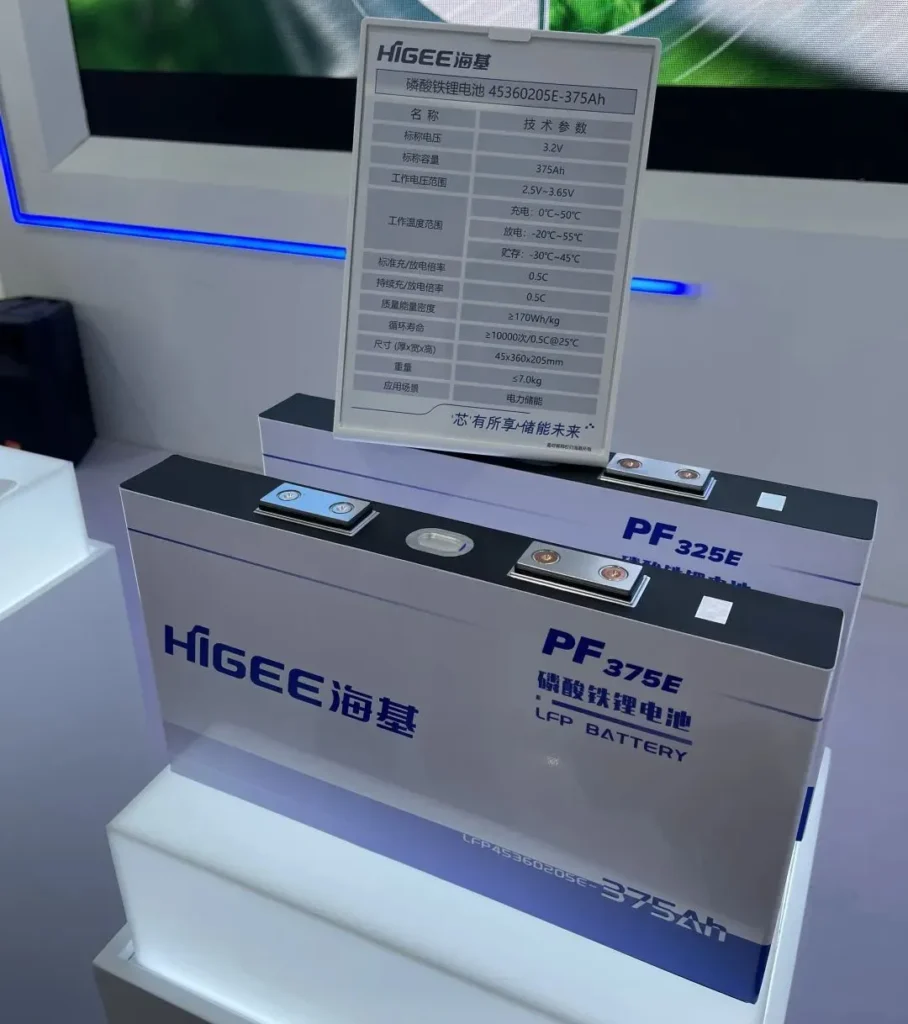
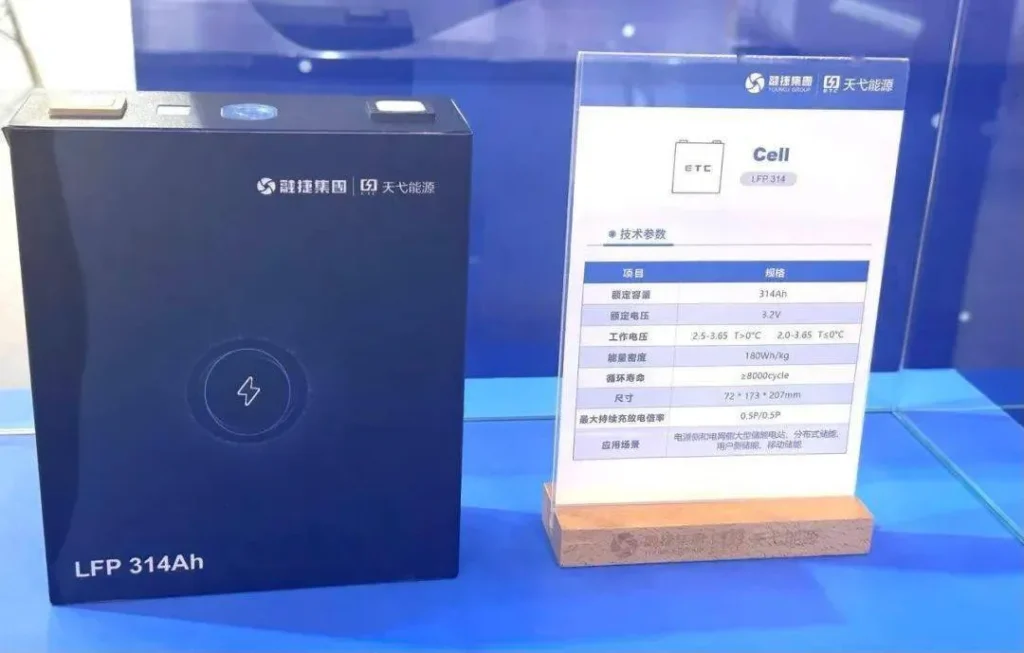
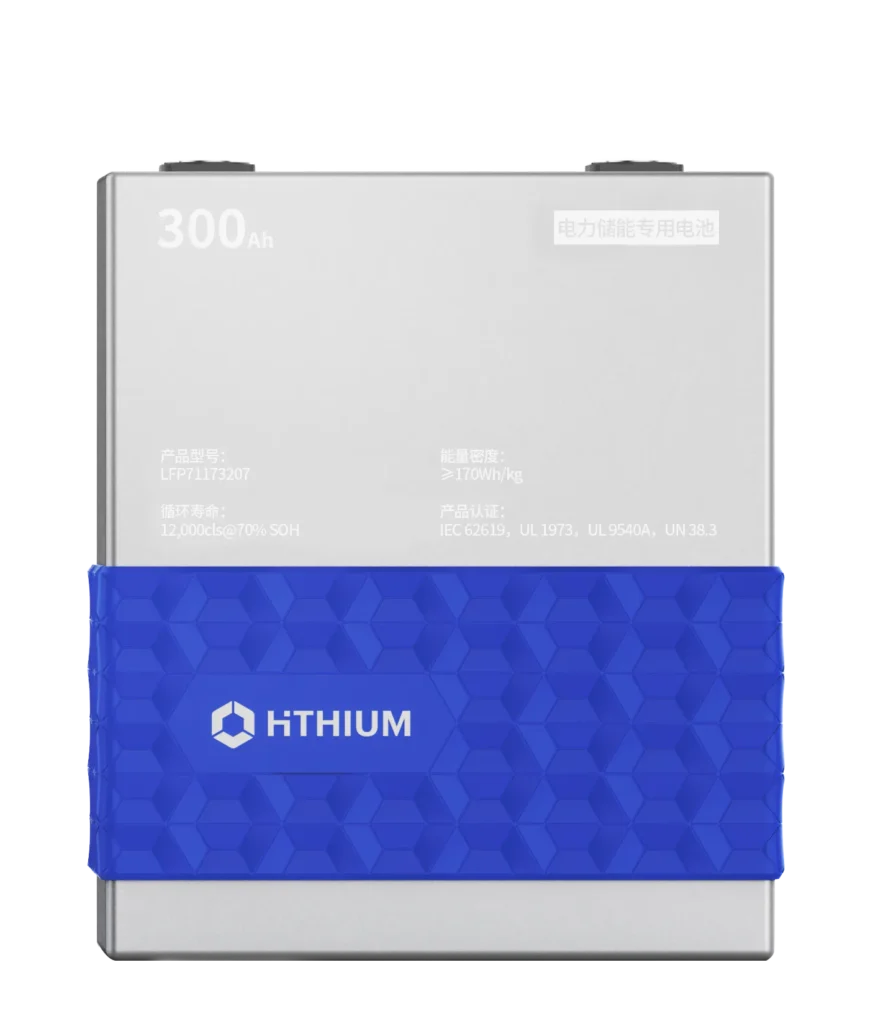
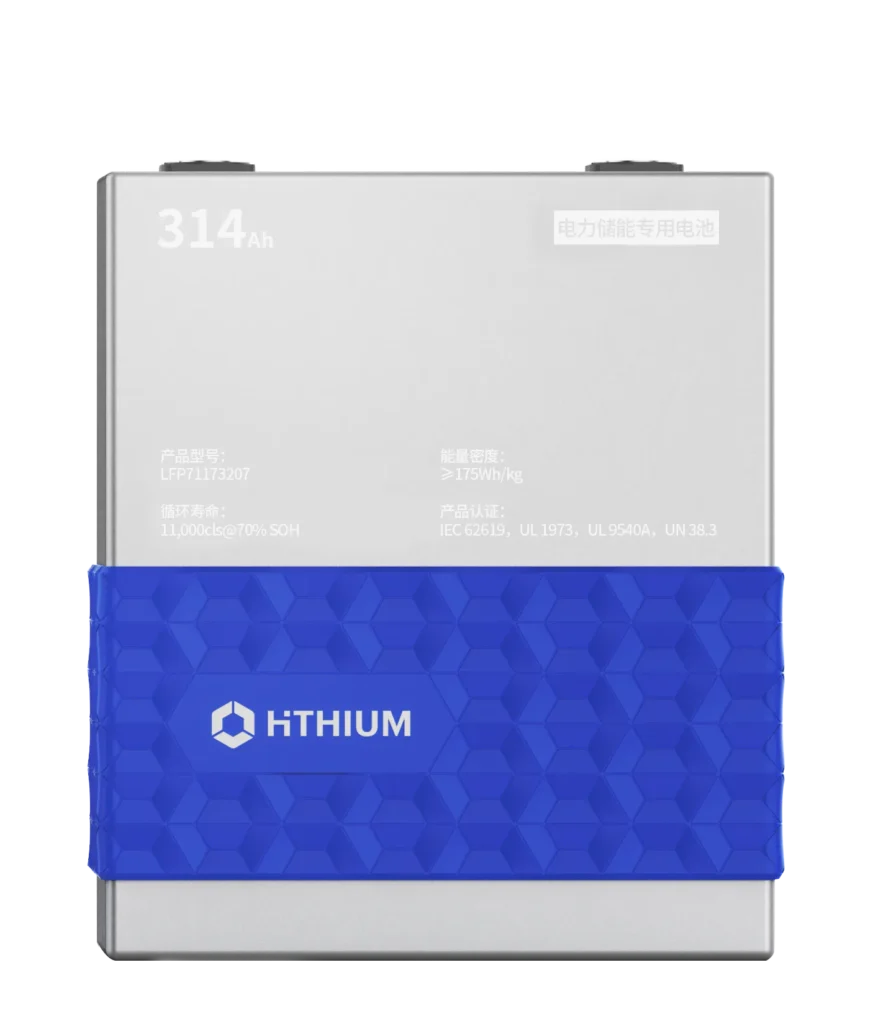
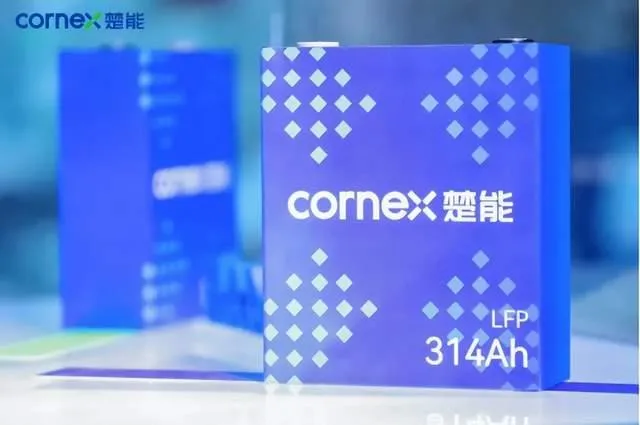
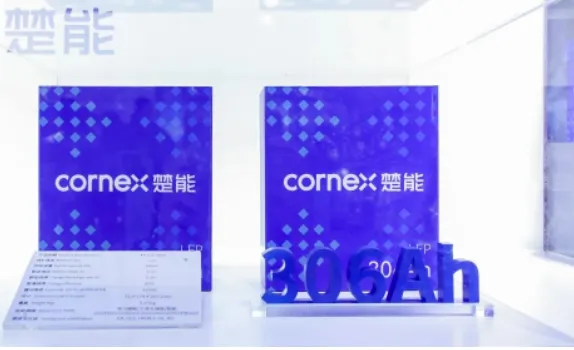
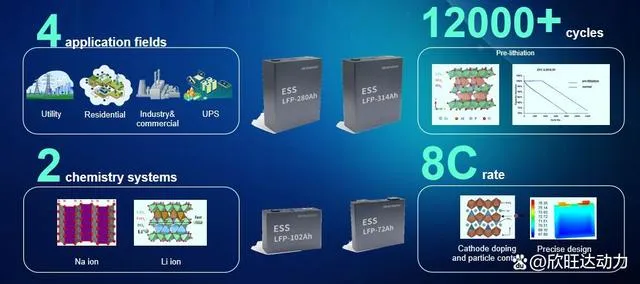
Information about the cell. The cell is identical to the current reference design of a prismatic Lifepo4 cell with the dimensions of 207mm x 173mm x 71mm. These are identical in every way to the cells made by CATL, EVE, CALB, GOTION, BYD, GREAT POWER, REPT, SUNWODA and the list goes on. All of these currently manufacturer this exact same cell, with the exact same dimensions. They all use the same ingredients, with very minute differences to the cathode and anode and electrolyte mixture.
Hithium 280AH
Product certifications: IEC 62619, UL 1973, UL 9540A, UN 38.3
Company certifications: ISO 9001, ISO 14001, ISO 45001
Environmental Compliance: ROHS, REACH
High safety
Hithium-developed prismatic LFP cell with high thermal stability
Passes crush and nail penetration test
Ultra wide operating temperature range
Overall this cell is modified to last longer. Although the truth is the cycle count can be manipulated such as 6000 cycles at 80% is the same as 9000 cycles at 70% and so on. So the claim of 10000 cycles is probably true. Especially considering they are made with the intention of Energy storage, so with a Hithium cell you know you are getting something that will last a very long time.
Published: December 26, 2023 | Updated: March 1, 2025
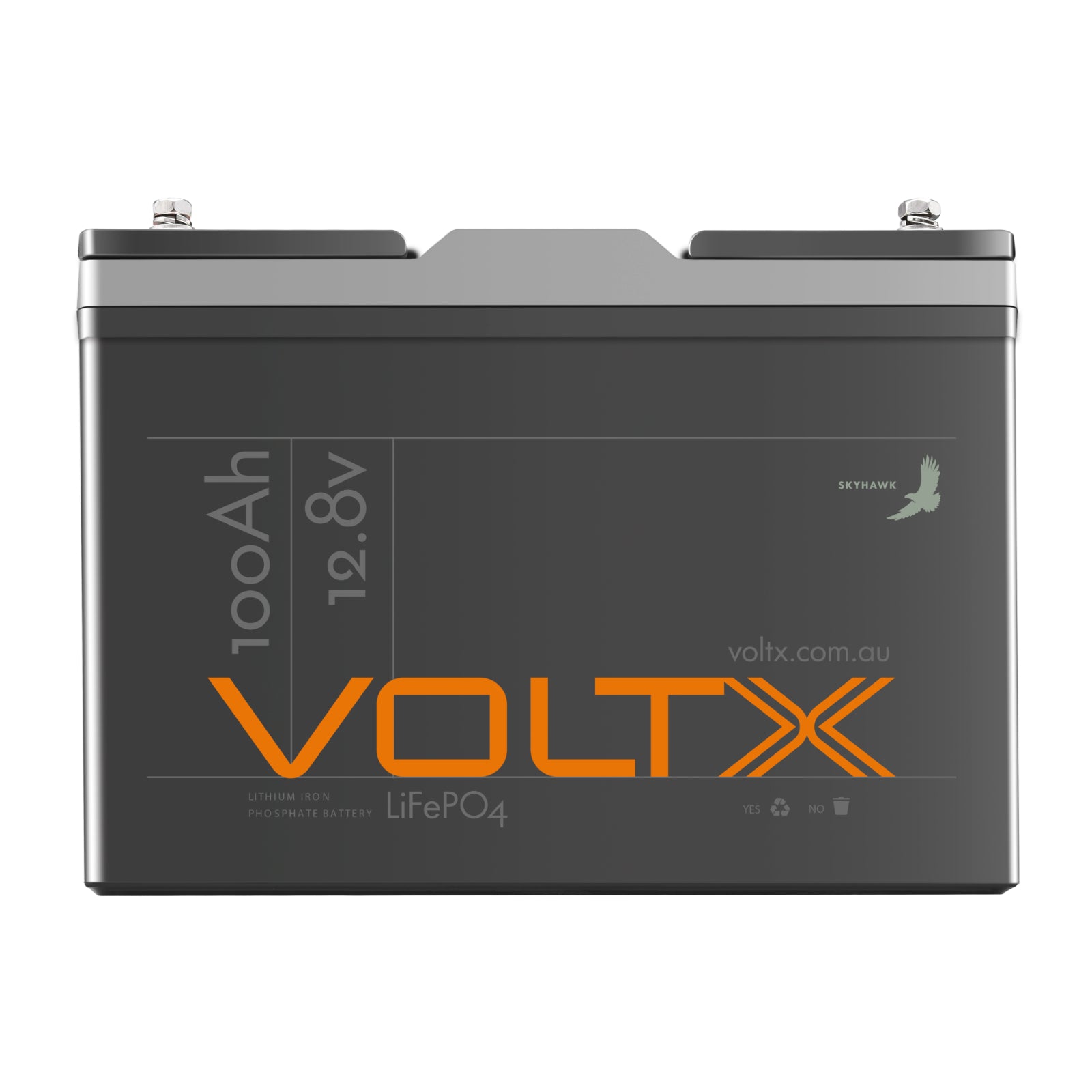
Lithium Iron Phosphate (LiFePO4) batteries have become a game-changer for off-grid enthusiasts, campers, and 4WD adventurers across Australia. Among the most popular options in 2025 are the Kings 12V 120Ah Lithium LiFePO4 Battery and the VoltX 12V 100Ah LiFePO4 Basic Lithium Battery. Both are affordable, reliable, and widely available, but they cater to slightly different needs. Let’s dive into an updated comparison to help you decide which one suits your setup best.
Kings 120Ah Lithium LiFePO4 Battery Review
The Kings 12V 120Ah Lithium LiFePO4 Battery, offered by 4WD Supacentre, remains a staple for those seeking a dependable, budget-friendly energy solution in 2025. Here’s what it brings to the table:
Key Features:
Capacity: 120Ah – offering a bit more juice than its VoltX counterpart.
Chemistry: LiFePO4 with prismatic cells (approx. 3000-cycle rating individually, though pack performance varies).
Weight: Approximately 15kg – lightweight compared to AGM alternatives.
Cycle Life: Rated for 2000+ cycles at 80% depth of discharge (DoD).
Battery Management System (BMS): Integrated BMS with thermal protection, overload management, and high/low voltage cutoff.
Connectivity: Supports up to 2 batteries in parallel or 4 in series.
Warranty: 12 months – very short but price reflects warranty
Price (2025 Estimate): Around AUD $499 (up from $449 in 2023 due to inflation and supply chain adjustments).
Pros:
Larger 120Ah capacity means more runtime for power-hungry setups.
Widely available through 4WD Supacentre’s extensive retail network, offering easy customer support.
Solid BMS ensures safety and reliability for off-grid use.
Great value for the price – still one of the cheapest LiFePO4 options per Ah in 2025.
Cons:
No Bluetooth or app-based monitoring – a basic battery with no frills.
12-month warranty is shorter than premium brands (though fair for the cost).
Some users report variability in long-term performance, possibly due to non-automotive-grade cells.
Best For:
Campers, boaters, or overlanders who need a reliable, no-nonsense battery for off-grid adventures without breaking the bank. In 2025, it’s still a top pick for those prioritizing capacity over advanced features.
Recommendation: We 100% recommend the Kings 120Ah for budget-conscious users who don’t need fancy extras. There are better batteries out there, but few match this price-to-performance ratio.
The VoltX 12V 100Ah LiFePO4 Basic Lithium Battery, sold by Outbax, continues to impress with its simplicity and performance in 2025. Here’s the latest rundown:
Capacity: 100Ah – slightly less than the Kings but still ample for most light applications.
Chemistry: LiFePO4 with A-grade prismatic cells.
Weight: Around 11kg – lighter than the Kings, making it easier to move.
Cycle Life: Advertised at 4000 cycles (though real-world testing suggests 2000-3000 cycles at 80% DoD).
Battery Management System (BMS): Integrated BMS protects against overheating, overcharging, and short circuits.
Connectivity: Officially not recommended for parallel/series connections, though some users report success with parallel setups.
Warranty: 36 months – a big step up from Kings.
Price (2025 Estimate): Around AUD $429 (up from $399 in 2023, reflecting market trends).
Pros:
Lightweight and compact – ideal for portable setups.
Longer 36-month warranty offers peace of mind.
Positive user feedback for reliability, especially with solar charging.
Outperforms AGM batteries in charging speed and weight.
Cons:
100Ah capacity limits its use for larger setups compared to the Kings.
No Bluetooth or advanced monitoring – like the Kings, it’s a basic battery.
Mixed messaging on parallel/series connections could confuse users.
User Feedback (Updated for 2025):
Richard B. (Adelaide, SA): “Still faultless after 18 months. Runs my 40L and 60L fridges for days via solar. Best bang for buck in 2025.”
Anonymous (VIC): “Perfect for my off-grid cabin. Charges fast and weighs next to nothing compared to my old AGM.”
Tom H. (QLD): “Outlasts my old lead-acid by miles. Two years in, and it’s still going strong.”
Best For:
Light off-grid applications like small fridges, LEDs, or solar-powered setups where portability and warranty matter more than raw capacity.
Head-to-Head Comparison (2025)
Feature
Kings 120Ah
VoltX 100Ah
Capacity
120Ah
100Ah
Weight
~15kg
~11kg
Cycle Life
2000+ cycles
2000-3000 cycles
BMS
Yes (basic)
Yes (basic)
Connectivity
2 parallel / 4 series
Not recommended
Warranty
12 months
36 months
Price (2025)
~AUD $499
~AUD $429
Availability
4WD Supacentre (online and retail stores)
Outbax (online-focused)
Key Differences in 2025:
Capacity: Kings wins with 120Ah vs. VoltX’s 100Ah – a 20% edge for bigger loads.
Weight: VoltX is lighter by 4kg, a bonus for portability.
Price: Kings is slightly more expensive, but you get more capacity per dollar.
Support: Kings’ physical stores offer an edge over VoltX’s online-only model.
Which Should You Choose in 2025?
Choose Kings 120Ah if:
You need more capacity for larger fridges, inverters, or multi-day trips.
You value in-person support and availability at 4WD Supacentre locations.
Budget is tight, and you’re okay with a shorter warranty.
Choose VoltX 100Ah if:
Portability and lighter weight are priorities.
You want a longer warranty for peace of mind.
Your setup doesn’t demand more than 100Ah (e.g., small solar or camping rigs).
Final Thoughts
In 2025, both the Kings 120Ah and VoltX 100Ah LiFePO4 batteries remain solid choices for budget-conscious Aussies ditching lead-acid batteries. Neither offers Bluetooth or premium features, but they deliver where it counts: reliable power at a fair price. Kings edges out for capacity and retail presence, while VoltX shines with its warranty and portability.
For most casual users, the Kings 120Ah is our top pick unless the VoltX’s lighter weight or longer warranty sways you. Either way, you’re getting a dependable LiFePO4 battery that’ll outlast AGM options every day of the week.
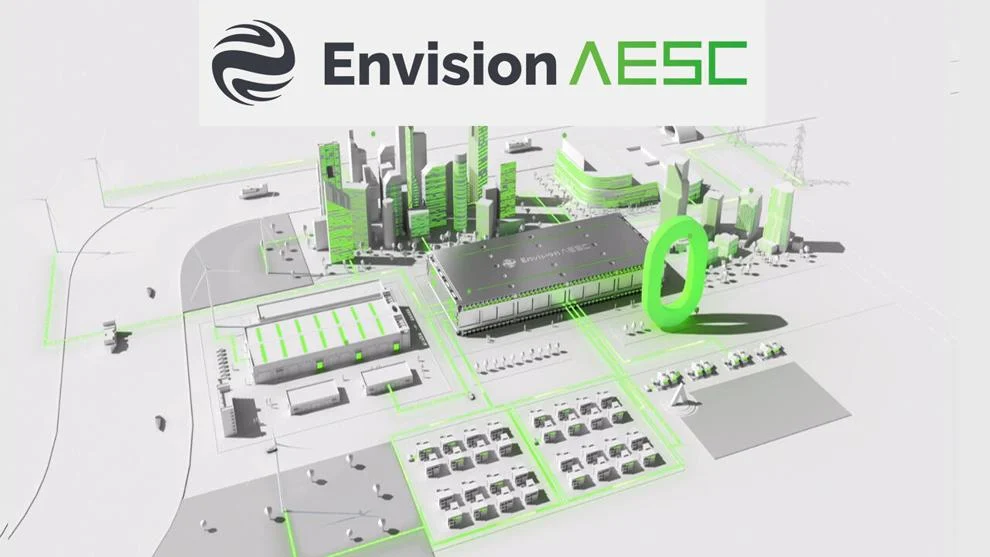
Envision AESC (Automotive Energy Supply Corporation) is a global battery manufacturer focused on powering electric vehicles (EVs) and energy storage systems.
Founded in 2007 in Japan as a joint venture between Nissan, NEC Corporation, and NEC Tokin.
In 2018, China’s Envision Group acquired a majority stake. Nissan retained a minority share.
Since then, the company has operated as Envision AESC, expanding into one of the world’s fastest-growing battery producers.
Products and Technology
Envision AESC designs lithium-ion battery cells and packs for both cars and stationary energy storage.
Chemistries: The company produces both NCM (nickel-cobalt-manganese) and LFP (lithium iron phosphate) cells, depending on the application.
EV Batteries: Its Gen5 platform (based on NCM 811 chemistry) targets higher energy densities, approaching ~300 Wh/kg in development.
Energy Storage: In 2025, Envision AESC announced 315 Ah and 530 Ah large-format cells, designed for long cycle life (~12,000 cycles) and high efficiency (>95%). Mass production is targeted for 2025.
Safety: The company highlights passing over 200 global safety tests, including a CSA-supervised 49-hour fire safety trial. It also claims a record of “zero major safety incidents” in its ESS products.
AESC: 530Ah Battery Cell
Envision AESC has unveiled a 530Ah energy storage cell delivering over 1.6kWh per unit. With 12,000-cycle longevity and 95% energy efficiency, it’s fully compatible with mainstream ESS solutions. Mass production and deliveries are set to begin in 2025.
Global Footprint and Capacity
Envision AESC is aggressively scaling with gigafactories worldwide:
Japan: Original facilities supplying early Nissan Leaf batteries.
UK (Sunderland): Expanding capacity to support Nissan’s EV hub.
France (Douai): A ~9 GWh plant near Renault’s ElectriCity, backed by EU funding.
Spain (Navalmoral de la Mata): €1.1 billion LFP factory, with production targeted for 2026.
China (Cangzhou, Hebei): “Zero-Carbon Intelligent Industrial Park,” with 10 GWh in production and another 10 GWh under construction.
USA: Plants announced in Tennessee and South Carolina; however, the Florence, SC site was paused in June 2025 due to policy and tariff uncertainty.
Past company roadmaps projected hundreds of GWh of global capacity by 2030, but actual targets depend on market conditions and government policy.
Partnerships and Customers
Envision AESC supplies some of the world’s biggest automakers and energy companies:
Nissan: Longstanding partner for Leaf and future EV platforms.
Renault: Supply through the Douai factory in France.
BMW: Planned supply for Spartanburg, USA production.
Energy storage integrators: Recent announcements of over 40 GWh of ESS cell supply contracts in China.
Challenges and Risks
Despite its growth, Envision AESC faces several challenges:
Policy Risks: Trade disputes and changing subsidy rules (especially in the U.S.) can stall investments.
Intense Competition: Rivals such as CATL, BYD, and LG Energy Solution currently dominate global market share.
Technology Race: Sodium-ion and solid-state batteries are emerging as future competitors.
Future Outlook
Looking forward, Envision AESC is focused on:
Expanding global capacity to the hundreds of GWh scale by 2030.
Delivering EV batteries with longer ranges (targets >1,000 km per charge).
Scaling grid-scale storage cells for renewable energy and Virtual Power Plant (VPP) projects.
Achieving zero-carbon manufacturing across multiple new gigafactories.
Key Takeaways
Envision AESC is a Chinese-owned, globally active battery maker with Japanese roots.
It is not affiliated with Cornex (a separate Chinese company).
The company is rapidly scaling with gigafactories across Europe, Asia, and North America.
While facing risks from policy and competition, Envision AESC is positioning itself as a key global player in the EV and ESS battery market.
Breaking this is likely the most important news to hit the DIY Solar and Lithium Lifepo4 Battery Off Grid community in 10 years. This really is going to upset the YouTube community apple cart. Especially that guy that lives in Australia who isn’t even Australian.
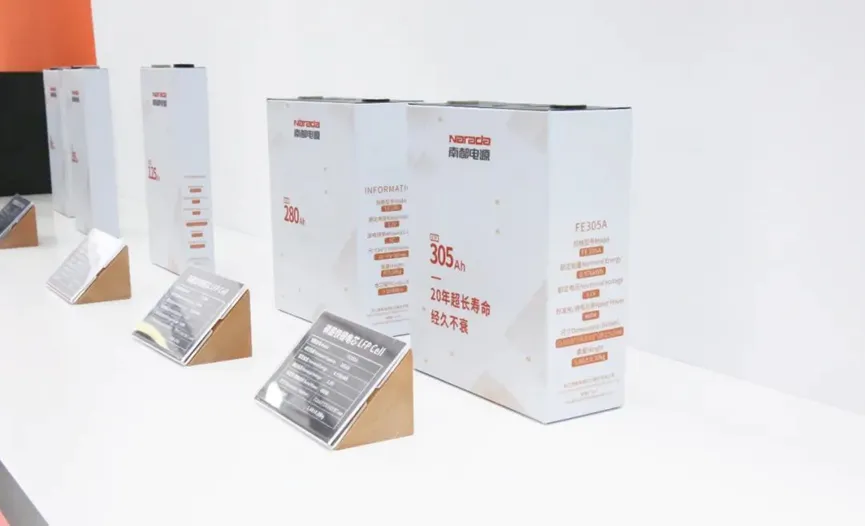
Currently, 280Ah and 300ah cells are the mainstream in Lifepo4 Batteries, but with the acceleration of technological iteration, the improvement to battery cathode and electrolyte technology in the past few years, over 20 types of high-capacity cells above 300Ah have emerged, these cells will take considerable time to enter the retail and B grade markets, but they are coming in 2024 and 2025. Some of these cells can be purchased now in very large quantity, but for the average joe, building batteries at home DIY style the best mix of value and performance still likes in the 280ah capacity cells over the next few months.
Super Large Capacity LiFePO4 Cells
With the rapid development of the energy storage industry, the market demand for cells continues to outpace supply. Many companies are increasing cell capacity through technological iteration. Cell capacity is growing larger, from 306ah to 314Ah, 320Ah, 340ah and 360ah and then to 500ah 560Ah and 580ah cells
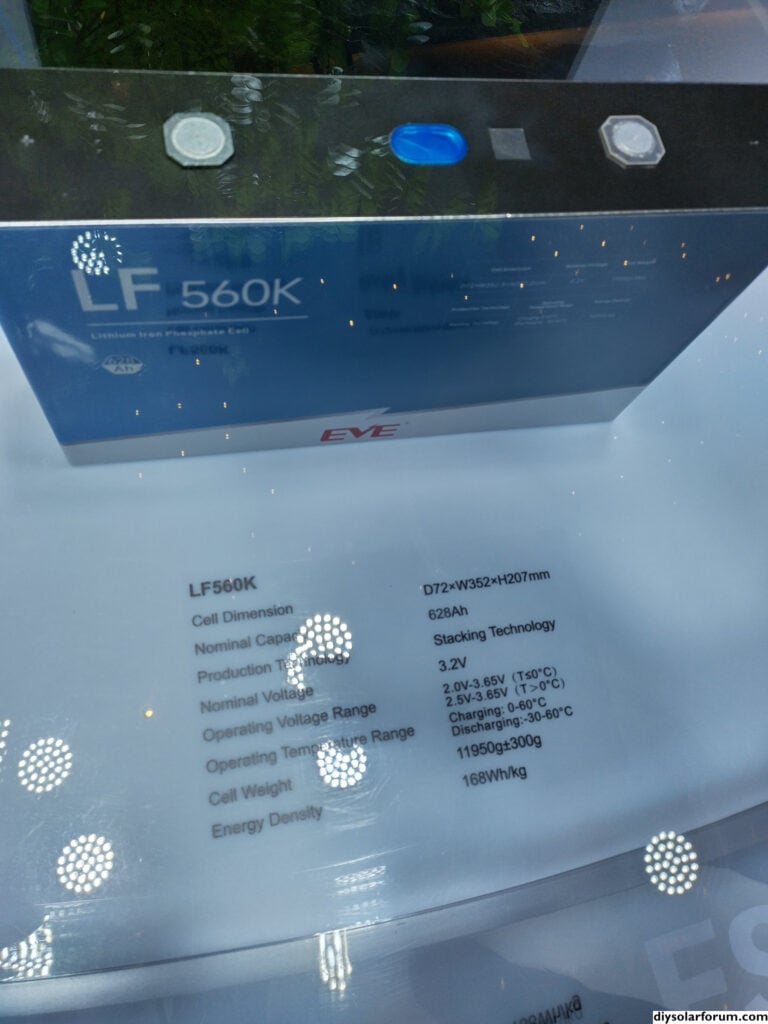
EVE LF560K (628Ah) LiFePO4 Cells
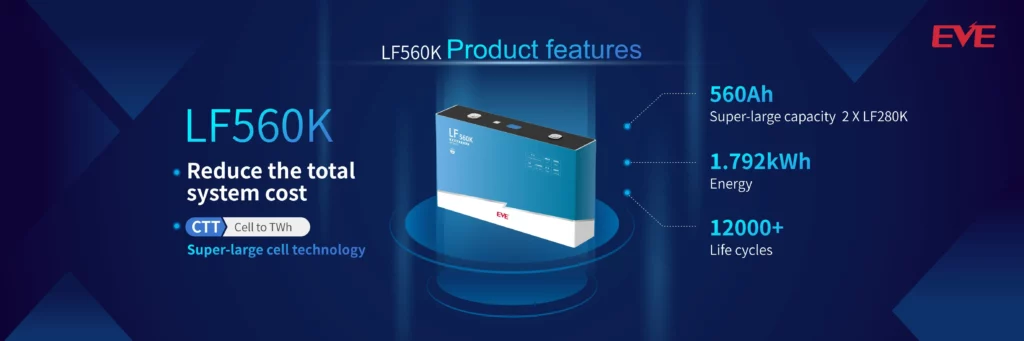
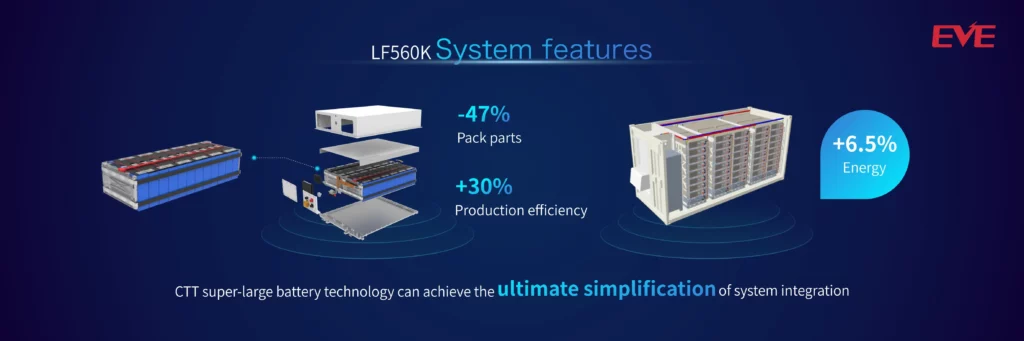
Last year, EVE Energy launched the LF560K battery, adopting cutting-edge Cell to TWh (CTT) technology tailored for TWh-scale energy storage applications. This enables extremely streamlined system integration and dual reduction in costs at both the cell and system levels. Global delivery is expected to commence in Q2 2024.
Keep in mind the DIY community won’t likely see these cells until at least 2025.
EVE LF560K (628Ah) LiFePO4 Cells
Compared to the LF280K battery, the LF560K battery can reduce components like busbars by almost half, whilst improving production efficiency by 30%. Container energy density can be increased by 6.5% allowing for lower costs for customers.
To address the key technological challenges facing the manufacture of ultra-large battery cells, EVE Energy has adopted a “stacking technique” to resolve issues with current collection and manufacturability in the LF560K battery’s electrode and current conductor design. Because the number of tabs per winding is doubled, solving the current collection problem and reducing DC IR by 8%. Prismatic sheet stacking replaces winding, doubling the single electrode sheet length, yields a 3% increase in total cell production .
The LF560K battery represents EVE Energy’s relentless pursuit of innovation and quality, built upon over 21 years of extensive experience in the battery industry and the strong R&D capabilities of its 3,100-member research team.
Currently, the mainstream energy storage cells on the market are 280Ah rectangular aluminum-cased cells. Many manufacturers are also reducing costs for downstream customers by improving cell volumetric density – that is, increasing capacity density per unit volume.
The 560Ah cell essentially doubles the common 280Ah rectangular cell size, equivalent to placing two 280Ah cells side-by-side. This aims to reduce PACK components and achieve cost reduction.
Although the 560Ah cell is not yet EVE Energy’s primary product, it has embarked on the path to commercialization. On February 1 this year, EVE Energy broke ground on its new “60 GWh Power Energy Storage Battery Super Factory” in Jingmen, Hubei, with 10.8 billion RMB investment. This factory will mass-produce the 560Ah energy storage cell. The 560Ah cell is expected to commence global delivery in Q2 2024.
Vision 580Ah LiFePOP4 Cell
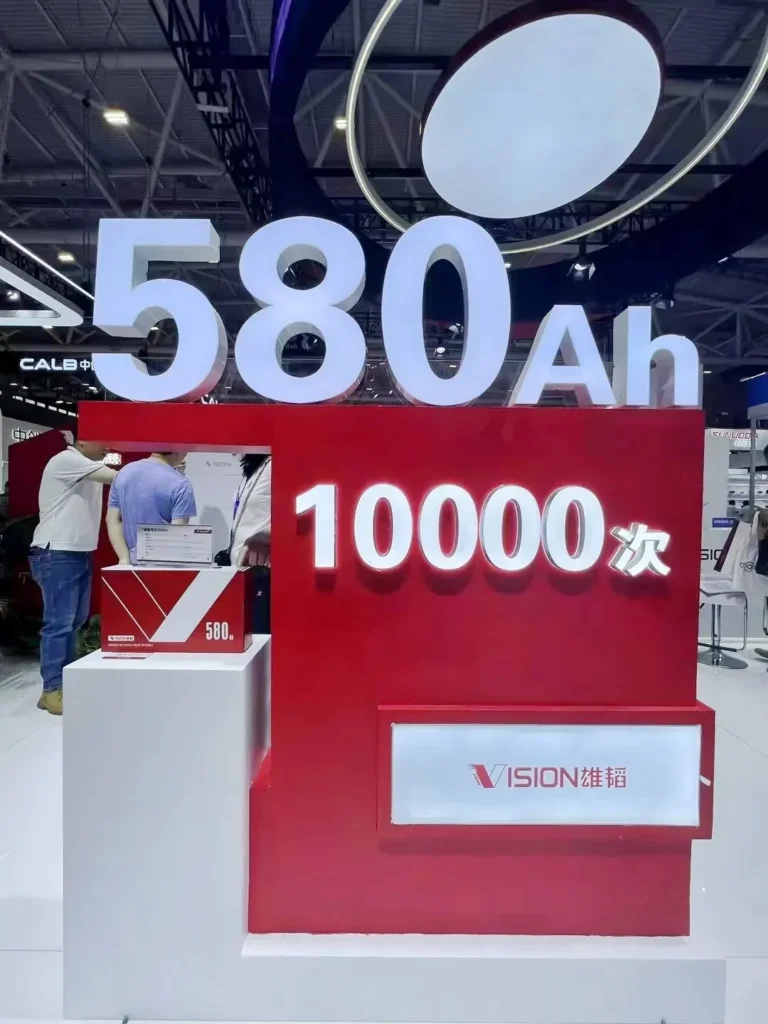
On May 16, China’s largest battery exhibition, CIBF 2023, opened in Shenzhen. Thunder Corporation prominently displayed an ultra-high capacity cell.
The 580Ah ultra-large single-cell released by Thunder Corp is the largest capacity single-cell emerged so far globally.
Although the exhibit at CIBF appeared high-profile, it only showcased partial specs. The company claims 10,000 cycle life, 11kg weight per cell, 1856Wh nominal capacity, and 0.5C charge/discharge rate. But details such as packaging technology, mass production timeline, and delivery schedule remain unclear.
With over 10,000 cycle life, the 580Ah cell represents a two-pronged upgrade at both the cell and system levels, providing customers robust safety assurance and performance guarantee. Technologies such as low-expansion anode materials, full tab design, electrode surface treatment, and flexible electrode forming help resolve liquid infiltration challenges for large cells, enabling comprehensive safety protection and high cycle life through heat insulation, diffusion prevention, pressure relief, and more. This will better meet application requirements for grid-scale energy storage, greatly improving system safety, lifespan, and lowering life-cycle electricity costs.
Vision 580Ah LiFePOP4 Cell
Currently, there is no universally accepted single-model standard for energy storage cells, and the industry has not yet formed complete standardization. It is believed that with continuous technological breakthroughs and improved designs, more energy storage cell solutions will emerge over time.
Enterprises should pursue R&D across diverse cell models, material systems, and cost schemes. With market validation over time, superior cell designs will become proven, catalyzing new breakthroughs in energy storage cells. This is a crucial premise for the healthy development of the energy storage industry.
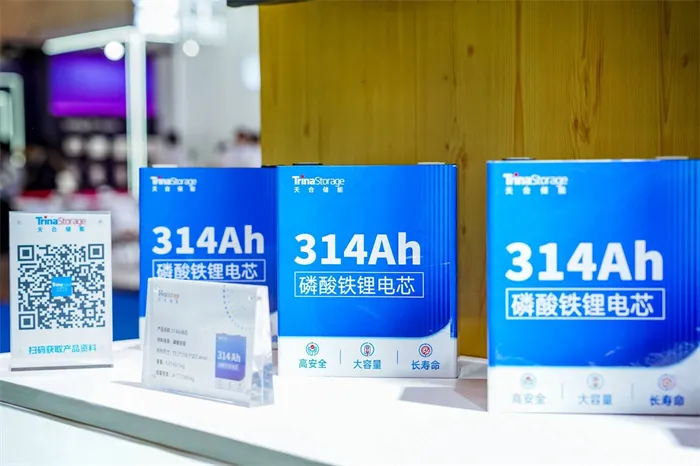
CATL 306Ah/314Ah LiFePO4 Cell
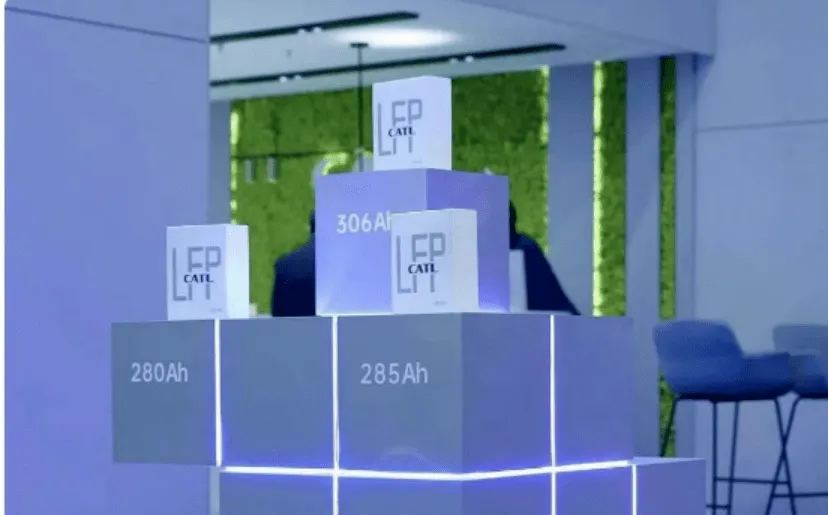
CATL said that the mass production and delivery of 314Ah dedicated electric core for energy storage is another opportunity for the company to lead the development of energy storage system through technological innovation and bring new breakthroughs in the field of energy storage.
It is understood that CATL EnerD series products use its energy storage dedicated 314Ah core, and equipped with CTP liquid cooling 3.0 high-efficiency grouping technology, optimizing the grouping structure and conductive connection structure of the core, while adopting a more modular and standardized design in the process of design and manufacturing, to achieve the 20-foot single compartment of the power from 3.354MWh to 5.0MWh, compared with the previous generation of products. Compared to its predecessor, the new EnerD series of liquid-cooled prefabricated energy storage pods saves more than 20% of floor space, reduces the amount of construction work by 15%, and decreases commissioning, operation and maintenance costs by 10%, and also significantly improves energy density and performance.
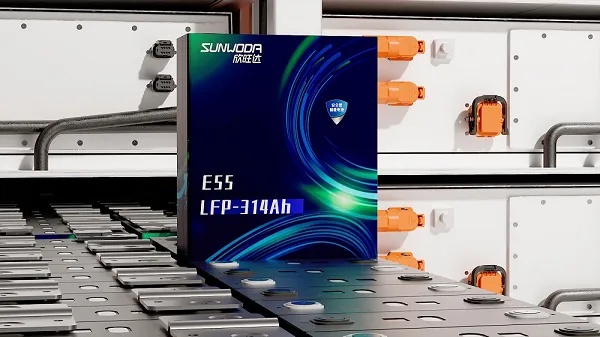
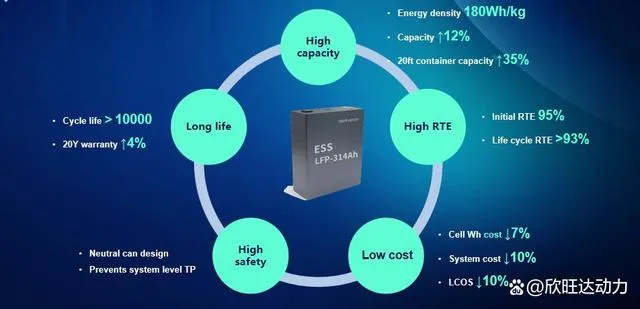
SUNWODA 314Ah LiFePO4 CellSUNWODA 314Ah LiFePO4 Cell Data & infomation
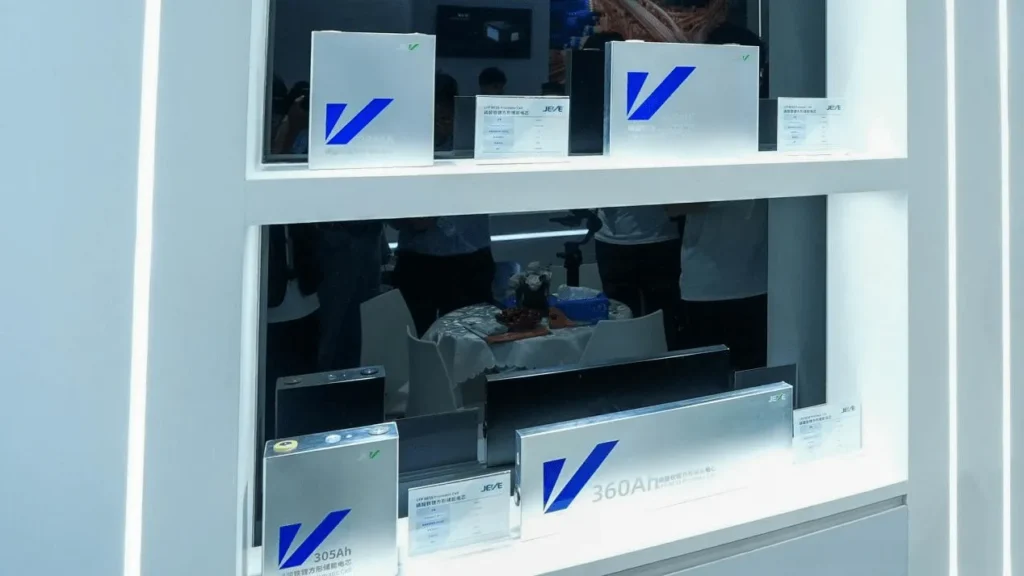
JEVE 305Ah/360Ah LiFePO4 Cells
JEVE 305Ah & 360Ah LiFePO4 Cell
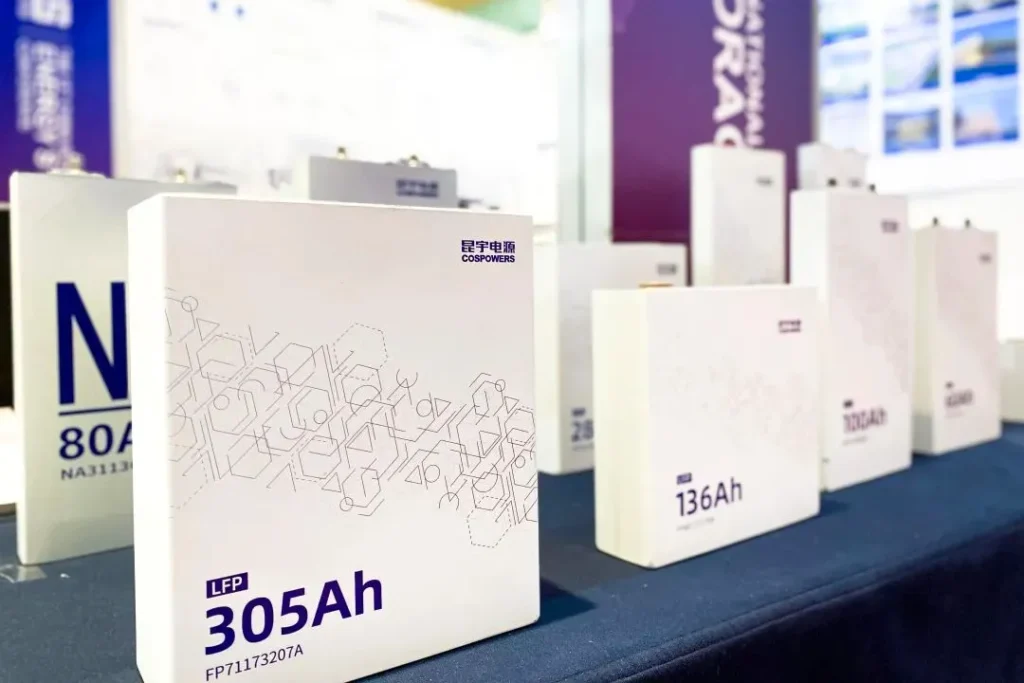
COSPOWERS 305Ah LiFePO4 Cell
COSPOWERS 305Ah LiFePO4 Cell
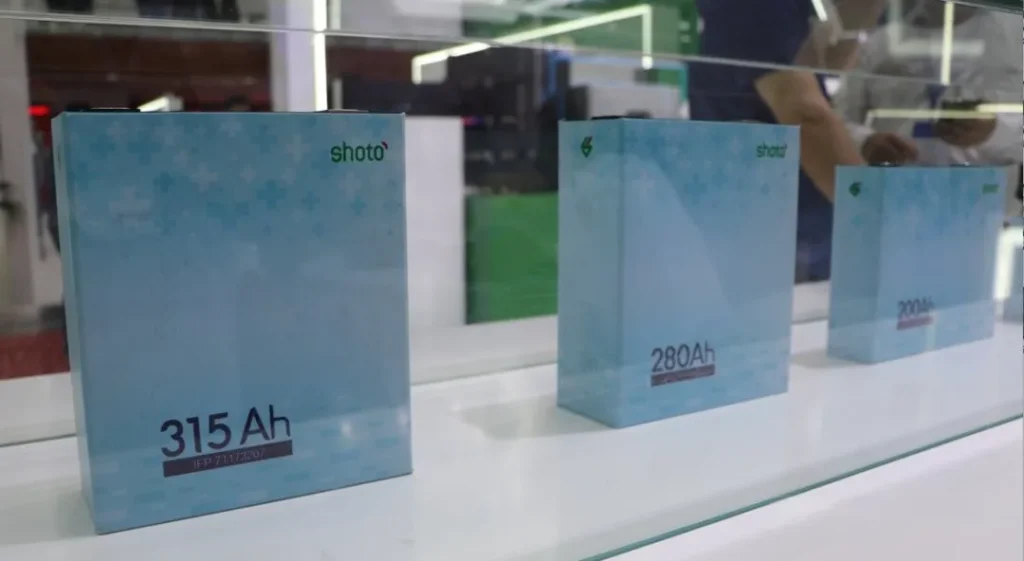
shoto 315Ah LiFePO4 Cell
Shoto 315Ah LiFePO4 Cell
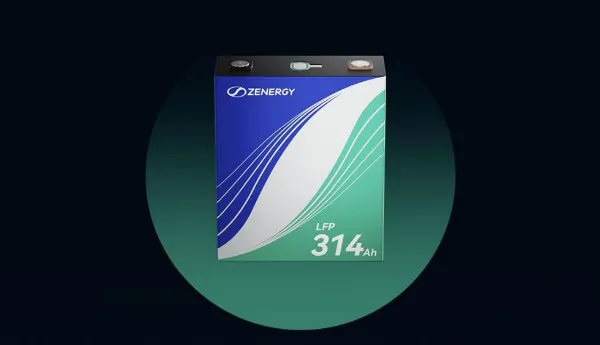
ZENERGY 314Ah LiFePO4 Cell
ZENERGY 314Ah LiFePO4 Cell
Seeking the “Triangle Balance Point”
At the 320Ah capacity level, internal cell temperatures can surpass 800°C, exceeding the decomposition temperature of lithium iron phosphate and posing challenges to cell safety, energy density, manufacturing processes, and more.
Cell R&D also faces the classic ‘impossible trinity’ of high energy density, long cycle life, and high safety. Energy density is a priority consideration in nearly all cell design. Pursuing higher energy density requires thinner membranes and high pressure and areal density electrode materials. On one hand, such extremities make liquid infiltration more difficult, undermining cycling performance. On the other hand, thinner membranes and higher energy density materials also mean poorer safety. There is no avoiding the trade-off between energy density and performance. Prioritizing energy density may jeopardize cycle life and safety. Whereas uncompromising cycle life and safety comes at the cost of lower energy density and weaker competitiveness. Most companies aim for a balanced sweet spot.
Cell manufacturers often tout cycle life figures of 6,000, 8,000, 10,000 even 18,000 based on specific controlled test conditions and model extrapolation. But actual cycle life is lower when cells are packaged into battery packs and deployed in energy storage systems. We expect a lifespan of about 3-18 years depending on the Depth of discharge, C rate, thermal and Battery Management put into place by each individual builder. That is a significant difference, because batteries are not invincible, but LiFePo4 is really versatile.
The 280Ah cells released in 2020 were produced by less than three manufacturers in 2021. Becoming mainstream in energy storage power stations in 2022, failure rate issues can be expected to surge around 2025 after initial installations complete their lifespan. Time will tell.
Safety Depends on Multiple Factors
Larger cells are a double-edged sword – cost reduction and accelerated market growth come with technical challenges and safety concerns. At the system level, safety depends on factors including cell design, thermal propagation isolation, early warning systems, fire prevention systems, and more.
Looking narrowly at the cell perspective, rising manufacturing automation enables producers to strengthen quality control capabilities. Meanwhile, breakthroughs in automated inspection equipment and methodologies screen cell safety before leaving factories.
Advancements in materials such as more thermally/chemically stable membrane systems and additives will also continuously improve battery safety and stability. But from an electrochemical standpoint, absolute safety remains elusive for lithium-ion batteries given inherent risks requiring mitigation through system design, monitoring, emergency response, and other management strategies. Therefore, a systematic approach will define future safety design.
Last year, EVE Energy launched the LF560K battery, adopting cutting-edge Cell to TWh (CTT) technology tailored for TWh-scale energy storage applications. This enables extremely streamlined system integration and dual reduction in costs at both the cell and system levels. Global delivery is expected to commence in Q2 2024.
Keep in mind the DIY community won’t likely see these cells until at least 2025.
EVE LF560K (628Ah) LiFePO4 Cells
Compared to the LF280K battery, the LF560K battery can reduce components like busbars by almost half, whilst improving production efficiency by 30%. Container energy density can be increased by 6.5% allowing for lower costs for customers.
To address the key technological challenges facing the manufacture of ultra-large battery cells, EVE Energy has adopted a “stacking technique” to resolve issues with current collection and manufacturability in the LF560K battery’s electrode and current conductor design. Because the number of tabs per winding is doubled, solving the current collection problem and reducing DC IR by 8%. Prismatic sheet stacking replaces winding, doubling the single electrode sheet length, yields a 3% increase in total cell production .
The LF560K battery represents EVE Energy’s relentless pursuit of innovation and quality, built upon over 21 years of extensive experience in the battery industry and the strong R&D capabilities of its 3,100-member research team.
Currently, the mainstream energy storage cells on the market are 280Ah rectangular aluminum-cased cells. Many manufacturers are also reducing costs for downstream customers by improving cell volumetric density – that is, increasing capacity density per unit volume.
The 560Ah cell essentially doubles the common 280Ah rectangular cell size, equivalent to placing two 280Ah cells side-by-side. This aims to reduce PACK components and achieve cost reduction.
Although the 560Ah cell is not yet EVE Energy’s primary product, it has embarked on the path to commercialization. On February 1 this year, EVE Energy broke ground on its new “60 GWh Power Energy Storage Battery Super Factory” in Jingmen, Hubei, with 10.8 billion RMB investment. This factory will mass-produce the 560Ah energy storage cell. The 560Ah cell is expected to commence global delivery in Q2 2024.
Electrical safety is a top concern in both industrial and residential environments. With the increased use of low voltage and ultra-low voltage (ULV) systems, it is essential to understand the safety measures required to prevent accidents and injuries. This blog post will discuss ultra-low voltage electrical safety, including the definition of ultra-low voltage, the benefits of using ULV systems, potential hazards, and best practices for ensuring safety.
What is Ultra Low Voltage?
Ultra-low voltage (ULV) refers to electrical systems that operate at or below 50 volts of alternating current (AC) or 120 volts of direct current (DC). These systems are designed to minimize the risk of electrical shock while still delivering adequate power to devices and appliances. ULV systems are commonly used in applications such as lighting, telecommunications, and control circuits, as well as in consumer electronics like laptops and smartphones.
Benefits of Using Ultra Low Voltage Systems
Reduced risk of electrical shock: ULV systems significantly reduce the risk of electrical shock, as the voltages involved are much lower than those in conventional electrical systems. This makes ULV systems ideal for applications where the risk of electrical shock must be minimized, such as in medical equipment and devices.
Energy efficiency: ULV systems are more energy-efficient than traditional electrical systems, leading to reduced energy consumption and lower utility bills. This is especially important in today’s world, where conserving energy and reducing greenhouse gas emissions are critical.
Compact design: ULV systems generally require less space than conventional electrical systems, allowing for more compact and lightweight device designs. This is particularly beneficial in applications such as portable electronic devices and space-constrained installations.
Potential Hazards of Ultra Low Voltage Systems
While ULV systems pose a reduced risk of electrical shock, they are not entirely risk-free. Some potential hazards associated with ultra-low voltage electrical systems include:
Fire hazards: Poorly designed or improperly installed ULV systems can generate heat, which may lead to a fire if not adequately managed.
Electromagnetic interference: ULV systems can emit electromagnetic radiation, which can interfere with nearby electronic devices or communication systems.
Component failure: Like any electrical system, ULV components can fail, leading to the malfunction or loss of functionality of the connected devices.
Best Practices for Ultra Low Voltage Electrical Safety
To ensure the safe operation of ULV systems, it is essential to follow these best practices:
Training and awareness: Ensure that individuals working with ULV systems have received proper training in electrical safety, and are aware of the potential hazards associated with these systems.
Installation and maintenance: ULV systems should be installed and maintained by qualified professionals, following the manufacturer’s guidelines and local electrical codes.
Inspection and testing: Regularly inspect and test ULV systems to ensure their proper function and to identify any potential issues before they become critical.
Proper grounding: Grounding is crucial for any electrical system, including ULV systems. Ensure that all grounding connections are secure and that grounding conductors are appropriately sized.
Use of appropriate components: Always use ULV-rated components and devices when working with ULV systems, and ensure that they are compatible with the specific voltages and currents of the system.
Labeling: Clearly label ULV systems and components to ensure that individuals working with or near the systems are aware of the voltage levels and any associated risks.
Conclusion
Ultra-low voltage systems offer many advantages in terms of safety and efficiency. However, it is crucial to be aware of the potential hazards associated with these systems and to follow best practices to ensure their safe operation. By implementing proper training, installation, maintenance, inspection, and labeling, ULV systems can provide a safe and efficient
Thanks to the Fully Charged YouTube channel and an innovative Australian company, you will finally have some really good evidence to tell all your friends. Why an Electric Truck is better than Diesel.
Don’t have time to watch a full YouTube video? Here is a summary
Janus Trucks – Janus Electric based in NSW is doing Electric Truck conversions.
90+ Tonne Rated – Twice the ability of the Tesla Semi 720HP – 540Kw Electric Motor Uses the Original Transmission RE-GEN Braking 1.5-1.7Kwh per Kilometer Battery Pack Size – 620Kwh – Equivalent to 8 Tesla Model 3 vehicles
Removes 3.5 Tonnes of existing Motor and other parts. Add 4 Tonnes for Motor, Battery and Drivetrain
Electric Truck Cost – 60cents a Kilometer at Grid Pricing Can be as low as 6 cents a Kilometer from your own Solar installation. Diesel Truck Cost – $1- a Kilometer THAT is up to 18 times cheaper than Diesel
Maintenance Costs are vastly reduced. As low as 4 cents a Kilometer Multi Million Kilometer Lifespan for the Electric Motor Gearbox – reduced vibrations and other wear and tear, expecting double the lifespan when using Electric motor vs the diesel.
The Motor can REGEN up to 540kw of power when Braking.
No Pollution in Urban area’s
Total cost is only $150,000-$170,000 when battery is AS A SERVICE model. That mean’s they pay to rent the battery per Kilometer
After the battery has reached 80% of original capacity it can then be used for storage applications such as on and off grid commercial, or housing applications.
Are you considering repurposing battery cells and building your own Powerwall or similar Energy storage system?
We are going to take a look at what you must understand before starting a project of this type.
The Chemistry
NMC or NCA
Both of these chemistries are considered dangerous, and they should be avoided, especially in any second life application. And even more importantly in any residential application. There is a real risk of a short circuit, leading to thermal runaway. Both of these chemistries will be extremely difficult to extinguish. And may explode, and burn anything and everything around it down to ashes, Firefighters will not try to extinguish a Lithium Battery fire, as they know they have no option but to wait for the
The capacity loss of LiBs is generally considered to be linear, with end of life typically around 75% to 80% state of health (SoH) and the final end-of-life stage around 50% to 60% SoH. However, at some point a severe and potentially dangerous deterioration can occur and lead to an increased ageing rate. The time at which this occurs, referred to as the “knee,” is difficult to predict. It can occur at a higher SoH than expected, thereby increasing the risk of thermal runaway, internal short circuits, and joule heating, according to the report.
Lithium Iron Phosphate
Although it is possible for LFP to enter thermal runaway, it is very unlikely, and usually only happens when external heat is present, it can also happen when the cell is at 100% SOC and is supplied with a very high current, such as
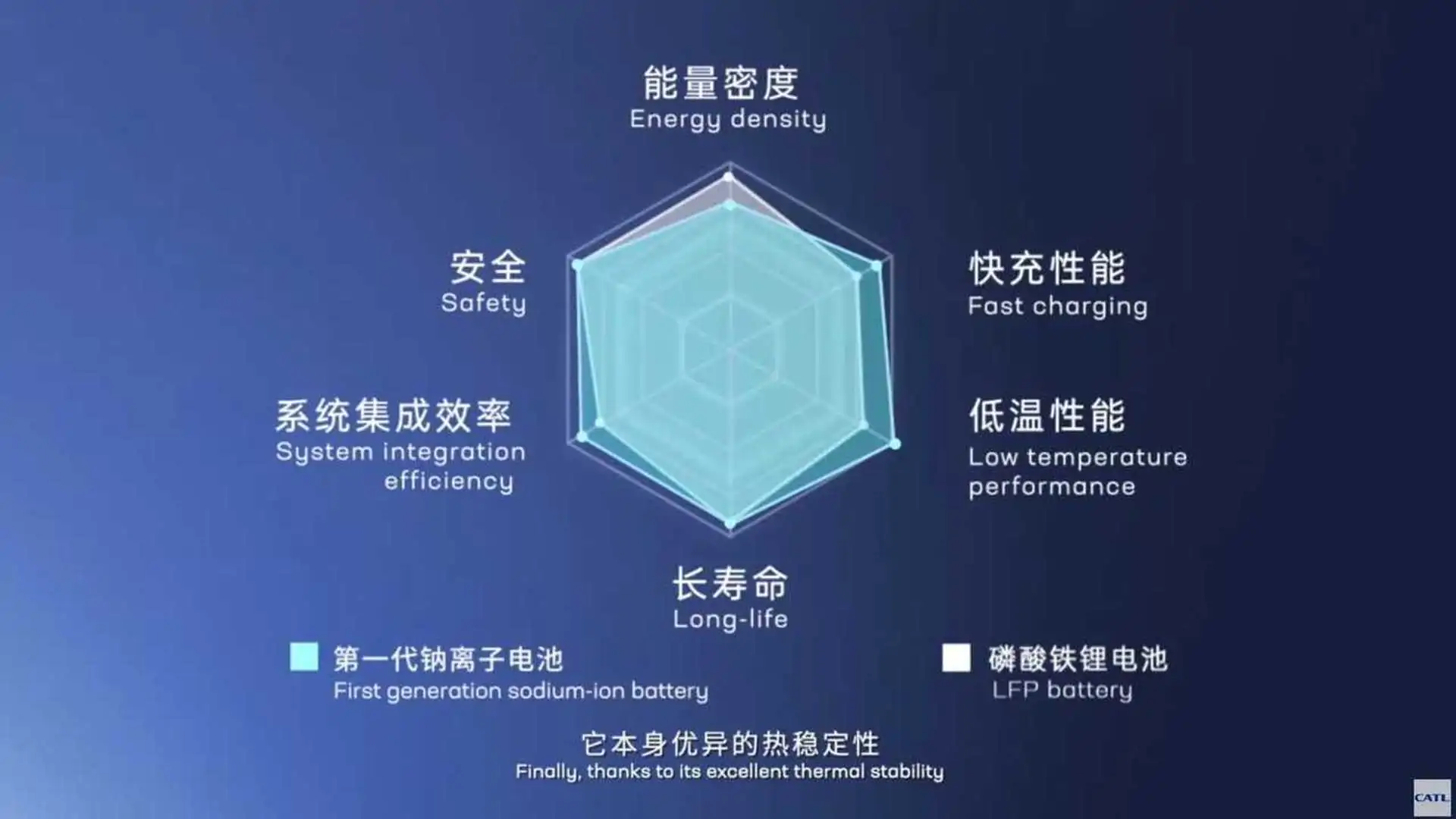
CATL the world’s largest Lithium battery manufacturer is now manufacturing the Sodium Ion Battery cell. It has the same energy density as LFP at 160Wh/Kg, however it’s even safer, and eventually it will be cheaper to manufacture due to not needing the expensive Lithium. And it wont require expensive shipping options to get to the end user, as it wont be a class 9 Dangerous Good.
Although it won’t be available to purchase until at least 2025. It is here, and it will likely be the Battery technology of choice for ESS. Such as homes, RV, and other similar use.
We see LiFePo4 being the dominant battery choice for the majority of users until late in the decade. The demand for Sodium Ion batteries will be very high, and although CATL has designed the battery to be able to be manufactured with the majority of the same machines and factory lines, it will still take a number of years for other companies to catch up to CATL. There are a number of companies already also manufacturing Sodium ion batteries. Which we will cover soon, and we will likely be posting more and more about this ground-breaking battery technology.
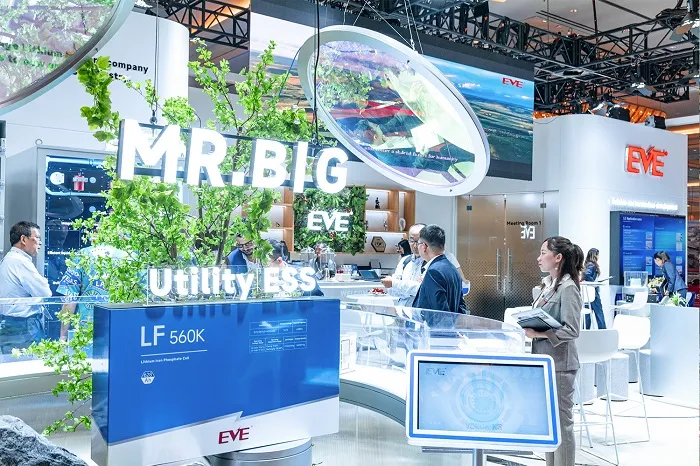
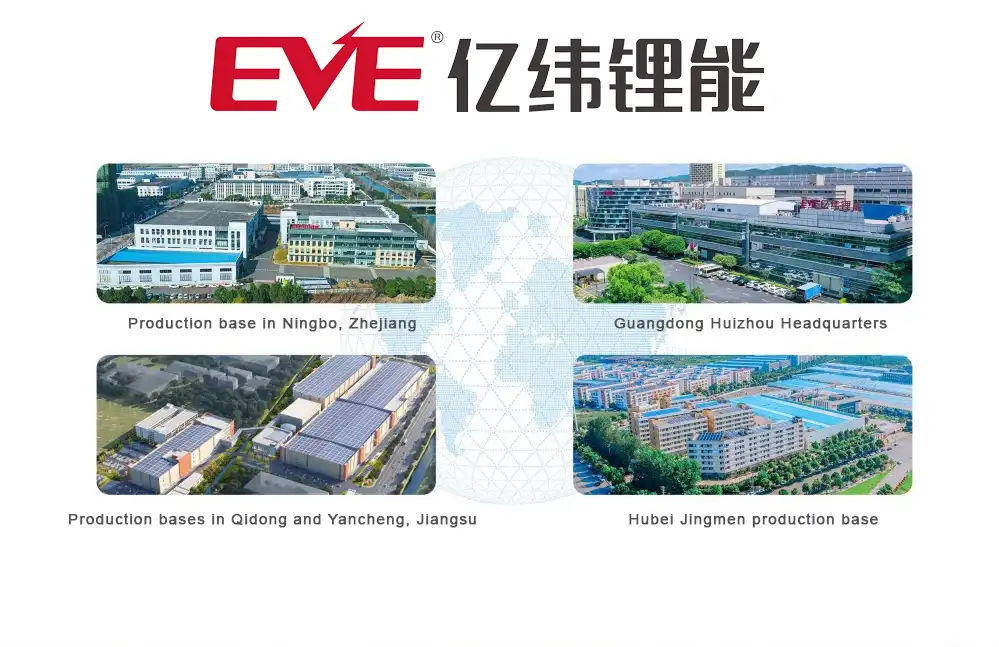
EVE Energy is a technology-driven company focused on the development of lithium batteries. Their products are widely used in the IoT, EV and ESS. Eve Energy makes prismatic, pouch and cylindrical battery cells. Along with a range of other batteries, including Lithium metal non rechargeable batteries.
Company Website – www.evebattery.com EVE Energy Co., Ltd. (stock code: 300014)
Household ESS, Utility ESS, and Telecom ESS with products covering cells, modules, battery systems, battery management systems, and other comprehensive solutions