Deye Review 2026 and Beyond Products and Features
Here is a comprehensive and technical deep dive into DEYE’s newest lineup of hybrid inverters and all-in-one energy solutions, based on the insights revealed at their recent All-Energy showcase.
DEYE’s Next-Gen All-In-One Hybrid Inverter Ecosystem
The energy storage and hybrid inverter landscape is shifting rapidly from modular, decentralized components to highly integrated, all-in-one ecosystem architectures. DEYE, a manufacturer heavily embedded in the global solar market (often white-labeled under various brand names), has unveiled its next generation of hybrid energy systems.
Moving far beyond simple solar inversion and battery charging, DEYE’s new hardware operates as a holistic Energy Management System (EMS). Let’s break down the technical specifications and architectural advantages of their latest product suite.
1. Smart Load Integration & LoRaWAN Connectivity
Most traditional inverters focus purely on supply-side metrics—managing generation and storage. DEYE’s new generation flips this by actively controlling demand-side loads.
The new inverters feature a built-in EMS with natively integrated LoRaWAN (Long Range Wide Area Network) protocols.
- Complete Wireless Control: Using LoRaWAN wireless dongles, the inverter can communicate with remote hardware—like EV chargers, smart relays, and smart meters—up to 200 meters away without requiring physical cable runs.
- Network Independence: Unlike typical IoT smart home ecosystems, DEYE’s communication protocol does not rely on the customer’s local Wi-Fi router. The inverter creates its own self-contained mesh, ensuring uninterrupted load control (e.g., scheduled EV charging based on Time-of-Use tariffs or excess PV production) even during localized network outages.
2. The “All-in-One” Residential Solution: The Inverter is now built in to the stack
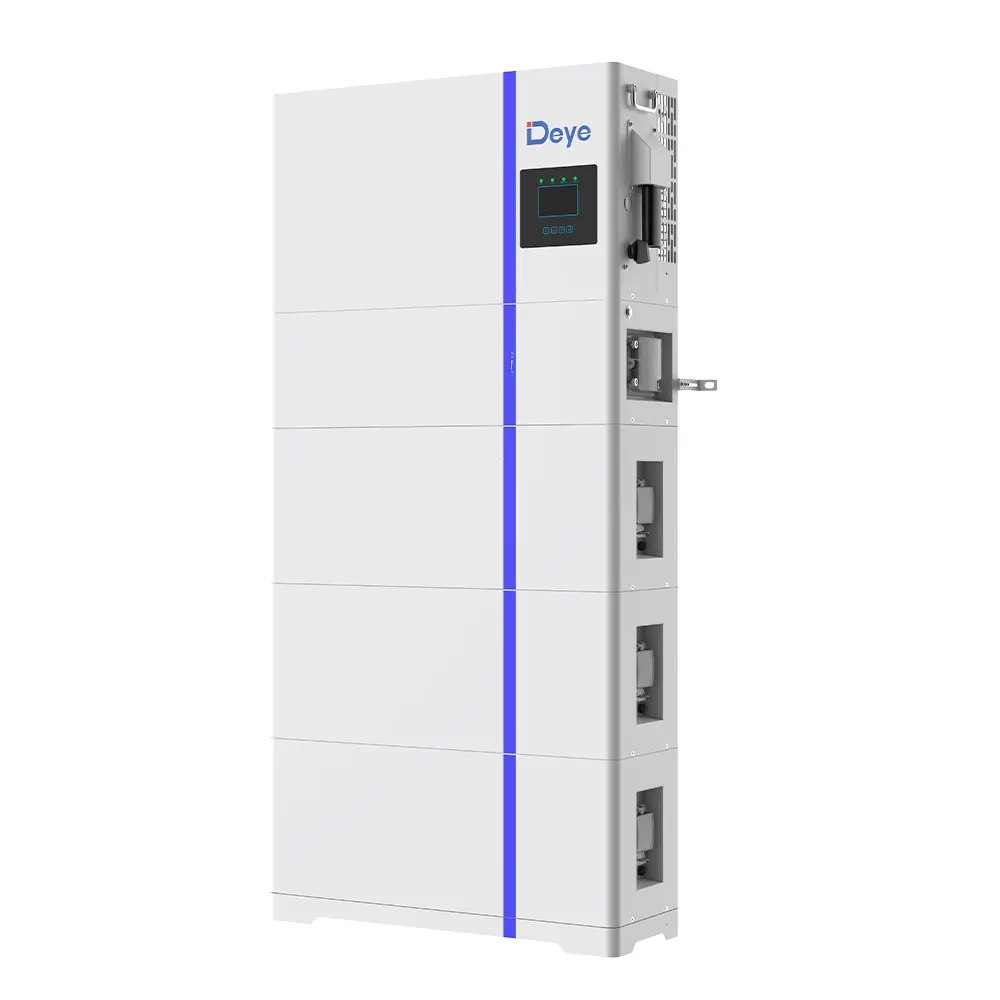
With Inbuilt Inverter

For residential applications, DEYE has introduced a highly stackable “All-in-One” unit that supports both on-grid and full off-grid topologies.
- Inverter Ratings: The range supports single-phase models from 3.6 kW up to 8 kW, and three-phase models from 5 kW up to 12 kW.
- Storage Density: The system utilizes low-voltage 5.12 kWh battery modules. A single stack can accommodate up to 6 modules (approx. 30 kWh).
- Massive Expandability: You can parallel up to 6 of these battery clusters to a single inverter, pushing the maximum localized storage capacity to an impressive 180 kWh.
- The “6-in-1” Architecture: DEYE classifies this as a 6-in-1 unit, most notably featuring direct diesel generator integration. The inverter can dynamically control a generator start/stop relay based on State of Charge (SoC) parameters, making it an ideal candidate for off-grid and rural properties.
3. Integrated Gateway & Ultra-Fast Islanding (4ms)
A major pain point in standard whole-home backup installations is the requirement for a separate external gateway or Automatic Transfer Switch (ATS)—such as the Tesla Backup Gateway. These external units are necessary to physically decouple the home from the grid during blackouts to ensure compliance with anti-islanding regulations (zero export).
DEYE has built this gateway hardware directly into the inverter chassis.
- Fewer Points of Failure: This native integration reduces installation time, minimizes required wall real estate, and eliminates the need for third-party ATS wiring.
- 4-Millisecond Transfer Time: In the event of a grid failure, the inverter detects the voltage drop and switches to off-grid backup mode in just 4 milliseconds [04:07]. This UPS-grade transfer time is fast enough to keep sensitive electronics, servers, and desktop computers running without rebooting.
4. Unmatched Phase Paralleling Architecture
Where DEYE truly flexes its engineering muscles is in its master/slave paralleling capabilities, which treat subsequent inverters as modular power blocks rather than isolated systems.
- Single-Phase: Up to 16 inverters can be paralleled together.
- Three-Phase: Up to 10 inverters can be paralleled together.
Crucially, the backup (EPS) ports can also be paralleled [06:01]. If an 8 kW single-phase inverter isn’t sufficient to handle the inrush current of a home’s HVAC system during a grid outage, you can parallel multiple units to stack their continuous backup output. The architecture allows you to easily expand the system’s power ceiling retroactively as site requirements grow.
5. C&I (Commercial & Industrial) Muscle
Scaling up from the residential sector, DEYE is rolling out heavy-duty solutions for the C&I market, maintaining the exact same modular philosophy.
BOS-G Pro- New Model
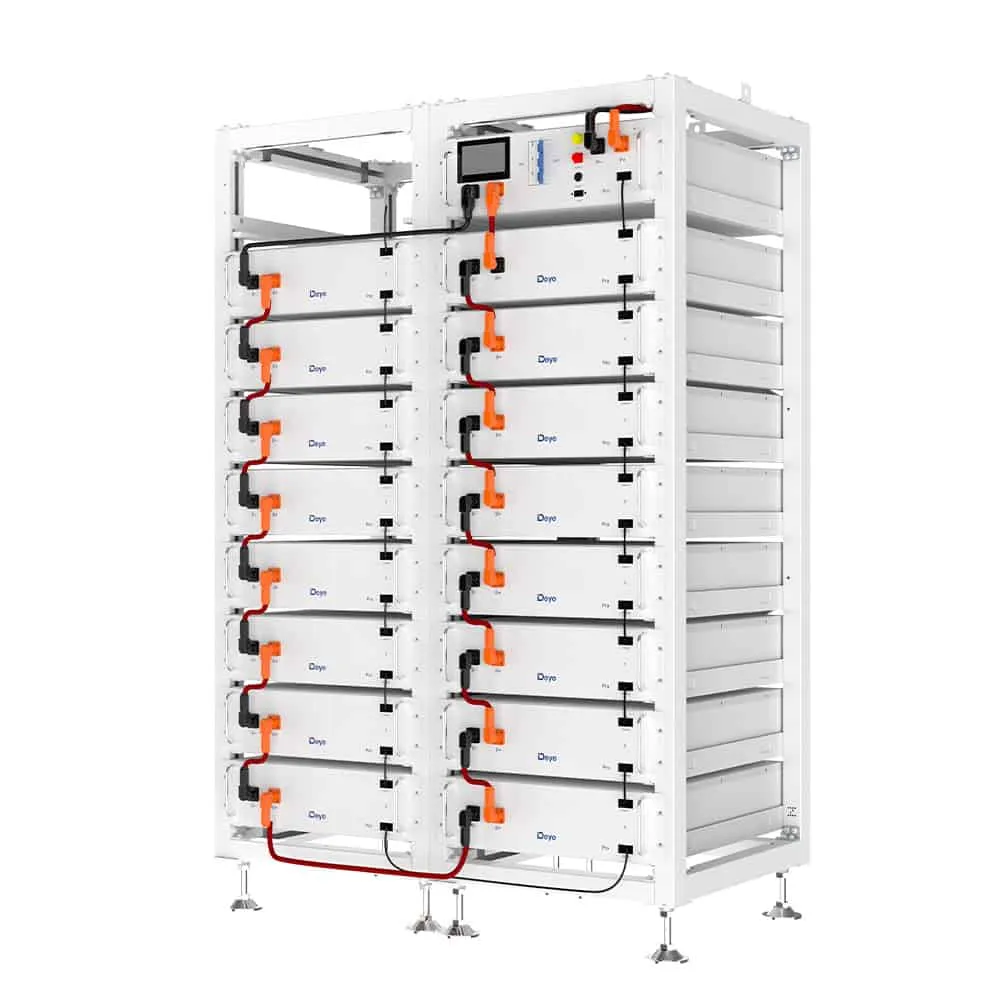
- BOS-G Pro High-Voltage Batteries: Utilizing 5.12 kWh modules, these high-voltage batteries can be stacked up to 12 per rack. You can tie up to 16 racks together, bringing total storage capacity to just under 1 Megawatt-hour (MWh).
- 80 kW Three-Phase Hybrid Inverter: These massive storage arrays mate to DEYE’s pending 80 kW hybrid inverters. Mirroring the residential lineup, up to 16 of these 80 kW units can be run in parallel, easily pushing the system into the multi-megawatt operational tier [06:51].
- Note: DEYE also noted that a massive 300 kW utility-scale inverter is currently navigating the compliance paperwork.
Summary
DEYE is aggressively targeting the pain points of modern solar installers and system architects. By bringing the EMS, grid gateway, and LoRaWAN communications inside the inverter casing, they are cutting down on physical clutter while offering an incredibly resilient, UPS-grade backup solution. Whether it’s an 8 kW off-grid cabin or a 1 MWh commercial facility, their paralleling architecture allows for virtually unlimited scaling.
REAL WORLD AUSTRALIAN INSTALLS
Check out what is coming with this video by the Smart Energy Lab