Seplos is a battery factory in China, alot like many other Alibaba sellers, they put together batteries. They sell a number of Batteries along with some DIY kits to make your life a little easier. The truth is, that although these KITS are easier, they work out a lot more expensive than if you just purchase the cells and the BMS and case yourself. They use B-grade cells, and you can find that information on some Youtube channels.
Should you want to choose Seplos, reach out to me and I can source anything you require. But my recommendation is to not choose Seplos for your next DIY project, as they are expensive for what you get, should you want to do DIY we can get everything you require for better pricing and we can guarantee the quality of the cells and other aspects of your build. We highly recommend not building anything larger than 48v 100ah banks as they get too heavy to be moved. That’s why every company has settled on such a size of 5kwh.
Some examples of their products are
Seplos mason 206 51.2v 16s 206ah 10.5kwh solar energy storage lifepo4 battery pack
PUSUNG-R 48V 100Ah residential solar power energy home battery storage system
And of course, we can help you to get this product. But even the BMS is cheaper than they are asking from the actual manufacturer, not through Seplos.
Seplos rose to fame because of the BMS, and its support for some Inverters on the DIYSOLARFORUM. However alot of time has now passed and almost all decent BMS can communicate with most inverters
Both EVE and CATL are professional LFP Prismatic manufacturers in China. CATL is the world’s largest battery manufacturer, and EVE is inside the TOP 10. Both companies work with car manufacturers, like Tesla, Geely, and Dongfeng Motors.
Both of these companies are poised for huge growth in the coming decade.
Both of these manufacturers have produced slightly different battery compositions to cater for either a high C rate discharge or a longer life low C rate prismatic cell. The LF280K from EVE is now widely respected and known to be of high quality.
CATL however, is not selling cells directly to the public, so all CATL cells are sold on the grey market, on places such as Alibaba, and Made in China. Many of these sellers, do sell B-grade cells, so you are taking a huge risk to purchase from these marketplaces.
EVE does allow the purchase of LFP cells directly to the public however, most people choose not to purchase from EVE because they don’t understand that a huge percentage (98%) of Alibaba and Aliexpress cells are actually B grade cells. They also have very complicated shipping procedures which are very difficult for the average person wot work with.
Model
Voltage
Capacity
Height
Length
Width
Weight (g)
LF50K
3.2v
50ah
185
135.3
29.3
1395
LF80
3.2v
80ah
170.5
130.3
36.7
1630
LF90K
3.2v
90ah
200.5
130.3
36.7
1970
LF100MA
3.2v
100ah
118.5
160
49.9
1920
LF105
3.2v
105ah
200.5
130.3
36.7
1980
LF173
3.2v
173ah
207
174
41
3250
LF230
3.2v
230ah
207.3
174
53.9
4110
LF280
3.2v
280ah
200
173.7
72
5220
LF280N
3.2v
280ah
200
173.7
72
5300
LF280K
3.2v
280ah
204.6
173.7
72
5420
LF304
3.2v
304ah
208.8
173.5
72
5490
Model
Voltage
Capacity
Height
Length
Width
Weight (g)
CB50
3.2v
50ah
135
175
30
1390
CB60
3.2v
60ah
220
135
29
1900
CB86
3.2v
86ah
133
173
47
2160
CB100
3.2v
100ah
170
200
34
2270
CB105
3.2v
105ah
167
200
34
2260
CB120
3.2v
120ah
170
174
48
2860
CB140
3.2v
140ah
171
200
46
3200
CB176
3.2v
176ah
205
174
54
3800
CB202
3.2v
202ah
201
174
54
4120
CB271
3.2v
271ah
207.2
174
71.7
5470
CB280
3.2v
280ah
207.2
174
71.7
5340
CB310
3.2v
310ah
208
174.5
72.5
5800
How to tell them apart visually
Let’s begin with the most common cell the 280ah capacity cells. The first thing you will notice is both have the QR code in the same location. However, the EVE cell has oval-shaped terminals and the CATL has circular. Genuine EVE cells will also state the cell model. eg LF280 or LF280K
According to the rules of QR code parsing, we know that the first three characters represent the vendor code.
Many customers emailed us asking if we have a list of vendor codes. Because there are two cases that need to know the vendor code.
1, You do not know the manufacturer of the LiFePO4 battery cell you are using.
2, You want to confirm whether the LiFePO4 battery cell you received is the one you are targeting.
Unfortunately, there is no official list of LiFePO4 battery cell vendor code so far.
We have maintained the following vendor code list based on our past experience, and hope it can help you identify the manufacturer of the battery cell.
LiFePO4 Battery Cell Vendor Code List
Manufacturer
Vendor Code
CATL
001
EVE
02Y
EVE Power
04Q
REPT
081
Lishen
08B
Ganfeng
0AL
CALB
0B5
Although this list does not cover all, but most of the popular LiFePO4 battery cell manufacturers on the market are on the list.
So you can identify which manufacturer your battery cell comes from based on the first 3 characters of the QR code on your LiFePO4 battery cell.
Recently we watched Will Prowse review a OEM battery that we can and have been able to source in small quantities for some time, one of our trusted suppliers sent us one of these Batteries for review last year, this battery is a made-to-specification battery by one of the largest LIFEPO4 drop-in replacement manufacturers in China. You probably have some questions you want to know the answer about China and the Lithium drop-in replacement industry, because its really hard to know who is making and selling what. And its an eye opening journey.
Over the past few years, a few of the OEM Battery suppliers have come up with some reliable and high quality drop-in replacements. This is one of the reasons Will has only recently discovered these better quality OEM batteries. Because they have been a work in progress, as each company gets a little better, so do the batteries they produce.
If you think, it’s actually in the best interest of both the consumer and the manufacturer to make a battery that does work and doesn’t fail. The competitive nature of business drives the improving product all the time.
We have been testing batteries like this since 2015. And they have been available in a similar form since about 2014 from these manufacturers.
What has happened is that the product has matured, they have got to the point where the BMS is very reliable, and the cells are better than what most people need.
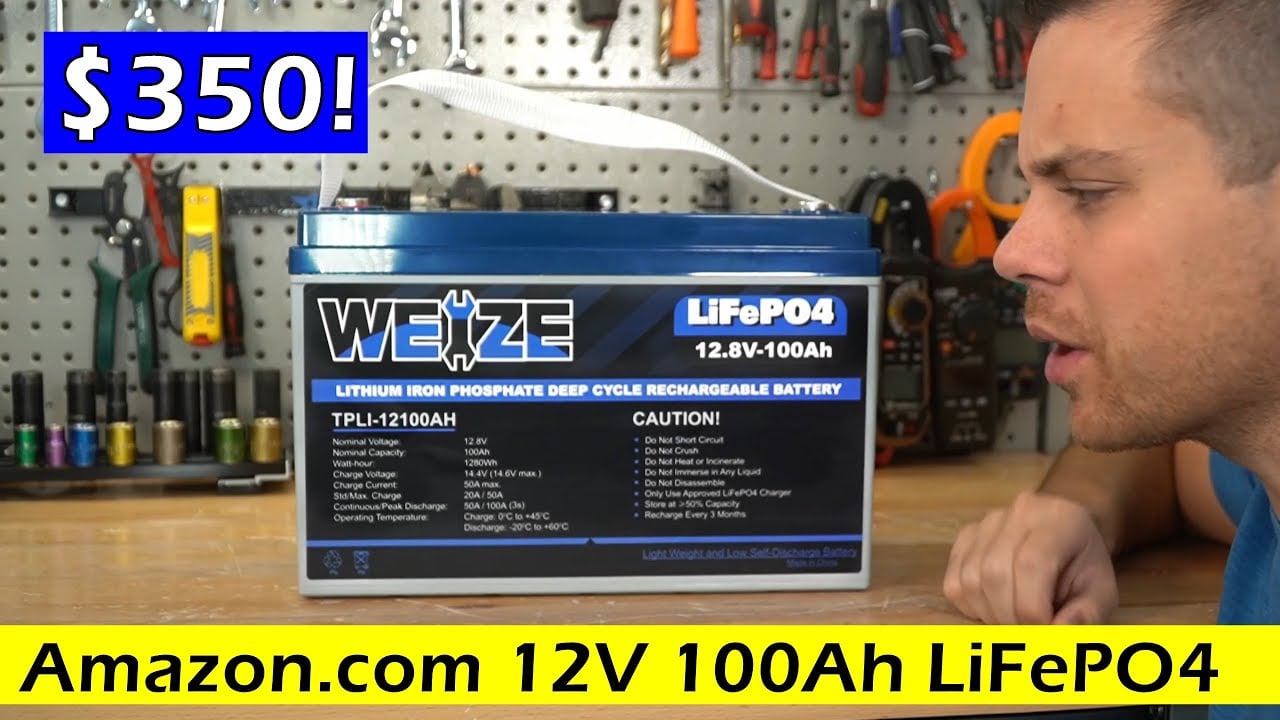
To find out why we won’t be importing this Weize 12V 100Ah LiFePO4 Battery in bulk read along further
Questions
Q. Can we get this in 50ah, 100ah, and 200ah capacity from the same manufacturer? A. Yes, we can
Q. Will we be ordering these into stock? A. No, we won’t, because there are too many brands of 12v 100ah drop-in, already on the market, and we would prefer to only bring in products we love and recommend for our customers.
Q. How much would we charge for this? A. Not as much as you might think, being Amazon is very competitive, the price of this is $350-450USD.
Lets do some quick math. based on the 2 prices $350USD and $450USD.
As you can see, there is no real business case for importing these into Australia. In fact they are already here, just labelled with a different brand. I know these are here in the $600-1000 range already.
It does make you wonder, should you buy a $400 eBay battery or should you buy a $2000 Enerdrive? In my view, I would buy somewhere in the middle, but I also build my own batteries which I prefer, as I can choose which cells I use, and which BMS I use, and that is exactly why we at Lifepo4 Australia choose to use the EVE and Ganfeng lithium cells primarily, because they are both A grade products, and they both use Australian Lithium inside them.
I don’t know about you but if Victron would just release a 100ah battery for $600-800, they would destroy every other battery retailer in one go. As long as it had 4 Series and 4 parallel, with an easy to use management software for when it’s used in various configurations. Victron would absolutely own the market.
The time has come, when Lithium Batteries are starting to reverse the pricing trajectory, they have since the 1980s only ever become cheaper for ever increasing capacity of Batteries.
Now in 2021, the price trend is reversing. As you can see in this very well researched youtube channel by the Electric Viking. The price of Lithium Carbonate has increased by 170% this year alone. Sure other factors play a part, but since the price per KWH fell to under $100USD, the demand spiked and the amount of car manufacturers is also growing at a dramatic pace, my guess for the next 10 years is some ups and downs probably within 100-200% of current pricing. Meaning we will see prices for LFP Batteries around the $200USD a KWH in the DIY Market. For pre assembled professional CEC approved house batteries such as LG produces, the price per KWH will likely stay around $500 USD KWH plus Installation, which in Australia is extremely expensive due to our extremely high Labour costs.
Jiangxi Ganfeng LiEnergy Technology Co.,Ltd. (aka “Ganfeng LiEnergy” ), is a Chinese lithium battery manufacturer Ganfeng LiEnergy signed an agreement on September 1 to build the battery technology industrial park and an advanced battery R&D center in Chongqing’s Liangjiang New Area.
It is estimated the development will cost in excess of 5 Billion Yuan (CNY). Around 400 Million of which is to be used for R&D for Solid State technology.
The majority shareholder of Ganfeng LiEnergy is Ganfeng Lithium, one of the world’s top producers of the commodity used in electric vehicle batteries. Ganfeng Lithium is well known as a supplier of battery-grade lithium to clients including automakers like Tesla, BMW, and Volkswagen Group. They have offices in Australia along with 2 mines, that I am aware of at the time of writing.
According to an announcement Ganfeng Lithium issued in early August, Ganfeng LiEnergy will spend about 3 billion yuan ($463.851 million) on another 5 GWh battery plant in Ganfeng’s home province Jiangxi, which will be put into operation in October 2023.
1. China – CATL 2. South Korea – LG Chem 3. Japan – Panasonic
These 3 Brands enjoyed a combined EV battery market share of 68%, according to Goldman Sachs’ estimates in 2020/21 FY.
#1 CATL – Contemporary Amperex Technology Co. Limited, abbreviated as CATL, is a Chinese battery manufacturer and technology company founded in 2011 that specializes in the manufacturing of lithium-ion batteries for electric vehicles and energy storage systems, as well as battery management systems.
#2 LG Chem Ltd often referred to as LG Chemical, is the largest Korean chemical company is headquartered in Seoul, South Korea. first established as the Lucky Chemical Industrial Corporation, which manufactured cosmetics. It is now solely a business-to-business company.
#3 Panasonic – Famous around the world, a japanese conglomorate who has been enourmously successful for decades #5 BYD – The newest entrant here, Build YOUR DREAMS is an AMAZING COMPANY THAT IS GOING TO BE ONE OF THE LARGEST COMPANIES IN THE WORLD WITHIN 5-10 YEARS #4 CALB
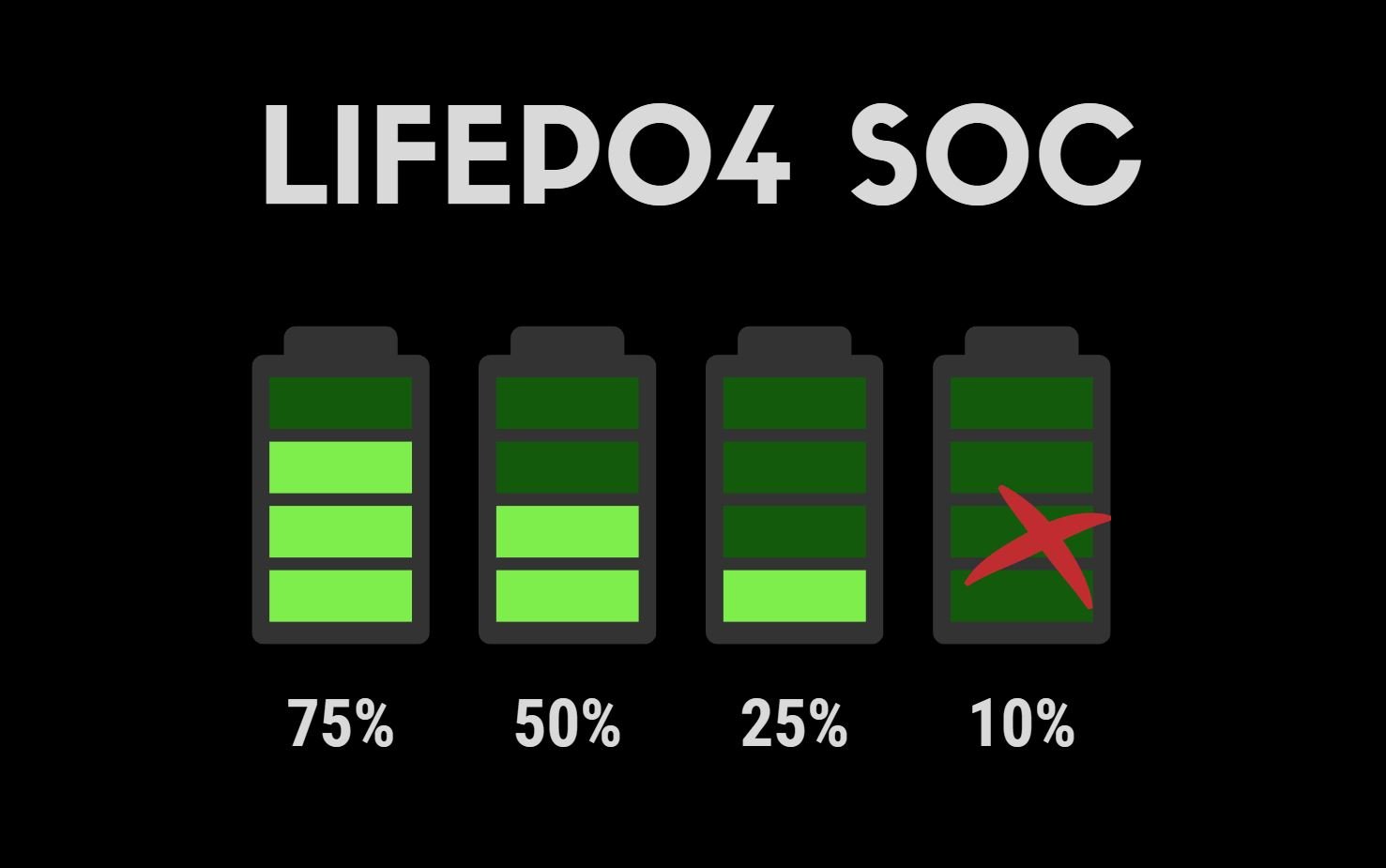
LiFePO4 SOC: Wondering how to care for your valuable new purchase? Learn the best ways to charge and discharge lithium batteries and how to maximize their lifespan using lots of important technical information, most importantly this chart below.
LiFePo4 SOC Chart Typical LiFePO₄ Cell Voltage vs. State of Charge (Resting)
SoC
Voltage (rest)
Notes
0%
~2.5–2.7 V
Deeply discharged — can degrade cell if held too long
10%
~2.90–3.05V
Often cited as ~3.0 V under no load
20%
~3.05–3.15 V
Some charts place 3.0 V closer to 10–15% instead
30%
~3.15-3.21 V
40%
~3.21–3.25 V
50%
~3.25–3.30 V
“Plateau” region can be quite flat
60%
~3.30 V
70%
~3.33 V
80%
~3.35–3.37 V
90%
~3.37–3.40 V
100%
~3.40–3.45 V
Resting after a charge that ends around 3.65 V under load
Important Factors
SOC from voltage alone is rough Because LiFePO₄ has such a flat discharge curve (especially from ~30% to ~80%), relying on voltage alone for an exact percentage can be misleading. A half-charged cell might only differ by ~0.1 V from a 70% charged cell.
Refer to the specific datasheet If you have a particular cell model (e.g., Winston, CALB, EVE, A123, etc.), look for a voltage–capacity chart in that manufacturer’s datasheet. It will usually show discharge curves at different C-rates and temperatures.
Use a proper Battery Management System (BMS) Most modern BMSs use coulomb counting (tracking how many amp-hours go in and out) combined with voltage readings and temperature sensors. This approach is more reliable than voltage alone for determining SoC.
Err on the side of caution To prolong cell life, it’s best to avoid the extreme low-voltage region (<2.8 V) and the extreme high-voltage region (>3.65 V under charge), even if the cell is technically capable of those voltages.
LiFePO4 Charge Voltages The correct charge voltage for a 3.2V LFP cell is 3.65V, although it is safe to charge them between 3.4V and 3.7V. Most users are interested in what these values translate to for systems of 12V and above.
Noninal Voltage
Manufacturers Stated Charge Voltage
Absolute Maximum
Recommended Charge Voltage
3.2v
3.65v
3.7v
3.55-3.6v
12.8v
14.6v
14.8v
14.2-14.4v
25.6v
29.2v
29.4v
28.4-28.8v
51.2v
58.4v
59.2v
57.6v-58.4v
To clarify the numbers in the chart above, we recommend a lower charge voltage out of an abundance of caution. While we still believe the manufacturer’s stated charge voltage is sufficient, extensive real-world data over the past 15-20 years has shown that lowering the charge voltage can enhance the lifespan of the cells. However, in most cases, it is advisable to use the Victron Profile in your chargers. Victron is highly respected in the industry and has a profound understanding of LFP chemistry and many other battery chemistries. They set their LFP charge voltage at 3.55-3.6V per cell.
Victron Recommends:
For a 12.8V LiFePO4 battery: Victron recommends setting the charge voltage between 14.2V to 14.4V. The float voltage is recommended to be set at 13.5V.
For a 25.6V LiFePO4 battery: Victron recommends setting the charge voltage between 28.4V and 28.8V. The float voltage should be set at 27V.
For a 51.2V LiFePO4 battery: Victron recommends setting the charge voltage between 57.6V and 58.4V. The float voltage should be set at 54V.
Lithium battery prices are slowly changing from obscenely expensive to cheaper than traditional Lead Acid, and we at LiFePo4 Australia tend to find most users using them in Caravans, fifth wheels, RVs, and the like Vehicles while some are jumping into stationary off-grid systems.
Lithium Ferro (iron) Phosphate, also known as LiFePO4 or LFP, is a type of lithium-ion battery. Unlike the lithium cobalt batteries commonly found in cell phones and laptops, LFP batteries are more stable and less prone to catching fire. However, if an LFP battery is damaged, it can still be dangerous due to the energy stored in it.
LFP batteries offer several advantages over lithium cobalt batteries, including longer lifespan and better temperature stability, making them ideal for deep cycle applications. A Battery Management System (BMS) is essential for protecting LFP batteries. It disconnects the battery to prevent overcharging or excessive discharging, limits charge and discharge currents, monitors cell temperatures, and balances the charge across all cells. This balancing is similar to the equalization process in lead-acid batteries, ensuring all cells have the same state of charge.
DO NOT BUY a battery without a quality BMS such as the JBD and JK BMS
Below is the knowledge gained from experience, but also reading a large number of web articles, blog pages, scientific publications, and discussions with LFP manufacturers. which we are writing about here is by no means intended as the ultimate guide to LFP batteries, we hope this article will bypass the BS and give you solid tips on how to get the most out of Lithium IRON Phosphate
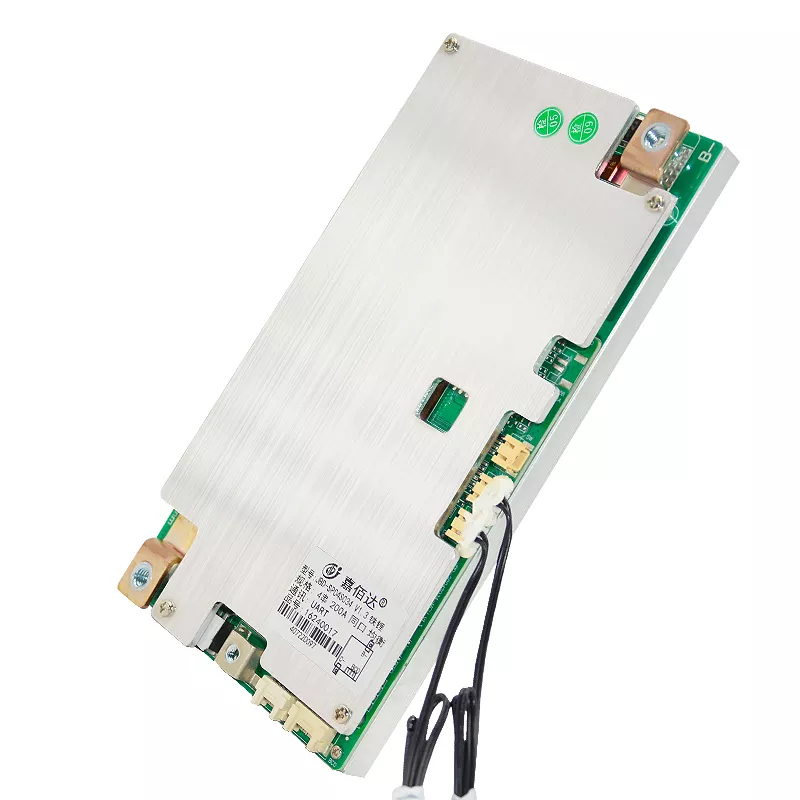
An image of the popular JBD 200 amp 4s 12v BMS for LFP and Lithium Batteries
We explained in our lead-acid battery article how that chemistry’s Achilles heel stays at a partial charge for too long It’s too easy to damage an expensive bank of lead-acid batteries in a few months by letting it sit at partial charge.
This is very different for LFP! You can let lithium-ion batteries stay partially charged forever without damage, LFP prefers to stay partially charged rather than full or empty, and for longevity, it is best to cycle the battery or let it sit partially charged. Any Lithium-ion batteries are currently what I would call the holy grail of batteries – with the right charging parameters you can almost forget there’s a battery. Maintenance. The BMS will take care of it and you can safely go cycling!
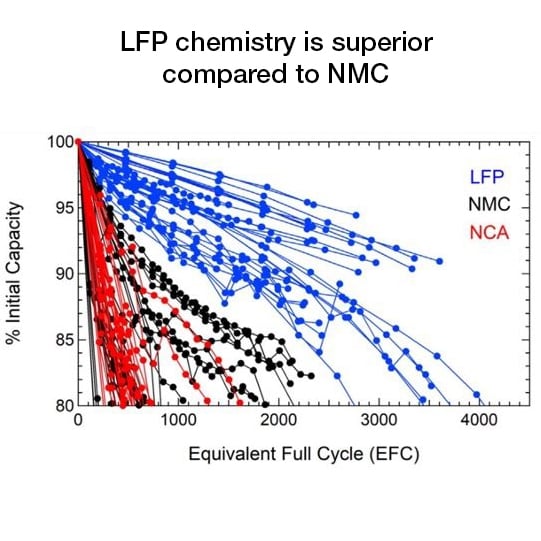
LFP batteries can also last very long. Most LFP batteries are rated for 3000 as a minimum cycles, with a full 100% charge/discharge cycle (we recommend 90%). If you do this every day, it gives you over 8 years of cycling! even longer when used in cycles less than 100%,
IN FACT, for simplicity, a linear relationship can be used: 50% discharge cycles mean twice as many cycles, 33% discharge cycles, and you can reasonably expect three times the number of cycles. A LiFePO4 battery also weighs less than one third that of a lead acid battery of similar capacity. It can withstand large charging currents (currently we recommend 0.5C) with most cells like the 280-330ah size to allow for fast charging, it’s sealed to prevent fumes and it has a very low self-discharge rate (3% per month or less).
Lithium-Ion vs. Lead Acid
As of 2024 a 12V 100Ah LFP battery can be found for as low as $299 AUD. The full 100Ah is usable, so 12.8 x 100 = 1,280-watt-hours of energy storage or just under $0.25c AUD per Wh of usable energy storage. Even of the best bang-for-buck really low quality deep cycle lead-acid batteries are currently about $200-300 for 12v 100Ah.
LEAD ACID PITFALLS
With lead-acid only 50% is safely usable without irreversable consequence. Lets calculate the usable watt hours 12v x 120ah x 50% = 770wh energy storage. That makes 249/60 = $ 0.32 AUD per Wh of usable energy storage.
The lifespan of a lead-acid AGM (Absorbent Glass Mat) battery when used occasionally in cycles can vary significantly based on factors such as depth of discharge, maintenance, and storage conditions. Generally, AGM batteries are known for their durability and longevity compared to other lead-acid types.
Cycle Life: AGM batteries can last between 300 to 700 cycles at 50% depth of discharge. Occasional use, where the battery is not deeply discharged each time, can extend the lifespan closer to or beyond the upper end of this range.
AGM (Absorbent Glass Mat) batteries typically last between 3 to 7 years, depending on usage and conditions. In optimal conditions, with proper maintenance, they can last over a decade. Key factors influencing their lifespan include the depth of discharge, operating temperature, and charging practices.
For occasional use, AGM batteries benefit from being kept in a partially charged state rather than being fully discharged. Regular charging, using smart chargers, and maintaining proper voltage can significantly extend their life. For example, maintaining a temperature range of 65 to 90°F and using temperature-compensated charging can help maximize their lifespan (Battery Skills) (Renogy) (OPTIMA Batteries) (Crown Power) (RV Talk).
Maintenance and Storage: Proper maintenance, such as keeping the battery charged and avoiding deep discharges, significantly affects lifespan. Storing the battery in a cool, dry place and ensuring it is not left in a discharged state will also help prolong its life
In summary, an AGM battery used occasionally in cycles can last anywhere from 3 to 10 years, depending on the depth of discharge, maintenance practices, and storage conditions.
Battery Bank Sizing for LFP
LFP (Lithium Ferro Phosphate) batteries have a usable capacity of about 90%, compared to lead-acid batteries which effectively provide only about 50% of their capacity. This allows you to size an LFP battery bank smaller than a lead-acid battery bank while achieving the same functional capacity. Typically, an LFP battery bank can be 55-60% the amp-hour size of a lead-acid battery bank.
Moreover, for longevity, lead-acid batteries should not be regularly discharged below 50% state of charge (SOC), whereas LFP batteries do not have this limitation. LFP batteries also have a higher round-trip energy efficiency compared to lead-acid batteries, meaning they require less energy to recharge after a discharge and can recover to 100% more quickly. This efficiency, coupled with the smaller required battery bank size, enhances overall performance.
As a result, sizing an LFP battery bank to 55-60% of the equivalent lead-acid bank size will not only match but often exceed performance expectations. Additionally, due to the higher efficiency of LFP batteries, you can reduce the size of the required solar panel array, further optimizing the system. This makes LFP batteries the superior choice in almost all scenarios, especially during periods of limited sunlight, such as dark winter days.
Beware of batteries connected in series!
Potential Issues When Connecting Lithium Batteries in Series
When connecting multiple lithium batteries in series, such as two 12V 100Ah batteries each with its own built-in Battery Management System (BMS), certain challenges can arise. For example, in a 24V 100Ah setup, if one battery is nearly empty and the other is almost full, and a load is applied, the empty battery’s BMS will shut down to prevent damage. This disconnection interrupts the entire battery bank, even if the other battery is still full.
Similarly, when charging both batteries simultaneously with a 24V charger, the fuller battery will reach its maximum charge first. Its BMS will then shut down to protect it, causing the entire battery bank to disconnect. If the batteries are out of sync initially, this issue will persist, preventing proper charging and balancing.
Unlike lead-acid batteries, which self-balance when charged, lithium batteries with independent BMS units do not naturally equalize their charge states. Therefore, it’s important to periodically sync the batteries by individually charging them with a 12V charger until both are fully charged. This ensures they start with the same state of charge, promoting balanced operation.
Understanding these dynamics is crucial when working with lithium-ion batteries, as their behavior differs significantly from lead-acid batteries. Proper management and periodic synchronization can help mitigate these issues and ensure reliable performance.
Temperature of LFP
But hold on! Is LFP really the perfect solution to all our battery issues? Not quite. LFP batteries also have their limitations. A major issue is temperature sensitivity: you cannot charge a lithium-ion battery below 0°C. Unlike lead-acid batteries, which can be charged in freezing temperatures, LFP batteries will not charge when it’s cold, although they can still be discharged with a temporary loss of capacity. The BMS (Battery Management System) should prevent charging in freezing temperatures to avoid damage, which can be a concern in the Australian climate.
High temperatures also pose a problem. Batteries age more quickly when used or stored at high temperatures. While temperatures up to 30°C are generally fine and even 45°C is manageable, anything higher accelerates aging and can significantly shorten the battery’s lifespan. To mitigate this, it’s crucial to store the battery in a shaded or cooled environment. (This also has implications for under bonnet use)
Another potential issue arises with charging sources that can deliver high voltage. If the battery becomes fully charged and the charging source doesn’t stop, the voltage will rise. If it rises too high, the BMS will disconnect the battery to protect it, potentially causing the charging source’s voltage to spike even further. This can happen with malfunctioning car alternator voltage regulators or small wind turbines, which depend on the battery to regulate their output. Such spikes can damage the LFP battery.
Additionally, the high initial purchase price of LFP batteries is a consideration. Despite these challenges, the benefits of LFP batteries often outweigh the drawbacks, making them an appealing option for many users.
How does a LiFePO4 battery work?
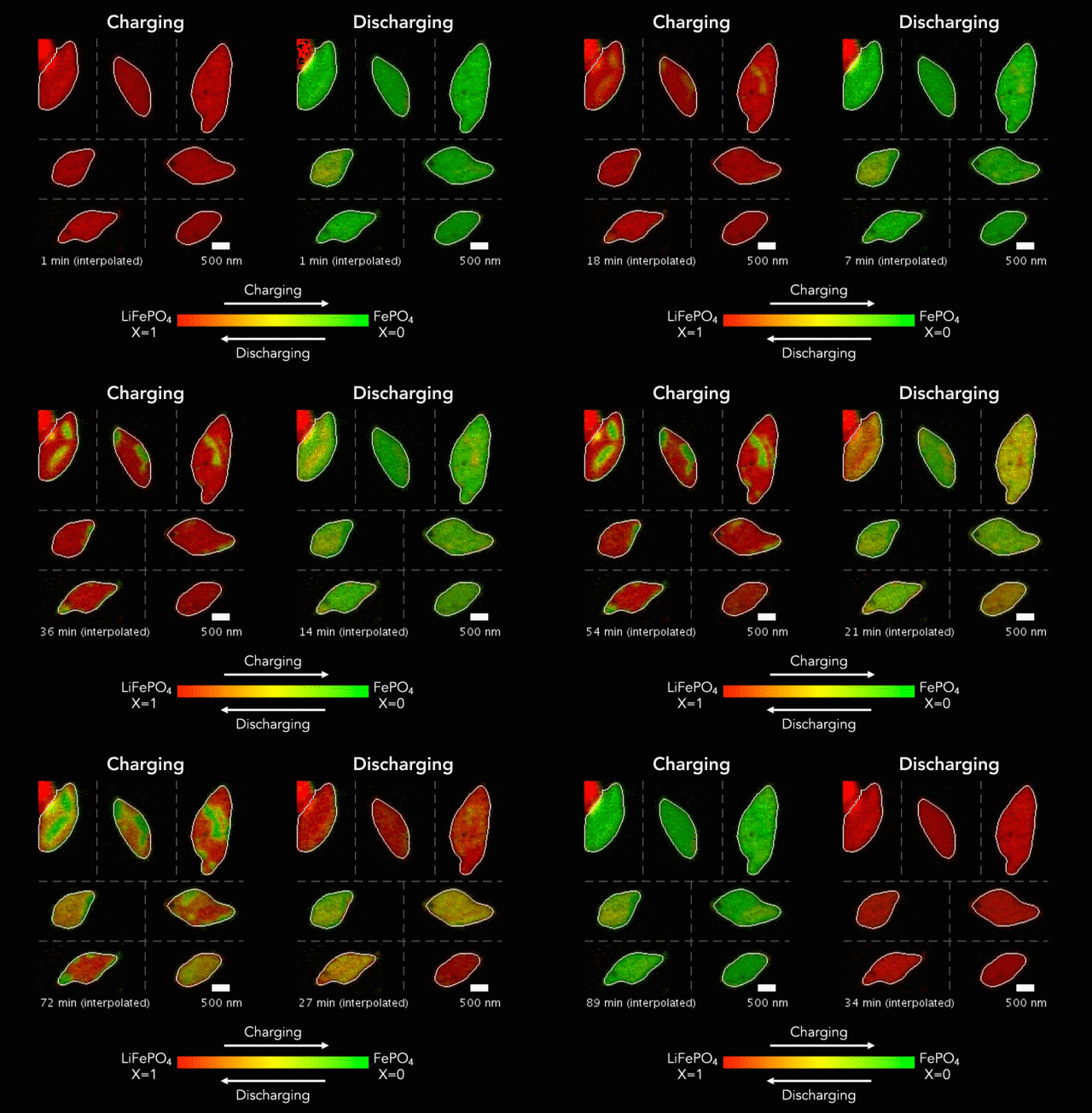
Lithium-ion batteries, including LiFePO4 (Lithium Iron Phosphate), are often described as “rocking chair” batteries. This term refers to the movement of lithium ions between the negative and positive electrodes during charging and discharging.
In the illustration, the red balls represent lithium ions. During discharge, these ions move from the negative electrode to the positive electrode. During charging, they move back in the opposite direction.
On the left side of the diagram is the positive electrode, made from iron phosphate (LiFePO4). This composition explains the battery’s name. Iron and phosphate ions form a grid that traps lithium ions. When the battery charges, lithium ions are drawn through the polymer membrane to the negative electrode on the right. This membrane has tiny pores that facilitate the passage of lithium ions. The negative electrode is made of a carbon lattice, which traps and holds the lithium ions.
When the battery discharges, electrons flow out through the negative electrode, and lithium ions move back through the membrane to the iron phosphate grid. They remain on the positive side until the battery is recharged. In a charged battery, lithium ions are stored in the carbon of the negative electrode.
In practical applications, lithium-ion cells consist of thin layers of alternating aluminum, polymer, and copper foils with chemicals adhered to them. These layers are rolled up like a jelly roll and encased in a steel container, similar to an AA battery. The 12-volt lithium-ion batteries available for purchase are made up of many such cells connected in series and parallel to increase the voltage and amp-hour capacity. Each cell provides about 3.3 volts, so connecting four in series yields 13.2 volts, making it a suitable replacement for a 12-volt lead-acid battery.
Charging an LFP Battery from solar
Charging LiFePO4 Batteries with Solar Charge Controllers
Most standard solar charge controllers can effectively charge lithium-ion batteries, such as LiFePO4 (Lithium Iron Phosphate) batteries, because the required voltages are similar to those for AGM (Absorbent Glass Mat) batteries, which are a type of sealed lead-acid battery. The Battery Management System (BMS) in LiFePO4 batteries ensures that the cells receive the correct voltage, preventing overcharging or over-discharging, balancing the cells, and maintaining cell temperature within safe limits during charging.
Charging Profile of LiFePO4 Batteries
LiFePO4 batteries have a characteristic charging profile that is easy to follow. The following points explain the process in detail:
Charge Voltage: The charging voltage for a 12V LiFePO4 battery is typically derived from the cell voltage. A single cell voltage is multiplied by four to get the approximate system voltage. For example, a single cell charge voltage is around 3.4V to 3.6V, so for a 12V system, it would be about 13.6V to 14.4V.
Charging Stages: LiFePO4 batteries are charged in two main stages:
Constant Current Stage: The battery is charged with a constant current until the voltage reaches the absorption level, typically around 14.6V for a 12V battery. During this stage, the voltage gradually increases.
Constant Voltage Stage: Once the absorption voltage is reached, the voltage is held constant, and the current gradually decreases. The battery is considered fully charged when the current drops to about 5% to 10% of the battery’s amp-hour (Ah) rating.
Efficiency: LiFePO4 batteries are more efficient than lead-acid batteries, meaning they require less energy to recharge after discharge. They also have a flat voltage curve, meaning the charge voltage does not change much with different charge rates.
Float Voltage: Unlike lead-acid batteries, LiFePO4 batteries do not require a float charge because they have a low self-discharge rate. If the charge controller cannot disable the float charge, set it to a low voltage (13.6V or less) to prevent actual charging.
Equalization: LiFePO4 batteries do not require equalization. If the charge controller has an equalization setting that cannot be disabled, set it to 14.6V or less so it functions as a normal absorption charge cycle.
High Voltage Protection: The BMS typically allows a maximum voltage of 14.8V to 15.0V before disconnecting the battery to prevent overcharging. There is no benefit to charging at higher voltages and doing so increases the risk of triggering the BMS protection and potential damage.
In summary, while LiFePO4 batteries are generally easier to manage and charge than lead-acid batteries, understanding their specific charging requirements and the role of the BMS is crucial for maintaining battery health and longevity. Properly configuring the solar charge controller to align with these requirements ensures optimal performance and safety.
Absorption time
There is a lot to be said for just setting the absorption voltage to 14.4V or 14.6V, and then stop charging once the battery reaches that voltage! In short, zero (or short) absorb time. At that point, the battery will be about 90% full. LiFePO4 batteries will be happier in the long run when they don’t stay at 100% SOC for too long, so this practice will extend your battery life. If you absolutely must have 100% SOC in your battery, absorb it will do! Officially, this is achieved when the charging current drops to 5% – 10% of the battery Ah value, i.e. 5-10 Amp for a 100Ah battery If you cannot stop absorbing the current, set the absorption time to about 2 hours and call Temperature compensation LiFePO4 Batteries do not require temperature compensation! Turn this off in the charge controller, otherwise, the charge voltage will be wildly turned off when it is very hot or cold. Check the voltage settings of the charge controller against actual voltage measured with a good quality DMM! Small changes in voltage can make a big difference during charging a lithium-ion battery! Change the charge settings accordingly!
Discharging an LFP Battery
Unlike lead acid batteries, the voltage of a lithium-ion battery remains very constant during discharge, making it difficult to guess the state of charge from the voltage alone. For a battery with a moderate load, the discharge curve seems LiFePO4 Discharge voltage vs. discharge voltage SOC LiFePO4 vs. SOC Most of the time during discharge, the battery voltage will be just around 13.2 volts. it was a really bad idea ™ to go below 20% SOC for a LiFePO4 battery. This has changed and the current LFP battery harvest will quite happily discharge down to 0% for many cycles. However, there is an advantage in pedaling less deep. It’s not just that going to 30% SOC will get you 1 / 3 cycles more than 0%, the battery will likely last more cycles than that. The hard numbers are, well, hard to find, but the cycle up to 50% SOC seems to show about 3 times the cycle life compared to .cycling 100%. Below is a table showing the battery voltage for a 12 Volt battery pack with respect to depth of discharge. Take these voltage values with a pinch of salt, the discharge curve is so flat that it is really difficult to determine SOC from voltage alone: small variations in load and accuracy of the voltmeter will negate the measurement.
LiFePo4 SOC Chart
% SOC
VOC
0.2C
100%
14.0 Volt
13.6 Volt
99%
13.8 Volt
13.4 Volt
90%
13.4 Volt
13.3 Volt
70%
13.2 Volt
13.2 Volt
40%
13.2 Volt
13.1 Volt
30%
13.0 Volt
13.0 Volt
20%
12.9 Volt
12.9 Volt
17%
12.8 Volt
12.8 Volt
14%
12.6 Volt
12.5 Volt
9%
12.4 Volt
12.0 Volt
0%
10.4 Volt
10.0 Volt
Storing lithium-ion batteries
The very low self-discharge rate makes it easier to store LFP batteries, even for longer periods of time. It is not a problem to put a lithium-ion battery away for a year, but make sure it is charged beforehand. Storing between 50% and 60% is ideal as the battery takes a very long time before self-discharge near voltage Storing batteries below freezing is fine even at very low temperatures than -40 degrees Celsius (which is the same in Fahrenheit) or even less! The electrolyte in LiFePO4 cells does not contain any water. Even if it freezes (which happens at around -40 degrees Celsius depending on the formulation), this is not the case. Allow the battery to warm up a little before discharging it again. This is fine at -20 degrees Celsius and above. When discharging at temperatures below freezing point, an obvious loss of capacity occurs, reversed when the battery rises above freezing point and has a slightly accelerated effect on aging. Storage at low temperatures is certainly much better than storage at high temperatures: the aging of the calendar slows down dramatically at low temperatures. Avoid storing them at 45 degrees Celsius and above, and try to avoid keeping them as full (or almost empty) as possible. If you need to store batteries for a long time, just unplug all cables from them. In this way, there can be no parasitic charges which slowly discharge the batteries.
The end of your lithium-ion batteries We can hear you gasp in horror; the idea that your precious LFP battery bank is no longer thrills you! Alas, all good things have to come to an end eventually. What we want to avoid is the premature (and perhaps spectacular) end of the genre, which makes us have to understand how lithium-ion batteries die. Many batteries consider a battery to be “dead” when its capacity drops to 80% of what it should be. Thus, for a 100Ah battery, its end comes when its capacity is reduced to 80Ah There are two mechanisms at work for the disappearance of your battery: cycling and aging. Each time you discharge and recharge the battery, it does a bit of damage and you lose a bit of capacity. But even if you put your precious battery in a beautiful, glass-enclosed sanctuary, never to be rolled, it will always come to an end.
LiFePo4 Lifespan
The latter is called lifespan. Calendar It is difficult to find reliable data on the calendar life of LiFePO4 batteries, very little is available. Some scientific studies have been conducted on the effect of extremes (temperature and SOC) on calendar life and these help set limits. What we gather is that if you don’t abuse the battery bank, avoid extremes and generally only use the batteries within reasonable limits, there is a maximum limit of about 20 years on calendar life. In addition to the cells inside the battery, there is also the BMS, which is made up of electronic parts. When the BMS fails, the battery will be too. ion batteries with a built-in BMS are still too new, and we’ll have to see, but ultimately the battery management system has to survive for as long as lithium-ion cells do. The processes within the battery conspire over time to coat the boundary layer between the electrodes and the electrolyte with chemical compounds that prevent lithium ions from entering and exiting the electrodes. The processes also bind lithium ions into new compounds chemicals, so they are no longer available to switch from electricity ode to electrode. These processes will happen regardless of what we do, but are very temperature dependent! Keep the batteries below 30 degrees centigrade and they are very slow. Go beyond 45 degrees centigrade and things speed up considerably! The # 1 public enemy for lithium-ion batteries is heat by far! The calendar life has more to offer and how quickly a LiFePO4 battery will age: the state of charge also has something to do with it. Bad at high temperatures, these batteries really, really don’t like to sit at 0% SOC and very high temperatures!
Also bad, although not quite as bad as 0% SOC, is sitting at 100% SOC and high temperatures for them. Very Low Temperatures As we discussed earlier, you cannot charge LFP batteries below freezing (and the BMS will not allow you to). It turns out that while it can be discharged below freezing, it also has an accelerated effect on aging. Nowhere near as bad as leaving your battery at a high temperature. However, if you are exposing your battery to freezing temperatures, it is better to do so while it is neither charging nor discharging and there is some gas in the tank (though not a full tank). In general, it is better to put these batteries away. a t around 50% – 60% SOC if they need to be stored longer. Molten Battery If you really want to know, what happens when a lithium-ion battery is charged below zero is that metallic lithium is deposited on the negative (carbon) electrode. , which end up puncturing the membrane and shorting out the battery (leading to a spectacular, unscheduled rapid disassembly event as NASA calls it, involving smoke, extreme heat, and most likely flames). Lucky for us this is something the BMS prevents from We move on to cycle life It has become common to get thousands of cycles, even at a full 100% charge-discharge cycle, with lithium-ion batteries There are some things you can do to maximize cycle life.
We talked about how LiFePO4 batteries work – they move lithium ions between electrodes It is important to understand that these are real physical particles, which have a size for them, are torn off one electrode and inserted into the other, each time the battery is charged-discharged This causes damage, particularly to the carbon of the negative electrode. Each time the battery is charged the electrode swells a little and thins again with each discharge. Over time this causes microscopic cracks. it is for this reason that loading a little below 100% will give you more cycles, as will discharging a little above 0%. Also, think of those ions as exerting “pressure,” and the extreme numbers of state of charge exert more pressure, causing chemical reactions that aren’t good for the battery. This is why LFP batteries don’t like being stored away. at 100% SOC, or float charge at (near) 100%. How quickly lithium ions are dragged here and there also has an effect on cycle life. Given the above, this shouldn’t come as a surprise. While LFP batteries are routinely charged and discharged at 1 ° C (i.e. 100 amps for a 100 Ah battery), you will see more cycles from your battery if you limit this to more reasonable values for lead-acid batteries Limit of about 20% of the Ah rating, and adhering to this limit for lithium-ion also has benefits for longer battery life. The last factor to mention is voltage, although this is really the BMS Lithium-ion batteries have a narrow voltage window for loading and unloading. Going outside this window very quickly will result in permanent damage and a possible RUD event (NASA talk, as mentioned before) in the upper area. For LiFePO4 this window is about 8.0V (2.0V per cell) up to 16. 8 Volts (4.2V per cell). The integrated BMS should be careful to keep the battery within these limits.
LFP Take-Home Lessons
Now that we know how lithium-ion batteries work, what they like and dislike, and how they ultimately fail, there are some tips to take away. We have made a small list below. If you’re not going to do anything else, please take note of the first two, they have by far the most effect on the overall time you have to enjoy your Li-ion battery! Paying attention to others will also help, to make the battery last even longer. above, for long and happy LFP battery life, in order of importance, you should pay attention to the following: Keep the battery temperature below 45 degrees centigrade (below 30 degrees if possible) – This is by far the most important! ! Keep charge and discharge currents below 0.5 ° C (preferably 0.2 ° C) Keep battery temperature above 0 degrees Celsius when discharging if possible – This is all located below is nowhere near as important as the first two Do not cycle below 10% – 15% SOC unless Do not float the battery at 100% SOC if possible Do not charge 100% SOC if you have none need That’s it! Now you too can find happiness and a full life with your LiFePO4 batteries!