We need solar and battery installers please contact us if you are interested in working with us, to power Australians with good value, high quality batteries and solar systems
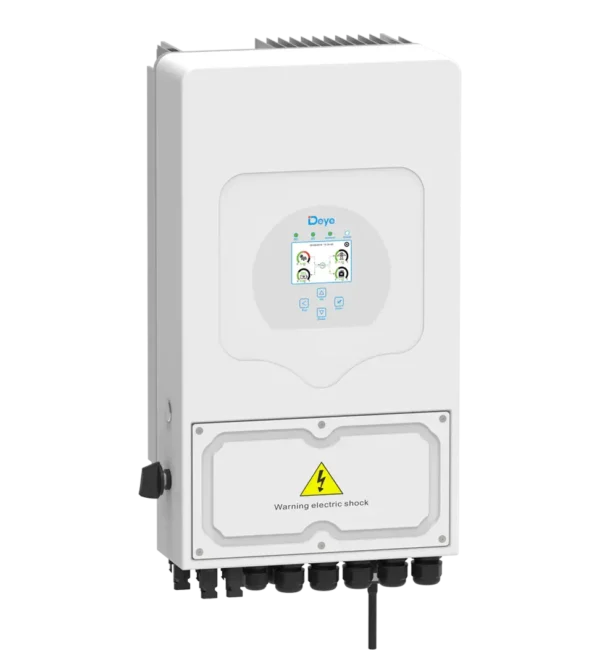
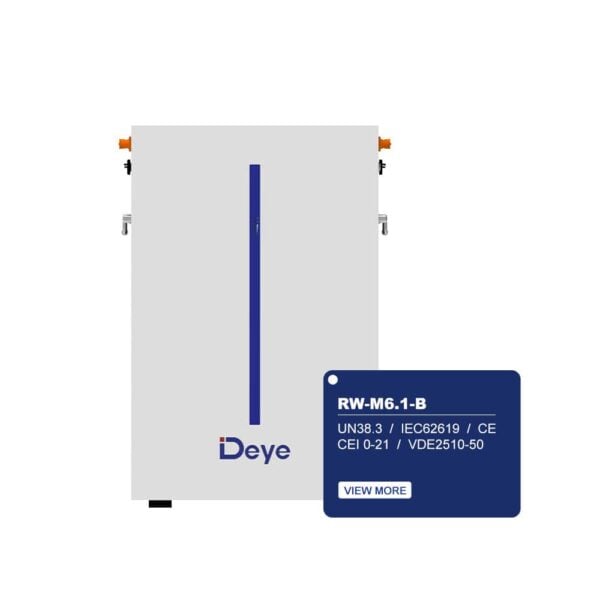
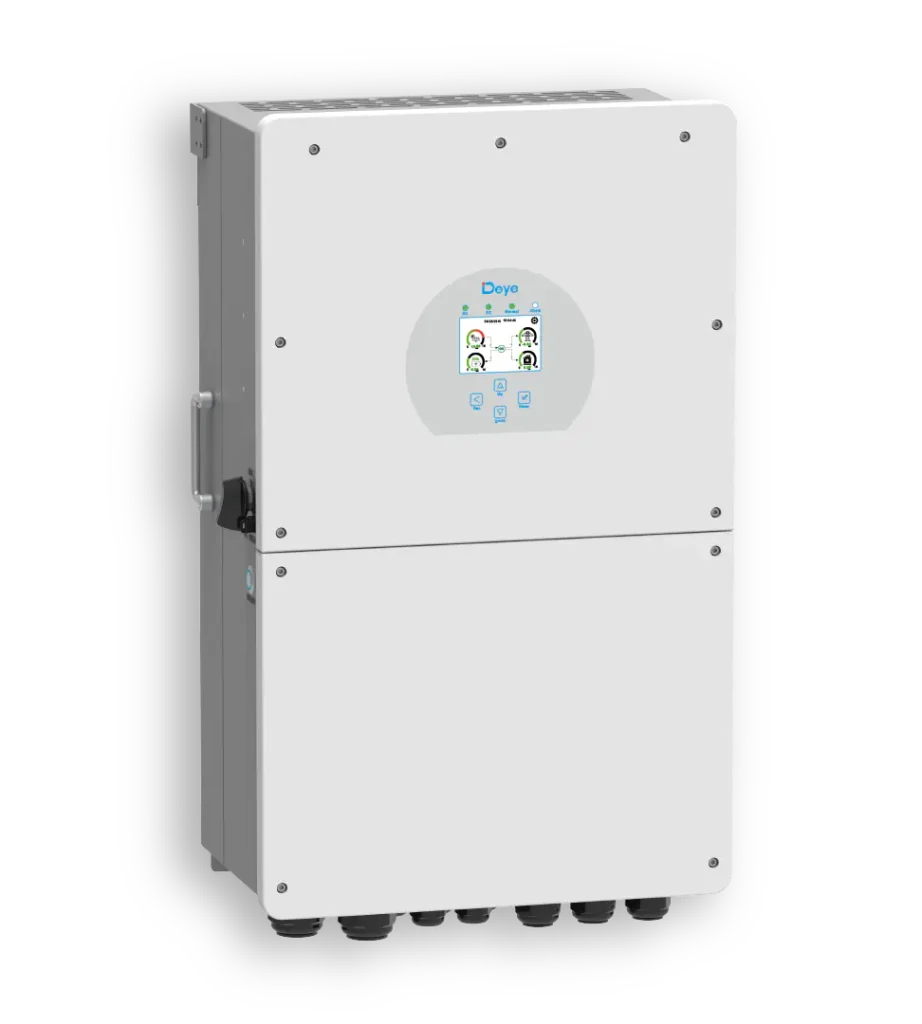
Deye is a leading manufacturer of high quality renewable energy solutions, they really have taken the market by storm in the last 5 years in Australia. The products we absolutely love here in at LiFePO4 Australia is the range of SUN Hybrid Inverters. Starting at just 5000W single phase 48v LV right up to the 16kW single phase LV model which really is groundbreaking.
Deye also makes products for SunSynk and Sol-Ark, along with NoArk who has the products in Australia.
Origins, corporate structure & listing
Deye grew out of Ningbo Deye Technology, a diversified appliance and climate-tech manufacturer founded in 1990 in Ningbo, Zhejiang. In 2007 it spun up Ningbo Deye Inverter Technology to focus on PV power electronics and later energy storage (ESS).
Deye is a vertically-integrated Chinese manufacturer that evolved from climate appliances into a full-stack PV-plus-storage supplier. The SUN-series hybrids earned a following by combining feature-dense controls (parallel/off-grid/AC-couple/genset support) with 48 V battery friendliness and region-specific compliance. For Australian projects in 2025, the critical checks are: current AS/NZS 4777.2 Amd 2 compliance, presence on CEC/CER-maintained approved lists, and battery-BMS compatibility per the latest Deye tables. That diligence preserves rebate eligibility, simplifies commissioning, and ensures the hardware behaves exactly as your design expects.
Who is Deye?
Worlds Largest Single Phase Low Voltage Hybrid Inverter
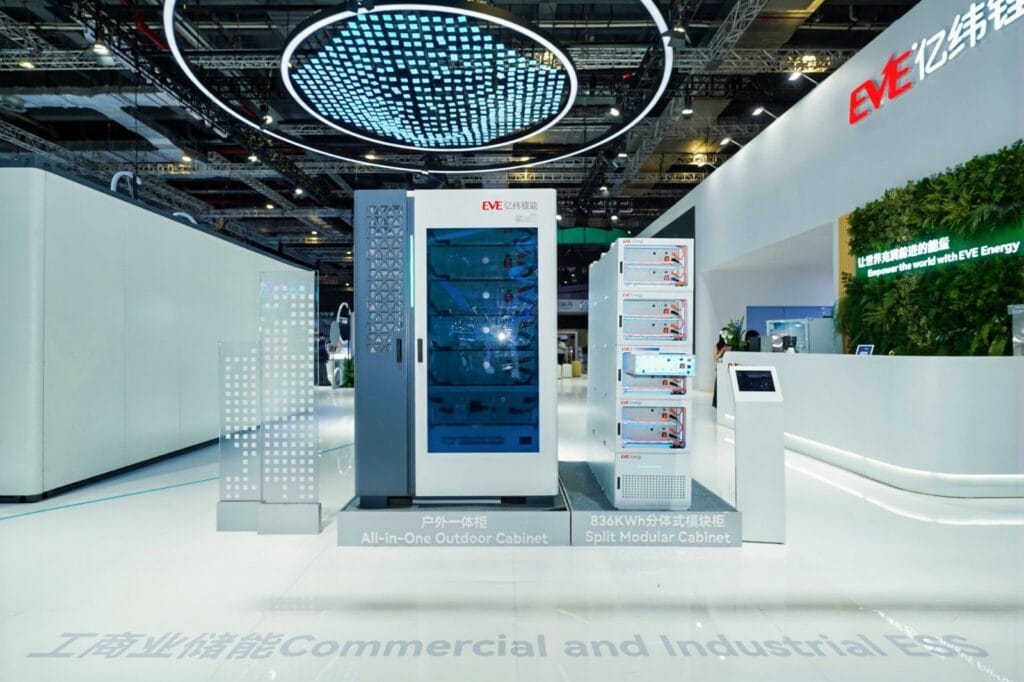
The future of energy storage is here, and it’s bigger than before! At the recent SNEC 2025 exhibition, industry giant EVE Energy unveiled a suite of groundbreaking LiFePO4 battery solutions that are set to revolutionize the commercial and industrial energy storage landscape. Such as the 836kWh Split-Type Modular Cabinet, built around the MB56 628ah LFP cell. For Australian businesses looking to gain a competitive edge in the renewable energy sector, this is an opportunity you won’t want to miss.
on the right you can see the 836kWh Split-Type Modular Cabinet
Introducing the 836kWh Split-Type Modular Cabinet
At the forefront of this new lineup is the 836kWh Split-Type Modular Cabinet. This innovative system is specifically designed for overseas markets and is perfectly suited for Australian commercial and industrial applications. Here’s what makes it a game-changer:
Modular and Scalable: The system is incredibly flexible, with a modular design that can be configured in various ways. It’s compatible with both 1000V and 1500V systems and can be expanded up to an impressive 5MWh. This means it can be tailored to meet the specific needs of your project, from small-scale commercial to large-scale industrial.
Overcoming Logistical Hurdles: One of the biggest challenges with large-scale energy storage is transportation and installation. EVE has solved this with an innovative split-design, allowing for more flexible deployment. This clever design not only overcomes logistical limitations for large cabinets but also increases energy density by 65% and reduces the system’s footprint by 37%.
Enhanced Safety and Intelligent Operation: Safety is paramount, and the 836kWh cabinet delivers. It features “thermal-electric separation” and “liquid-electric separation” designs, along with a fire-resistant layer that provides 15% more insulation than traditional cabinets. The smart management system ensures precise warnings and extends the system’s lifespan, making it a reliable and long-term investment.
Pushing the Boundaries with “Mr. Big” and “Mr. Giant”
EVE Energy also showcased its commitment to large-scale energy solutions with the “Mr. Big” super-large capacity 628Ah cell and the “Mr. Giant” 5MWh minimalist large system. These products are designed for large-scale power station projects and demonstrate the incredible potential of LiFePO4 technology.
What This Means for Australia
The launch of these new products from EVE Energy comes at a pivotal time for Australia’s energy market. As we continue to transition towards a renewable energy future, the demand for reliable, scalable, and cost-effective energy storage solutions is at an all-time high. The modularity and logistical advantages of the 836kWh cabinet make it an ideal choice for Australian businesses looking to invest in energy storage, whether for behind-the-meter applications or to support the grid.
LIFEPO4 Australia: Your Partner in Energy Innovation
At LIFEPO4 Australia, we are excited to be at the forefront of this technological advancement. As your trusted partner, we can assist you with:
Sourcing and Procurement: We have the expertise to source these cutting-edge EVE Energy products directly for your projects.
Seamless Importation: Our team will handle the complexities of importation, ensuring a smooth and hassle-free process.
Negotiating Favorable Terms: We can leverage our industry connections to negotiate excellent terms, ensuring you get the best possible value for your investment.
The future of energy storage has arrived, and it’s more accessible than ever. If you’re ready to explore how EVE Energy’s new LiFePO4 solutions can transform your business, we’re here to help.
Contact LIFEPO4 Australia today to discuss your energy storage needs and to learn more about how we can help you power your future.
How Lithium Prices Influence ESS-Grade LFP Cell Costs Lithium iron phosphate (LiFePO₄ or LFP) is the chemistry of choice for stationary energy storage systems (ESS) thanks to its safety, cycle life, and cost stability. But battery-grade lithium carbonate (Li₂CO₃) prices can move sharply. The big question: does this heavily impact the final cost of an ESS battery? The answer: it has a surprisingly small effect — even when prices double.
1. Real-World LFP Cell Examples
Two widely used prismatic LiFePO₄ cells from EVE Energy are great case studies:
EVE MB31 – 314 Ah large-format cell (~1 kWh, ~5.6 kg)
EVE LF100LA – 100 Ah cell (~0.326 kWh, ~1.98 kg)
Exact lithium content is proprietary, but we can calculate it closely using LiFePO₄’s chemistry.
2. Lithium Carbonate Content in LFP Cells
Lithium makes up about 4.4% of LiFePO₄’s cathode mass, and lithium carbonate is 18.8% lithium by weight.
From this, manufacturing each 1 kWh of LFP storage capacity needs ~0.47 kg of lithium carbonate.
This means:
MB31 (≈1 kWh) → ~0.47 kg Li₂CO₃ per cell
LF100LA (≈0.326 kWh) → ~0.153 kg Li₂CO₃ per cell
3. Price Change: USD $10,000/t → USD $20,000/t
Let’s compare the impact of lithium carbonate doubling from USD $10/kg to USD $20/kg.
Per cell:
MB31 314 Ah:
$10/kg → USD $4.70 lithium cost
$20/kg → USD $9.40 lithium cost
Increase: USD $4.70 (~AUD $7)
LF100LA 100 Ah:
$10/kg → USD $1.53 lithium cost
$20/kg → USD $3.06 lithium cost
Increase: USD $1.53 (~AUD $2.30)
4. Effect on a 51.2 V Battery Pack (16 Cells)
Most 51.2 V ESS batteries are built from 16 cells in series:
Using MB31 cells (314 Ah / ~1 kWh each):
16 × USD $4.70 increase = USD $75.20 (~AUD $112) more if Li₂CO₃ doubles in price.
Using LF100LA cells (100 Ah / ~0.326 kWh each):
16 × USD $1.53 increase = USD $24.48 (~AUD $36) more if Li₂CO₃ doubles in price.
5. Why the Impact Is So Small
Even a 100% jump in lithium carbonate prices adds less than AUD $120 to a large 51.2 V / 314 Ah battery, and under AUD $40 to a smaller 100 Ah version.
That’s because:
Lithium carbonate is only a small fraction of the cell’s mass.
The rest of the cost comes from iron, phosphorus, graphite, copper, aluminium, electrolyte, casings, BMS, labour, testing, logistics, and installation.
6. Key Takeaways
Doubling lithium carbonate from USD $10k/t → USD $20k/t adds:
~USD $75 (~AUD $112) to a large 51.2 V 314 Ah pack
~USD $24.50 (~AUD $36) to a smaller 51.2 V 100 Ah pack
Other materials, manufacturing, and installation dominate ESS battery costs.
Lithium price swings are important, but they don’t make or break ESS battery affordability.
Sources:
EVE datasheets of 100ah and 314ah cells.
Lithium content calculations based on LiFePO₄ molecular composition.
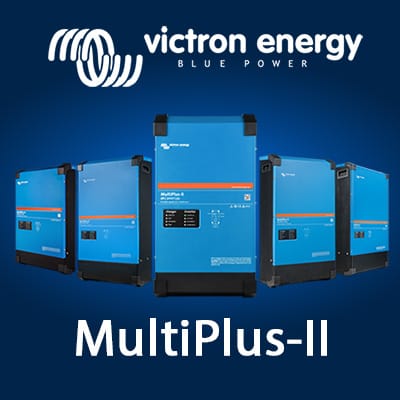
Victron MultiPlus-II Range Gains Expanded CEC Approval
The Clean Energy Council (CEC) has updated its approved inverter list to include additional Victron MultiPlus-II models under the AS/NZS 4777.2:2020 standard, valid until 2027–2028.
Now certified for residential & commercial use in:
On-grid installations — with no power export back to the grid, single or three-phase. (No Battery Rebate available on grid)
Off-grid installations — with up to 4 units per phase in parallel. Battery rebate is available, when installed by an OFFGRID licensed CEC/SAA installer (to be clear, this is a very uncommon license even for Solar installers)
Model
Approval Expiry
MultiPlus-II 48/8000/110-100 230V
Jul 10, 2028
MultiPlus-II 48/10000/140-100 230V
Jul 10, 2028
MultiPlus-II 48/15000/200-100 230V
Jul 10, 2028
Existing Approved Models
The 3 kVA & 5 kVA models (including GX versions) remain approved under:
Stand-Alone Inverter with Generator Input – Battery Only
Stand-Alone Inverter with Grid Input – Battery Only (-AU models)
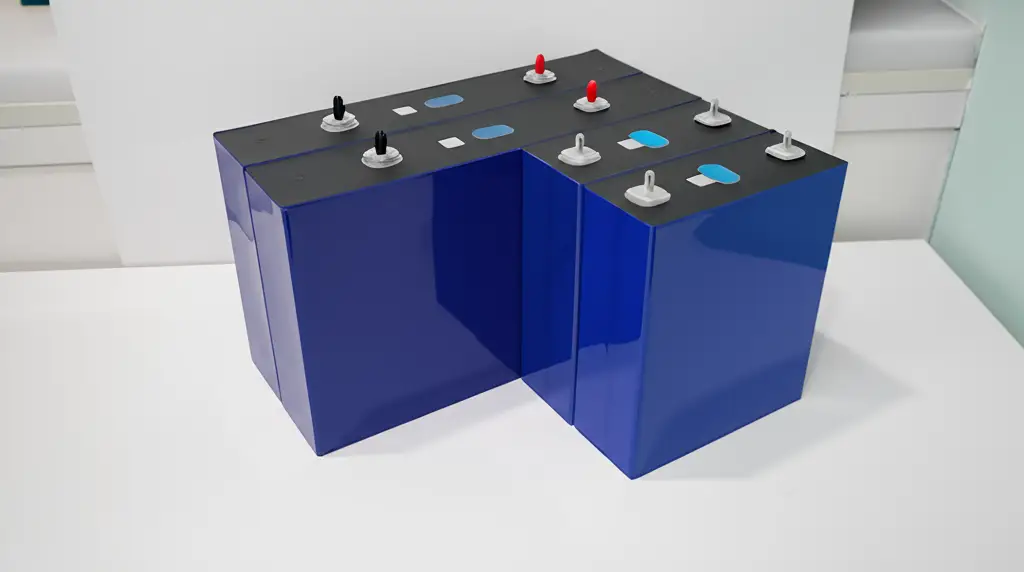
EVE Energy’s new MB56 (also known as LF560K) battery cell is potentially going to make waves in the world of energy storage, promising to revolutionize everything from home solar systems to large-scale grid infrastructure. This LiFePO4 (LFP) prismatic cell boasts an impressive blend of high capacity, extended lifespan, and enhanced safety, setting a new benchmark for the industry.
EVE MB56 seen next to the EVE MB30 cell. Cycle life can be as high as 12000 cycles, but for residential non thermally managed battery cells, EVE has given them a cycle life of 8000 cycles according to the datasheet they have released. – Source EVE BATTERY USA WEBSITE
At its core, the MB56 offers a nominal capacity of 628Ah and a nominal voltage of 3.2V. What truly sets it apart, however, is its ultra-long cycle life, ranging from 8,000 to an astonishing 12,000 cycles to 70% of its original health. This longevity is a result of EVE’s innovative manufacturing techniques and improved material composition for both the cathode and anode.
Beyond its impressive lifespan, the MB56 prioritizes safety and efficiency. It features very low internal resistance, minimizing energy loss and maximizing performance. The cell is designed with robust safety features, including an explosion-proof and leak-free construction, and excellent thermal stability. EVE is even integrating “smart cell” technology for real-time monitoring of crucial parameters like temperature and gas levels.
The MB56 is a true workhorse, designed for a wide array of applications. Its primary focus is large-scale energy storage systems, encompassing utility-grade grid storage, commercial building solutions, and seamless integration with renewable energy sources. It’s also an ideal candidate for off-grid systems, providing reliable power for homes and remote setups. Furthermore, its “Automotive Grade” designation makes it suitable for electric vehicles, particularly buses, heavy-duty trucks, and commercial fleets, as well as marine applications. For the DIY enthusiast, its high capacity, pre-welded studs, and included busbars make it an attractive option for building custom battery packs.
EVE Energy began pilot production of the MB56 around December 2024 at its state-of-the-art “Super Factory” in Jingmen, China. This highly automated facility is designed for precision and efficiency, with the capacity to produce a remarkable 1.5 cells per second.
In essence, the EVE MB56 represents a significant leap forward in battery technology. Its combination of high capacity, exceptional cycle life, and advanced safety features not only drives down overall system costs but also simplifies integration, paving the way for a more efficient and sustainable energy future.
Limited stock is available, but they are now in production for available to purchase in limited quantities, we also have
Further news, we may be moving away from the JK BMS for some of our higher end batteries. We have already started using a PACEBMS on our LiFePro 51.2v 100ah batteries, and the software is great, the touchscreen is really easy to set the required protocol and the ability to connect to the BMS remotely is ideal, featuring both Wifi and Bluetooth.
The new models just recently annouced now feature 2A Active cell balancing, which is a really great feature, it not only extends the pack life, when the cells begin to fade with age, it also makes the balancing function, must faster than traditional energy storage BMS.
The new PACE BMS offers OTA (over the air) updates, a cleaner and nicer software setup, on Tier 1 grade hardware with 2A active balancer built into the board. This is significant, and allows us to be able to remotely update any BMS that is connected to the WIFI network at the installed location, firmware brings new features in particular inveter support and updates.
EVE Energy is currently the 4th or 5th largest Lithium battery manufacturer in China that is based on 2024/2025 sales figures and revenues. That places them at around the 10th largest global battery manufacturer, but in terms of LFP chemistry probably around 3rd or 4th Globally, as LFP is really dominant in China, and the rest of the world is still mostly producing NMC or NCA, with its higher energy density.
Eve Energy announced on June 9, 2025 its board approval to issue H-shares for a HKEX listing to bolster its international brand, following 8.3 GWh of global EV battery installations in early 2025 cnevpost.com.
Other chinese battery companies who have already or are planning the same
CATL completed a US$4.6 billion secondary listing in May 2025, the largest IPO of the year
CALB went public in October 2022, raising HK$10.1 billion with its HK$38-per-share IPO cnevpost.com.
Rept Battero Energy debuted on December 18, 2023 under ticker 0666, raising HK$2.0 billion at HK$18.30 per share cnevpost.com.
BYD’s Date of IPO: 31 July 2002 inaugural public offering aimed to raise capital for expansion beyond batteries into automotive manufacturing, shortly before acquiring Xi’an Qinchuan Automobile in January 2003 en.wikipedia.org. BYD is the Tesla of China, vertical integration, they make almost 100% of the parts inside their own Electric vehicles
SVOLT – The sister company of GWM (Great Wall Motors) , if you don’t already know they have plans to capture some of BYD’s market share. In Australia you might see their battery in the GWM Cannon Alpha ute, though SVOLT does make a considerable number of NMC battery packs, and the Cannon Alpha is not LFP like the BYD. SVOLT like BYD does make a few Blade batteries, and we at LiFePO4 Australia have supplied those to customers before.
EVE ENERGY
Founded in 2001 and headquartered in Huizhou, Guangdong, EVE Energy has established itself as a key player in the lithium-ion battery industry, catering to both electric vehicles (EVs) and energy storage systems. As of the first four months of 2025, the company held a 2.7% share of the global EV battery market, ranking ninth worldwide.
EVE Energy’s international footprint includes significant investments and partnerships:
Malaysia: A new battery plant in Kulim District, Kedah, began operations in February 2025, producing 21700 cylindrical-format NMC battery cells.
Hungary: Construction is underway for a battery factory in Debrecen, set to supply BMW’s next-generation vehicles with 46mm diameter cylindrical NMC cells.
United States: Through a joint venture named Amplify Cell Technologies, EVE Energy is establishing a battery manufacturing facility in Mississippi to serve the North American commercial vehicle market.
Global Offices: The company has launched regional headquarters across various regions, including Asia-Pacific, Southeast Asia, and the Americas, to bolster its global operations.
Hong Kong Listing: A Strategic Move
The decision to list on HKEX aligns with EVE Energy’s goal to access international capital markets and support its global expansion. The company has received board approval for the issuance of H-shares and is collaborating with intermediaries to facilitate the listing process. This move follows similar strategies by other Chinese battery manufacturers, such as CATL, which successfully raised approximately $4.6 billion through its Hong Kong listing in May 2025. globaltimes.cn+2ess-news.com+2apnewsweek.com+2 channelnewsasia.com+1morningstar.com+1
Implications for the Industry
EVE Energy’s Hong Kong listing is indicative of a broader trend among Chinese battery manufacturers seeking to diversify funding sources and enhance their global presence. By tapping into international capital markets, these companies aim to accelerate their expansion and innovation efforts, contributing to the global advancement of electric mobility and energy storage solutions.
As EVE Energy progresses with its listing plans, investors and industry observers will be closely monitoring the company’s performance and its impact on the competitive landscape of the global battery industry.
Step-by-step summary of the Cheaper Home Batteries Program policy paper and some rough cost comparisons to help you work out the best option for you:
1. Introduction and Context:
The Challenge: Australia leads the world in rooftop solar panel installations. However, the adoption of small-scale battery systems (which store solar energy for later use) is lagging. The primary reason for this is the high upfront cost of purchasing and installing these batteries.
Why Batteries are Important:
They help secure renewable energy resources by storing excess solar power.
They improve the overall reliability and stability of the energy system.
They allow households and businesses to maximize their use of self-generated solar power, reducing reliance on the grid and potentially lowering electricity bills.
Purpose of the Policy Paper: This document outlines the Australian Government’s plan to support the uptake of battery systems by making them cheaper. It details the key features of the “Cheaper Home Batteries Program,” focusing on who is eligible and how the program will work. It’s important to note that some details might change before the final regulations are approved.
2. The Cheaper Home Batteries Program: Core Details
Program Name: Cheaper Home Batteries Program.
Primary Goal: To significantly reduce the initial purchase and installation cost of small-scale battery systems for Australian households, businesses, and community facilities.
Start Date: The program is scheduled to begin on July 1, 2025.
Delivery Mechanism:
The program will be implemented by expanding the existing Small-scale Renewable Energy Scheme (SRES).
The SRES currently provides incentives for installing small-scale renewable energy systems (like rooftop solar panels) through the creation of Small-scale Technology Certificates (STCs).
The program will extend this STC mechanism to include eligible battery systems.
3. Financial Incentives (The Discount):
Target Discount: The program aims to reduce the upfront cost of an eligible battery system by approximately 30%.
Discount Value in 2025:
This 30% discount is estimated to be equivalent to $372 per kilowatt-hour (kWh) of the battery’s usable capacity.
In terms of STCs, this translates to 9.3 STCs per kWh of usable capacity in the year 2025.
Progressive Reduction: The level of discount (and therefore the number of STCs) will gradually decrease over time. By the year 2030, the discount is planned to be half of what it is in 2025. This is designed to encourage earlier adoption.
Funding the Discount: The Australian Government will purchase the STCs generated by the battery installations from the STC Clearing House. This government purchase effectively covers the cost of the discount provided to consumers.
4. Eligibility Criteria for Battery Systems and Applicants:
Who is Eligible? The program is open to:
Households
Businesses
Community facilities
Battery System Size:
Eligible battery systems must have a usable capacity between 5 kWh and 100 kWh.
However, the discount (STCs) will be provided for a maximum of 50 kWh of usable capacity per system.
Solar PV System Requirement:
The battery system must be installed in conjunction with a new or existing solar photovoltaic (PV) system.
Accreditation Standards:
Both the battery itself and the inverter (which converts DC power from the battery to AC power for household use) must be accredited by the Clean Energy Council (CEC). This ensures they meet certain quality and safety standards.
On-Grid vs. Off-Grid Systems:
On-Grid Systems: Batteries connected to the main electricity grid must be Virtual Power Plant (VPP) capable.
VPP Capability: This means the battery system can be controlled (with the owner’s permission) to work in coordination with other distributed energy resources (like other batteries or solar systems) to provide services to the electricity grid. This can help with grid stability, managing peak demand, and integrating more renewable energy.
Off-Grid Systems: Batteries not connected to the main electricity grid do not need to be VPP capable.
Relationship with Other Incentives: The support provided under this federal program will be in addition to any rebates or incentives offered by state and territory governments. This means consumers may be able to “stack” incentives for a greater overall discount.
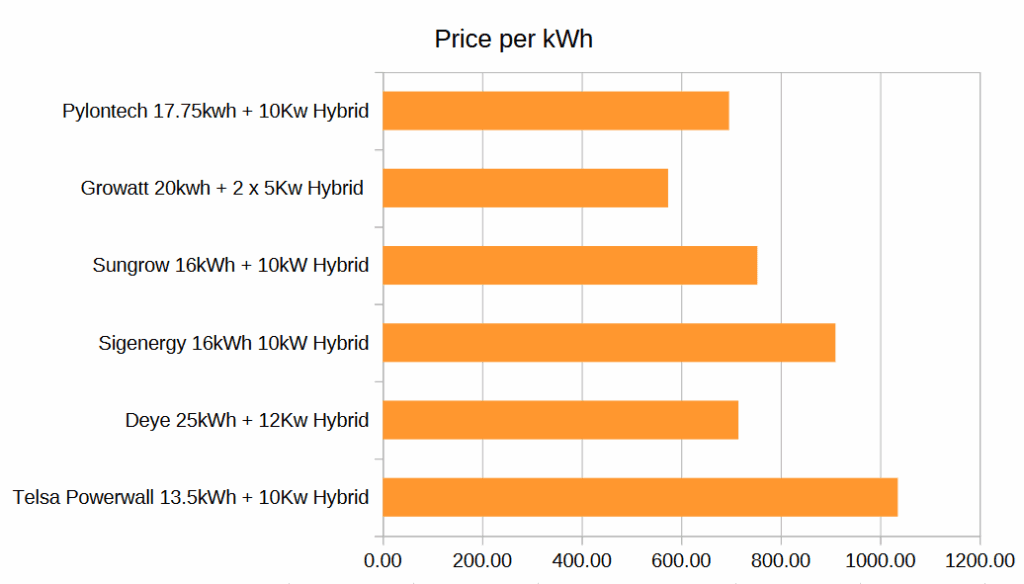
5. Some Battery and inverters that may be eligible at estimated costs based on national averages
Battery
Usable kWh
Retail Price
Average Install Cost
Subtotal
Rebate
After Rebate
Price per kWh
Telsa Powerwall 13.5kWh + 10Kw Hybrid
13.5
14000
5000
19000
5022
13978
1035.41
Deye 25kWh + 12Kw Hybrid
23
21000
4000
25000
8556
16444
714.96
Sigenergy 16kWh 10kW Hybrid
15.6
15000
5000
20000
5803.2
14196.8
910.05
Sungrow 16kWh + 10kW Hybrid
16
14000
4000
18000
5952
12048
753.00
Growatt 20kwh + 2 x 5Kw Hybrid
18.4
13400
4000
17400
6844.8
10555.2
573.65
Pylontech 17.75kwh + 10Kw Hybrid
16.85
14000
4000
18000
6268.2
11731.8
696.25
6. Regulatory Framework and Administration:
Primary Administrator: The Clean Energy Regulator (the Regulator) will be responsible for administering the Cheaper Home Batteries Program as an expansion of the SRES.
Responsibilities of the Clean Energy Regulator:
Ensuring overall compliance with the program’s rules and regulations.
Validating applications for STCs related to battery installations.
Issuing the STCs once applications are validated.
Managing a system of inspections for installed battery systems to ensure they meet requirements.
Educating the industry (installers, suppliers) about the program.
Taking compliance and enforcement action if rules are broken.
Role of State and Territory Regulators:
State and territory government bodies will continue to be responsible for aspects related to:
Electrical safety of battery installations.
Ensuring installations comply with local electrical codes and standards.
Consumer protection issues related to the sale and installation of battery systems.
In summary, the Cheaper Home Batteries Program aims to significantly boost battery adoption in Australia by making them more affordable through an expansion of the SRES. It sets clear eligibility criteria focused on system size, solar integration, product accreditation, and VPP capability for on-grid systems, with the Clean Energy Regulator overseeing its implementation.
For up to date information contact us and we can send you a copy of the policy.
This information can tell us about LFP prismatic format cells and how the SOC to voltage works. This data is pulled from an online resource, where an EVE MB30 cell was discharged at 40Amps of current from 3.6v to 2.5v.
The total capacity of this cell was approx 333ah and the average voltage was 3.23V throughout this 3.6-2.5v range.
Some important points. 10% was approx 3.09V under load. This is as low as we recommend taking the LFP cells to avoid any significant damage. Many users try to aim for the 20% point which cant really be achieved through voltage alone, a shunt or BMS with shunt like the JK Inverter BMS, would be needed to stop the battery at 20% SOC.
This will probably not be accurate, but under a load of about 0.2C the voltage of 20% SOC MB30 cells would be about 3.19V.
EVE MB30 LiFePO4 Cell: Discharge Voltage vs. State of Charge
Plot based on the provided discharge curve data (interpolated to 2% SOC increments)
*This plot represents the **discharge curve** of the EVE MB30 cell, showing voltage as the battery discharges from 100% to 0% SOC.
Data points were extracted from the provided image and interpolated for smoother representation.
EVE MB31 LiFePO4 Cell: Charge Voltage vs. State of Charge
Plot based on the provided charge curve (2% SOC increments)
*This plot represents the **charging curve** of the EVE MB31 cell, showing voltage as the battery charges from 0% to 100% SOC.
The voltage profile during charging can differ from that during discharging.
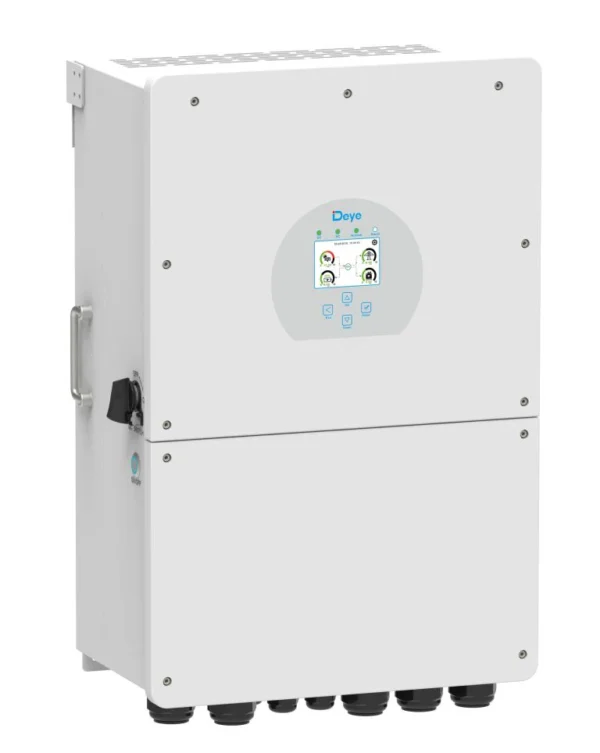
Battery throughput: SG02 handles ~20 % higher charge/discharge current, so faster cycling if you need rapid charge/discharge (e.g. peak-shaving).
Physical footprint: SG02 is ~25 % lighter and ~30 mm shallower, making it easier to wall-mount or fit into compact enclosures.
Backup capability: SG01’s 100 A passthrough gives a heftier emergency load supply than SG02’s 60 A, so if you plan heavy critical loads during grid-out, SG01 has the edge.
Efficiency & performance: Both share the same peak efficiency and grid-compliance; SG01’s MPPT efficiency spec is stated slightly tighter (99.90 %) but in real-world use you’ll see both tracking very near 99 %.
Choose SUN-12K-SG02LP1-AU-AM3 if you prioritise higher battery current and a lighter, more compact unit; choose SUN-12K-SG01LP1-AU if you need maximum passthrough for backup loads and don’t mind the extra size/weight.