Lithium Battery-school News
Next Generation LiFePo4 Cells – Technical Assessment

Energy storage cells can store electrical energy and release it when needed, such as during peak demand or power outages. They can also help balance the grid, reduce carbon emissions, and increase energy efficiency. Energy storage cells have various applications, such as home energy storage, grid-scale energy storage, electric vehicles, and portable devices.

Let’s dive into these four topics and see how they will ensure LiFePo4 and other relevant battery storage chemistries, will become increasingly more affordable on a TCO basis.

Increased capacity, competition in mass production

One of the main challenges for energy storage cells is to increase their capacity, which means the amount of energy they can store per unit volume or weight. Higher capacity means higher energy density, which can reduce the cost and space requirements of energy storage systems. Higher capacity also means longer duration, which can extend the operating time of energy storage systems.

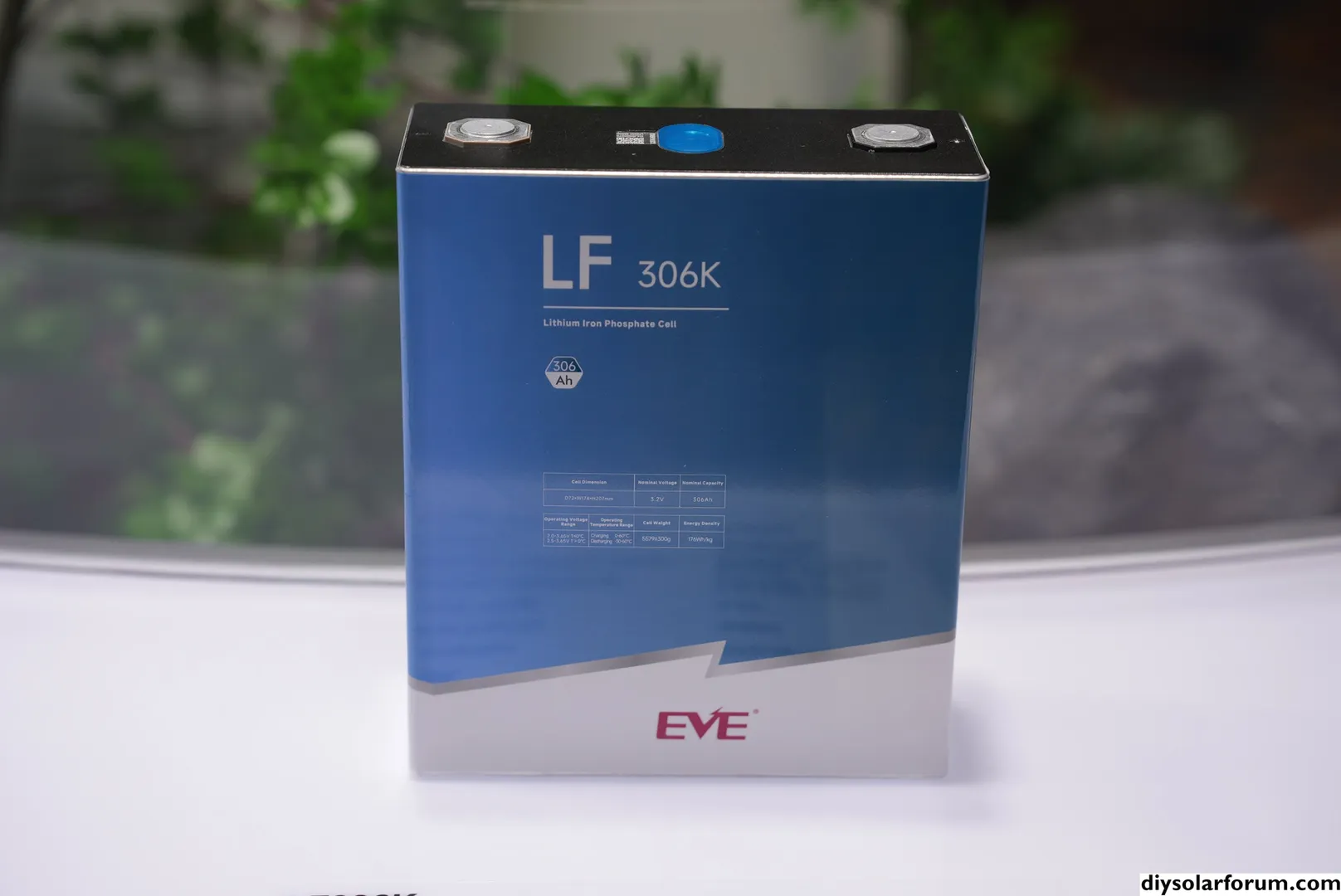
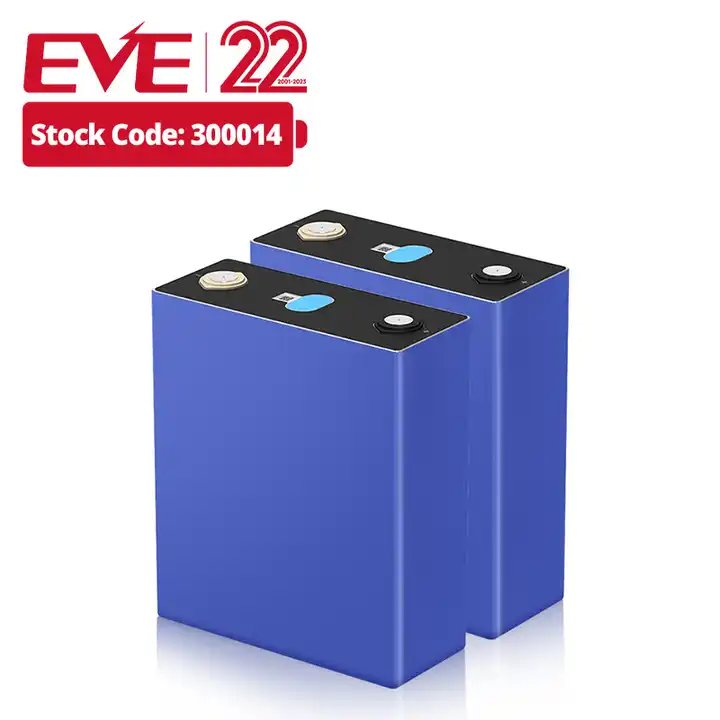
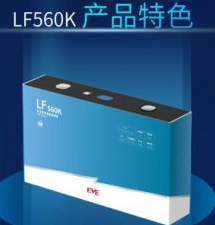
Many energy storage cell manufacturers have been developing and releasing high-capacity products in recent years, especially in the lithium-ion battery sector. For example, EVE has released information about the upcoming LF560K energy storage battery. The battery capacity is at least 560Ah (reported to be as high as 628ah), twice that of LF280K, and the energy of a single battery reaches 1.792kWh (reportedly 2000wh, also known as 2kwh per cell)

EVE 280ah 304ah
LF560K-560k-EVE-LFP-Lifepo4
winston wb lyp700aha lifeypo4 3
winston-wb-lyp700aha-lifeypo4

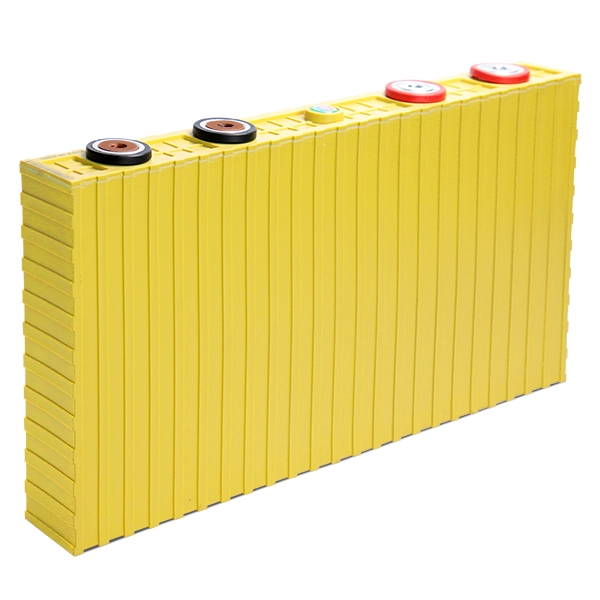
We should quickly mention that Winston Thundersky has been producing larger format cells such as the 700ah, 1000ah and 10000ah for a long time, but the competitiveness in terms of price and weight is being left for dead by the new generation of LFP manufacturers such as CATL, BYD, GOTION, EVE, HITHIUM, Envision AESC, Great Power, REPT, Narada and energy storage battery cell companies have successively released 300Ah and above capacity battery products . While the capacity is increasing, mass production and delivery of 300Ah and above capacity batteries have also started. It is worth mentioning that Envision AESC has achieved mass production and delivery of 305Ah energy storage cells in the past two years, and recently released 315Ah energy storage cells within the same size and format.

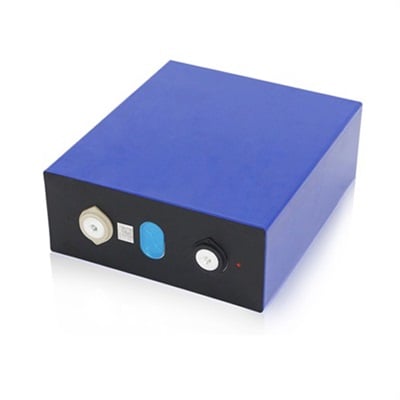
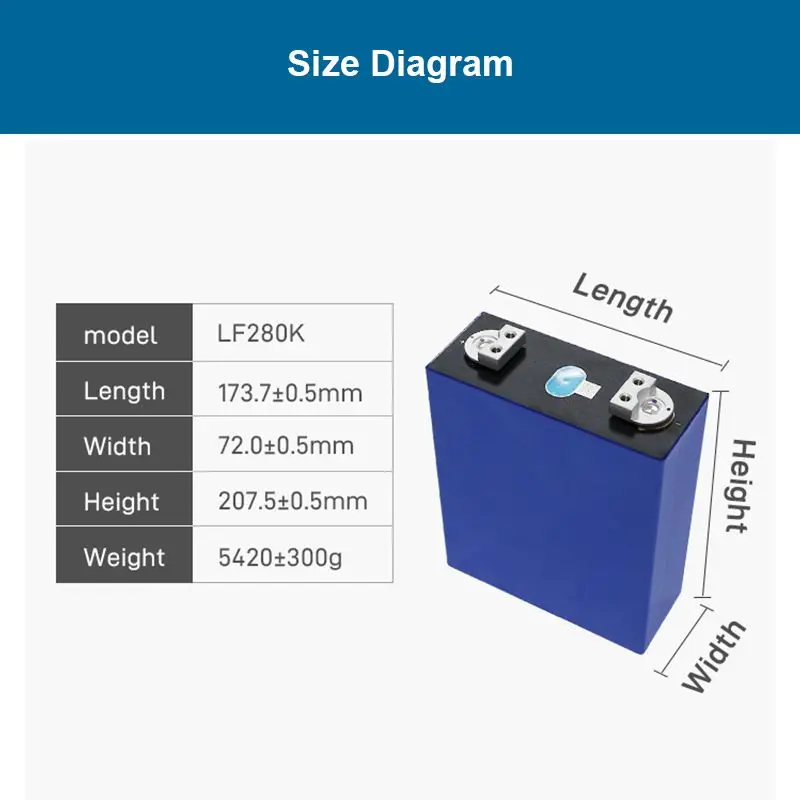
Right now in 2024, the 173 x 73 x 207 mm battery is the most popular for DIY because it has the best cost per kwh. Due to the competition in this area. In late 2023, Envision lead the pack with pricing that was about 50% of the going prices from 2021-2023.

Mass production and delivery of high-capacity batteries can create economies of scale and reduce the cost per kWh of energy storage systems. It can also increase the competitiveness of energy storage cell manufacturers in the global market and meet the growing demand for large-scale energy storage projects.

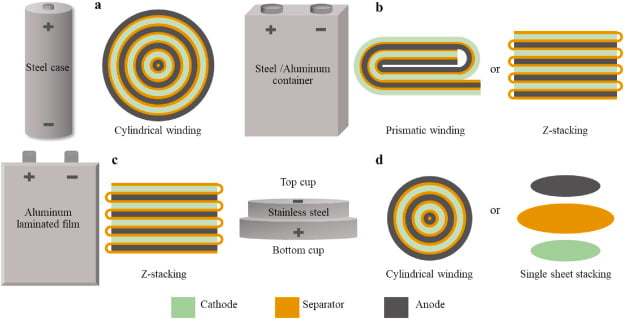
Energy storage cell stacking vs winding comparison

Lithium battery Stacking vs Winding

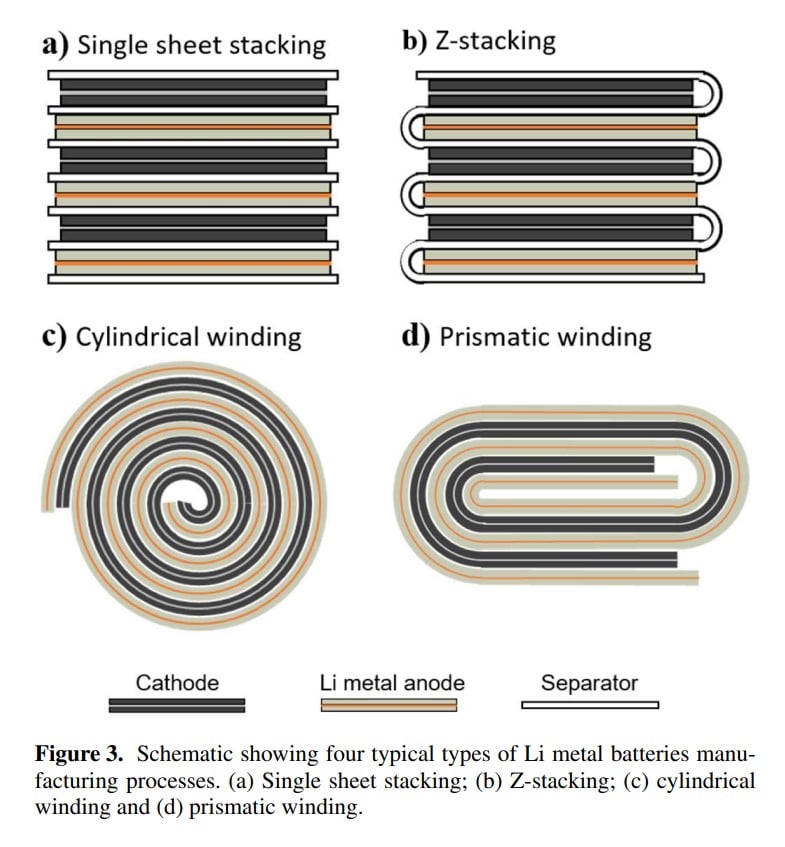
Another challenge for energy storage cells is to optimize their structure and manufacturing process to improve their performance and reliability. One of the key factors that affect the structure and process of energy storage cells is whether they use stacking or winding methods to arrange the electrodes and separators inside the cell.

Stacking is a method that stacks the positive and negative electrodes and separators layer by layer to form a cell. Winding is a method that winds the positive and negative electrodes and separators into a spiral shape to form a cell. Both methods have their advantages and disadvantages.

Stacking can achieve higher packing density and higher capacity than winding, but it requires more precise alignment and cutting of electrodes and separators, which increases the complexity and cost of manufacturing. Winding can achieve better uniformity and consistency than stacking, but it may cause more internal resistance and heat generation, which reduces the efficiency and safety of the cell.

Different manufacturers may choose different methods according to their own technical advantages and market positioning. For example, EVE uses stacking for its LF560K battery, while Envision AESC uses winding for its 315Ah battery . The choice of stacking or winding may also depend on the shape and size of the cell, which we will discuss next.

Longer cycle life

The number of lugs of stacking batteries is twice that of winding, and the more the tabs, the shorter the electron transmission distance and the smaller the resistance.

It is well known that when the voltage and time are constant, the larger the resistance, the less heat generated, and the smaller the resistance, the smaller the heat generated, so the service life of stacking batteries is relatively longer than winding batteries to compare stacking battery vs winding battery. This is the main reason we have seen cell life increase from 2000 cycles to 12000 cycles. These numbers are in ideal conditions, which almost certainly are unachievable in almost all DIY battery projects.

Stacking battery has a Lower yield rate, which is why there are so many B grade cells for sale

The winding battery is easy to cut and has a high pass rate. Each battery cell only needs to cut the positive and negative electrodes once, which is less difficult. However, compared stacking battery vs winding, each battery has dozens of small pieces in stacking cutting, and each small piece has four cut surfaces, which is prone to defective products.

Lithium battery Stacking vs Winding 2

A recent industry leak stated “the iPhone 15 line arriving in the coming months would be equipped with batteries with stacked structure. In standard ones, the three main elements (anode, cathode and separator) are three thin sheets rolled up on top of each other. In this type of battery, however, the separator is folded in a zigzag and takes up less space in the battery, and therefore there is more space for increase its capacity due to higher energy density. Furthermore, this type of arrangement ensures that the temperatures are dissipated more evenly, avoiding concentrating them in a single space and prolonging their longevity”.

The size of energy storage cells

The size of energy storage cells is another important factor that affects their performance and application. The size of a cell determines its volume, weight, surface area, heat dissipation, internal resistance, power density, etc. Generally speaking, larger cells have higher capacity but lower power density than smaller cells. Larger cells also have more challenges in heat management and safety than smaller cells.

The size of energy storage cells can be measured by their diameter and height (for cylindrical cells) or length and width (for prismatic or pouch cells). The common sizes for lithium-ion batteries range from 18650 (18mm diameter x 65mm height) to 21700 (21mm diameter x 70mm height) for cylindrical cells, and from 20Ah to 560Ah for prismatic or pouch cells.

Different sizes of cells may suit different applications of energy storage systems. For example, smaller cells may be more suitable for portable devices or electric vehicles that require high power density and fast charging/discharging. Larger cells may be more suitable for home energy storage or grid-scale energy storage that require high capacity and long duration.

The size of energy storage cells may also change with the development of technology and market demand. For example, some manufacturers are developing solid-state batteries that can achieve higher energy density and safety than liquid or gel electrolyte batteries, which may enable smaller and lighter cells . Some manufacturers are also developing modular and scalable energy storage systems that can use different sizes of cells according to the needs of customers .

Industry calls for long cycle of battery cells

The last trend we will discuss is the demand for long cycle life of energy storage cells. Cycle life is the number of times a cell can be charged and discharged before its capacity drops below a certain threshold (usually 80% of its initial capacity). Cycle life is an important indicator of the durability and cost-effectiveness of energy storage cells.

Long cycle life can extend the lifespan of energy storage systems and reduce the need for replacement or maintenance. Long cycle life can also reduce the environmental impact of energy storage systems by reducing the waste and emissions generated by cell production and disposal. Long cycle life can also increase the value of energy storage systems by enabling more applications and services, such as frequency regulation, peak shaving, demand response, etc.

The cycle life of energy storage cells depends on many factors, such as the chemistry, structure, process, operation, and management of the cells. Different types of cells may have different cycle life characteristics. For example, lithium iron phosphate (LFP) batteries have longer cycle life than lithium nickel manganese cobalt oxide (NMC) batteries, but lower energy density . Different applications of energy storage systems may also have different cycle life requirements. For example, home energy storage may require longer cycle life than electric vehicles, because home energy storage may operate more frequently and continuously than electric vehicles.

Many energy storage cell manufacturers have been improving their cycle life performance by optimizing their materials, designs, processes, and systems. For example, Envision AESC claims that its 315Ah battery can achieve more than 10,000 cycles at 80% depth of discharge (DOD) . TYCORUN ENERGY claims that its home energy storage products use lithium iron phosphate batteries, which have a deep cycle of more than 6000 times with low self-discharge rate .

Conclusion

In summary, we have discussed four trends in the development of energy storage cells: increased capacity, competition in mass production; energy storage cell stacking vs winding comparison; discussion on the size of energy storage cells; economy calls for long cycle of battery cells. These trends reflect the technological innovation and market demand in the energy storage industry, which is expected to grow rapidly in the coming years. Energy storage cells are key components for renewable energy systems, which can provide clean, reliable, and affordable electricity for various applications.

We hope this blog post has given you some insights into the current state and future direction of energy storage cells. If you are interested in learning more about energy storage products and solutions, please visit our website or contact us for more information.

Here is a nice professional production video by EVE Energy. Footage is taken about 18 months ago.
In their most advanced factory, which produces LF280K

Lithium Battery-school Blog
AS/NZS3001.2:2022 Electrical system safety in RVs (Caravans, Motor Homes, and Camper trailers)
What is the new standard?

AS/NZS3001.2:2022 outlines requirements and guidelines for various aspects of the electrical system in Caravans, RVs, and Camper trailers. The standard considers wiring, inverters, solar panels, and batteries. The standard also requires batteries to comply with AS IEC 62619.

What is AS IEC 62619 Certification?

AS IEC 62619 Certification is a globally recognized standard for lithium batteries, developed by the International Electrotechnical Commission (IEC).  IEC 62619 specifies requirements and tests for the safe operation of secondary lithium cells and batteries used in industrial applications, including stationary applications. 

This certification assures consumers that the battery they are purchasing has undergone rigorous testing and meets all the necessary requirements for safe operation. 

What is driving the change in standards?

The change in standards is driven by the need to improve safety and consistency in the storage of batteries in RVs. The new standards, AS/NZS3001.2:2022, have been developed in consultation with electrical experts and industry professionals to address safety concerns and ensure standardization in the industry.

When are they enforced from?

The new standards are enforceable from 18 November 2023.

Who does it apply to?

The standards apply to everyone buying or using a new recreational vehicle build but are of particular importance to manufacturers and importers of recreational vehicles.

Do I need to comply to the new standard?

The standard applies for any new installations from the 18th of November 2023 (the effective date). The new standard applies to any new electrical installations (vehicle builds) conducted after the effective date, but not to existing installations. Installations prior to the effective date will be assessed against the standards at the time of installation so long as they meet basic safety standards.

Typically, repairs may be conducted using methods, fittings and fixtures that were acceptable at the time of the original installation.   Alternatively, currently available methods fittings and fixtures available as direct replacements may be used, providing that basic safety requirements are met. 

Alterations, e.g. replacing lead acid batteries with lithium batteries, are to be completed in line with the current (new) standards and shall not compromise the remainder of the installation.  

We recommend consulting a professional and ensuring the installation complies with the new standard.

Will it affect my existing installation?

The new standards are enforceable on new RVs, so they are unlikely to affect your existing installation. However, if you plan to make any alterations or updates to your RV’s electrical system, including battery system, it is advisable to consult with a qualified professional to ensure compliance with safety standards.

In a nutshell, what are the key changes?

The key changes include requirements for the installation, mounting and wiring of electrical systems into RVs including inverters, solar, wiring and batteries. With respect to batteries the changes focus on minimising the potential for adverse events by considering protection against harmful gasses and fumes and to prevent their build up, fire, damage from water ingress, damage from physical impact and to make sure they are installed and operating withing the batteries specifications.

Do all LiFePo4 Australia lithium batteries comply with the new standard?

The Lifepo4 Australia range of batteries, either comply or are under application with IEC62619, a requirement of the new standard. If these batteries are installed in accordance with the regulations, they are considered to be meeting the standard. You must check the website and or ask us if you require your battery purchase to be used in accordance with this standard.

From the standards

(a) be installed externally, i.e. behind a wall, compartment or barrier that prevents the egress of gases into the habitable area; and
(b) not enter the habitable area of the structure; and
(c) be installed to operate within the manufacturer’s defined operating temperatures, including IP rating; and
(d) be installed in a suitable battery container where the battery manufacturer has not provided encapsulated cells.

What do the standards say about lithium batteries in caravan/camper trailers?

The new regulations stipulate that a lithium battery cannot be installed in a habitable living area, such as inside a caravan or camper trailer, unless it is placed in a sealed enclosure, or the installation location is sealed off from the habitable area and the sealed off area is vented to the exterior environment. 

Solar panels

AS/NZS 3001.2:2022 Electrical Installations Standard also covers the use of solar panels. One significant change to the standard is the requirement for individual fusing and isolation points prior to the panels being connected in parallel. This is to prevent one faulty panel from taking out the entire string, which could lead to a fire. With individual fusing, any faulty panel will blow the singular fuse, and the rest of the system will continue to operate as it should.

How do I get a copy of these regulations / can you send me a copy of them?

You can obtain a copy of AS/NZS3001.2:2022 by purchasing it from Standards Australia. Or alternatively, you can ensure you installer is qualified and is following the new standards by asking them if they comply.

Where do I get more information about these regulations?

Can the batteries be mounted on the outside of the caravan (i.e. Chassis)?

Yes, as this is not classed as a habitable environment, lithium batteries can be mounted on the exterior of the caravan. When installing outside the vehicle it is important to ensure that the installation ensures the batteries are operated within their specifications. The installation must be protected from physical damage, operating within its temperature range, adequately IP rated to protect against water and dust etc. 

How do I install batteries within the standard if the batteries are to be mounted inside the caravan?

When installing batteries inside the caravan while adhering to the standard, it is essential to place the batteries within a sealed enclosure, with venting directing gases outside of any habitable areas whilst also ensuring that the enclosure (venting port) is environmentally protected. The enclosure must provide access for installation and maintenance and must have effective seals. A screwdriver or special tool must be required to access the enclosure. Whilst the standards do not provide specific guidance on the material that should be used to construct this enclosure it should be suitable to provide a sturdy home for the batteries and survive the roads conditions that the Caravan/RV is designed for.

What’s the difference between Lead Acid and Lithium battery installations?

Lead acid (LA) batteries are also required to be sealed off from the habitable area and to be vented externally. Because LA batteries release gasses that are lighter than air they need two vents, one at the top and one at the bottom of the enclosure. An enclosure that is design specially for Lithium batteries, i.e., one has one vent must be clearly labelled as only being suitable for lithium batteries and to not install LA batteries in the enclosure.  

Are lithium batteries safe to use?

Lithium batteries with an in-built BMS that monitors and balances individual cell voltages, monitors charge voltage and current and ensures the battery does not drop below an acceptable charge level are safe to use when installed and maintained correctly. We always recommend the use of LFP Lifepo4 chemistry as it is much safer than NCM, NCA and similar chemistries which include Nickel and Cobalt.

What are the repercussions of installing non-approved lithium after Nov 18?

As with any non-conformance to Australian Standards, the vehicle in question can be defected and any manufacturer or importer of non-compliant vehicles may be prosecuted to the extent of the law.

What about in-vehicle situations? Can batteries be installed in-cabin or in the engine bay still due to these standards?

The changes to AS/NZS 3001.2:2022 do not explicitly consider in-vehicle installations unless they are installed in a habitable area, however the recommendations on installation including gas venting, fire, physical and environmental protection are still valid for all installations.

Residual Current Device (RCD)

Inverters must be installed using a Residual Current Device (RCD) which will provide protection in a similar manner to all AC wiring which is installed with an RCD at the input to the RV. This would need to be a separate RCD and labelled appropriately that an inverter or and inverter/charger is installed.  The old way of just buying an off the shelf inverter and connecting it to your battery stored under the bed or seat and then plugging in an extension lead is to be thing of the past.  The unit must be accessible and have a visible light to identify the status. 

Solar Panels

Solar panels must have over current protection devices – fusing must be installed on the positive cable at the actual panels where there is circulating current.  Also to note is that cable suitable for solar panel installations must be used – eg. the cable must be double insulated and also IP rated for the harshness of the Australian sun and the environmental conditions. RVers should give due regard to any portable panels that they decide to connect to their system in that these should also be fused and incorporate appropriate cables. 

Fusing

Fusing must also be provided to protect batteries and this again, should be as close as practicable to the battery itself and on the positive wire.  We would recommend the slow blow blade fuses generally used in automotive applications.  These allow for some momentary or temp over current or inrush and are not designed to protect highly sensitive electrical equipment but will certainly blow when there is sustained over current.  In the case of RV installations it is used not only to prevent damage to appliances and chargers etc but also to prevent the wiring insulation from melting as most manufacturers will only used the minimum wiring gauge require to meet voltage drop.

From the standards

(a) be installed externally, i.e. behind a wall, compartment or barrier that prevents the egress of gases into the habitable area; and
(b) not enter the habitable area of the structure; and
(c) be installed to operate within the manufacturer’s defined operating temperatures, including IP rating; and
(d) be installed in a suitable battery container where the battery manufacturer has not provided encapsulated cells.

Further Reading and more detailed analysis of the Standard
Sourced from Our Blog New Standards for Fitment of Batteries to Caravans – Electrical Installations Standard (AS/NZS 3001.2:2022) (12voltdirect.com.au)

AS/NZS 3001.2:2022 Electrical installations – Connectable electrical installations and supply arrangements; Part 2: Connectable electrical Installations is a key Australian Standard, covering electrical installations in recreational vehicles (as well as other connectable installations used for accommodation, habitation or commercial purposes).  This Standard has recently undergone a major revision and was published on 18 November 2022.

Caravan Industry Association of Australia holds a seat on the AS/NZS 3001 Standards Australia committee (through Jason Arter) and has worked in collaboration with our member state associations and industry throughout this standard revision project.

The following overview provides a summary of some of the key changes in this revision and is provided as general guidance and information based on our understanding of the electrical Standard requirements.  However, it is important to note that this does not provide an exhaustive list of changes to the standard.  It is strongly recommended that industry businesses make their own investigations and explore the changes to AS/NZS 3001.2:2022 with regard to the recreational vehicles they are producing.  It is also important to ensure that the relevant personnel (e.g. contract or staff electricians, vehicle designers etc.) within your business are up to date with these changes.

There is a significant administration change with the separation of AS/NZS 3001 into 2 parts:

  • AS/NZS 3001.1, Electrical installations — Connectable electrical installations and supply arrangements, Part 1: Site supplies for connectable electrical installations
  • AS/NZS 3001.2, Electrical installations — Connectable electrical installations and supply arrangements, Part 2: Connectable electrical installations

This summary only addresses Part 2 of the Standard (AS/NZS 3001.2) relating to installations within vehicles and relocatable units.

Within Part 2, the Standard has been divided into separate sections that address specific types of connectable electrical installations.  This assists readers to locate the information relevant to their particular installation.  It may mean that a section is not applicable to your installation, depending on the product and features incorporated.

  • Section 1 provides the scope, inclusions, and exclusions of this Standard. The definitions and alterations and repairs have been expanded;
  • Section 2 provides for the external supply connection and onboard supply installation requirements applicable to a connectable electrical installation;
  • Section 3 provides the installation requirements for relocatable units;
  • Section 4 provides the installation requirements for recreational vehicles and non-recreational vehicles;
  • Section 5 provides the installation requirements for extra-low voltage wiring systems and equipment in all connectable electrical installations; and
  • Section 6 provides verification requirements in all connectable electrical installations.

If you are using the Standard for installations in recreational vehicles, refer to sections 1, 2, 4, 5 and 6 – for installations in relocatable units, refer to sections 1,2,3,5 and 6.


Key Changes Summary
One of the most significant changes to the Standard is the inclusion of a section outlining requirements for extra-low voltage d.c. electrical installations (Section 5).  Within this section are significant new requirements for batteries, solar panels (and other sources of supply), wiring, electrical equipment and accessories.

Batteries
Batteries should be rechargeable and have a minimum battery capacity of 40Ah at a 20h discharge rate.

Securing of batteries – no greater than 25mm movement under a pulling force of twice the battery weight.

Clearance to metallic service lines – 300mm clearance around battery terminals, or appropriate shielding in place.  E.g. to gas, diesel, water lines or similar.

Lead-Acid batteries (all types)

  • External location:
    • Open to environment or in a vented battery compartment;
    • Must include a spill tray that can hold at least 20% of the electrolyte held by the battery; and
    • Battery compartment vents must be outside the habitable area.
  • Internal location:
    • Must be in a battery compartment that is vented to the exterior of the vehicle; and
    • Must include a spill tray that can hold at least 20% of the electrolyte held by the battery.
  • Battery compartment ventilation is required via one of three prescribed methods.

Lithium ion batteries (all types)

  • Location – external to the living area, i.e. behind a wall, compartment or barrier that prevents the ingress of gasses to the habitable area.
  • Must be provided with a battery management safety system:
    • Monitors voltage, current and temperature of the battery; and
    • Automatically disconnects for critical conditions.
  • Must be provided with a visible monitoring device:
    • Must display state of charge, may display voltage; and
    • May use wired or wireless communication direct to the battery management safety system.
  • Installer should consult with the battery manufacturer for compartment design and means of venting that are appropriate for the type of battery.

Solar
Renewable energy sources:

  • Installed only for charging batteries;
  • Only generate extra-low voltage; and
  • Must have a device which prevents overcharging of the battery(ies).

Photovoltaic (PV) array installations shall be installed as per this standard (AS/NZS 3001.2).  Further guidance may be sought from AS/NZS 5033.

Overcurrent protection devices shall be provided at the PV array.

PV modules must comply with all national design rules for road safety (i.e. ADRs):

  • Height & width limits.
  • External projections.
  • Vehicle lighting – obstruction.
  • Strength of attachment – normal operation, emergency braking, crash scenario.

Recreational vehicle manufacturers who offer solar power systems are strongly encouraged to investigate the full details of the section on solar (and other renewable) energy sources.

Multiple sources of supply
An installation may be supplied from multiple sources – either external or on-board, and at either low voltage or extra-low voltage.

A changeover device that ensures only one source of supply can be connected at any given time must be provided on (or adjacent to) the switchboard:

  • Where the switchboard is mounted externally, provision is made for the changeover switch to be placed in a prominent position internally; and
  • Where a changeover switch is incorporated into a source of supply (e.g. inverter charger) a label shall be placed at the switchboard indicating the location the device.

When multiple sources of supply are present, low voltage socket outlets in the installation must be labelled to indicate the sources of supply.

Onboard Supplies – Inverters
All or part of the electrical installation may be supplied by an on-board source of supply, such as an inverter or inverter charger.

If an inverter (or inverter charger) is fitted:

  • Controls must be readily accessible;
  • Final sub-circuits supplied by an inverter or inverter charger must be protected by an RCD device. (For an isolated/EPB inverter this can be integral to the unit or external); and
  • The main switchboard must contain
    1. A warning label indicating the presence of an inverter; and
    2. A visible indicator showing the status of the inverter or inverter charger – active online or in standby mode.

Note: Where the switchboard is mounted externally, provision is made for these indications to be placed in a prominent position internally.

Extra-Low Voltage (12V d.c.) Wiring
Protection must be provided against mechanical damage, environment and other external influences:

  • Retention of wiring.
  • Enclosure.

Protect must be provided against physical contact with live parts:

  • Insulation or physical separation.

Wiring must be suitable for its intended use:

  • Current-carrying capacity.
  • Voltage drop.
  • Conductor size requirements.

Separation must be provided from low voltage (240V) wiring.

Another significant area of change in the standard relates to exclusion areas for electrical equipment and accessories.  Importantly, these restricted areas are applied to both low voltage (240V) and extra-low voltage (e.g. 12V d.c.) equipment and accessories.

Exclusion around gas cylinders
The requirements for this area have been aligned with the controlled areas of AS/NZS 5601.2 Gas Installations Standard.

In very broad summary, devices such as switches, motors, appliances cannot be located within a prescribed controlled area around gas cylinders or gas cylinder compartments.

Exceptions are made for electrical fittings and electrical wiring mounted on a drawbar of an RV whose primary function relates to propulsion or roadworthiness of a vehicle.  e.g. trailer plugs, stability controllers, road vehicle lighting.

Damp area exclusion zones – showers, external shower (sinks unchanged)
An exclusion zone has been applied around an external shower – similar to internal bathroom requirements.  Again, exceptions are made for equipment whose primary function relates to propulsion or roadworthiness of a vehicle.

Dimensions of the defined zones around an internal shower remain consistent with the previous standards.  Further clarification has been provided to address some of the typical door arrangements seen in current vehicle designs.  e.g. shower doors hinged part way along a door.

Cooker exclusion zone
The exclusion zone around an open cooktop has been updated to limit the exclusion area to a height above the cooker as far as the range hood or overhead cupboard (or ceiling if neither of these are applicable).  This is a variation from the corresponding zone in AS/NZS 3000, reducing the area that previously extended up surrounding walls, in recognition of the limited space for relocation of electrical equipment in a recreational vehicle setting.

AS/NZS 3001.2 acts to modify the requirements of AS/NZS 3000 in some key areas:

Appliance switching requirements – cooker, A/C, HWS
Appliances are required to be controlled by a switch that is readily identifiable and convenient for its intended use.

This requirement modifies the AS/NZS 3000 requirements relating to isolation switches for air conditioners, hot water services, and cooking appliances, such that these appliances are not required to have separate isolating devices.

Switchboard (main circuit breaker) clearances – in a cupboard
The requirements for a switchboard (or main circuit breaker) located in a cupboard have some key clarifications:

  • Maximum clearance in front of the switchboard (circuit breaker) is set at 600mm from the face of the device.  note: this modifies AS/NZS 3000 requirements that measure from the edge of an open door in some circumstances;
  • Maximum distance from the face of the device to a protruding bench (or another surface) is 600mm; and
  • Clearance from the face of a device to the front of the cupboard must be no more than 50mm.

This overview highlights some of the significant changes for consideration within your business.  Further technical bulletins will follow with more detail of some of these changes during the implementation phase of the Standard.

As AS/NZS 3001 is made mandatory by electrical legislation in each State and Territory.  While it is expected that each respective Regulatory Authority will honour the 12-month transitional provision, they may apply the new Standard requirements at an earlier time.  Caravan Industry Association of Australia and your state caravanning associations are working with the respective jurisdictions to confirm the details of transitional arrangements in each State, particularly around the timing for full implementation and enforcement of the new Standard. 

Blog Lithium Battery-school
Lifepo4 (Lithium) vs Lead-Acid

If you are looking for a reliable and efficient energy storage solution you might be wondering whether to choose lifepo4 or lead-acid batteries. Both types of batteries have their advantages and disadvantages, depending on your needs and preferences. In this article, we will compare lithium and lead-acid batteries in terms of performance, durability, cost, and environmental impact, to help you make an informed decision.

Performance

One of the most important factors to consider when choosing a battery is its performance, which includes its capacity, power, efficiency, and lifespan.

Capacity

The capacity of a battery is the amount of energy it can store and deliver. It is measured in amp-hours (Ah) or watt-hours (Wh). The higher the capacity, the longer the battery can run your appliances and devices.

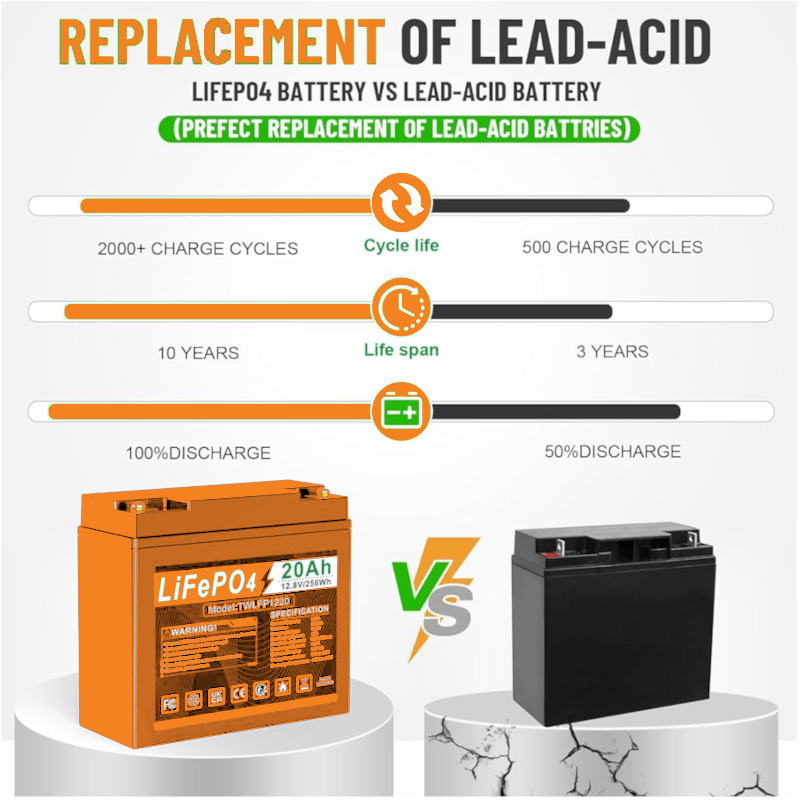
Lithium batteries have a higher capacity than lead-acid batteries of the same size and weight. For example, a 100Ah lithium battery can provide 100Ah of usable energy, while a 100Ah lead-acid battery can only provide 50Ah of usable energy at best. This is because lithium batteries can be discharged up to 100% depth of discharge (DoD), while lead-acid batteries should not be discharged below 50% DoD to avoid damaging the cells.

Power

The power of a battery is the rate at which it can deliver energy. It is measured in watts (W) or amps (A). The higher the power, the faster the battery can charge and discharge, and the more appliances and devices it can run simultaneously.

Lithium batteries have a higher power than lead-acid batteries of the same capacity. For example, a 100Ah lithium battery can deliver up to 200A of continuous current, while a 100Ah lead-acid battery can only deliver up to 100A of continuous current. This is because lithium batteries have a lower internal resistance than lead-acid batteries, which means they can handle higher currents without overheating or losing efficiency.

Efficiency

The efficiency of a battery is the ratio of the energy output to the energy input. It is expressed as a percentage (%). The higher the efficiency, the less energy is wasted during charging and discharging.

Lithium batteries have a higher efficiency than lead-acid batteries. For example, a lithium battery can have an efficiency of up to 98%, while a lead-acid battery can have an efficiency of around 80%. This means that lithium batteries can store and deliver more energy from the same amount of solar input or generator output than lead-acid batteries.

Lifespan

The lifespan of a battery is the number of charge and discharge cycles it can undergo before its capacity drops below 80% of its original value. The higher the lifespan, the longer the battery can serve you before needing replacement.

Lithium batteries have a longer lifespan than lead-acid batteries. For example, a lithium battery can last up to 2000 cycles at 100% DoD, while a lead-acid battery can last up to 600 cycles at 50% DoD. This means that lithium batteries can endure more frequent and deeper cycling than lead-acid batteries without losing much capacity.

Durability

Another factor to consider when choosing a battery is its durability, which includes its resistance to temperature, vibration, and corrosion.

Temperature

The temperature of the environment where the battery is installed and operated can affect its performance and lifespan. Extreme temperatures can cause thermal stress, expansion, contraction, and chemical reactions that can damage the cells.

Lithium batteries are more resistant to temperature than lead-acid batteries. For example, lithium batteries can operate in a wider temperature range than lead-acid batteries, from -20°C to +60°C. They also have built-in battery management systems (BMS) that monitor and regulate the temperature of each cell to prevent overheating or freezing. Lead-acid batteries are more sensitive to temperature changes and require more ventilation and insulation to maintain optimal performance.

Vibration

The vibration of the vehicle or vessel where the battery is installed and operated can also affect its performance and lifespan. Excessive vibration can cause physical damage, loose connections, and internal short circuits that can reduce the capacity and power of the battery.

Lithium batteries are more resistant to vibration than lead-acid batteries. For example, lithium batteries are made of solid-state cells that are tightly packed and sealed in sturdy cases that prevent movement and leakage. They also have BMS that protect them from short circuits and overloads. Lead-acid batteries are made of liquid electrolyte and plates that are prone to spilling and sulfation under vibration.

Corrosion

The corrosion of the terminals and connectors of the battery can also affect its performance and lifespan. Corrosion can cause increased resistance, reduced conductivity, and poor contact that can reduce the capacity and power of the battery.

Lithium batteries are more resistant to corrosion than lead-acid batteries. For example, lithium batteries have stainless steel or brass terminals and connectors that are less likely to rust or oxidize than lead-acid batteries. They also have BMS that prevent overcharging and undercharging that can cause corrosion.

Cost

The cost of a battery is another factor to consider when choosing a battery. It includes the initial purchase price, the installation cost, the maintenance cost, and the replacement cost. But in 2024, its usually far cheaper per cycle to purchase a Lifepo4 battery. Usually 5-10 times cheaper or more.

Purchase Price

The purchase price of a battery is the amount of money you pay upfront to buy the battery. It is usually based on the capacity, power, and quality of the battery.

Lithium batteries have a higher purchase price than lead-acid batteries of the same capacity and power. For example, a 100Ah lithium battery can cost around $400-$600, while a 100Ah lead-acid battery can cost around $300-$600. This is because lithium batteries use more advanced and expensive materials and technologies than lead-acid batteries, but recently the competition of Lithium Iron Lifepo4 has lead to very similar prices

Installation Cost

The installation cost of a battery is the amount of money you pay to install the battery in your vehicle or vessel. It is usually based on the size, weight, and complexity of the battery.

Lithium batteries have a lower installation cost than lead-acid batteries of the same capacity and power. For example, a 100Ah lithium battery can weigh around 12kg and take up around 20L of space, while a 100Ah lead-acid battery can weigh around 30kg and take up around 40L of space. This means that lithium batteries are easier and cheaper to install than lead-acid batteries, especially in tight and limited spaces.

Maintenance Cost

The maintenance cost of a battery is the amount of money you pay to maintain the performance and lifespan of the battery. It is usually based on the frequency, complexity, and necessity of the maintenance tasks.

Lithium batteries have a lower maintenance cost than lead-acid batteries. For example, lithium batteries are maintenance-free and do not require any watering, equalizing, or cleaning. They also have BMS that monitor and regulate their performance and health. Lead-acid batteries require regular maintenance such as watering, equalizing, cleaning, and checking for corrosion and sulfation. They also need external regulators to prevent overcharging and undercharging.

Replacement Cost

The replacement cost of a battery is the amount of money you pay to replace the battery when it reaches the end of its lifespan. It is usually based on the lifespan, availability, and recyclability of the battery.

Lithium batteries have a lower replacement cost than lead-acid batteries. For example, lithium batteries can last up to four times longer than lead-acid batteries, which means they need to be replaced less often. They are also more widely available and recyclable than lead-acid batteries, which means they are easier and cheaper to dispose of.

Environmental Impact

The environmental impact of a battery is another factor to consider when choosing a battery. It includes the energy consumption, greenhouse gas emissions, waste generation, and resource depletion associated with the production, use, and disposal of the battery.

Energy Consumption

The energy consumption of a battery is the amount of energy required to produce, charge, and discharge the battery. It is usually based on the efficiency, lifespan, and capacity of the battery.

Lithium batteries have a lower energy consumption than lead-acid batteries. For example, lithium batteries can store and deliver more energy from the same amount of solar or generator input than lead-acid batteries due to their higher efficiency. They also need less energy to produce due to their longer lifespan and smaller size.

Greenhouse Gas Emissions

The greenhouse gas emissions of a battery are the amount of carbon dioxide (CO2) and other gases released into the atmosphere as a result of the production, use, and disposal of the battery. They are usually based on the energy consumption, energy source, and recycling rate of the battery.

Lithium batteries have lower greenhouse gas emissions than lead-acid batteries. For example, lithium batteries can reduce CO2 emissions by up to 50% compared to lead-acid batteries due to their lower energy consumption and higher recycling rate. They also use renewable energy sources such as solar or wind more efficiently than lead-acid batteries due to their higher efficiency.

The production and carbon costs of Lead Acid vs Lithium, are very hard to know, with some saying Lithium is much worse, and it’s true that mining lithium and Iron and the other metals required may have a higher carbon footprint, but if you are using the battery daily, these will eventually become less.

Cranking Amps compared

When comparing cranking amps between LiFePO4 (Lithium Iron Phosphate) and lead-acid batteries, there are some important distinctions:

  1. LiFePO4 Batteries:
    • LiFePO4 batteries are more effective at delivering a large amount of current over a short period.
    • They are particularly suitable for applications where high cranking power is needed, such as starting engines or powering devices with significant initial current demands.
    • For instance, if you require a battery that can sustain a 40-amp device for two hours straight, LiFePO4 is an excellent choice
  2. Lead-Acid Batteries:
    • Lead-acid batteries have been around for a long time and are commonly used in various applications.
    • While they have their advantages, such as being cost-effective, they are not as efficient as LiFePO4 batteries in terms of cranking amps.
    • Lead-acid batteries may struggle to deliver high current consistently over a short duration compared to LiFePO4 batteries.

In summary, if you prioritize high cranking power and need a battery that can handle substantial current demands, LiFePO4 is the way to go.

Lithium Battery-school News
48v Battery Circuit Breaker or T Class Fuse

What are the most common curves for circuit breakers that are DC rated to 250A?

If you are looking for a circuit breaker that can handle direct current (DC) loads up to 500A, you might wonder what kind of tripping curve you should choose. A tripping curve is a graphical representation of how fast a circuit breaker will trip in response to different levels of overcurrent. It shows the relationship between the current and the tripping time of a protection device.

There are different types of tripping curves for circuit breakers, such as B, C, D, K and Z. Each curve has a different instantaneous trip current range, which is the amount of current at which the breaker will trip without causing a time delay. Generally, the higher the current spike, the faster the breaker will trip.

The most common curves for circuit breakers that are DC rated to 500A are C and D curves. These curves are suitable for inductive and motor loads with medium to high starting currents. They can also handle the inrush current of DC loads, which is the high current draw during the switching on of a load.

A C curve circuit breaker will trip instantaneously when the current flowing through it reaches between 5 to 10 times the rated current. For example, a C curve circuit breaker with a rated current of 25A will trip between 125A and 250A without any delay. This type of curve is ideal for domestic and residential applications and electromagnetic starting loads with medium starting currents.

A D curve circuit breaker will trip instantaneously when the current flowing through it reaches between above 10 (excluding 10) to 20 times the rated current. For example, a D curve circuit breaker with a rated current of 25A will trip between above 250A (excluding 250A) and 500A without any delay. This type of curve is ideal for inductive and motor loads with high starting currents.

The other curves, such as B, K and Z, are less common for circuit breakers that are DC rated to 250A. These curves are either too sensitive or too insensitive to short circuits and are used for specific applications.

A B curve circuit breaker will trip instantaneously when the current flowing through it reaches between 3 to 5 times the rated current. This type of curve is too sensitive for DC loads with high inrush currents and is mainly used for cable protection and electronic devices with low surge levels.

A K curve circuit breaker will trip instantaneously when the current flowing through it reaches between 8 to 12 times the rated current. This type of curve is similar to a D curve but has a higher instantaneous trip range. It is used for inductive and motor loads with very high inrush currents.

A Z curve circuit breaker will trip instantaneously when the current flowing through it reaches between 2 to 3 times the rated current. This type of curve is too insensitive for DC loads with high inrush currents and is mainly used for highly sensitive devices such as semiconductor devices.

To summarize, the most common curves for circuit breakers that are DC rated to 250A are C and D curves, depending on the type and size of the load. These curves can provide adequate protection against overcurrents and short circuits without tripping unnecessarily or too slowly.

An Alternative is to use a Circuit Breaker is a T class fuse

If you are using lithium batteries in any application, you might want to consider using a T-class fuse as part of your safety measures. A T-class fuse is a type of fuse that is specifically designed for use with lithium batteries. It has a fast-acting, low-melting-point element that can quickly interrupt the flow of current in the event of an overcurrent or short-circuit condition. This helps prevent damage to the battery and reduces the risk of fire or explosion.

Here are some of the benefits of using a T-class fuse in your lithium battery setup:

  1. Improved Safety: T-class fuses can protect the battery from overcurrent and short-circuit conditions, which can help prevent damage to the battery and reduce the risk of fire or explosion .
  2. Increased Reliability: T-class fuses can help increase the overall reliability of your setup by preventing damage to the battery and other components in case of an overcurrent or short-circuit condition . This is especially important in applications where downtime or failure can be costly or dangerous.
  3. Simplified Design: T-class fuses can simplify the design of your lithium battery setup by eliminating the need to select the right type of fuse for your application. Because they are designed specifically for use with lithium batteries, you don’t have to worry about compatibility issues or errors .
  4. Cost-Effective: T-class fuses are generally affordable, especially when compared to the cost of replacing damaged batteries or dealing with the consequences of a battery-related incident. They are also durable and long-lasting, which can save you money in the long run .

To sum up, using a T-class fuse in your lithium battery setup can provide a range of benefits, from improved safety and reliability to simplified design and cost savings. If you want to learn more about T-class fuses and how to use them, you can read more, to learn about

Class T vs ANL fuse

Choosing between ANL and Class T fuses depends on your specific needs and application. Here’s a breakdown of their key differences to help you decide:

Current Interrupt Capacity:

  • ANL fuse: Up to 2,700 amps, suitable for automotive starting batteries and modest DC current applications.
  • Class T fuse: Up to 200,000 amps, significantly higher, making it ideal for high-power systems with lithium batteries, solar panels, inverters, etc.

Response Time:

  • ANL fuse: Moderately fast, but not as fast as Class T.
  • Class T fuse: Very fast, crucial for protecting sensitive electronics from quick surge currents.

Size and Cost:

  • ANL fuse: Larger and typically cheaper.
  • Class T fuse: Smaller and more expensive due to its superior capabilities.

Applications:

  • ANL fuse: Good for:
    • Starter batteries
    • Audio systems
    • Winches
    • Moderate-power DC circuits
  • Class T fuse: Ideal for:
    • Lithium batteries
    • Solar power systems
    • Inverters
    • High-power industrial applications
    • Sensitive electronics requiring fast protection

Additional Considerations:

  • ANL fuses: Prone to arcing after blowing, potentially causing further damage.
  • Class T fuses: Designed to minimize arcing, enhancing safety.
  • Certification: Class T fuses often have UL 248-15 listing, important for marine applications.

In summary:

  • Choose ANL fuse for moderate-power DC applications like car audio or winches where affordability is a concern.
  • Choose Class T fuse for high-power systems with lithium batteries, solar panels, or sensitive electronics where fast response and high interrupt capacity are critical, despite the higher cost.

Class-T fuses

are a type of high-performance, fast-acting fuse designed for protecting demanding electrical systems from damage caused by overcurrents and short circuits. They are known for their:

  • High interrupt capacity: Up to 200,000 amps, making them suitable for high-power applications like marine, solar, and industrial systems.
  • Fast response time: They blow very quickly in the event of a fault, minimizing damage to equipment.
  • Compact size: They are smaller than other types of fuses with similar current ratings, making them ideal for space-constrained applications.
  • Corrosion resistance: They are constructed with nickel-plated terminals and a sealed ceramic body, making them resistant to corrosion in harsh environments.

Here are some of the common applications of Class-T fuses:

  • Marine electrical systems: Protecting batteries, inverters, chargers, and other sensitive equipment. Class T fuse in marine electrical system
  • Solar power systems: Protecting solar panels, charge controllers, and batteries. Class T fuse in solar power system
  • Industrial control panels: Protecting motors, drives, and other critical equipment.
  • Battery banks: Protecting large battery banks from short circuits and overcurrent’s. Class T fuse in battery bank
  • Variable speed drives: Protecting drives from motor faults and overloads.
  • Rectifiers: Protecting rectifiers from overloads and short circuits.

When choosing a Class-T fuse, it is important to consider the following factors:

  • The amount of current the circuit will carry: Choose a fuse with a current rating that is slightly higher than the maximum expected current in the circuit.
  • The type of fault the fuse is protecting against: Choose a fuse with an interrupt capacity that is high enough to handle the maximum fault current that is likely to occur.
  • The physical size constraints of the application: Choose a fuse that will fit in the available space.

I cannot directly recommend a specific fuse size without more information. Choosing the wrong fuse size can be dangerous, so it’s crucial to follow proper guidelines and consult a qualified electrician for accurate sizing.

However, I can help you gather the necessary information to make an informed decision:

1. Identify your application:

  • What are you protecting with the fuse (e.g., battery bank, inverter, solar panel system)?
  • What is the voltage and amperage rating of the circuit?

2. Consult the device manuals:

  • The manuals for your devices (battery, inverter, etc.) should specify the recommended fuse size or amp rating.
  • Do not exceed the recommended fuse size for any device.

3. Consider continuous and surge currents:

  • Choose a fuse with a continuous current rating slightly higher than the maximum expected current in the circuit under normal operation.
  • Account for potential surge currents (e.g., motor startup) and choose a fuse with an interrupt capacity high enough to handle those surges safely.

4. Follow safety standards and regulations:

  • Ensure the chosen fuse complies with relevant safety standards for your application (e.g., UL 248-15 for marine use).

5. Consult a qualified electrician:

  • If you’re unsure about any aspect of fuse selection or electrical work, always seek guidance from a qualified electrician. They can assess your specific needs and recommend the most suitable fuse size for your application, ensuring safety and optimal performance.

Remember, safety is paramount when working with electrical systems. Never experiment with fuse sizes or attempt electrical work without proper knowledge and qualifications.

Class-T fuses are a reliable and effective way to protect your electrical equipment from damage. If you are unsure about which fuse to choose, consult with a qualified electrician.

Remember, consult qualified personnel when dealing with high-power applications and fuse selection. They can assess your specific needs and recommend the most suitable option for safety and optimal performance.

We hope this blog post was informative and helpful for you. If you have any questions or feedback, please feel free to leave a comment below. Thank you for reading!

News Blog
Pylontech US5000B vs LiFePro (EG4-LL) 51.2v 100ah Lithium Battery price per KWH
shopping?q=tbn:ANd9GcSMCjUkFT86xmxMdrXsFesM5SSRbFCudfCqNWfM0fFJqDRXf1g14IMmayUjuT1rDjEZwK zgp4reNc7yI8IUkZJyCbVmTwA4SAOz8ATellshXI an5BEerysA&usqp=CAE
ModelCapacity (kWh)Voltage (V)Useable Power (kW)Efficiency (%)Lifespan (cycles)Warranty
(Australia)
Price ($)Price per kWh ($)Easy
Parallel 
US5000B4.8484.5695450010300065715
LifePro-LL5.1251.25.1296700010220042964
Mictronix5.151.24.59964000104071886?
PowerPlus LiFe4838P3.851.23.8967000103240852?
LifePro 15kwh1551.215958000104999299.515

If you are looking for a reliable, powerful and cost-effective battery for your solar system, you might be wondering which one to choose: the LIFEPRO 51.2v 100ah or the Pylontech US5000B. Both are lithium iron phosphate (LFP) batteries that offer high energy density, long cycle life and safety features. But which one is better for your needs? In this blog post, we will compare the two batteries and show you why the LIFEPRO 51.2v 100ah is the superior choice. 

EG4 AUSTRALIA SOK JAKIPER

LifePro 48v Lifepo4 battery

First, let’s look at the capacity and voltage of the two batteries. The LIFEPRO 51.2v 100ah has a nominal capacity of 100 ampere-hours (Ah) and a nominal voltage of 51.2 volts (V). This means that it can store up to 5.12 kilowatt-hours (kWh) of energy. The Pylontech US5000B, on the other hand, has a nominal capacity of 95 Ah and a nominal voltage of 48 V. This means that it can store up to 4.56 kWh of energy. As you can see, the LIFEPRO 51.2v 100ah has a higher capacity and voltage than the Pylontech US5000B, which means that it can provide more power and run longer for your appliances and devices. 

Second, let’s look at the efficiency and performance of the two batteries. The LIFEPRO 51.2v 100ah has a round-trip efficiency of over 95%, which means that it can deliver more than 95% of the energy that it receives from the solar panels or the grid. The Pylontech US5000B, on the other hand, has a round-trip efficiency of only 90%, which means that it can deliver only 90% of the energy that it receives from the solar panels or the grid. This means that the LIFEPRO 51.2v 100ah wastes less energy and saves you more money on your electricity bills. 

The LIFEPRO 51.2v 100ah also has a better performance in terms of discharge depth and temperature range. The LIFEPRO 51.2v 100ah can discharge up to 80% of its capacity without affecting its lifespan, which means that it can use more of its stored energy before needing to recharge. The Pylontech US5000B, on the other hand, can discharge only up to 70% of its capacity without affecting its lifespan, which means that it can use less of its stored energy before needing to recharge. This means that the LIFEPRO 51.2v 100ah gives you more flexibility and convenience in managing your energy consumption. 

The LIFEPRO 51.2v 100ah also has a wider temperature range than the Pylontech US5000B. The LIFEPRO 51.2v 100ah can operate in temperatures ranging from -20°C to +60°C, which means that it can withstand extreme weather conditions and function well in different climates. The Pylontech US5000B, on the other hand, can operate in temperatures ranging from -10°C to +50°C, which means that it is more sensitive to temperature fluctuations and may not work well in some environments. This means that the LIFEPRO 51.2v 100ah is more durable and reliable than the Pylontech US5000B. 

Third, let’s look at the warranty and price of the two batteries. The LIFEPRO 51.2v 100ah comes with a generous warranty of 10 years or 6000 cycles, whichever comes first. This means that you can enjoy peace of mind knowing that your battery is covered for a long time and that you can get free replacement or repair if anything goes wrong with it within that period. The Pylontech US5000B, on the other hand, comes with a shorter warranty of only 7 years or 4500 cycles, whichever comes first. This means that you have less protection and assurance for your battery and that you may have to pay extra for maintenance or replacement if anything goes wrong with it after that period. 

The LIFEPRO 51.2v 100ah also has a lower price than the Pylontech US5000B. The LIFEPRO 51.2v 100ah costs from only $2000 AUD per unit, which means that you can get more value for your money and save more on your initial investment. The Pylontech US5000B, on the other hand, costs about $3000 AUD per unit, which means that you have to pay more for a lower quality battery and spend more on your upfront cost. 

As you can see, the LIFEPRO 51.2v 100ah is better than the Pylontech US5000B in every aspect: capacity, voltage, efficiency, performance, warranty and price. The LIFEPRO 51.2v 100ah is the ultimate battery for your solar system that will give you more power, more savings and more satisfaction. Don’t settle for less, choose the LIFEPRO 51.2v 100ah today and enjoy the benefits of a superior battery for years to come.


Lithium Battery-school
How to Top Balance Lifepo4
  1. Hook up the LiFePO4 cells in parallel – (that means connecting all the positives together and the same for the negatives.)
  2. Charge to 3.45V with a regulated DC power supply with overvoltage protection. This part takes a long time! And your power supply should be large enough to cater to your needs. Our exclusive 30amp Lab supply is voltage and current limited here.
    IMPORTANT – DO NOT CHANGE THE VOLTAGE AFTER CONNECTION TO THE CELLS
  3. Once it hits 3.45V, then adjust the target voltage to 3.65V, keep an eye on the cells during this stage, the voltage will rise very rapidly and it’s good not to rely solely on the overvoltage protection feature of the power supply. Check with a multimeter very regularly.
  4. Once you hit 3.65V, turn off the power and leave for an hour or more. Check to see if it’s still over 3.5V. If not, charge it up to 3.65V again and leave it for another hour. Repeat until it does.
  5. Once done, reassemble the pack into your desired battery Voltage eg. 12V or 24V, and discharge
  6. Storing at a high level of charge is not good for the LiFePO4 cells. If storing for a long time, discharge down to 30-50%. If possible, keep the battery below 90% SOC and above 10% SOC. It will increase the lifespan of the cells. And definitely help with cell bloat.

    Congratulations you have successfully manually top balanced.

An alternative (not ideal or recommended) way to top balance a battery pack with a BMS, such as the JBD BMS is to connect the battery cells in series, and slowly, incrementally increase the pack voltage inside the Bluetooth app. (occasionally this will not work if the cells are at different SOC, please be aware, it could take weeks to balance if that were the case, and therefore it’s not usually recommended unless you don’t have any access to an appropriate voltage limited Lab supply)

1. Wire up the Battery in series. Eg, connect the 4 cells (positive to negative) Which will create a battery of about 13.2V for a 4s LiFePo4 Battery.
2. Charge with a charger between 14v and 14.6v. Slower is better
3. Inside the JBD Bluetooth app (XiaoXiang), set the fully charged voltage to 3.45v, and a total pack voltage of 13.8v and charge it until the BMS stops. Inside the app turn off the charge balancing feature and leave until all the cells are balanced.
4. The following day or more inside the BMS Bluetooth app settings increase the pack voltage to 14.4v (3.6v per cell) or 14.6v (3.65v) and ensure the balance on charge is turned off. The battery will then go and top balance itself. Leave here until balanced

Blog Lithium Battery-school Manufacturers
Hithium 280ah 300ah and 320ah cell Lifepo4 Review

Wondering about Hithium Lifepo4 cells quality?

Hithium 280Ah cells are a type of lithium iron phosphate (LiFePO4) battery cells. They are known for their high energy density, long cycle life, and safety features123.

Information about the cell. The cell is identical to the current reference design of a prismatic Lifepo4 cell with the dimensions of 207mm x 173mm x 71mm. These are identical in every way to the cells made by CATL, EVE, CALB, GOTION, BYD, GREAT POWER, REPT, SUNWODA and the list goes on. All of these currently manufacturer this exact same cell, with the exact same dimensions. They all use the same ingredients, with very minute differences to the cathode and anode and electrolyte mixture.

202303301648005656
290AH
Hithium 280AH
  • Product certifications:
    IEC 62619, UL 1973, UL 9540A, UN 38.3
  • Company certifications:
    ISO 9001, ISO 14001, ISO 45001
  • Environmental Compliance: ROHS, REACH

High safety

  • Hithium-developed prismatic LFP cell with high thermal stability
  • Passes crush and nail penetration test
  • Ultra wide operating temperature range


Overall this cell is modified to last longer. Although the truth is the cycle count can be manipulated such as 6000 cycles at 80% is the same as 9000 cycles at 70% and so on. So the claim of 10000 cycles is probably true. Especially considering they are made with the intention of Energy storage, so with a Hithium cell you know you are getting something that will last a very long time.

3.2V 280Ah LiFePO4 Battery Prismatic Cell With 10000cycles (evlithium.com)

News Blog
Kings vs Voltx Lithium Battery

Kings Vs VoltX Lithium Battery

Published: December 26, 2023 | Updated: March 1, 2025

Lithium Iron Phosphate (LiFePO4) batteries have become a game-changer for off-grid enthusiasts, campers, and 4WD adventurers across Australia. Among the most popular options in 2025 are the Kings 12V 120Ah Lithium LiFePO4 Battery and the VoltX 12V 100Ah LiFePO4 Basic Lithium Battery. Both are affordable, reliable, and widely available, but they cater to slightly different needs. Let’s dive into an updated comparison to help you decide which one suits your setup best.

120thumbnail1

Kings 120Ah Lithium LiFePO4 Battery Review

The Kings 12V 120Ah Lithium LiFePO4 Battery, offered by 4WD Supacentre, remains a staple for those seeking a dependable, budget-friendly energy solution in 2025. Here’s what it brings to the table:

Key Features:

  • Capacity: 120Ah – offering a bit more juice than its VoltX counterpart.
  • Chemistry: LiFePO4 with prismatic cells (approx. 3000-cycle rating individually, though pack performance varies).
  • Weight: Approximately 15kg – lightweight compared to AGM alternatives.
  • Cycle Life: Rated for 2000+ cycles at 80% depth of discharge (DoD).
  • Battery Management System (BMS): Integrated BMS with thermal protection, overload management, and high/low voltage cutoff.
  • Connectivity: Supports up to 2 batteries in parallel or 4 in series.
  • Warranty: 12 months – very short but price reflects warranty
  • Price (2025 Estimate): Around AUD $499 (up from $449 in 2023 due to inflation and supply chain adjustments).

Pros:

  • Larger 120Ah capacity means more runtime for power-hungry setups.
  • Widely available through 4WD Supacentre’s extensive retail network, offering easy customer support.
  • Solid BMS ensures safety and reliability for off-grid use.
  • Great value for the price – still one of the cheapest LiFePO4 options per Ah in 2025.

Cons:

  • No Bluetooth or app-based monitoring – a basic battery with no frills.
  • 12-month warranty is shorter than premium brands (though fair for the cost).
  • Some users report variability in long-term performance, possibly due to non-automotive-grade cells.

Best For:

Campers, boaters, or overlanders who need a reliable, no-nonsense battery for off-grid adventures without breaking the bank. In 2025, it’s still a top pick for those prioritizing capacity over advanced features.

Recommendation: We 100% recommend the Kings 120Ah for budget-conscious users who don’t need fancy extras. There are better batteries out there, but few match this price-to-performance ratio.


VoltX 12V 100Ah LiFePO4 Basic Lithium Battery Review

image

Key Features:

The VoltX 12V 100Ah LiFePO4 Basic Lithium Battery, sold by Outbax, continues to impress with its simplicity and performance in 2025. Here’s the latest rundown:

  • Capacity: 100Ah – slightly less than the Kings but still ample for most light applications.
  • Chemistry: LiFePO4 with A-grade prismatic cells.
  • Weight: Around 11kg – lighter than the Kings, making it easier to move.
  • Cycle Life: Advertised at 4000 cycles (though real-world testing suggests 2000-3000 cycles at 80% DoD).
  • Battery Management System (BMS): Integrated BMS protects against overheating, overcharging, and short circuits.
  • Connectivity: Officially not recommended for parallel/series connections, though some users report success with parallel setups.
  • Warranty: 36 months – a big step up from Kings.
  • Price (2025 Estimate): Around AUD $429 (up from $399 in 2023, reflecting market trends).

Pros:

  • Lightweight and compact – ideal for portable setups.
  • Longer 36-month warranty offers peace of mind.
  • Positive user feedback for reliability, especially with solar charging.
  • Outperforms AGM batteries in charging speed and weight.

Cons:

  • 100Ah capacity limits its use for larger setups compared to the Kings.
  • No Bluetooth or advanced monitoring – like the Kings, it’s a basic battery.
  • Mixed messaging on parallel/series connections could confuse users.

User Feedback (Updated for 2025):

  • Richard B. (Adelaide, SA): “Still faultless after 18 months. Runs my 40L and 60L fridges for days via solar. Best bang for buck in 2025.”
  • Anonymous (VIC): “Perfect for my off-grid cabin. Charges fast and weighs next to nothing compared to my old AGM.”
  • Tom H. (QLD): “Outlasts my old lead-acid by miles. Two years in, and it’s still going strong.”

Best For:

Light off-grid applications like small fridges, LEDs, or solar-powered setups where portability and warranty matter more than raw capacity.


Head-to-Head Comparison (2025)

FeatureKings 120AhVoltX 100Ah
Capacity120Ah100Ah
Weight~15kg~11kg
Cycle Life2000+ cycles2000-3000 cycles
BMSYes (basic)Yes (basic)
Connectivity2 parallel / 4 seriesNot recommended
Warranty12 months36 months
Price (2025)~AUD $499~AUD $429
Availability4WD Supacentre (online and retail stores)Outbax (online-focused)

Key Differences in 2025:

  • Capacity: Kings wins with 120Ah vs. VoltX’s 100Ah – a 20% edge for bigger loads.
  • Weight: VoltX is lighter by 4kg, a bonus for portability.
  • Warranty: VoltX’s 36 months trumps Kings’ 12 months, appealing to long-term users.
  • Price: Kings is slightly more expensive, but you get more capacity per dollar.
  • Support: Kings’ physical stores offer an edge over VoltX’s online-only model.

Which Should You Choose in 2025?

  • Choose Kings 120Ah if:
    • You need more capacity for larger fridges, inverters, or multi-day trips.
    • You value in-person support and availability at 4WD Supacentre locations.
    • Budget is tight, and you’re okay with a shorter warranty.

  • Choose VoltX 100Ah if:
    • Portability and lighter weight are priorities.
    • You want a longer warranty for peace of mind.
    • Your setup doesn’t demand more than 100Ah (e.g., small solar or camping rigs).

Final Thoughts

In 2025, both the Kings 120Ah and VoltX 100Ah LiFePO4 batteries remain solid choices for budget-conscious Aussies ditching lead-acid batteries. Neither offers Bluetooth or premium features, but they deliver where it counts: reliable power at a fair price. Kings edges out for capacity and retail presence, while VoltX shines with its warranty and portability.

For most casual users, the Kings 120Ah is our top pick unless the VoltX’s lighter weight or longer warranty sways you. Either way, you’re getting a dependable LiFePO4 battery that’ll outlast AGM options every day of the week.

Manufacturers
Who is Envision AESC?
f6d6d781e2f95c0675acf81bbac0384cc36aeda0 2206x5641 1

Origins and Ownership

Envision AESC (Automotive Energy Supply Corporation) is a global battery manufacturer focused on powering electric vehicles (EVs) and energy storage systems.

  • Founded in 2007 in Japan as a joint venture between Nissan, NEC Corporation, and NEC Tokin.
  • In 2018, China’s Envision Group acquired a majority stake. Nissan retained a minority share.
  • Since then, the company has operated as Envision AESC, expanding into one of the world’s fastest-growing battery producers.

Products and Technology

Envision AESC designs lithium-ion battery cells and packs for both cars and stationary energy storage.

  • Chemistries: The company produces both NCM (nickel-cobalt-manganese) and LFP (lithium iron phosphate) cells, depending on the application.
  • EV Batteries: Its Gen5 platform (based on NCM 811 chemistry) targets higher energy densities, approaching ~300 Wh/kg in development.
  • Energy Storage: In 2025, Envision AESC announced 315 Ah and 530 Ah large-format cells, designed for long cycle life (~12,000 cycles) and high efficiency (>95%). Mass production is targeted for 2025.
  • Safety: The company highlights passing over 200 global safety tests, including a CSA-supervised 49-hour fire safety trial. It also claims a record of “zero major safety incidents” in its ESS products.

AESC: 530Ah Battery Cell

Envision AESC has unveiled a 530Ah energy storage cell delivering over 1.6kWh per unit. With 12,000-cycle longevity and 95% energy efficiency, it’s fully compatible with mainstream ESS solutions. Mass production and deliveries are set to begin in 2025.


Global Footprint and Capacity

Envision AESC is aggressively scaling with gigafactories worldwide:

  • Japan: Original facilities supplying early Nissan Leaf batteries.
  • UK (Sunderland): Expanding capacity to support Nissan’s EV hub.
  • France (Douai): A ~9 GWh plant near Renault’s ElectriCity, backed by EU funding.
  • Spain (Navalmoral de la Mata): €1.1 billion LFP factory, with production targeted for 2026.
  • China (Cangzhou, Hebei): “Zero-Carbon Intelligent Industrial Park,” with 10 GWh in production and another 10 GWh under construction.
  • USA: Plants announced in Tennessee and South Carolina; however, the Florence, SC site was paused in June 2025 due to policy and tariff uncertainty.

Past company roadmaps projected hundreds of GWh of global capacity by 2030, but actual targets depend on market conditions and government policy.


Partnerships and Customers

Envision AESC supplies some of the world’s biggest automakers and energy companies:

  • Nissan: Longstanding partner for Leaf and future EV platforms.
  • Renault: Supply through the Douai factory in France.
  • BMW: Planned supply for Spartanburg, USA production.
  • Energy storage integrators: Recent announcements of over 40 GWh of ESS cell supply contracts in China.

Challenges and Risks

Despite its growth, Envision AESC faces several challenges:

  • Policy Risks: Trade disputes and changing subsidy rules (especially in the U.S.) can stall investments.
  • Intense Competition: Rivals such as CATL, BYD, and LG Energy Solution currently dominate global market share.
  • Technology Race: Sodium-ion and solid-state batteries are emerging as future competitors.

Future Outlook

Looking forward, Envision AESC is focused on:

  • Expanding global capacity to the hundreds of GWh scale by 2030.
  • Delivering EV batteries with longer ranges (targets >1,000 km per charge).
  • Scaling grid-scale storage cells for renewable energy and Virtual Power Plant (VPP) projects.
  • Achieving zero-carbon manufacturing across multiple new gigafactories.

Key Takeaways

  • Envision AESC is a Chinese-owned, globally active battery maker with Japanese roots.
  • It is not affiliated with Cornex (a separate Chinese company).
  • The company is rapidly scaling with gigafactories across Europe, Asia, and North America.
  • While facing risks from policy and competition, Envision AESC is positioning itself as a key global player in the EV and ESS battery market.

Official Website – https://www.aesc-group.com/

News Blog Home
New LiFePo4 Prismatic Cells sizes 306ah 314ah 320ah and more in 2024

Breaking this is likely the most important news to hit the DIY Solar and Lithium Lifepo4 Battery Off Grid community in 10 years. This really is going to upset the YouTube community apple cart. Especially that guy that lives in Australia who isn’t even Australian.

Currently, 280Ah and 300ah cells are the mainstream in Lifepo4 Batteries, but with the acceleration of technological iteration, the improvement to battery cathode and electrolyte technology in the past few years, over 20 types of high-capacity cells above 300Ah have emerged, these cells will take considerable time to enter the retail and B grade markets, but they are coming in 2024 and 2025. Some of these cells can be purchased now in very large quantity, but for the average joe, building batteries at home DIY style the best mix of value and performance still likes in the 280ah capacity cells over the next few months.

Super Large Capacity LiFePO4 Cells

With the rapid development of the energy storage industry, the market demand for cells continues to outpace supply. Many companies are increasing cell capacity through technological iteration. Cell capacity is growing larger, from 306ah to 314Ah, 320Ah, 340ah and 360ah and then to 500ah 560Ah and 580ah cells

EVE LF560K (628Ah) LiFePO4 Cells

Last year, EVE Energy launched the LF560K battery, adopting cutting-edge Cell to TWh (CTT) technology tailored for TWh-scale energy storage applications. This enables extremely streamlined system integration and dual reduction in costs at both the cell and system levels. Global delivery is expected to commence in Q2 2024.

Keep in mind the DIY community won’t likely see these cells until at least 2025.

EVE LF560K (628Ah) LiFePO4 Cells

Compared to the LF280K battery, the LF560K battery can reduce components like busbars by almost half, whilst improving production efficiency by 30%. Container energy density can be increased by 6.5% allowing for lower costs for customers.

EVE LF560K 628Ah LiFePO4 Cells Data infomation 1

To address the key technological challenges facing the manufacture of ultra-large battery cells, EVE Energy has adopted a “stacking technique” to resolve issues with current collection and manufacturability in the LF560K battery’s electrode and current conductor design. Because the number of tabs per winding is doubled, solving the current collection problem and reducing DC IR by 8%. Prismatic sheet stacking replaces winding, doubling the single electrode sheet length, yields a 3% increase in total cell production .

EVE LF560K 628Ah LiFePO4 Cells Data infomation 2

The LF560K battery represents EVE Energy’s relentless pursuit of innovation and quality, built upon over 21 years of extensive experience in the battery industry and the strong R&D capabilities of its 3,100-member research team.

Currently, the mainstream energy storage cells on the market are 280Ah rectangular aluminum-cased cells. Many manufacturers are also reducing costs for downstream customers by improving cell volumetric density – that is, increasing capacity density per unit volume.

The 560Ah cell essentially doubles the common 280Ah rectangular cell size, equivalent to placing two 280Ah cells side-by-side. This aims to reduce PACK components and achieve cost reduction.

Although the 560Ah cell is not yet EVE Energy’s primary product, it has embarked on the path to commercialization. On February 1 this year, EVE Energy broke ground on its new “60 GWh Power Energy Storage Battery Super Factory” in Jingmen, Hubei, with 10.8 billion RMB investment. This factory will mass-produce the 560Ah energy storage cell. The 560Ah cell is expected to commence global delivery in Q2 2024.

Vision 580Ah LiFePOP4 Cell

On May 16, China’s largest battery exhibition, CIBF 2023, opened in Shenzhen. Thunder Corporation prominently displayed an ultra-high capacity cell.

The 580Ah ultra-large single-cell released by Thunder Corp is the largest capacity single-cell emerged so far globally.

Although the exhibit at CIBF appeared high-profile, it only showcased partial specs. The company claims 10,000 cycle life, 11kg weight per cell, 1856Wh nominal capacity, and 0.5C charge/discharge rate. But details such as packaging technology, mass production timeline, and delivery schedule remain unclear.

With over 10,000 cycle life, the 580Ah cell represents a two-pronged upgrade at both the cell and system levels, providing customers robust safety assurance and performance guarantee. Technologies such as low-expansion anode materials, full tab design, electrode surface treatment, and flexible electrode forming help resolve liquid infiltration challenges for large cells, enabling comprehensive safety protection and high cycle life through heat insulation, diffusion prevention, pressure relief, and more. This will better meet application requirements for grid-scale energy storage, greatly improving system safety, lifespan, and lowering life-cycle electricity costs.

Vision 580Ah LiFePOP4 Cell

Currently, there is no universally accepted single-model standard for energy storage cells, and the industry has not yet formed complete standardization. It is believed that with continuous technological breakthroughs and improved designs, more energy storage cell solutions will emerge over time.

Enterprises should pursue R&D across diverse cell models, material systems, and cost schemes. With market validation over time, superior cell designs will become proven, catalyzing new breakthroughs in energy storage cells. This is a crucial premise for the healthy development of the energy storage industry.

CATL 306Ah/314Ah LiFePO4 Cell

CATL New 306Ah 285Ah 280Ah LiFePO4 Cells 1024x768 1

CATL said that the mass production and delivery of 314Ah dedicated electric core for energy storage is another opportunity for the company to lead the development of energy storage system through technological innovation and bring new breakthroughs in the field of energy storage.

CATL 306Ah 285Ah 280Ah LiFePO4 Cells

It is understood that CATL EnerD series products use its energy storage dedicated 314Ah core, and equipped with CTP liquid cooling 3.0 high-efficiency grouping technology, optimizing the grouping structure and conductive connection structure of the core, while adopting a more modular and standardized design in the process of design and manufacturing, to achieve the 20-foot single compartment of the power from 3.354MWh to 5.0MWh, compared with the previous generation of products. Compared to its predecessor, the new EnerD series of liquid-cooled prefabricated energy storage pods saves more than 20% of floor space, reduces the amount of construction work by 15%, and decreases commissioning, operation and maintenance costs by 10%, and also significantly improves energy density and performance.

CALB 305Ah/314Ah LiFePO4 Cells

CALB 305Ah 314Ah LiFePO4 Cells 1024x630 1
CALB 305Ah & 314Ah LiFePO4 Cells
CALB 314Ah LiFePO4 Cell Data Infomation
CALB 314Ah LiFePO4 Cell Data & Infomation

SVOLT 325Ah LiFePO4 Blade Cell

SVOLT 325Ah LiFePO4 Blade Cell

GOTION 300Ah/340Ah LiFePO4 Cell

GOTION 340Ah LiFePO4 Prismatic Battery Cells 1
GOTION 340Ah LiFePO4 Prismatic Battery Cells

REPT 320Ah/340Ah LiFePO4 Cells

REPT 320Ah 340Ah LiFePO4 Cells
REPT 320Ah & 340Ah LiFePO4 Cells

BATTERO TECH 314Ah LiFePO4 Cell

兰钧 BATTERO TECH 314Ah LiFePO4 Cell
BATTERO TECH 314Ah LiFePO4 Cell

Great Power 320Ah LiFePO4 Cell

Great Power 320Ah 280Ah 220Ah 150Ah LiFePO4 Cells

Higee 314Ah/375Ah LiFePO4 Cell

Higee 375Ah LiFePO4 Cell

ETC 314Ah LiFePO4 Cell

ETC 314Ah LiFePO4 Cell

HTHIUM 300Ah/314Ah LiFePO4 Cells

海辰 HTHIUM 300Ah LiFePO4 Cell
HTHIUM 300Ah LiFePO4 Cell
海辰 HTHIUM 314Ah LiFePO4 Cell
HTHIUM 314Ah LiFePO4 Cell

Cornex 306Ah/314Ah/320Ah LiFePO4 Cells

楚能 Cornex 314Ah LiFePO4 Cell
Cornex 314Ah LiFePO4 Cell
楚能 Cornex 306Ah LiFePO4 Cell
Cornex 306Ah LiFePO4 Cell

Narada 305Ah LiFePO4 Cell

Narada 305Ah LiFePO4 Cell

TrinaStorage 306Ah/314Ah LiFePo4 Cells

天合储能 TrinaStorage 314Ah LiFePO4 Cells
TrinaStorage 314Ah LiFePO4 Cells

SUNWODA 314Ah LiFePO4 Cell

SUNWODA 314Ah LiFePO4 Cell
SUNWODA 314Ah LiFePO4 Cell Data infomation
SUNWODA 314Ah LiFePO4 Cell Data infomation 2
SUNWODA 314Ah LiFePO4 Cell Data & infomation

JEVE 305Ah/360Ah LiFePO4 Cells

JEVE 305Ah 360Ah LiFePO4 Cell
JEVE 305Ah & 360Ah LiFePO4 Cell

COSPOWERS 305Ah LiFePO4 Cell

昆宇电源 COSPOWERS 305Ah LiFePO4 Cell
COSPOWERS 305Ah LiFePO4 Cell

shoto 315Ah LiFePO4 Cell

双登集团 shoto 315Ah LiFePO4 Cell
Shoto 315Ah LiFePO4 Cell

ZENERGY 314Ah LiFePO4 Cell

正力新能 ZENERGY 314Ah LiFePO4 Cell
ZENERGY 314Ah LiFePO4 Cell

Seeking the “Triangle Balance Point”

At the 320Ah capacity level, internal cell temperatures can surpass 800°C, exceeding the decomposition temperature of lithium iron phosphate and posing challenges to cell safety, energy density, manufacturing processes, and more.

Cell R&D also faces the classic ‘impossible trinity’ of high energy density, long cycle life, and high safety. Energy density is a priority consideration in nearly all cell design. Pursuing higher energy density requires thinner membranes and high pressure and areal density electrode materials. On one hand, such extremities make liquid infiltration more difficult, undermining cycling performance. On the other hand, thinner membranes and higher energy density materials also mean poorer safety. There is no avoiding the trade-off between energy density and performance. Prioritizing energy density may jeopardize cycle life and safety. Whereas uncompromising cycle life and safety comes at the cost of lower energy density and weaker competitiveness. Most companies aim for a balanced sweet spot.

Cell manufacturers often tout cycle life figures of 6,000, 8,000, 10,000 even 18,000 based on specific controlled test conditions and model extrapolation. But actual cycle life is lower when cells are packaged into battery packs and deployed in energy storage systems. We expect a lifespan of about 3-18 years depending on the Depth of discharge, C rate, thermal and Battery Management put into place by each individual builder. That is a significant difference, because batteries are not invincible, but LiFePo4 is really versatile.

The 280Ah cells released in 2020 were produced by less than three manufacturers in 2021. Becoming mainstream in energy storage power stations in 2022, failure rate issues can be expected to surge around 2025 after initial installations complete their lifespan. Time will tell.

Safety Depends on Multiple Factors

Larger cells are a double-edged sword – cost reduction and accelerated market growth come with technical challenges and safety concerns. At the system level, safety depends on factors including cell design, thermal propagation isolation, early warning systems, fire prevention systems, and more.

Looking narrowly at the cell perspective, rising manufacturing automation enables producers to strengthen quality control capabilities. Meanwhile, breakthroughs in automated inspection equipment and methodologies screen cell safety before leaving factories.

Advancements in materials such as more thermally/chemically stable membrane systems and additives will also continuously improve battery safety and stability. But from an electrochemical standpoint, absolute safety remains elusive for lithium-ion batteries given inherent risks requiring mitigation through system design, monitoring, emergency response, and other management strategies. Therefore, a systematic approach will define future safety design.

X