News Lithium Battery-school Manufacturers
CATL’s 18000 Cycle Life LFP Battery Cell: Technological Innovations

In the past couple of years some very significant news has been annouced by CATL, this technology has since also made its way to a number of other LFP manufacturers in China. Such as EVE and Hithium

We are looking at very high cycle life LFP battery cells and the underlying technologies that are being implemented to enable such numbers. It should be noted that these numbers are theoretical, and you should not expect anything close to these in real world applications. Calendar Life ageing plays a significant role in the lifespan of any lithium based battery.

CATL, a leading battery manufacturer, has announced a breakthrough with their new Lithium Iron Phosphate (LFP) battery cell, boasting an impressive cycle life of 18,000 cycles. This achievement is a result of several advanced technologies and innovative approaches in battery chemistry and manufacturing processes.

Key Technologies Implemented:

  1. Fully Nano-Crystallized LFP Cathode Material:
    CATL has pioneered a fully nano-crystallized LFP cathode material based on hard carbon, not graphene, forming a highly efficient super-conductive pathyway. This sophisticated nanostructure promotes the swift extraction and movement of lithium ions, The stability and performance of the cathode are substantially improved, contributing to the extended cycle life and reliability of the battery.
  2. Granular Gradation Technology:
    This technology involves placing every nanometer particle in the optimal position within the cathode. By precisely positioning these particles, CATL has significantly improved the energy density and durability of the battery. This meticulous structuring at the nanoscale level minimizes degradation and ensures uniform performance over many cycles
  3. 3D Honeycomb-Shaped Anode Material:
    The use of a 3D honeycomb-shaped material in the anode helps to increase energy density while effectively controlling the volume expansion during charge and discharge cycles. This design innovation not only boosts the battery’s capacity but also enhances its structural integrity, contributing to its extended lifespan
  4. Advanced Separator Technology:
    The new LFP battery incorporates an ultra-thin, high-safety separator that improves ion transport while maintaining structural stability. This separator technology is crucial for achieving high charging speeds and ensuring safety during operation, which are critical factors for the long-term durability of the battery
  5. Cell-to-Pack (CTP) Technology:
    CATL’s CTP technology eliminates the need for traditional modules, increasing the packing efficiency by about 7%. This optimization allows more active material to be packed into the battery, enhancing its overall performance and extending its cycle life. The CTP approach also simplifies the manufacturing process and reduces costs
  6. Superconducting Electrolyte Formulation:
    The new battery employs a superconducting electrolyte formulation that enhances ion conductivity. This innovation ensures that the battery can charge and discharge at higher rates without compromising its longevity. It also contributes to the battery’s ability to maintain performance in extreme temperatures

Explanation and Implications of Advanced LFP Battery Technologies

Granular Gradation Technology

Granular Gradation Technology involves the meticulous positioning of nanoparticles within the cathode material of a battery. By placing each particle in an optimal position, the technology significantly improves the energy density and durability of the battery. This precise arrangement minimizes degradation and ensures uniform performance over many cycles. This is achieved through advanced nanotechnology techniques, which allow for the controlled deposition and organization of particles at the atomic or molecular level. The structured material resulting from this technology facilitates efficient ion transport, thereby enhancing the battery’s overall performance and lifespan.

Atomic Layer Deposition (ALD) in Battery Manufacturing

Atomic Layer Deposition (ALD) is a technique used to apply ultrathin films to various components of a battery, such as electrodes and separators. ALD works by depositing materials one atomic layer at a time through a series of self-limiting chemical reactions. This process allows for precise control over film thickness and composition, which is crucial for enhancing battery performance. For example, ALD can be used to coat lithium iron phosphate (LiFePO4) electrodes with materials like aluminum oxide (Al2O3), which can improve the electrode’s stability, reduce degradation, and enhance the battery’s cycle life.
Further Research by Video The use of Atomic Layer Deposition

CATL has implemented Atomic Layer Disposition (ALD) to create a fully nano-crystallized LFP cathode material. This technology forms a super-electronic network that facilitates efficient lithium ion movement and ensures a rapid response to charging signals. The nanostructure of this material enhances the stability and performance of the cathode, contributing to the long cycle life of the battery. Additionally, CATL utilizes long, thin carbon nanotubes to create conductive pathways, or “highways,” for ion transmission. This improves the permeability of the electrode films, making it easier for lithium ions to travel between electrodes, thereby significantly enhancing fast-charging capabilities.

Granular Gradation Technology

Granular Gradation Technology involves the meticulous positioning of nanoparticles within the cathode material of a battery. By placing each particle in an optimal position, the technology significantly improves the energy density and durability of the battery. This precise arrangement minimizes degradation and ensures uniform performance over many cycles. This is achieved through advanced nanotechnology techniques, which allow for the controlled deposition and organization of particles at the atomic or molecular level. The structured material resulting from this technology facilitates efficient ion transport, thereby enhancing the battery’s overall performance and lifespan.

In summary, these advanced technologies in battery manufacturing, including Granular Gradation Technology and Atomic Layer Deposition, enable the development of high-performance, durable batteries with extended cycle lives and improved charging efficiency. These innovations are crucial for the advancement of energy storage solutions, particularly in applications requiring long-term reliability and fast charging【source】【source】【source】.
Further Research from 2020 here

Impact of Mass Production and Economies of Scale:

The implementation of these advanced technologies in mass production is expected to drive down the cost per kilowatt-hour (kWh) of LFP batteries. CATL’s extensive production capacity and economies of scale are instrumental in making these high-performance batteries more affordable and accessible for various applications, including electric vehicles and energy storage systems

Conclusion:

CATL’s 18,000 cycle life LFP battery represents a significant advancement in battery technology, driven by innovations in nano-crystallized cathode materials, granular gradation, and advanced manufacturing techniques. These technologies not only enhance the battery’s performance and safety but also contribute to its long-term durability, making it a game-changer in the field of energy storage

For more detailed information on CATL’s technological advancements and their impact on the battery industry, you can visit the original articles on Electrek and PV Magazine.

Chinese lithium battery manufacturers, including CATL, are indeed utilizing advanced technologies like Atomic Layer Deposition (ALD) to enhance the performance and longevity of their batteries. ALD is employed to apply ultra-thin, uniform coatings on battery components, such as electrodes and separators. This technique improves the stability and efficiency of the batteries, particularly under high-stress conditions such as high voltages and temperatures.

Key Technologies Used:

  1. Atomic Layer Deposition (ALD):
    • ALD allows for the precise application of thin films on battery materials, improving their structural integrity and performance. It helps in forming protective layers on cathodes and anodes, reducing degradation and enhancing cycle life. For example, ALD-coated LiFePO4 electrodes exhibit significantly improved cycle stability and energy density​ (RSC Publishing)​​ (SpringerLink)​.
  2. Granular Gradation Technology:
    • This technology involves the meticulous arrangement of nanoparticles within the cathode material. By placing each particle in an optimal position, the energy density and durability of the battery are significantly enhanced. This structured arrangement minimizes degradation and ensures consistent performance over many cycles​ (RSC Publishing)​.
  3. Nanotechnology and Carbon Nanotubes:
    • The integration of long, thin carbon nanotubes creates highly efficient pathways for ion transmission, enhancing the battery’s fast-charging capabilities. This, combined with additives to improve film permeability, facilitates easier lithium ion movement between electrodes, thereby improving overall battery performance​ (Leading Edge Materials Corp)​.

These innovations are part of the broader trend in the battery industry to improve energy storage solutions through cutting-edge material science and nanotechnology. Chinese manufacturers, particularly CATL, are at the forefront of implementing these technologies to produce high-performance, durable batteries suitable for a wide range of applications, from electric vehicles to large-scale energy storage systems.

More sources in relation to this topic

  1. Winding vs Stacking
  2. ALD (Atomic Layer Deposition) Coating
  3. Trends in modern Lithium manufacturing cells
  4. Winding and Z Stacking link
  5. Winding vs Z Stacking pt2
  6. Electrolyte Additives

In the first few seconds of this video made in 2018 at one of EVE’s battery factories, you will notice the winding of a prismatic cell.

Final Words – Batteries aren’t all the same!

This video made in 2023, shows the EVE factory, with some of its most advanced manufacturing equipment in full operation. We are see in the space of just 4 or 5 years, the speed and yield has increased dramatically. The combination of many technologies has increased the lifespan of a LFP cell.
We currently recommend the use of the MB30 and MB31 cells for 300+ah cells. They are the most advanced cells for Energy Storage made by EVE.
EVE makes more than 50 cells that I am aware of, probably more than 100 if you include some of the lesser known cell types and variants.


One of the best videos we have ever seen to explain what is really happening in the newest generation of LFP cells is this one made by CATL in 2024.

https://youtu.be/0cyz5vXd-xY – It was made private by CATL recently on their YOUTUBE channel. We found a copy of the video in the wayback machine. And though its low resolution, Its still good enough to see the tech in laymans terms.


News Manufacturers
EVE Lithium LFP Cells List 3.2v

A list of cells manufactured by EVE in July 2024.
It details the capacity, energy density, estimated cycle life, weight, and Internal resistance of each cell.

Using this information you might be able to decide what cells suit your application best.
For example the LF50k cell is rated for 7000 cycles at 1C charge and discharge. But its energy density is very low. The main reason it gets such a good rating is because it can be actively cooled or heated in the right application, which can help tremendously with lifespan.
However you will also note that cycle life is now mostly spoken about at 0.5C or P. Meaning much of the information previously released has been further corrected over time.
All of these numbers are best case scenario, and usually at 25 degrees Celsius. So these numbers are basically unattainable in most cases.

ModelCapacity (Ah)Voltage (V)Cycle(time) 25°CInternal Resistance (1KHz)Weight (g)Length × Width × Height (mm)Energy Density (Wh/kg)
LF22K223.224500 (3C/3C)≤0.4mΩ628±10148.7×17.7×131.8112
LF32323.203500 (1C/1C)≤1.5mΩ730±50148.3×26.8×94.3140
LF50F503.201500 (0.5C/0.5C)≤2.0mΩ1035±100148.3×26.7×129.8154
LF50L503.205000 (0.5C/0.5C)≤0.6mΩ1090±50148.6×39.7×100.2154
LF50K503.207000 (1C/1C)≤0.7mΩ1395±50135.3×29.3×185.3114
LF80823.204000 (0.5C/0.5C)≤0.5mΩ1680±50130.3×36.3×170.5156
LF90K903.206000 (1C/1C)≤0.5mΩ1994±100130.3×36.3×200.5144
LF100MA1013.202000 (0.5C/0.5C)≤0.5mΩ1920±100160.0×50.1×118.5168
LF100LA1023.205000 (0.5C/0.5C)≤0.5mΩ1985±100160.0×50.1×118.5164
LF1051053.204000 (0.5C/0.5C)≤0.32mΩ1980±60130.3×36.3×200.5169
LF1251253.224000 (0.5C/0.5C)≤0.40mΩ2390±71200.7×33.2×172.0168
LF1501503.224000 (0.5C/0.5C)≤0.4mΩ2830±84200.7×33.2×207.0170
LF1601603.224000 (0.5C/0.5C)≤0.21mΩ3000±100173.9×53.8×153.5171
LF1731733.224000 (0.5C/0.5C)≤0.25mΩ3190±96173.9×41.06×207.5174
LF2302303.204000 (0.5C/0.5C)≤0.25mΩ4140±124173.9×53.8×207.2177
LF280K2803.208000 (0.5C/0.5P)≤0.25mΩ5490±300173.7×71.7×207.2163
LF3043043.204000 (0.5C/0.5C)≤0.16mΩ5450±164173.7×71.7×207.2178
LF560K5603.208000 (0.5P/0.5P)≤0.25mΩ10700±300352.3×71.7×207.2167
MB303063.2010000 (0.5P/0.5P)≤0.18mΩ5600±300173.7×71.7×207.2174
MB313143.208000 (0.5P/0.5P)≤0.18mΩ5600±300173.7×71.7×207.2179
V211543.222000 (0.5C/0.5C)≤0.5mΩ2755±30110.0×35.7×346.4182
A22178.13.222000 (0.33C/0.33C)≤0.3mΩ3170±230280.7×31.0×88.6180
A24172.13.222000 (0.33C/0.33C)≤0.45mΩ3160±240301.0×36.7×132.5175
A31-V1132.53.222000 (0.33C/0.33C)≤0.45mΩ2370±230194.3×50.7×112.7180
A31-V21413.222000 (Fch/1C)≤0.45mΩ2450±230194.3×50.7×112.7185
A27127.23.212000 (Fch/1C)≤0.45mΩ2220±33088.0×37.2×309.5183
A2887.53.222500 (0.33C/0.33C)≤0.57mΩ1645±30301.8×26.7×94.9171
News
Guide to Connecting Solar Panels in Series with Victron Charge Controllers

Guide to Connecting Solar Panels in Series with Victron Charge Controllers

Connecting solar panels in series with Victron MPPT (Maximum Power Point Tracking) charge controllers requires careful consideration of voltage limits and configuration. Here’s a step-by-step guide:

1. Understanding Series Connections

In a series connection, the positive terminal of one panel connects to the negative terminal of the next. This setup increases the total voltage while keeping the current constant. For instance, if each panel has a voltage of 40V and they are connected in series, the total voltage is the sum of each panel’s voltage.

2. Calculating System Voltage

To ensure compatibility with your Victron charge controller, calculate the total open circuit voltage (VOC) of your system:

[ Total VOC = VOC per panel x number of panels in series x times 1.1 ]

The factor of 1.1 accounts for temperature variations, which can increase the voltage. For example, three panels with a VOC of 40V each will have a total VOC of ( 40 x 3 x times 1.1 = 132V ).

3. Checking Controller Specifications

Ensure that the total VOC does not exceed the maximum input voltage of the Victron MPPT charge controller. Exceeding this limit can damage the controller. Victron MPPT controllers have different voltage ratings, so choose one that accommodates your array’s maximum VOC.

4. Choosing the Right Wire Gauge for Solar Installations

Selecting the appropriate wire gauge for a solar installation is crucial to ensure safety, efficiency, and minimal energy loss. The wire gauge determines the amount of current that can safely flow through the wire, which is critical in preventing overheating and voltage drop. Here’s a guide to choosing the right wire gauge based on common solar installation sizes:

Factors to Consider

  1. Current (Amperage): The amount of current the wire needs to carry.
  2. Distance: The length of the wire run between the solar panels and the charge controller or battery.
  3. Voltage Drop: The reduction in voltage that occurs as electric current moves through the wire. A lower gauge number means a thicker wire and less voltage drop.

Common Wire Gauges for Solar Installations

  • 18 AWG (~0.82 mm²): 1 mm² cable, suitable for low current applications, up to 5A.
  • 14 AWG (~2.08 mm²): 2.5 mm² cable, common for small systems, up to 15A.
  • 12 AWG (~3.31 mm²): 4 mm² cable, used in medium-sized installations, up to 20A.
  • 10 AWG (~5.26 mm²): 6 mm² cable, for larger systems, up to 30A.
  • 8 AWG (~8.37 mm²): 10 mm² cable, for high current requirements, up to 50A.
  • 6 AWG (~13.3 mm²): 16 mm² cable, used in high-current or long-distance setups, up to 65A.

6 mm² cable, for larger systems, up to 30A, this is going to be most common wire size used in PV in Australia, as the MC4 Connectors are normally limited to 30A. This cable size is standard for medium to large residential and small commercial solar systems, ensuring safe and efficient energy transfer. It’s readily available from most electrical and solar supply stores in Australia.

Voltage Drop Consideration

For optimal performance, aim for a voltage drop of less than 3%. You can calculate the required wire gauge using the formula:

Voltage Drop = 1000 (2×Length×Current×Resistance per unit length)​

Where:

Resistance per unit length is the resistance of the wire (in ohms per meter)

Length is the one-way distance of the wire run (in meters).

Current is the amount of electrical current flowing through the wire (in amperes).

Where length is the one-way distance in feet, current is in amperes, and resistance is the wire’s resistance per unit length (in ohms per 1000 feet). This formula helps ensure that the wire gauge chosen minimizes energy loss and maintains system efficiency.

Conclusion

Choosing the right wire gauge is a balance between current carrying capacity, voltage drop, and cost. Overestimating the required gauge can lead to unnecessary expenses, while underestimating can cause safety hazards and inefficiencies. Always consult with a qualified electrician or solar installer to ensure that your wire sizing meets local electrical codes and safety standards.

5. Grounding and Safety

Proper grounding of the solar panel array is crucial for safety and system longevity. Follow local regulations and manufacturer guidelines for grounding methods. Additionally, use overcurrent protection devices like fuses or breakers to protect your system components.

6. Monitoring and Maintenance

Regularly check connections and the performance of the system. Victron controllers often come with monitoring capabilities, allowing you to track system performance and make adjustments as needed.

For detailed specifications and guidance, always refer to the Victron MPPT charge controller manual and consult with a professional installer.

Victron MPPT Installation Guide
SmartSolar MPPT 150/70 up to 250/100 VE.Can here

Be sure to follow Australian Standard AS/NZS 5033 , AS/NZS 3000, PV cables can be certified to the IEC 62930 standard.

News Lithium Battery-school
The Lifepo4 QR code B to A Grade problem

Q. What is a QR Code?
A. Its a 3D barcode

Q. What is a Barcode?
A. A visual representation of data

Q. Can a barcode be scanned to verify authenticity of unique products?
A. NO! A QR code does NOT authenticate product genuineness because it can be easily copied or duplicated by anyone.

Put Simply, if I have some text or numbers, I can quickly and easily generate a QR code. It is static data. It does not connect to EVE or any other manufacturer.

Q. Why I keep writing these articles over and over?

Part 1

I am observing that most sellers in Australia (Melbourne, Sydney, Rockhampton, Perth, and Brisbane) sell B grade cells as A grade. They either don’t care, or they don’t know themselves. It’s really disappointing.

I have to defend our own business sometimes, yet those same people attacking me are under the impression that the other sellers are selling genuine products, but I KNOW they aren’t.

a) I know because I have seen their cells in person, and I have seen the packaging. I can see they are buying from QSO, Basen, Docan, or EEL by the boxes, the stickers, the busbars, and the QR CODE! b) I have spoken to most of the sellers personally. c) I have seen the evidence over and over again.

Part 2

I have always known what a barcode and therefore a QR code is. I have personally worked in stock control systems since I was a teenager and in IT for years. I sold and supported stock control systems. We work with barcodes all day, and we know what a keyboard wedge is. (I know that 99.8% of people do not.)

Part 3

I only recently realized that most (not all) people do not understand what they are or how they work.

I’ve watched multiple people scan the code, thinking they were connecting to an authenticity server or something. Recently, I actually watched a guy scan his “known fake” jacket, which had a QR code on it, and I finally realized that people just don’t understand this technology in general.

Let me say this in BOLD red text!

QR CODES DO NOT AND CAN NOT VERIFY AUTHENTICITY

QR Codes for DUMMIES

Below this paragraph I have given you a QR code generator. You can make it do whatever you want within a set number or characters. It can create any data, like

If I have a spreadsheet with genuine QR codes, I can then generate a QR Code. If someone gets a hold of a spreadsheet like this one, attatched here. EVE uses a 24 character “string” of numbers and letters as their identifier.
1200px .xlsx icon.svg1
Click it to download the spreadsheet of real QR codes, from a real EVE spreadsheet

Use this tool in orange, to create your own EVE barcodes using the Spreadsheet.

In Depth detail of QR codes

The amount of text a QR code can hold depends on the version and error correction level. Here’s a general idea:

  • A standard QR code (Version 40, the largest version) can hold up to:
    • 7,089 numeric characters
    • 4,296 alphanumeric characters
    • 2,953 binary (8-bit) bytes

However, practical QR codes used in everyday situations usually hold much less data to ensure they are easily scannable.
For best results, it’s advisable to keep the text short, typically under 300 characters, to maintain quick and reliable scanning.

Summary

EVE and others like them use QR codes for internal tracking while manufacturing battery cells. They are not there for the end user, to verify the authenticity.

QR Code created with a QR Generator by LiFePo4 Australia

THIS QR will have the string of data “https://lifepo4.com.au” You can scan this with a camera app, or a QR Code scanner and it will take you to this website, it won’t work with the LIFEPO4 QR Scanner, because that app has been modified to interpret batteries only.

If you have the spreadsheet with genuine QR codes, You can then generate a QR Codes and upload them to the Laser Engraver, and every 5 seconds you can laser engrave a new QR code onto a B grade cell, making it appear as a genuine A grade product, that even matches the spreadsheet you are look at.

Stop thinking chinese people are not educated, the truth is that many chinese, over 100 Million of them hold college degrees, they are smarter that you, almost certainly. And it only takes a few to tell the others what to do. Just like an egineer would do in Australia to his subordinates. As of recent data, approximately 18.3% of Chinese people hold higher education degrees.
That means, that there are more educated people in china, than the entire population of USA and Australia combined.
It also means that there are at least 10-20 educated chinese people for every one of us.
Make your own judgement.

image

How to use a spreadsheet to generate and print new QR codes with a Laser

If someone (think shady chinese battery mafia figure) gets a hold of a spreadsheet like this one, attatched here. They can then upload the data onto the Laser Machine, then one by one, they will write over the top of the Invalid or B Grade QR Code. Thus making a Battery cell with 280ah appear to be a 330ah cell.

It is really simple, the entire process takes a few seconds at most per cell. I have seen a video of this being done, I did not have the ability to save that video, and I can not seem to find it no matter how hard I google, and Baidu it. The videos are private for obvious reasons. But they do exist.

The Process of QR code Re-Lasering

Q How does QR replacement take place, and who is doing it?

A. In china, there are vast warehouses full of products that did not meet specifcations for use in commercial or high voltage battery pack use. They are still batteries, and they work, but for how long I hear you ask?

“how long is a piece of string”

High Voltage Module and A grade Pack disassembled

QR CODES DO NOT AND CAN NOT VERIFY AUTHENTICITY

Summary
A QR code is like a sticker. Anyone can print the same sticker and put it on anything, so it doesn’t prove the product is real. Only trusted sellers, like us, can guarantee the product’s genuineness. 

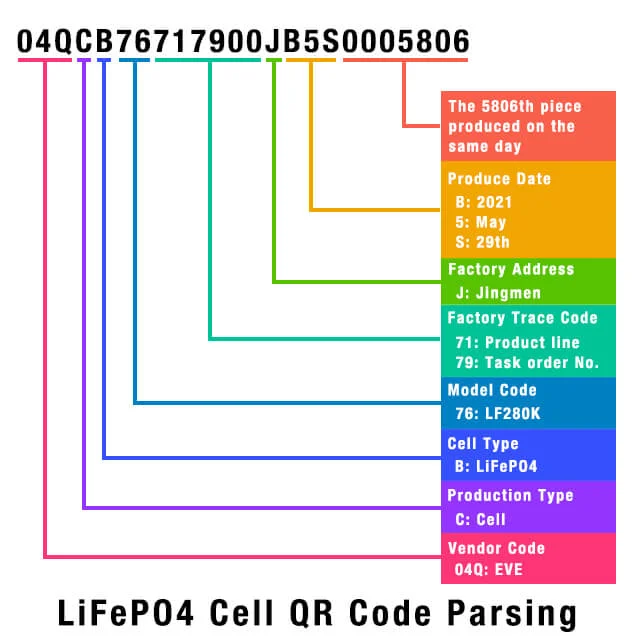
How to decode the data from EVE LFP Batteries

This is the EVE format of a QR code

How to Quickly Identify Fake Batteries Part 3 QR code parsing

Why a Lifepo4 QR Scanner app does NOT verify the Authenticity or Genuineness of Batteries

As we have discussed, a QR code is STATIC,
1. It does not connect to a database and return anything that can be used to know if the product is real or fake.

The Lifepo4 QR Scanner App, has a database, (think of it as a big spreadsheet. The database contains all the cell models, and some logical programming for the app to be able to decode all known QR codes. The user who created this app, did this to assist the community to try to know what product of battery cells, and where they were made and what capacity they were.
He has been able to gather enough data to make it work for the most popular manufacturers.

Once he has this image and others like it from the other manufacturers, he can very easily decode the important data, and that will return you a result on what that QR is supposed to be attached or printed on. (notice I said supposed)

H95df8f324b3a4959bece3fdc98ad34dbm1How to Quickly Identify Fake Batteries Part 3 QR code parsing
Why Does all this even matter?

In a high voltage battery pack, it’s crucial that the batteries in series are matched and high quality because:

  1. Balanced Performance: Matched batteries ensure consistent performance, as each battery will charge and discharge at the same rate.
  2. Safety: High-quality batteries reduce the risk of failures, such as overheating, leaks, or explosions.
  3. Longevity: Using matched and high-quality batteries extends the overall lifespan of the pack by preventing weak batteries from causing the entire pack to degrade faster.
  4. Efficiency: Ensures that the battery pack operates at optimal efficiency, providing reliable power output without losses due to imbalance.

By ensuring batteries are matched and high-quality, you maintain the safety, efficiency, and durability of the high voltage pack.

But wait there is more!

If a single battery cell in a high voltage pack is faulty, it impacts the entire pack because:

  1. Chain Reaction: In a series configuration, the current flows through each cell in the chain. A faulty cell disrupts this flow, reducing the pack’s overall performance.
  2. Reduced Capacity: The faulty cell limits the pack’s capacity to the weakest cell, causing the whole pack to discharge faster and reducing its overall capacity.
  3. Safety Risks: A single faulty cell can overheat or fail, potentially causing damage to adjacent cells and posing safety hazards like fires or explosions.
  4. Increased Wear: The healthy cells are forced to compensate for the faulty one, leading to uneven wear and shortening the lifespan of the entire pack.

In summary, a single faulty cell can degrade the performance, capacity, and safety of the whole pack, highlighting the importance of ensuring all cells are high quality and well-matched.

Now the best way to explain this. using math

if you have 16 cells in series, all of which are 330ah, though a single cell has only 150ah of capacity, then the entire pack will loose 55% of its capacity.

In this example the single cell, limits the pack to a total of 16 x 150ah. Making your pack only 7.6Kwh, when it should be 16.8kwh.

In dollars in todays market, this would mean,

A $5000 investment would loose $2750 in value.

Making your battery worth only $2250

Not only this but the cell will continue to cause problems, causing your power to cut off regularly, and remain out of balance, and it will strain every other component in your pack.

Not only this but the cell will continue to cause problems, causing your power to cut off regularly, and remain out of balance, and it will strain every other component in your pack.

Notice these are 2023-2024 cells, V3 LF280K or MB31

News
340AH 51.2v LFP BATTERIES

This is a warning for those looking at 340AH Lifepo4 Batteries.

Warning: Issues with 51.2V 340Ah Batteries Made by Gotion

We would like to inform our customers about a serious concern regarding 51.2V 340Ah batteries especially those with the cells made by Gotion. There have been known production issues with these cells, and as a result, B grade sellers have been attempting to sell these faulty units for over a year.

Key Points:

  1. Production Issues: Gotion encountered significant production issues with their 340Ah cells. These problems have led to a number of quality and performance concerns.
  2. B Grade Cells: These problematic cells are being sold as B grade, meaning they do not meet the original quality standards and may have defects.
  3. Long-Term Sales: Despite these issues, sellers have been trying to offload these subpar cells for more than a year, often at attractive prices to entice buyers.

Risks of Using B Grade 340Ah Batteries:

  • Reduced Performance: Expect lower efficiency and potential inconsistencies in power output.
  • Safety Hazards: Faulty cells can pose significant safety risks, including overheating, leaks, or even fires.
  • Shortened Lifespan: These cells may not last as long as A grade cells, leading to a need for earlier replacement and additional costs.

OUR CHINESE PARTNERS have rated them as some of the lowest quality 3.2v cells on the market. So please be careful. The capacity variances can be up to 20% and the expected lifespan has been quoted at only 2500 cycles by the wholesaler. Ive never seen a cell that low, not since before 2020.

Recommendations:

  • Verify Source: Ensure that you are purchasing batteries from reputable sources and confirm the grade of the cells.
  • Check Documentation: Look for any documentation or certifications that guarantee the quality and safety of the batteries.
  • Avoid Suspicious Deals: If a deal seems too good to be true, it likely is. Be wary of heavily discounted 340Ah batteries, especially if the seller cannot provide solid proof of their grade and quality.

At Lifepo4 Australia, we are committed to providing only the highest quality products to our customers. We encourage you to reach out to us for any questions or concerns about battery purchases. Your safety and satisfaction are our top priorities.

Stay informed and purchase wisely.

Gotion’s 3.2V 340Ah LiFePO4 cells have encountered significant production issues, leading to a number of concerns for potential buyers. These issues primarily involve quality control problems that have resulted in inconsistent performance and reliability across batches. Due to these problems, a large number of B-grade cells have been circulating in the market for over a year, often sold at discounted prices by various vendors.

Key points to be aware of:

  1. Inconsistent Performance: Many users have reported variability in capacity and performance among the cells. Some cells fail to meet the advertised capacity of 340Ah, causing issues in applications requiring consistent and reliable power output.
  2. Balancing Issues: There have been frequent reports of difficulties in balancing these cells, with some cells showing significantly different voltage levels under the same charge/discharge conditions. This can lead to premature wear and potential safety risks.
  3. Safety Concerns: Given the quality issues, there is an increased risk of thermal events, especially under high charge or discharge conditions. Proper handling and rigorous testing are essential before deploying these cells in any critical application.
  4. Long-Term Reliability: The long-term reliability of these cells remains questionable due to the production flaws. This includes a higher than usual rate of degradation and potential failures over time, which can be costly and hazardous.

It is crucial to purchase from reputable sources and verify the authenticity and quality of the cells before use. Consider requesting detailed test reports and certification to ensure you are getting Grade A cells.

For more detailed insights, you can refer to discussions on platforms like DIY Solar Power Forum and product details on sites like TezPower and Lightning Energy

News
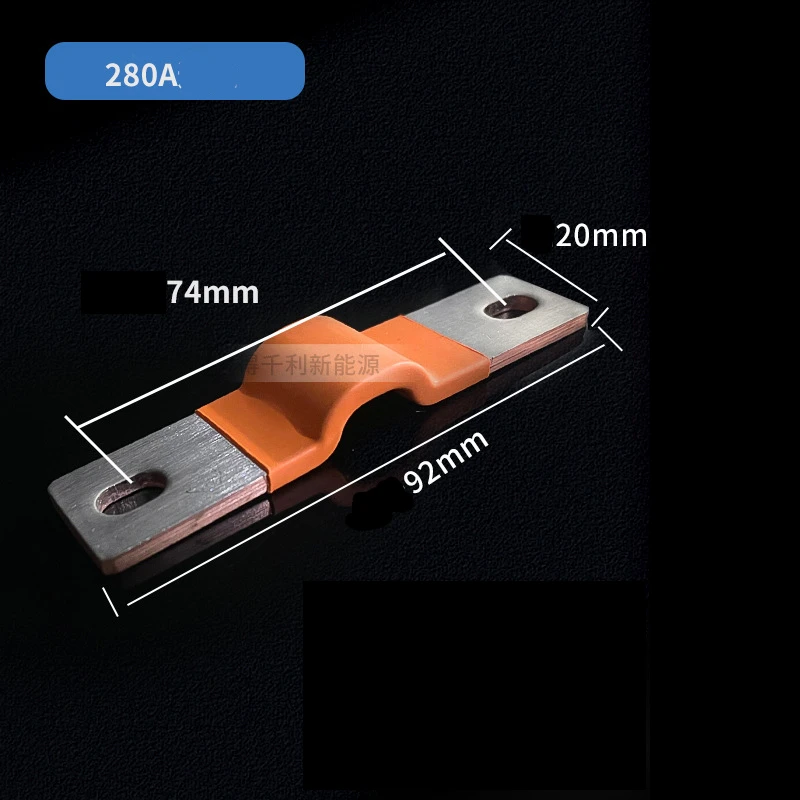
Flexible Busbars? Yay or Nay

Why Flexible Busbars for LiFePO4 Battery Cells are mostly a Gimmick

Introduction In the world of LiFePO4 battery cells, flexible busbars have gained popularity as an innovative solution promising improved performance and longevity. However, some industry experts and battery enthusiasts argue that this is merely a marketing gimmick designed to boost profit margins. This article explores the reasons behind this skepticism and presents both sides of the argument, including real-world accounts.

Reasons Why Flexible Busbars Are Considered a Gimmick

  1. Limited Swelling in LiFePO4 Cells
    • Argument Against: LiFePO4 battery cells are known for their stability and minimal swelling compared to other battery chemistries. The structural integrity of these cells typically does not necessitate flexible connections. The argument here is that the batteries would never swell enough to require a busbar that can extend its length, making the flexible feature redundant.
    • Real-World Account: Many DIY battery builders and professionals have reported that their LiFePO4 battery packs remain structurally sound over long periods, with no significant swelling that would justify the need for flexible busbars.
  2. Increased Complexity and Cost
    • Argument Against: Flexible busbars add unnecessary complexity and cost to battery pack construction. Traditional rigid busbars are sufficient for maintaining solid connections and managing current flow. The additional expense of flexible busbars may not translate into any significant performance benefits, thus being viewed as an upsell tactic.
    • Real-World Account: Most battery assembly experts have highlighted that they have successfully used rigid busbars for years without any issues related to swelling or connection failures. These experts argue that the cost-benefit ratio of flexible busbars does not favor their use in practical applications.
  3. Potential for Increased Resistance
    • Argument Against: The materials and design used in flexible busbars can sometimes introduce additional electrical resistance, which may negatively impact the efficiency of the battery pack. In contrast, rigid busbars typically offer lower resistance and more reliable performance.
    • Real-World Account: Engineers and battery technicians have noted that maintaining low resistance connections is critical for high-performance battery systems. Any additional resistance introduced by flexible busbars could potentially degrade the overall efficiency of the system.

Arguments in Favor of Flexible Busbars

  1. Improved Vibration Resistance
    • Argument For: Flexible busbars can absorb and dissipate vibrations more effectively than rigid busbars. This feature can be particularly beneficial in applications where the battery pack is subject to constant movement or vibrations, such as in electric vehicles or portable power systems.
    • Real-World Account: Some users in the automotive industry have reported that flexible busbars contribute to the longevity and reliability of battery packs by reducing the stress on connections due to vibrations.
  2. Ease of Assembly and Maintenance
    • Argument For: Flexible busbars can simplify the assembly process, especially in battery packs with complex geometries or tight spaces. They allow for easier alignment and connection of cells, which can reduce assembly time and potential errors.
    • Real-World Account: Battery assembly technicians in some manufacturing setups have expressed that flexible busbars make the assembly process more straightforward, reducing the likelihood of connection issues during installation.

Conclusion While flexible busbars for LiFePO4 battery cells are marketed as an innovative solution, many industry experts argue that they are unnecessary and primarily serve as a way to increase profit margins. The stability and minimal swelling of LiFePO4 cells, coupled with the additional cost and potential for increased resistance, make flexible busbars a questionable investment for many applications. However, in specific use cases involving high vibration environments or complex assembly requirements, flexible busbars may offer some advantages. Ultimately, the decision to use flexible busbars should be based on the specific needs and constraints of the battery pack design.

News Home Manufacturers

The Yixiang DIY Battery Box is a customizable battery enclosure designed for DIY battery builders. It is sometimes promoted among those who assemble their own battery packs for various applications, including solar energy storage and backup power systems.

BE CAREFUL! these companies start off cheap, but end up expensive!

Make sure you have calculated ALL THE COSTS and never agree to a sale until you have had
1. TIME TO THINK about your purchase
2. Checked the competitors
3. Asked a business in your own Country for a quote for a similar or better item

YIXIANG DIY

  1. Modular Design: The battery box is modular, allowing users to configure it to fit different battery cell sizes and quantities. This flexibility makes it suitable for a range of battery pack designs.
  2. Durability: Made from high-quality materials, the box is designed to be durable and provide good protection for the battery cells inside. It is often constructed from fire-resistant and impact-resistant materials to ensure safety.
  3. Ease of Assembly: The design of the Yixiang DIY Battery Box emphasizes ease of assembly, with clearly marked components and straightforward instructions. This makes it accessible even for those with limited technical expertise.
  4. Ventilation and Cooling: Many models include features for ventilation and cooling, which help to maintain optimal operating temperatures for the battery cells, thereby enhancing performance and longevity.
  5. Compatibility: The battery box is compatible with various battery chemistries, including LiFePO4, NCM, and others. This versatility allows users to choose the best battery type for their specific needs.
  6. Customization Options: Users can customize the box with additional features such as BMS (Battery Management System) integration, LCD screens for monitoring, and various connectors and terminals to suit their application.
  7. Safety Features: The Yixiang DIY Battery Box often includes multiple safety features such as short circuit protection, overcharge and over-discharge protection, and temperature sensors to ensure the safe operation of the battery pack.
  8. Portability: Designed with portability in mind, many models include handles or wheels, making it easy to transport the assembled battery pack.

If you need more detailed specifications or information about a particular model, please let me know!

[contact-form-7 id=”4034c29″ title=”Contact Us”]
News Lithium Battery-school
Understanding Lithium Battery Cell Purchasing from China: Navigating Quality and Shipping Challenges

The process of purchasing from China lithium battery cells, particularly for do-it-yourself (DIY) projects, is fraught with complexities and pitfalls, largely stemming from issues of quality and shipping. As a specialist in the field with extensive experience, I aim to experienced on these challenges, providing insights that stem from my personal journey in navigating this treacherous terrain.

The Allure and Risks of Using Alibaba

Many importers continue to be drawn to platforms like Alibaba due to apparent cost savings and convenience. However, a significant risk lurks beneath the surface: approximately 90% of importers end up with subpar, or “B grade,” cells. This pervasive issue is largely attributable to the shipping practices and the inability to visually distinguish between A and B grade cells.

Why Most Cells Are B Grade

The core of the problem lies in the shipping practices employed by many Alibaba vendors. These sellers often resort to “black market shipping,” where containers filled with dangerous goods (like lithium batteries) are not properly declared. This involves using what is known in Chinese as “special line” shipping, which typically involves bribes to customs officials in both China and Australia.

This unorthodox approach allows sellers to dramatically reduce shipping costs—sometimes by half compared to reputable companies like EVE Energy, which adhere strictly to international shipping regulations for dangerous goods. EVE Energy, being a billion-dollar enterprise, cannot risk the legal and ethical implications of concealing dangerous goods in regular shipments.

The Difference Between A and B Grade Cells

From a technical perspective, A and B grade cells may appear identical, but their performance and reliability diverge significantly. EVE Energy, for instance, implements rigorous testing procedures during their 3-4 week manufacturing process. This includes specialized charging processes, capacity checks, and voltage tests, which classify cells into categories like A+, A, B, and B- grades. Up to 40% of cells are downgraded to a lower grade due to identified defects during these tests.

Our Approach: Ensuring Quality and Compliance

Given the complexities of legally and safely importing lithium cells, I have taken the route of organizing my own shipping and securing necessary certifications for transporting dangerous goods. This approach, while time-consuming and complex, ensures that I provide only A+ grade cells, unlike the prevalent B grade cells that flood the Australian market through less scrupulous importers.

The Misrepresentation by Alibaba Sellers

A common tactic among Alibaba sellers is falsely representing B grade cells as A+ grade. This misrepresentation is facilitated by the structure of the supply chain, where cells are warehoused en masse and drop-shipped by vendors who often operate merely as call centers. The consequence is a market flooded with inferior cells sold under the guise of top-tier quality.

Conclusion: Navigating the Lithium Cell Landscape

The challenges of purchasing lithium battery cells from China revolve around navigating through a murky landscape riddled with deceptive practices and regulatory challenges. My expertise and commitment to quality and safety have allowed me to overcome these barriers, ensuring that I can provide genuinely high-grade lithium cells.

This situation underscores the importance of rigorous due diligence and understanding the intricate dynamics of international shipping and quality control. By sharing my experience, I aim to enlighten potential buyers and DIY enthusiasts on the pitfalls of the market and the critical importance of sourcing from reliable and ethical suppliers.

In simpler terms, buying lithium battery cells from China can be tricky. Many buyers (importers) get tempted by lower prices on platforms like Alibaba, but often end up with lower-quality, “B grade” cells due to shady shipping practices where sellers don’t declare dangerous goods properly to cut costs. This is risky and against the law.

On the other hand, reputable companies like EVE Energy follow strict shipping rules, which makes their cells more expensive but ensures they are of high quality. I’ve gone the extra mile to organize my own shipping and make sure everything is above board, which means I only provide top-quality, “A+ grade” cells.

To put it plainly, if you’re looking to buy lithium cells, it’s crucial to understand that the cheapest option might end up costing you more in the long run due to poor quality. It’s better to pay a bit more for cells that are safely and legally shipped, ensuring you get what you pay for—reliable and effective batteries.

To clearly highlight our approach: we manage our own shipping and customs processes entirely within legal frameworks. This commitment to legality and ethical practices sets us apart from many sellers around the world who often resort to shortcuts like purchasing from Alibaba to save on shipping costs.

By purchasing in bulk and overseeing every step from customs clearance to delivery, we ensure that we provide only A+ grade cells. This direct involvement allows us to maintain high standards of quality and safety, unlike many other sellers who compromise on these aspects to reduce expenses. This unique approach ensures that our customers receive the best possible product without the common risks associated with improperly handled imports.

Probably the best information we can give you is to outline the actual practices

  1. EVE might sell a battery for $68-78 USD A+ grade
    Shipping might be $500-800 AUD for 16 cells (Its always more expensive because its legal shipping)
  2. Alibaba sellers buy B grade cells from anywhere between 50-75% of the A+ grade price.
    This means $34-56 USD
  3. The Alibaba seller will then quote you $63-$78 for that same cell
    But not only that there shipping quote to you might be $300-600.
  4. The price is not that important, BUT! they are also making profits on the shipping because its not DG shipping. Its illegal.
  5. They do not declare the Batteries as DG in Australia either, so they pay $100’s of dollars less for this shipping pathway.
  6. This is all profit. The process has been improved over a few years. So its now down to only a couple of shipping companies who handle all of the deliveries in Australia
  7. In many cases, they do not pay GST either or only a tiny fraction of what should be paid.
    This is our money, our countries money, that is supposed to go back into, schools and hospitals and such for the benefit of our country. No in the pockets of overseas companies who are also selling bad cells to us.

The total price is always lower through Alibaba sellers. The Alibaba seller makes $20-35 USD more per cell. This means they can put signinificant effort into replacing a QR code with valid data.

The Laser etching technique which is used to replace a QR code, machine is a very cheap investement when we are talking about replacing the QR code of thousands of cells a day. The investement into this machinery and process is now extremely profitable.

The cells are purhased in lots of thousand and hundreds of thousands. They are transported to a warehouse/ processing centre. where they are graded again and then relabelled with a new QR code. The QR code is from genuine A+ grade cells. A QR code is just letters and numbers. So this data is taken from a genuine batch of A+ grade cells. The spreadsheets from EVE A+ grade cells are used to create what appears to be A+ grade cells. This process costs about $1.50 USD per cell.

Lithium Battery-school News
Key Aspects of IEC 62619:2022

The IEC 62619:2022 standard specifies requirements and tests for the safe operation of secondary lithium cells and batteries used in industrial applications. This includes stationary applications like energy storage systems and mobile applications such as electric vehicles. The standard is crucial for manufacturers, integrators, and end-users who rely on lithium battery technology, as it addresses several critical aspects of safety and performance.

Key Aspects of IEC 62619:2022

Scope and Application:

  • The IEC 62619:2022 standard is specifically designed for secondary lithium cells and batteries for industrial applications. It does not cover batteries for consumer electronics or those used in electrically propelled road vehicles.
  • It is applicable to cells and batteries regardless of the lithium-ion chemical composition.

Safety Requirements:

  • The standard includes stringent safety requirements for lithium-ion batteries to minimize risks such as thermal runaway, fire, and electric shock. These requirements are designed to protect users, technicians, and nearby equipment from potential hazards.
  • It mandates measures for the protection against mechanical abuses, electrical abuses (like overcharge and deep discharge), and thermal abuses, ensuring the batteries can withstand harsh conditions without failing.

Testing Procedures:

  • IEC 62619:2022 outlines comprehensive testing procedures to verify compliance with its safety requirements. These tests assess the battery’s ability to safely charge and discharge, its resistance to mechanical stress, and its thermal stability, among other factors.
  • The tests include, but are not limited to, short circuit conditions, overcharge, forced discharge, thermal abuse, and mechanical shock tests.

Performance Metrics:

  • While the primary focus of IEC 62619:2022 is on safety, it also considers performance aspects such as cycle life, capacity, and efficiency under various conditions, ensuring that the batteries not only are safe but also perform reliably over their intended lifespan.

Documentation and Marking:

  • The standard requires clear documentation for the safe handling, operation, and maintenance of lithium-ion batteries. This includes data sheets, instructions for use, and safety warnings.
  • Batteries must be marked with specific information, including manufacturer details, type, electrical characteristics, and safety symbols, as applicable.

Environmental Considerations:

  • Although IEC 62619:2022 focuses on safety and performance, manufacturers and users are encouraged to consider environmental impacts, including recycling and disposal of lithium-ion batteries in accordance with local regulations and best practices.

Importance of IEC 62619:2022

Compliance with IEC 62619:2022 is crucial for manufacturers and suppliers of lithium-ion batteries for several reasons:

  • Safety: It ensures that products are designed and tested to minimize risks of injury or damage.
  • Market Access: Many countries and industries require compliance with international standards like IEC 62619:2022 for market entry.
  • Quality Assurance: Adherence to the standard reassures customers and end-users about the quality and reliability of the batteries.
  • Regulatory Compliance: It helps manufacturers navigate the complex landscape of global regulations concerning lithium-ion batteries.

For the most current and detailed information, including any amendments or interpretations, directly consulting the IEC 62619:2022 standard document and associated regulatory bodies is recommended.

News
SOK vs EG4 – Battery Comparisons

When examining the landscape of lithium iron phosphate (LiFePO4) batteries, SOK and EG4 stand out for their quality, reliability, and performance. Both brands have garnered attention in the renewable energy sector, particularly among solar energy enthusiasts and off-grid living proponents. This analysis will delve into the technical aspects of popular LiFePO4 batteries from SOK and EG4, highlighting their features, performance, and suitability for various applications.

4a0432 f4e943189f734cc5b5c616821650ca71mv21

Capacity and Energy Density

SOK LiFePO4 Batteries:
SOK batteries are known for their true-to-advertised capacity, typically offering a range from 100Ah to 200Ah per battery. This capacity is ideal for a range of applications, from home energy storage systems to RV and marine applications. The energy density of SOK batteries is optimized for longevity and reliability, with a focus on providing consistent power output over an extended period.

EG4 LiFePO4 Batteries:
EG4 also provides a range of capacities, similar to SOK, with models also available in the 100Ah to 200Ah range. The energy density of EG4 batteries is competitive, ensuring that they occupy less space while delivering equivalent power, which is particularly advantageous in mobile applications and installations where space is at a premium.

Cycle Life and Longevity

SOK LiFePO4 Batteries:
SOK batteries boast a significant cycle life, often rated at over 4000 cycles at 80% depth of discharge (DoD), which translates to more than a decade of use under normal conditions. This long lifespan is a testament to the quality of the battery construction and the efficiency of the internal BMS (Battery Management System).

EG4 LiFePO4 Batteries:
EG4 matches the industry standard with a similar cycle life, also claiming upwards of 4000 cycles at 80% DoD. This level of performance indicates that EG4 batteries are built to last, providing users with a reliable power source over many years.

Charging and Discharging Rates

SOK LiFePO4 Batteries:
SOK batteries are designed to accommodate flexible charging and discharging rates, suitable for various applications. Typically, they can support continuous discharge rates up to 1C and charge rates up to 0.5C. This means a 100Ah SOK battery can be discharged at 100A and charged at 50A, making them versatile for different energy needs.

EG4 LiFePO4 Batteries:
EG4 batteries offer similar charging and discharging capabilities, with most models supporting 1C discharge and 0.5C charge rates. This compatibility with high-rate charging and discharging makes EG4 batteries suitable for applications requiring rapid energy availability and storage.

Built-in Battery Management System (BMS)

SOK LiFePO4 Batteries:
The BMS in SOK batteries is designed for efficiency and safety, providing overcharge, over-discharge, over-current, and temperature protection. Additionally, the BMS facilitates cell balancing, ensuring that each cell in the battery operates optimally, which is crucial for maintaining the battery’s health and extending its lifespan.

EG4 LiFePO4 Batteries:
Similarly, EG4 batteries come equipped with a sophisticated BMS that offers protection against common battery issues, including overcharging, deep discharging, and overheating. The BMS also supports cell balancing, which is essential for the longevity and performance of the battery.

Price and Value

SOK LiFePO4 Batteries:
SOK batteries are generally considered to offer excellent value for money, given their longevity, reliability, and performance. While they may carry a higher upfront cost compared to traditional lead-acid batteries, their extended lifespan and lower total cost of ownership make them a financially sound investment over time.

EG4 LiFePO4 Batteries:
EG4 batteries are competitively priced, offering a similar value proposition to SOK. The brand is known for providing high-quality batteries that meet the demands of rigorous applications, ensuring that consumers receive a product that balances cost with performance and durability.

Conclusion

Both SOK and EG4 LiFePO4 batteries offer exceptional quality, performance, and reliability for a wide range of applications. The choice between the two will largely depend on specific application requirements, brand preference, and potentially the level of customer service and support offered by the company. In terms of technical specifications, both brands are closely matched, providing durable, high-performance batteries that promise long-term reliability and efficiency for energy storage needs.

X

Australian battery hardware specialists

Reliable. Easy. Better value.

It’s time to switch to LiFePO4 Australia.