News
EVE Unveils largest LiFePO4 MB56 Technology yet! 836kWh Split-Type Modular Cabinet

The future of energy storage is here, and it’s bigger than before! At the recent SNEC 2025 exhibition, industry giant EVE Energy unveiled a suite of groundbreaking LiFePO4 battery solutions that are set to revolutionize the commercial and industrial energy storage landscape. Such as the 836kWh Split-Type Modular Cabinet, built around the MB56 628ah LFP cell. For Australian businesses looking to gain a competitive edge in the renewable energy sector, this is an opportunity you won’t want to miss.
17503818078252741
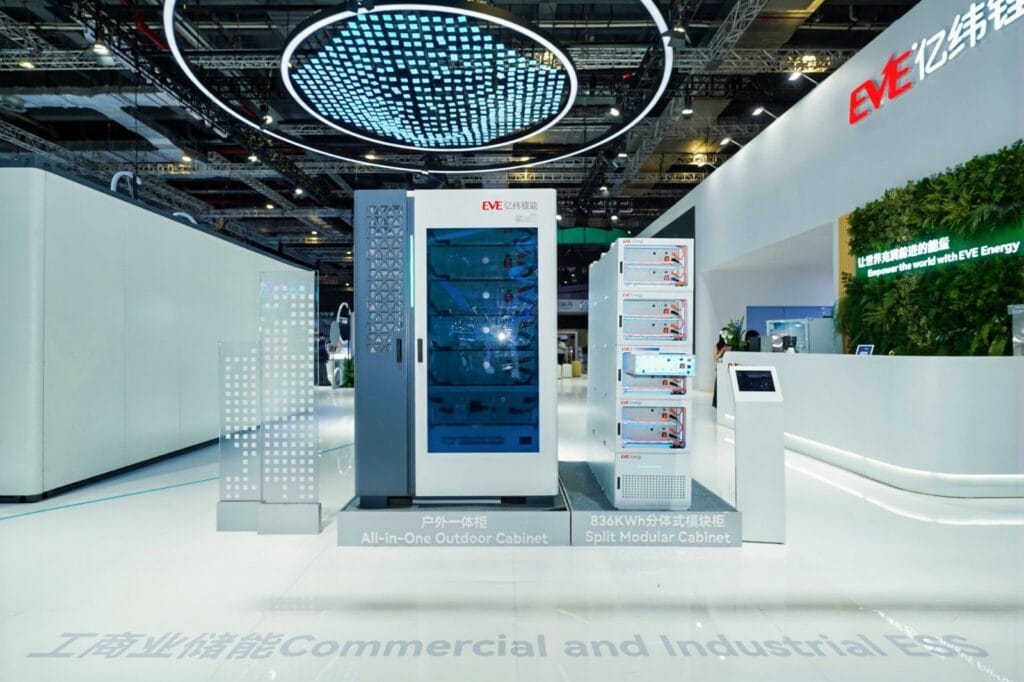
on the right you can see the 836kWh Split-Type Modular Cabinet

Introducing the 836kWh Split-Type Modular Cabinet

At the forefront of this new lineup is the 836kWh Split-Type Modular Cabinet. This innovative system is specifically designed for overseas markets and is perfectly suited for Australian commercial and industrial applications. Here’s what makes it a game-changer:

  • Modular and Scalable: The system is incredibly flexible, with a modular design that can be configured in various ways. It’s compatible with both 1000V and 1500V systems and can be expanded up to an impressive 5MWh. This means it can be tailored to meet the specific needs of your project, from small-scale commercial to large-scale industrial.
  • Overcoming Logistical Hurdles: One of the biggest challenges with large-scale energy storage is transportation and installation. EVE has solved this with an innovative split-design, allowing for more flexible deployment. This clever design not only overcomes logistical limitations for large cabinets but also increases energy density by 65% and reduces the system’s footprint by 37%.
  • Enhanced Safety and Intelligent Operation: Safety is paramount, and the 836kWh cabinet delivers. It features “thermal-electric separation” and “liquid-electric separation” designs, along with a fire-resistant layer that provides 15% more insulation than traditional cabinets. The smart management system ensures precise warnings and extends the system’s lifespan, making it a reliable and long-term investment.

Pushing the Boundaries with “Mr. Big” and “Mr. Giant”

EVE Energy also showcased its commitment to large-scale energy solutions with the “Mr. Big” super-large capacity 628Ah cell and the “Mr. Giant” 5MWh minimalist large system. These products are designed for large-scale power station projects and demonstrate the incredible potential of LiFePO4 technology.

What This Means for Australia

The launch of these new products from EVE Energy comes at a pivotal time for Australia’s energy market. As we continue to transition towards a renewable energy future, the demand for reliable, scalable, and cost-effective energy storage solutions is at an all-time high. The modularity and logistical advantages of the 836kWh cabinet make it an ideal choice for Australian businesses looking to invest in energy storage, whether for behind-the-meter applications or to support the grid.

LIFEPO4 Australia: Your Partner in Energy Innovation

At LIFEPO4 Australia, we are excited to be at the forefront of this technological advancement. As your trusted partner, we can assist you with:

  • Sourcing and Procurement: We have the expertise to source these cutting-edge EVE Energy products directly for your projects.
  • Seamless Importation: Our team will handle the complexities of importation, ensuring a smooth and hassle-free process.
  • Negotiating Favorable Terms: We can leverage our industry connections to negotiate excellent terms, ensuring you get the best possible value for your investment.

The future of energy storage has arrived, and it’s more accessible than ever. If you’re ready to explore how EVE Energy’s new LiFePO4 solutions can transform your business, we’re here to help.

Contact LIFEPO4 Australia today to discuss your energy storage needs and to learn more about how we can help you power your future.

News Manufacturers
EVE Lithium LFP Cells List 3.2v

A list of cells manufactured by EVE in July 2024.
It details the capacity, energy density, estimated cycle life, weight, and Internal resistance of each cell.

Using this information you might be able to decide what cells suit your application best.
For example the LF50k cell is rated for 7000 cycles at 1C charge and discharge. But its energy density is very low. The main reason it gets such a good rating is because it can be actively cooled or heated in the right application, which can help tremendously with lifespan.
However you will also note that cycle life is now mostly spoken about at 0.5C or P. Meaning much of the information previously released has been further corrected over time.
All of these numbers are best case scenario, and usually at 25 degrees Celsius. So these numbers are basically unattainable in most cases.

ModelCapacity (Ah)Voltage (V)Cycle(time) 25°CInternal Resistance (1KHz)Weight (g)Length × Width × Height (mm)Energy Density (Wh/kg)
LF22K223.224500 (3C/3C)≤0.4mΩ628±10148.7×17.7×131.8112
LF32323.203500 (1C/1C)≤1.5mΩ730±50148.3×26.8×94.3140
LF50F503.201500 (0.5C/0.5C)≤2.0mΩ1035±100148.3×26.7×129.8154
LF50L503.205000 (0.5C/0.5C)≤0.6mΩ1090±50148.6×39.7×100.2154
LF50K503.207000 (1C/1C)≤0.7mΩ1395±50135.3×29.3×185.3114
LF80823.204000 (0.5C/0.5C)≤0.5mΩ1680±50130.3×36.3×170.5156
LF90K903.206000 (1C/1C)≤0.5mΩ1994±100130.3×36.3×200.5144
LF100MA1013.202000 (0.5C/0.5C)≤0.5mΩ1920±100160.0×50.1×118.5168
LF100LA1023.205000 (0.5C/0.5C)≤0.5mΩ1985±100160.0×50.1×118.5164
LF1051053.204000 (0.5C/0.5C)≤0.32mΩ1980±60130.3×36.3×200.5169
LF1251253.224000 (0.5C/0.5C)≤0.40mΩ2390±71200.7×33.2×172.0168
LF1501503.224000 (0.5C/0.5C)≤0.4mΩ2830±84200.7×33.2×207.0170
LF1601603.224000 (0.5C/0.5C)≤0.21mΩ3000±100173.9×53.8×153.5171
LF1731733.224000 (0.5C/0.5C)≤0.25mΩ3190±96173.9×41.06×207.5174
LF2302303.204000 (0.5C/0.5C)≤0.25mΩ4140±124173.9×53.8×207.2177
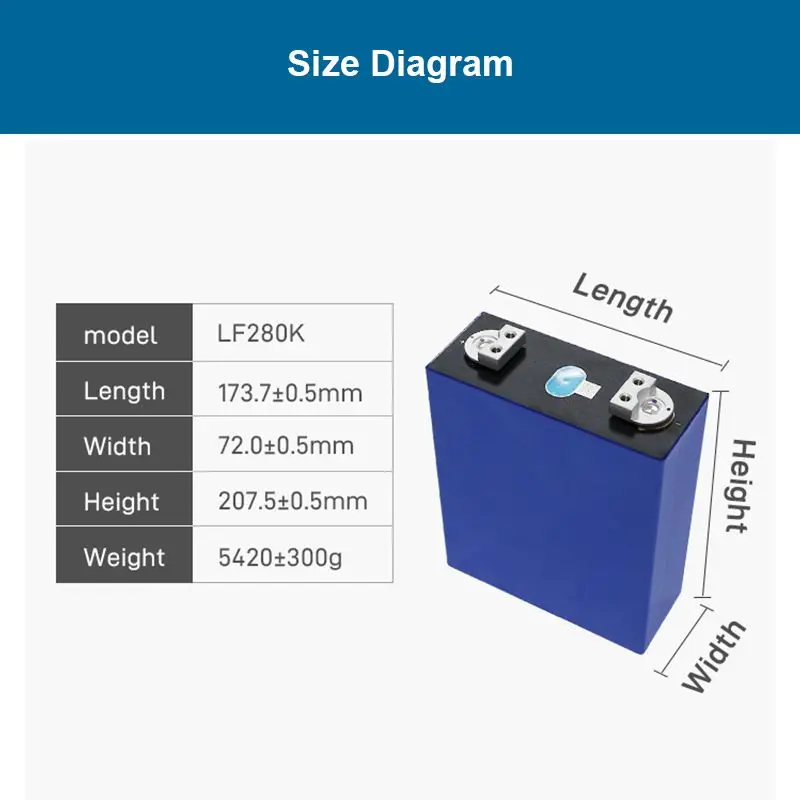
LF280K2803.208000 (0.5C/0.5P)≤0.25mΩ5490±300173.7×71.7×207.2163
LF3043043.204000 (0.5C/0.5C)≤0.16mΩ5450±164173.7×71.7×207.2178
LF560K5603.208000 (0.5P/0.5P)≤0.25mΩ10700±300352.3×71.7×207.2167
MB303063.2010000 (0.5P/0.5P)≤0.18mΩ5600±300173.7×71.7×207.2174
MB313143.208000 (0.5P/0.5P)≤0.18mΩ5600±300173.7×71.7×207.2179
V211543.222000 (0.5C/0.5C)≤0.5mΩ2755±30110.0×35.7×346.4182
A22178.13.222000 (0.33C/0.33C)≤0.3mΩ3170±230280.7×31.0×88.6180
A24172.13.222000 (0.33C/0.33C)≤0.45mΩ3160±240301.0×36.7×132.5175
A31-V1132.53.222000 (0.33C/0.33C)≤0.45mΩ2370±230194.3×50.7×112.7180
A31-V21413.222000 (Fch/1C)≤0.45mΩ2450±230194.3×50.7×112.7185
A27127.23.212000 (Fch/1C)≤0.45mΩ2220±33088.0×37.2×309.5183
A2887.53.222500 (0.33C/0.33C)≤0.57mΩ1645±30301.8×26.7×94.9171
News Lithium Battery-school
Comparing the most popular 300AH Lifepo4 cells

Comparing the EVE LF304 to the LF280, LF280K, and LF280k v3, MB30, MB31 we can analyze the key differences and similarities among these popular Lifepo4 cells.

You can also find out why the next generation of MB (Mr Big) cells is better than the last, mostly due to the new stacking technique being employed by just a small number of LFP manufacturers. At this stage CATL, EVE have next generation cells, not yet freely available. But in the near future, you will be able to purchase these cells if you don’t buy them from the grey markets.

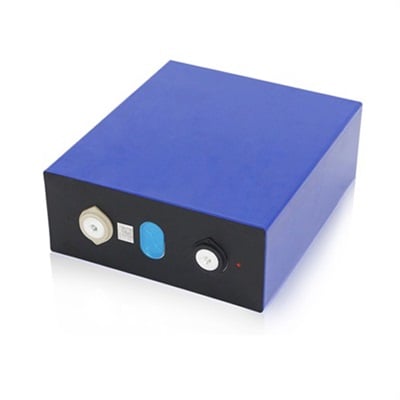
EVE LF304

EVE 304ah 300Ah 310Ah 320Ah
LF304 EVE

The EVE LF304 has a cycle life of 4000 at 0.5C/0.5C. Giving it an estimated lifespan of up to 11 years.
The EVE LF304 is EVE’s high power cell, with thicker coatings,

Capacity: 304Ah
Nominal Voltage: 3.2V

Production technology – Winding

LF280

LF280

The EVE LF280 has a cycle life of 4000 cycles at 0.5C/0.5C. Giving it an estimated lifespan of up to 11 years
Capacity: 280Ah
Nominal Voltage: 3.2V

Maximum Continuous Discharge 1C
Production technology – Winding

LF280K

eve lf280k 2
EVE LF280K

The EVE LF280K has a cycle life of 6000 cycles at 0.5C/0.5C. Giving it an estimated lifespan of up to 16 years
Capacity: 280Ah
Nominal Voltage: 3.2V

Cycle Life @ 0.5C : 6000 Cycles
Production technology – Winding

LF280k v3

The EVE LF280K has a cycle life of 6000 cycles (A+ Grade 8000 Cycles) at 0.5C/0.5C. Giving it an estimated lifespan of up to 16 years
Capacity: 280Ah
Nominal Voltage: 3.2V

Cycle Life: 6000 Cycles (A+ Grade 8000 Cycles)
Maximum Continuous Discharge 1C
Recommended Discharge 0.5C

Production technology – Stacking

MB30

The EVE MB30 has a cycle life of 10000 cycles at 0.5C/0.5C. Giving it an estimated lifespan of up to 20-25 years
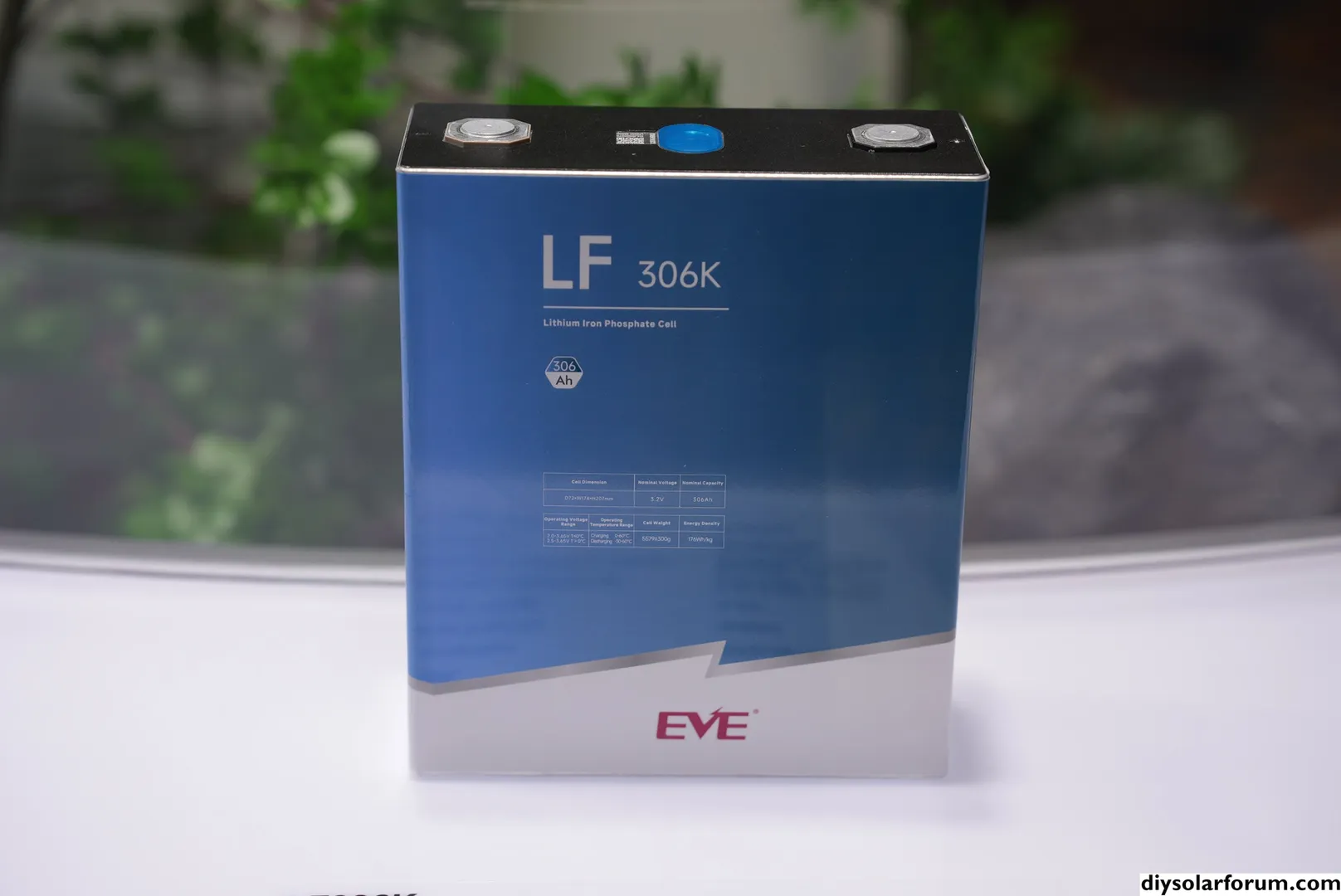
Capacity: 306Ah
Expected Real measured capacity when new 320+AH
Nominal Voltage: 3.2V

Cycle Life: 10000 Cycles
Maximum Continuous Discharge 1C
Recommended Discharge 0.5C

Production technology – Stacking

MB31

The EVE MB31 has a cycle life of 8000 cycles at 0.5C/0.5C. Giving it an estimated lifespan of up to 20-25 years
Capacity: 314Ah
Expected Real measured capacity when new 330+AH
Nominal Voltage: 3.2V
Advertised Cycle Life: 8000 Cycles

Maximum Continuous Discharge 1C
Recommended Discharge 0.5C

Production technology – Stacking

Stacking vs Winding

Longer life span
The stacked battery cell has more tabs, the shorter the electron transmission distance, and the smaller the resistance, so the internal resistance of the stacked battery cell can be reduced, and the heat generated by the battery cell is small. The winding is prone to deformation, expansion and other problems, which affect the attenuation performance of the battery.

Comparing process of stacking battery vs winding

StackingWinding
Energy densityHigher. Higher space utilization.Lower. There is a C angle, and the larger the capacity, the lower the utilization rate.
Structural stabilityHigher. The internal structure is uniform and the reaction rate is relatively low.Lower. There is a C angle, which leads to uneven rate of internal reaction of charging and discharging.
Fast charging adaptationBetter. The multi-pole plates are connected in parallel, the internal resistance is low, and the charge and discharge of large current can be completed in a short time, and the rate performance of the battery is high.Poor. During the charge and discharge process, the degradation rate of the active material at the high temperature position is accelerated, and the other positions are rapidly attenuated.
SafetyThe risk is low. Stress distribution is more consistent, which keeps the interface flat and more stable.Lower. Potential problems such as powder shedding, burrs, pole piece expansion, and separator stretching are easy to occur at the bend.
Cycle lifeLonger. Low internal resistance, relieve battery heating during fast charging, improve battery chemical system stability and prolong service life.Shorter. It is easy to deform in the later stage, which in turn affects the cycle life of the battery.
ProductivityLarge-capacity batteries are generally low, mainly 6-8PPM.Higher, generally at 12-13PPM.
YieldLow, the glitch problem is prominent.Higher automation, higher yield rate, higher number of pole pieces.
Process maturityLow, the number of pole pieces is large, and the investment in equipment is large.Higher, fewer pole pieces, mature equipment and low investment cost.

Summary of new technology

Technologies such as low-expansion anode materials, full tab design, electrode surface treatment, and flexible electrode forming help resolve liquid infiltration challenges for large cells, enabling comprehensive safety protection and high cycle life through heat insulation, diffusion prevention, pressure relief

What to choose for a battery with the longest lifespan.

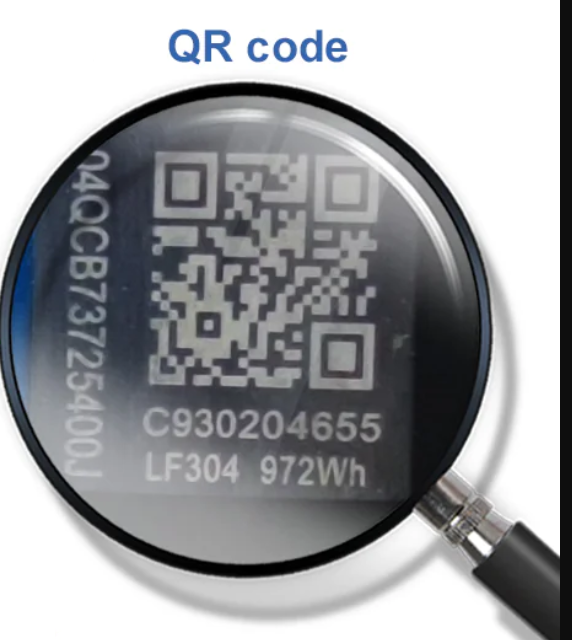
EVE MB30 Automotive A+ verified cells directly supplied from EVE, not via a third party, not via Alibaba, and not from most resellers and battery pack manufacturers including almost all battery builders in Australia and China, unless they can provide you with a) the official eve delivery report for the cell purchase, and b) evidence that the QR code is genuine and not re-lasered.
The B grade to A grade problem is going to be larger with the new models the LF280K v3 which is actually the MB30

A genuine QR code should be shiny behind the data that has been printed.

CleanQR wpp1710016061418
QR EVE LF304
Lithium Battery-school
Who is EVE Energy?

EVE Energy is a technology-driven company focused on the development of lithium batteries. Their products are widely used in the IoT, EV and ESS. Eve Energy makes prismatic, pouch and cylindrical battery cells. Along with a range of other batteries, including Lithium metal non rechargeable batteries.

Company Website – www.evebattery.com
EVE Energy Co., Ltd. (stock code: 300014)

Household ESS, Utility ESS, and Telecom ESS with products covering cells, modules, battery systems, battery management systems, and other comprehensive solutions

X