What is the new standard?
AS/NZS3001.2:2022 outlines requirements and guidelines for various aspects of the electrical system in Caravans, RVs, and Camper trailers. The standard considers wiring, inverters, solar panels, and batteries. The standard also requires batteries to comply with AS IEC 62619.
What is AS IEC 62619 Certification?
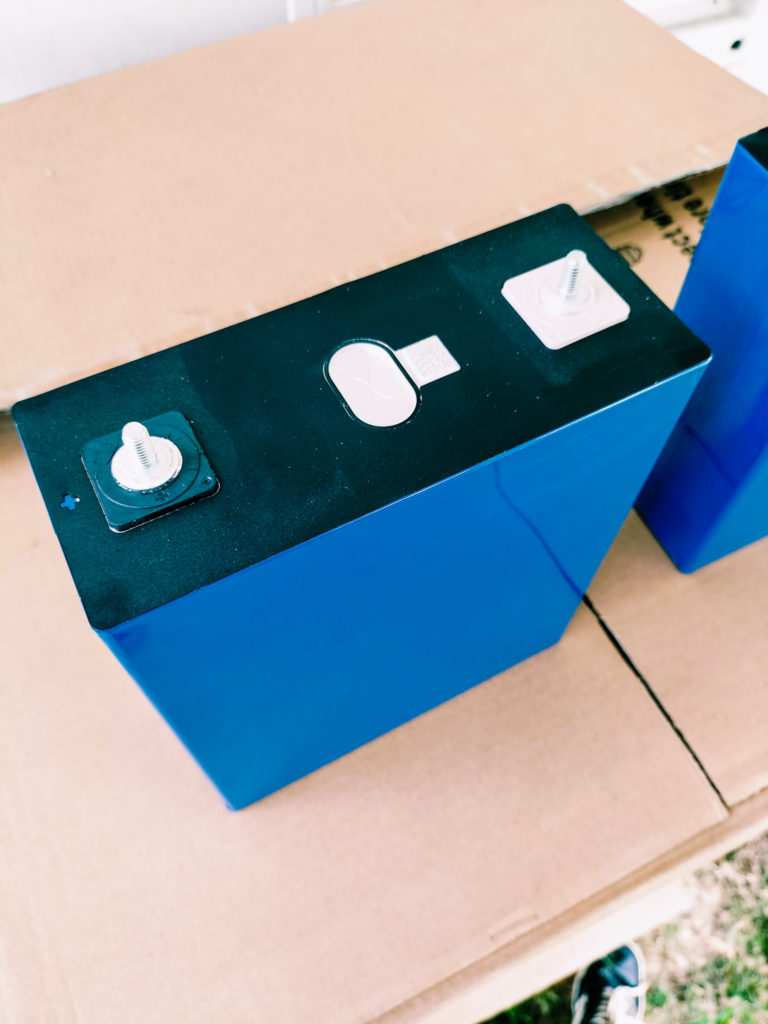
AS IEC 62619 Certification is a globally recognized standard for lithium batteries, developed by the International Electrotechnical Commission (IEC). IEC 62619 specifies requirements and tests for the safe operation of secondary lithium cells and batteries used in industrial applications, including stationary applications.
This certification assures consumers that the battery they are purchasing has undergone rigorous testing and meets all the necessary requirements for safe operation.
What is driving the change in standards?
The change in standards is driven by the need to improve safety and consistency in the storage of batteries in RVs. The new standards, AS/NZS3001.2:2022, have been developed in consultation with electrical experts and industry professionals to address safety concerns and ensure standardization in the industry.
When are they enforced from?
The new standards are enforceable from 18 November 2023.
Who does it apply to?
The standards apply to everyone buying or using a new recreational vehicle build but are of particular importance to manufacturers and importers of recreational vehicles.
Do I need to comply to the new standard?
The standard applies for any new installations from the 18th of November 2023 (the effective date). The new standard applies to any new electrical installations (vehicle builds) conducted after the effective date, but not to existing installations. Installations prior to the effective date will be assessed against the standards at the time of installation so long as they meet basic safety standards.
Typically, repairs may be conducted using methods, fittings and fixtures that were acceptable at the time of the original installation. Alternatively, currently available methods fittings and fixtures available as direct replacements may be used, providing that basic safety requirements are met.
Alterations, e.g. replacing lead acid batteries with lithium batteries, are to be completed in line with the current (new) standards and shall not compromise the remainder of the installation.
We recommend consulting a professional and ensuring the installation complies with the new standard.
Will it affect my existing installation?
The new standards are enforceable on new RVs, so they are unlikely to affect your existing installation. However, if you plan to make any alterations or updates to your RV’s electrical system, including battery system, it is advisable to consult with a qualified professional to ensure compliance with safety standards.
In a nutshell, what are the key changes?
The key changes include requirements for the installation, mounting and wiring of electrical systems into RVs including inverters, solar, wiring and batteries. With respect to batteries the changes focus on minimising the potential for adverse events by considering protection against harmful gasses and fumes and to prevent their build up, fire, damage from water ingress, damage from physical impact and to make sure they are installed and operating withing the batteries specifications.
Do all LiFePo4 Australia lithium batteries comply with the new standard?
The Lifepo4 Australia range of batteries, either comply or are under application with IEC62619, a requirement of the new standard. If these batteries are installed in accordance with the regulations, they are considered to be meeting the standard. You must check the website and or ask us if you require your battery purchase to be used in accordance with this standard.
From the standards
(a) be installed externally, i.e. behind a wall, compartment or barrier that prevents the egress of gases into the habitable area; and
(b) not enter the habitable area of the structure; and
(c) be installed to operate within the manufacturer’s defined operating temperatures, including IP rating; and
(d) be installed in a suitable battery container where the battery manufacturer has not provided encapsulated cells.
What do the standards say about lithium batteries in caravan/camper trailers?
The new regulations stipulate that a lithium battery cannot be installed in a habitable living area, such as inside a caravan or camper trailer, unless it is placed in a sealed enclosure, or the installation location is sealed off from the habitable area and the sealed off area is vented to the exterior environment.
Solar panels
AS/NZS 3001.2:2022 Electrical Installations Standard also covers the use of solar panels. One significant change to the standard is the requirement for individual fusing and isolation points prior to the panels being connected in parallel. This is to prevent one faulty panel from taking out the entire string, which could lead to a fire. With individual fusing, any faulty panel will blow the singular fuse, and the rest of the system will continue to operate as it should.
How do I get a copy of these regulations / can you send me a copy of them?
You can obtain a copy of AS/NZS3001.2:2022 by purchasing it from Standards Australia. Or alternatively, you can ensure you installer is qualified and is following the new standards by asking them if they comply.
Where do I get more information about these regulations?
Can the batteries be mounted on the outside of the caravan (i.e. Chassis)?
Yes, as this is not classed as a habitable environment, lithium batteries can be mounted on the exterior of the caravan. When installing outside the vehicle it is important to ensure that the installation ensures the batteries are operated within their specifications. The installation must be protected from physical damage, operating within its temperature range, adequately IP rated to protect against water and dust etc.
How do I install batteries within the standard if the batteries are to be mounted inside the caravan?
When installing batteries inside the caravan while adhering to the standard, it is essential to place the batteries within a sealed enclosure, with venting directing gases outside of any habitable areas whilst also ensuring that the enclosure (venting port) is environmentally protected. The enclosure must provide access for installation and maintenance and must have effective seals. A screwdriver or special tool must be required to access the enclosure. Whilst the standards do not provide specific guidance on the material that should be used to construct this enclosure it should be suitable to provide a sturdy home for the batteries and survive the roads conditions that the Caravan/RV is designed for.
What’s the difference between Lead Acid and Lithium battery installations?
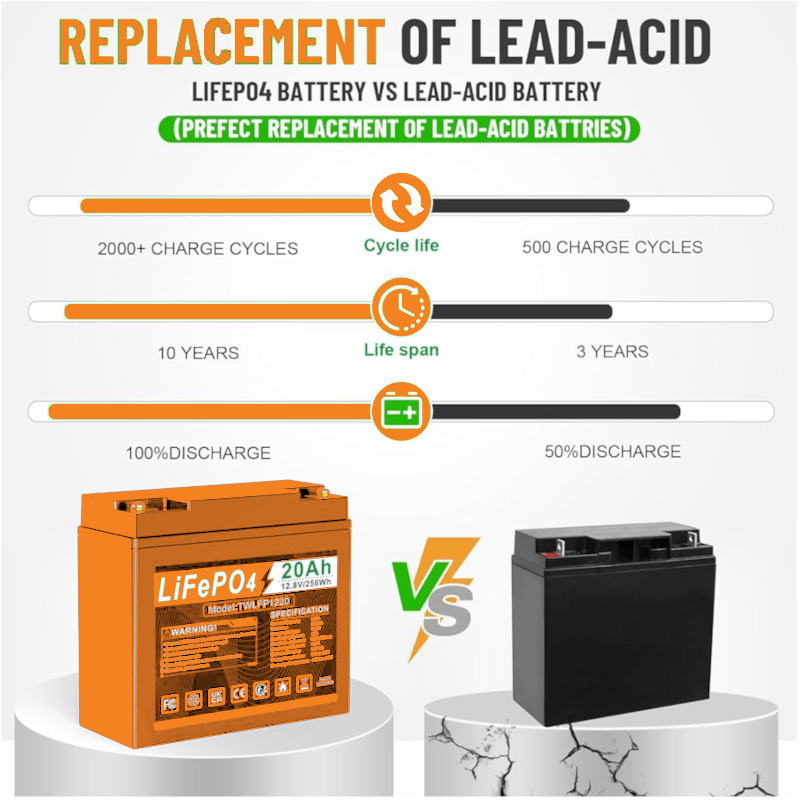
Lead acid (LA) batteries are also required to be sealed off from the habitable area and to be vented externally. Because LA batteries release gasses that are lighter than air they need two vents, one at the top and one at the bottom of the enclosure. An enclosure that is design specially for Lithium batteries, i.e., one has one vent must be clearly labelled as only being suitable for lithium batteries and to not install LA batteries in the enclosure.
Are lithium batteries safe to use?
Lithium batteries with an in-built BMS that monitors and balances individual cell voltages, monitors charge voltage and current and ensures the battery does not drop below an acceptable charge level are safe to use when installed and maintained correctly. We always recommend the use of LFP Lifepo4 chemistry as it is much safer than NCM, NCA and similar chemistries which include Nickel and Cobalt.
What are the repercussions of installing non-approved lithium after Nov 18?
As with any non-conformance to Australian Standards, the vehicle in question can be defected and any manufacturer or importer of non-compliant vehicles may be prosecuted to the extent of the law.
What about in-vehicle situations? Can batteries be installed in-cabin or in the engine bay still due to these standards?
The changes to AS/NZS 3001.2:2022 do not explicitly consider in-vehicle installations unless they are installed in a habitable area, however the recommendations on installation including gas venting, fire, physical and environmental protection are still valid for all installations.
Residual Current Device (RCD)
Inverters must be installed using a Residual Current Device (RCD) which will provide protection in a similar manner to all AC wiring which is installed with an RCD at the input to the RV. This would need to be a separate RCD and labelled appropriately that an inverter or and inverter/charger is installed. The old way of just buying an off the shelf inverter and connecting it to your battery stored under the bed or seat and then plugging in an extension lead is to be thing of the past. The unit must be accessible and have a visible light to identify the status.
Solar Panels
Solar panels must have over current protection devices – fusing must be installed on the positive cable at the actual panels where there is circulating current. Also to note is that cable suitable for solar panel installations must be used – eg. the cable must be double insulated and also IP rated for the harshness of the Australian sun and the environmental conditions. RVers should give due regard to any portable panels that they decide to connect to their system in that these should also be fused and incorporate appropriate cables.
Fusing
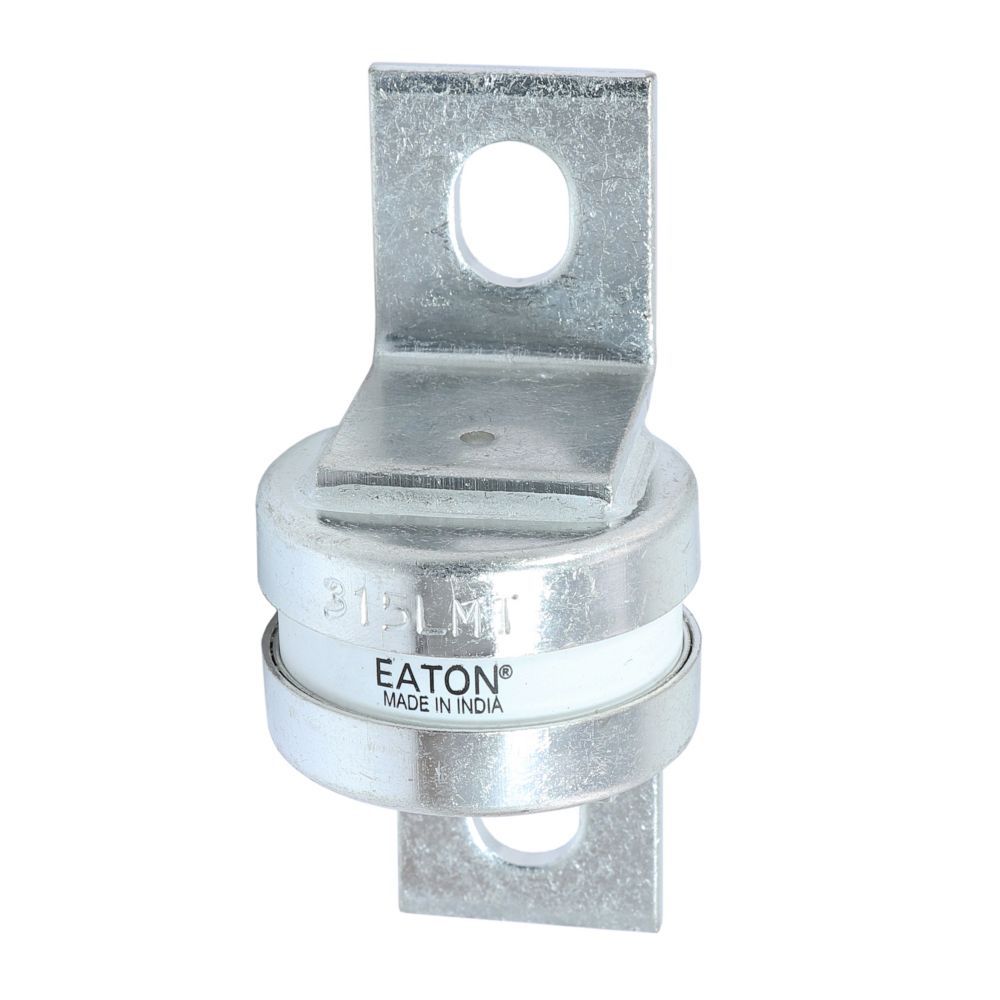
Fusing must also be provided to protect batteries and this again, should be as close as practicable to the battery itself and on the positive wire. We would recommend the slow blow blade fuses generally used in automotive applications. These allow for some momentary or temp over current or inrush and are not designed to protect highly sensitive electrical equipment but will certainly blow when there is sustained over current. In the case of RV installations it is used not only to prevent damage to appliances and chargers etc but also to prevent the wiring insulation from melting as most manufacturers will only used the minimum wiring gauge require to meet voltage drop.
From the standards
(a) be installed externally, i.e. behind a wall, compartment or barrier that prevents the egress of gases into the habitable area; and
(b) not enter the habitable area of the structure; and
(c) be installed to operate within the manufacturer’s defined operating temperatures, including IP rating; and
(d) be installed in a suitable battery container where the battery manufacturer has not provided encapsulated cells.
AS/NZS 3001.2:2022 Electrical installations – Connectable electrical installations and supply arrangements; Part 2: Connectable electrical Installations is a key Australian Standard, covering electrical installations in recreational vehicles (as well as other connectable installations used for accommodation, habitation or commercial purposes). This Standard has recently undergone a major revision and was published on 18 November 2022.
Caravan Industry Association of Australia holds a seat on the AS/NZS 3001 Standards Australia committee (through Jason Arter) and has worked in collaboration with our member state associations and industry throughout this standard revision project.
The following overview provides a summary of some of the key changes in this revision and is provided as general guidance and information based on our understanding of the electrical Standard requirements. However, it is important to note that this does not provide an exhaustive list of changes to the standard. It is strongly recommended that industry businesses make their own investigations and explore the changes to AS/NZS 3001.2:2022 with regard to the recreational vehicles they are producing. It is also important to ensure that the relevant personnel (e.g. contract or staff electricians, vehicle designers etc.) within your business are up to date with these changes.
There is a significant administration change with the separation of AS/NZS 3001 into 2 parts:
- AS/NZS 3001.1, Electrical installations — Connectable electrical installations and supply arrangements, Part 1: Site supplies for connectable electrical installations
- AS/NZS 3001.2, Electrical installations — Connectable electrical installations and supply arrangements, Part 2: Connectable electrical installations
This summary only addresses Part 2 of the Standard (AS/NZS 3001.2) relating to installations within vehicles and relocatable units.
Within Part 2, the Standard has been divided into separate sections that address specific types of connectable electrical installations. This assists readers to locate the information relevant to their particular installation. It may mean that a section is not applicable to your installation, depending on the product and features incorporated.
- Section 1 provides the scope, inclusions, and exclusions of this Standard. The definitions and alterations and repairs have been expanded;
- Section 2 provides for the external supply connection and onboard supply installation requirements applicable to a connectable electrical installation;
- Section 3 provides the installation requirements for relocatable units;
- Section 4 provides the installation requirements for recreational vehicles and non-recreational vehicles;
- Section 5 provides the installation requirements for extra-low voltage wiring systems and equipment in all connectable electrical installations; and
- Section 6 provides verification requirements in all connectable electrical installations.
If you are using the Standard for installations in recreational vehicles, refer to sections 1, 2, 4, 5 and 6 – for installations in relocatable units, refer to sections 1,2,3,5 and 6.
Key Changes Summary
One of the most significant changes to the Standard is the inclusion of a section outlining requirements for extra-low voltage d.c. electrical installations (Section 5). Within this section are significant new requirements for batteries, solar panels (and other sources of supply), wiring, electrical equipment and accessories.
Batteries
Batteries should be rechargeable and have a minimum battery capacity of 40Ah at a 20h discharge rate.
Securing of batteries – no greater than 25mm movement under a pulling force of twice the battery weight.
Clearance to metallic service lines – 300mm clearance around battery terminals, or appropriate shielding in place. E.g. to gas, diesel, water lines or similar.
Lead-Acid batteries (all types)
- External location:
- Open to environment or in a vented battery compartment;
- Must include a spill tray that can hold at least 20% of the electrolyte held by the battery; and
- Battery compartment vents must be outside the habitable area.
- Internal location:
- Must be in a battery compartment that is vented to the exterior of the vehicle; and
- Must include a spill tray that can hold at least 20% of the electrolyte held by the battery.
- Battery compartment ventilation is required via one of three prescribed methods.
Lithium ion batteries (all types)
- Location – external to the living area, i.e. behind a wall, compartment or barrier that prevents the ingress of gasses to the habitable area.
- Must be provided with a battery management safety system:
- Monitors voltage, current and temperature of the battery; and
- Automatically disconnects for critical conditions.
- Must be provided with a visible monitoring device:
- Must display state of charge, may display voltage; and
- May use wired or wireless communication direct to the battery management safety system.
- Installer should consult with the battery manufacturer for compartment design and means of venting that are appropriate for the type of battery.
Solar
Renewable energy sources:
- Installed only for charging batteries;
- Only generate extra-low voltage; and
- Must have a device which prevents overcharging of the battery(ies).
Photovoltaic (PV) array installations shall be installed as per this standard (AS/NZS 3001.2). Further guidance may be sought from AS/NZS 5033.
Overcurrent protection devices shall be provided at the PV array.
PV modules must comply with all national design rules for road safety (i.e. ADRs):
- Height & width limits.
- External projections.
- Vehicle lighting – obstruction.
- Strength of attachment – normal operation, emergency braking, crash scenario.
Recreational vehicle manufacturers who offer solar power systems are strongly encouraged to investigate the full details of the section on solar (and other renewable) energy sources.
Multiple sources of supply
An installation may be supplied from multiple sources – either external or on-board, and at either low voltage or extra-low voltage.
A changeover device that ensures only one source of supply can be connected at any given time must be provided on (or adjacent to) the switchboard:
- Where the switchboard is mounted externally, provision is made for the changeover switch to be placed in a prominent position internally; and
- Where a changeover switch is incorporated into a source of supply (e.g. inverter charger) a label shall be placed at the switchboard indicating the location the device.
When multiple sources of supply are present, low voltage socket outlets in the installation must be labelled to indicate the sources of supply.
Onboard Supplies – Inverters
All or part of the electrical installation may be supplied by an on-board source of supply, such as an inverter or inverter charger.
If an inverter (or inverter charger) is fitted:
- Controls must be readily accessible;
- Final sub-circuits supplied by an inverter or inverter charger must be protected by an RCD device. (For an isolated/EPB inverter this can be integral to the unit or external); and
- The main switchboard must contain
- A warning label indicating the presence of an inverter; and
- A visible indicator showing the status of the inverter or inverter charger – active online or in standby mode.
Note: Where the switchboard is mounted externally, provision is made for these indications to be placed in a prominent position internally.
Extra-Low Voltage (12V d.c.) Wiring
Protection must be provided against mechanical damage, environment and other external influences:
- Retention of wiring.
- Enclosure.
Protect must be provided against physical contact with live parts:
- Insulation or physical separation.
Wiring must be suitable for its intended use:
- Current-carrying capacity.
- Voltage drop.
- Conductor size requirements.
Separation must be provided from low voltage (240V) wiring.
Another significant area of change in the standard relates to exclusion areas for electrical equipment and accessories. Importantly, these restricted areas are applied to both low voltage (240V) and extra-low voltage (e.g. 12V d.c.) equipment and accessories.
Exclusion around gas cylinders
The requirements for this area have been aligned with the controlled areas of AS/NZS 5601.2 Gas Installations Standard.
In very broad summary, devices such as switches, motors, appliances cannot be located within a prescribed controlled area around gas cylinders or gas cylinder compartments.
Exceptions are made for electrical fittings and electrical wiring mounted on a drawbar of an RV whose primary function relates to propulsion or roadworthiness of a vehicle. e.g. trailer plugs, stability controllers, road vehicle lighting.
Damp area exclusion zones – showers, external shower (sinks unchanged)
An exclusion zone has been applied around an external shower – similar to internal bathroom requirements. Again, exceptions are made for equipment whose primary function relates to propulsion or roadworthiness of a vehicle.
Dimensions of the defined zones around an internal shower remain consistent with the previous standards. Further clarification has been provided to address some of the typical door arrangements seen in current vehicle designs. e.g. shower doors hinged part way along a door.
Cooker exclusion zone
The exclusion zone around an open cooktop has been updated to limit the exclusion area to a height above the cooker as far as the range hood or overhead cupboard (or ceiling if neither of these are applicable). This is a variation from the corresponding zone in AS/NZS 3000, reducing the area that previously extended up surrounding walls, in recognition of the limited space for relocation of electrical equipment in a recreational vehicle setting.
AS/NZS 3001.2 acts to modify the requirements of AS/NZS 3000 in some key areas:
Appliance switching requirements – cooker, A/C, HWS
Appliances are required to be controlled by a switch that is readily identifiable and convenient for its intended use.
This requirement modifies the AS/NZS 3000 requirements relating to isolation switches for air conditioners, hot water services, and cooking appliances, such that these appliances are not required to have separate isolating devices.
Switchboard (main circuit breaker) clearances – in a cupboard
The requirements for a switchboard (or main circuit breaker) located in a cupboard have some key clarifications:
- Maximum clearance in front of the switchboard (circuit breaker) is set at 600mm from the face of the device. note: this modifies AS/NZS 3000 requirements that measure from the edge of an open door in some circumstances;
- Maximum distance from the face of the device to a protruding bench (or another surface) is 600mm; and
- Clearance from the face of a device to the front of the cupboard must be no more than 50mm.
This overview highlights some of the significant changes for consideration within your business. Further technical bulletins will follow with more detail of some of these changes during the implementation phase of the Standard.
As AS/NZS 3001 is made mandatory by electrical legislation in each State and Territory. While it is expected that each respective Regulatory Authority will honour the 12-month transitional provision, they may apply the new Standard requirements at an earlier time. Caravan Industry Association of Australia and your state caravanning associations are working with the respective jurisdictions to confirm the details of transitional arrangements in each State, particularly around the timing for full implementation and enforcement of the new Standard.