
New Victron gear to watch in 2027: Koro 640 GX S and BMV-812 Smart
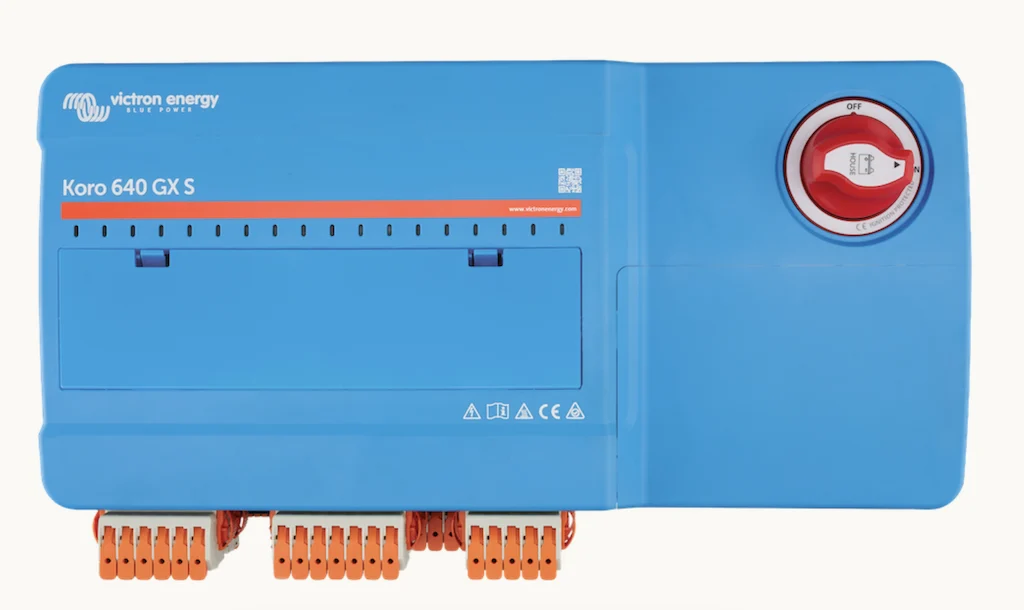
If you’re putting together a boat, caravan or motorhome electrical system over the next six to twelve months, the Koro 640 GX S is the new Victron product I’d keep an eye on. It puts a lot of the 12 V or 24 V gear you’d normally buy and wire separately into one unit. The other one I’d look at is the BMV-812 Smart, especially if you already have a BMV-712 fitted.
Victron previewed these products at METSTRADE 2026. I wanted to go through what each one does, where it might fit and what you can look forward to in 2027. Some of the GX gear and software is already available, so I’ve included what you can use now as well.
Koro 640 GX S — what does it replace?
Think about the number of boxes that go into a typical 12 V or 24 V system. You’ve got your solar charger, a DC-DC charger if you’re charging off the alternator, a shunt to see what the battery is doing, fuses and distribution, and a GX if you want to see it all in one place. The Koro brings those jobs together, with two MPPT solar inputs, dimmable lighting, switched circuits and inputs for tank senders and other sensors. You still choose your battery and a separate inverter or inverter/charger for AC appliances.
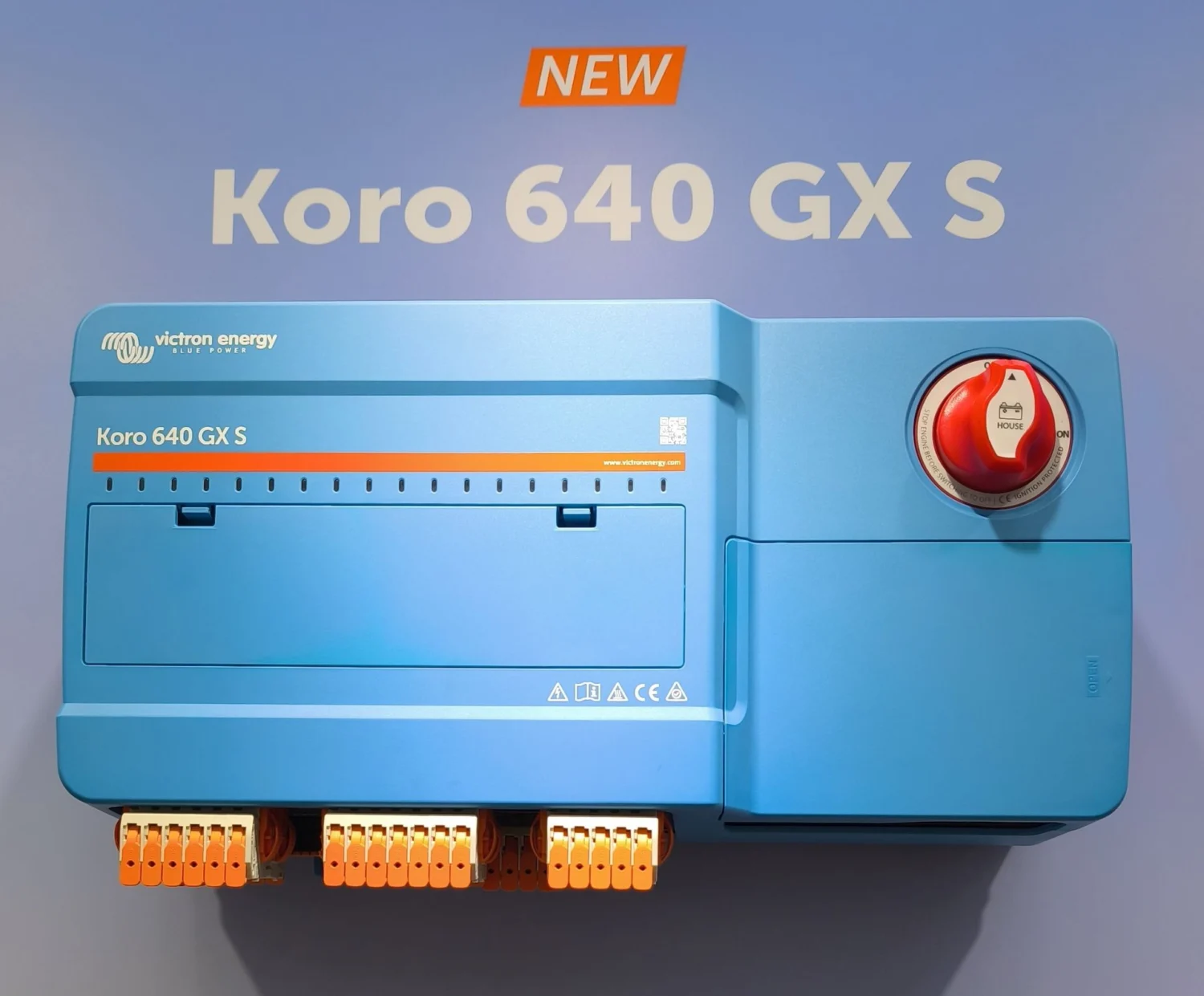
Why two solar inputs? On a caravan you could have panels on the roof and a portable panel out in the sun. On a boat the mast might shade one set of panels while the other is still in full sun. Each set has its own tracker. Then you can see the solar, battery and tank levels together on your phone or a GX Touch, and operate compatible switches from the same place.
How the circuits are laid out
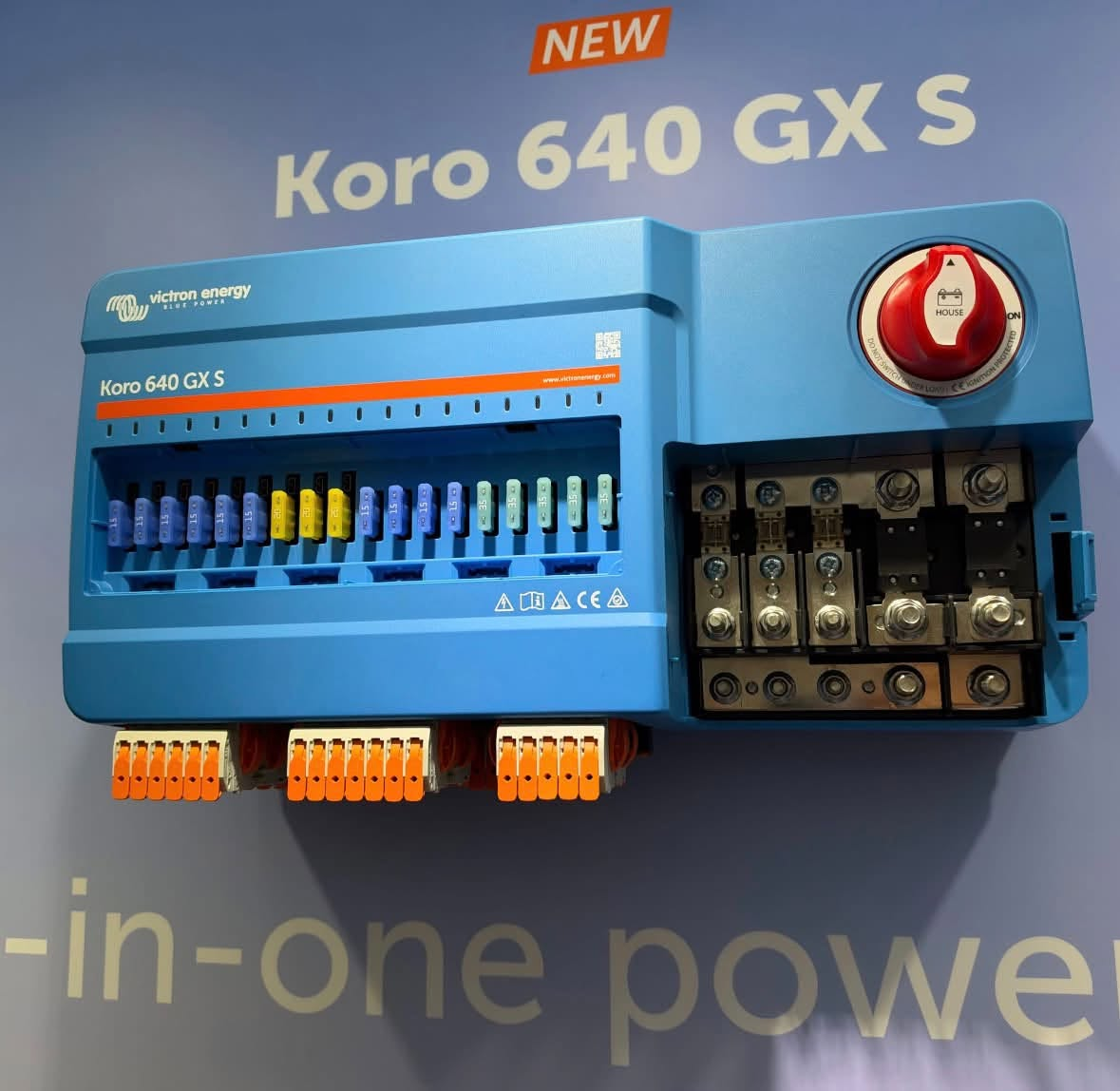
Have a look at the wiring compartment in the video. The plugs come out so you can prepare the wiring on a bench. The blade fuses are accessible and there’s a manual override on the three relay-switched circuits. That’s the sort of detail I’d look for if the unit is going into a cupboard or behind a panel and you need to get to a fuse later.
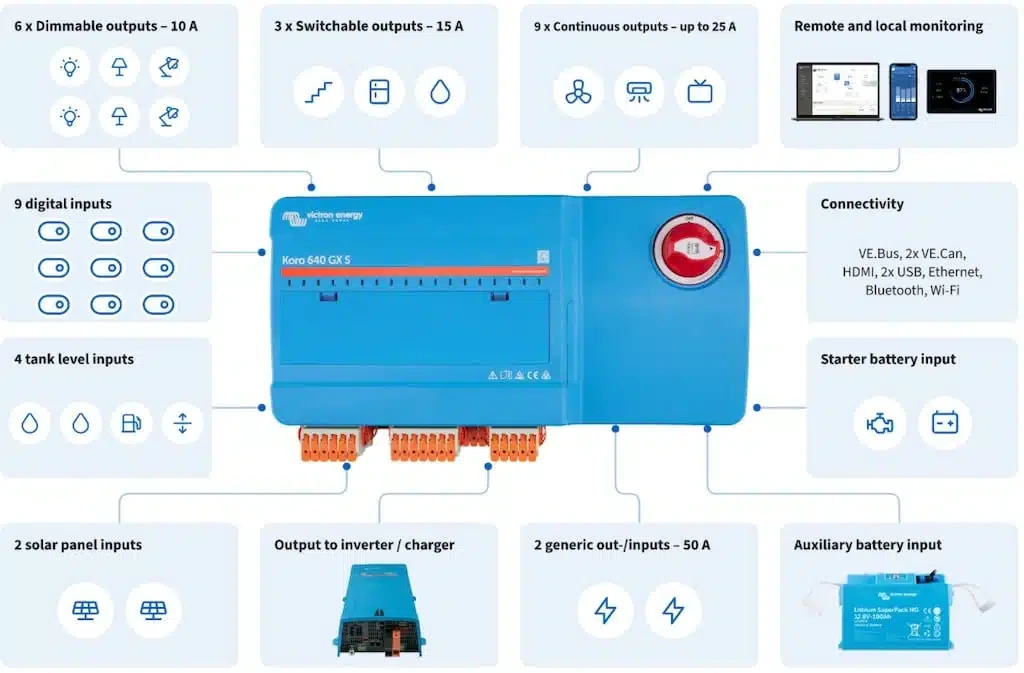
| Function | What Victron has shown so far |
|---|---|
| System voltage | Nominal 12 V or 24 V battery system |
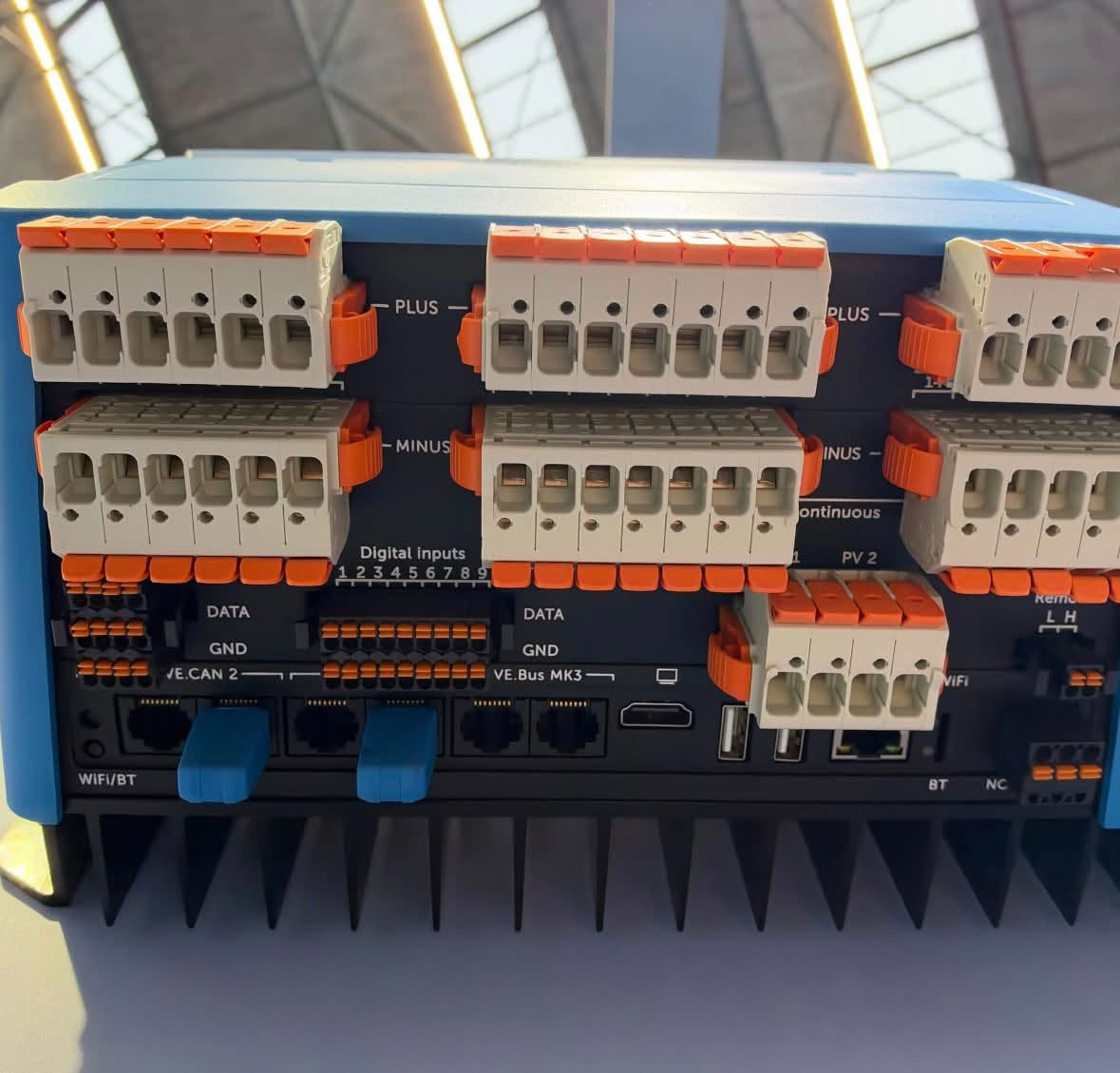
| Solar | Two MPPT inputs. The demonstration placard showed 2 × 220 W at 12 V and 2 × 440 W at 24 V. |
| Alternator charging | Integrated DC-DC charging with engine detection. The placard listed 50 A / 1,400 W. |
| Main connections | Separate M8 battery and inverter/charger connections. Each was marked 200 A continuous on the demonstration unit. |
| Lighting | Six 10 A PWM dimming outputs |
| Switched loads | Three 15 A outputs |
| Always-on loads | Nine fused outputs. The demonstration showed four 10 A and five 25 A circuits. |
| Extra DC connections | Two general-purpose 50 A inputs/outputs in the preview diagram |
| Monitoring | Built-in battery shunt, nine digital inputs and four 0–10 V tank inputs |
| Communications | The preview diagram shows VE.Bus, two VE.Can connections, two USB ports, HDMI, Ethernet, Wi-Fi and Bluetooth. |
Start with a list of what you actually run. Lights you want to dim go in one group, things you want to switch on and off go in another, and the gear you want to leave running goes in the always-on group. The current marked on an individual circuit tells you what that circuit can carry. Check the main battery connection and how much you can run at the same time as separate figures.
Would I design a system around it yet?
I’d use the figures above to get an idea of whether it suits the build. For the actual design I’d wait for Victron’s manual, especially if you’ve got a big inverter or you’ve already bought your solar panels. The maximum PV voltage and current, supported battery and inverter combinations, total load and space around the unit are the figures I’d want before buying the rest of the gear. Victron has yet to announce a price or release date for the Koro.
Product references
BMV-812 Smart — can you upgrade from a BMV-712?
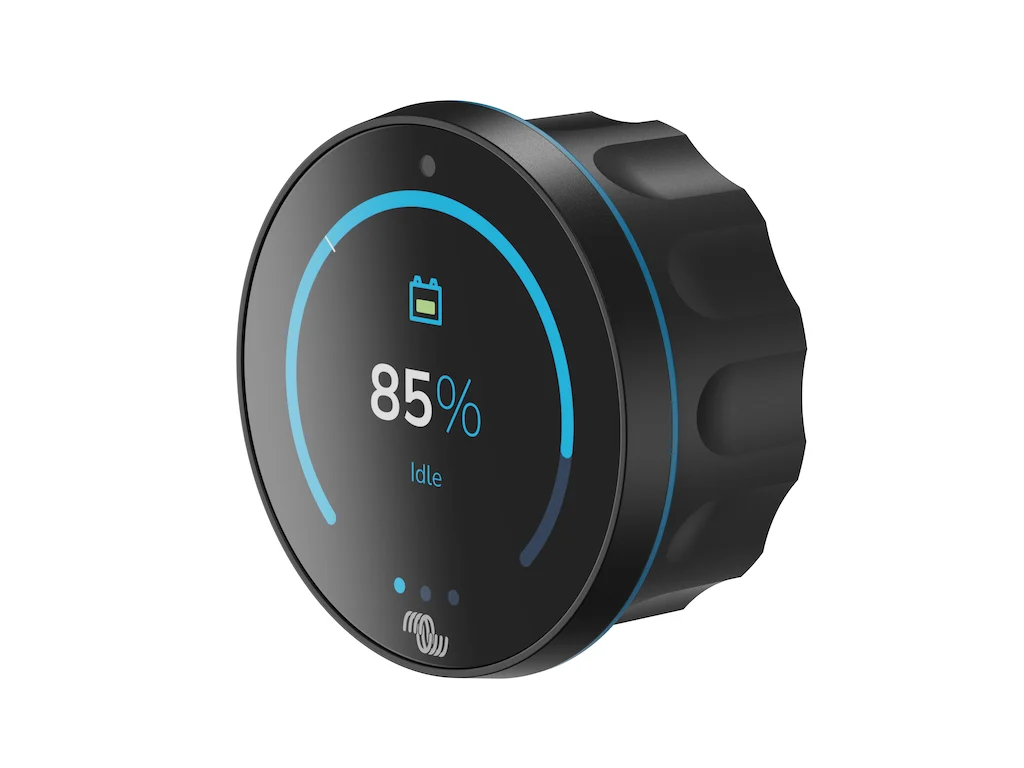
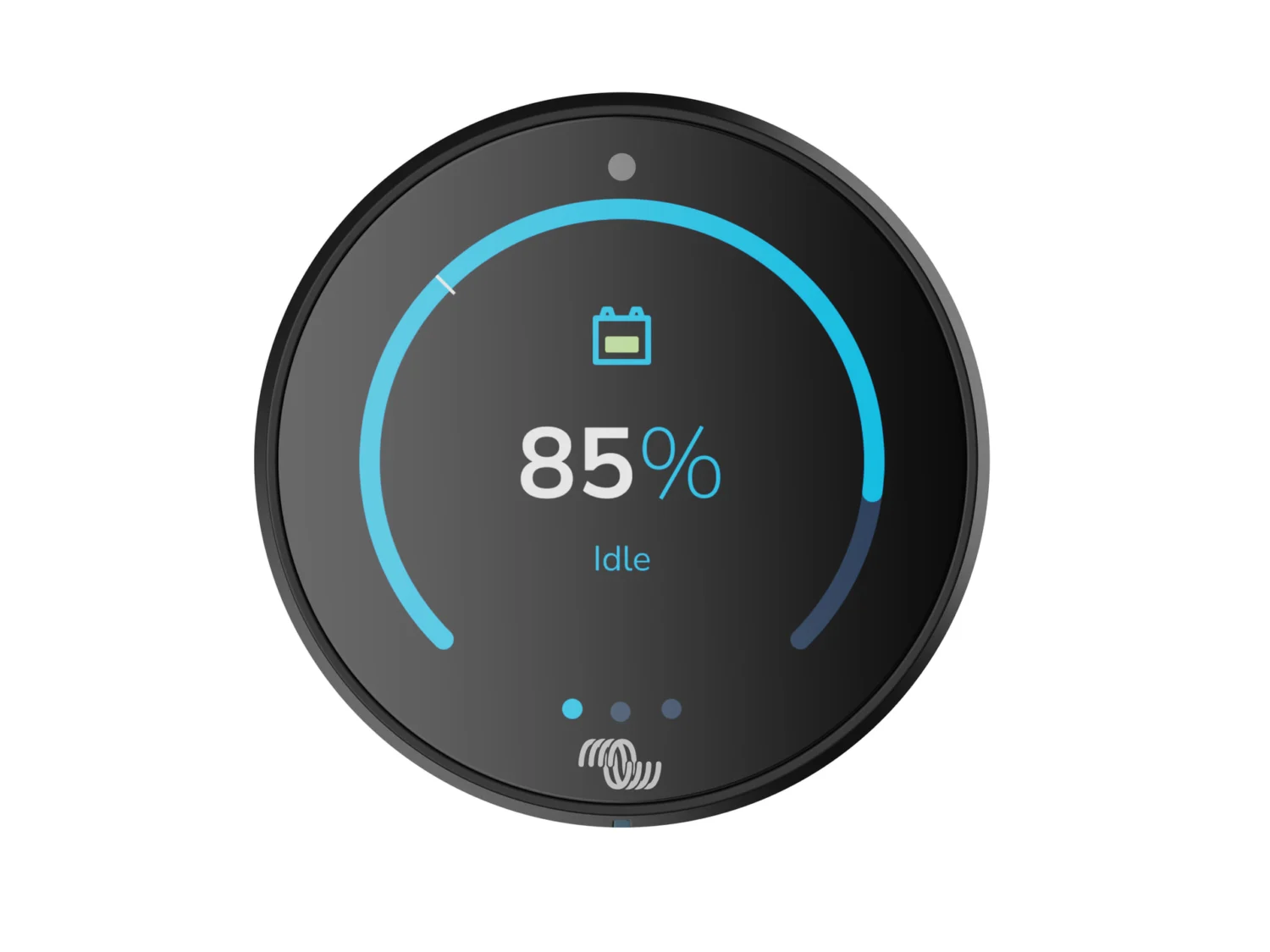
The BMV is the little battery gauge you can glance at as you walk past. Victron’s new BMV-812 Smart keeps that compact format and gives it a colour touchscreen. You can see what percentage is left, whether the battery is charging or discharging, the voltage and an estimate of how long it will last at the current load. Victron lists 12 V, 24 V, 36 V and 48 V systems, audible and visual alarms, VictronConnect and a connection to GX.
What can you keep from the BMV-712?
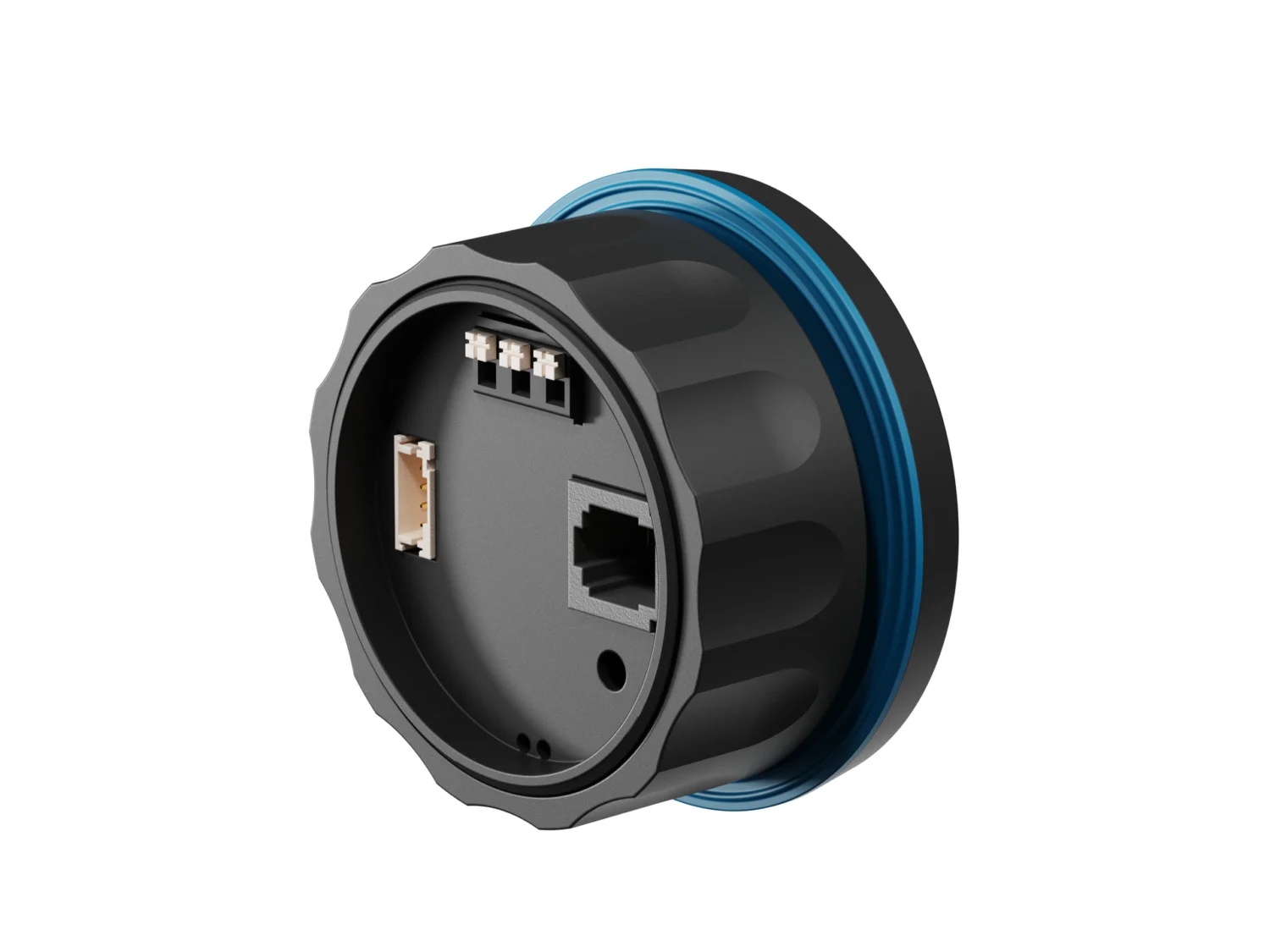
If you’ve already got a BMV-712 fitted, the first thing I’d want to know is whether the existing shunt and cable can stay. Victron says you can keep both. That saves pulling the cable back through the lining just to change the display. For reference, the standard 712 comes with a 500 A / 50 mV shunt and uses a 52 mm panel cut-out. Victron was still discussing whether it would sell the 812 display head separately as of 24 November.
Early firmware and retail availability
There are already more than 100 early units with distributors. The first beta could show live readings. History, trends and a power-saving mode were still being worked on. Victron says the updates will come through VictronConnect. If you’re using your 712 to operate a relay or read a second battery, I’d check those functions in the new manual when it’s published. Pricing and general release timing are still to come.
If you’re happy reading the battery on your phone, a SmartShunt does that job. I can see the appeal of this one in a caravan or at the helm, where you just want to look up and see how much battery you’ve got. If you want the solar, inverter and tank levels on the same screen, that’s where a GX and display make sense.
Product references
Cerbo GX MK3 — where does the extra speed matter?
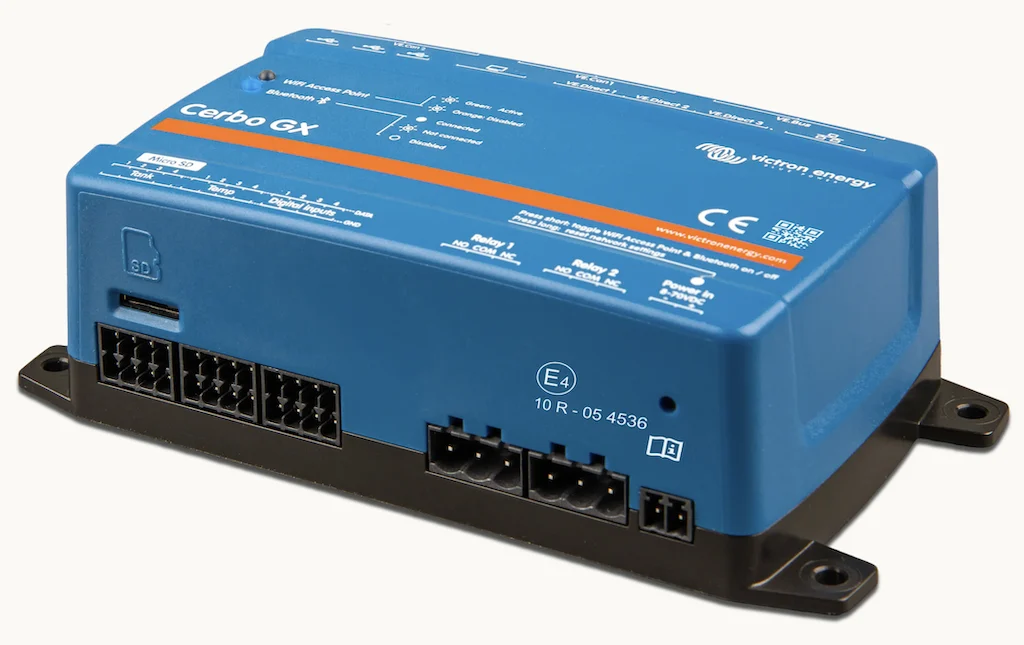
If you’re already running a Cerbo GX MK2 and it’s doing everything you need, I’d start by asking what you want the new one to do. Victron says the MK3 is three to four times faster depending on the workload. Where that matters is when you’re running a lot of Node-RED automation, using Signal K on a boat, or collecting data from a lot of equipment. Both have three VE.Direct sockets, but with USB interfaces the MK3 can handle up to 25 VE.Direct devices in total. The MK2 handles up to 15.
If you’ve got a MultiPlus or Quattro, there’s a built-in VE.Bus connection. There are two VE.Can networks, plus Ethernet, Wi-Fi, Bluetooth, three USB host ports, HDMI and microSD. For hard-wired gear you get four resistive tank inputs, four temperature inputs, four digital inputs and two programmable relays. You can use the optional GX Touch 50 or 70 at the unit, a compatible marine display at the helm, or VRM Remote Console over the network.
Victron lists an 8–70 V DC supply, an IP20 enclosure measuring 78 × 154 × 48 mm, and an operating range of −20°C to +50°C. Article numbers are BPP900450130 and BPP900451130. The Venus OS 3.81 update included a stability fix specifically for the MK3.
Product references
Nucleo GX — which setups suit it?
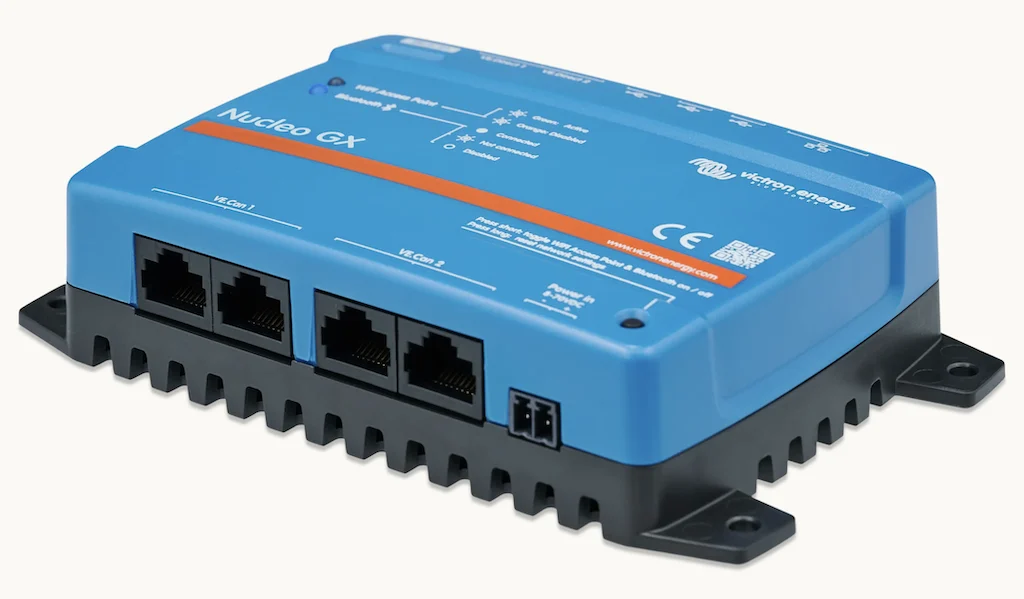
Say you’ve got a Multi RS or Inverter RS on VE.Can, or a smaller setup with a solar charger, shunt and Orion XS on VE.Direct. The Nucleo GX is a good fit for that sort of system. It uses the same quad-core platform as the Ekrano GX. You can see the system in a browser, in VictronConnect or through VRM, and use an Android device running GX WiFi Display as a local screen. It also works with compatible marine displays.
The hardware has two VE.Direct sockets, two VE.Can networks, three USB-A host ports, Ethernet, Wi-Fi, Bluetooth and microSD. Its supply range is 8–70 V DC. Victron lists up to 25 VE.Direct devices in total with USB expansion. Model BPP900453100 is IP20 and can be wall-mounted or fitted with the optional DIN rail adapter.
The way I’d choose between the two is to count what you need to plug in. A MultiPlus or Quattro needs the optional MK3-USB interface on the Nucleo. You can add the GX IO-Extender 150 for more switching and signalling, or a GX Tank 140 for four 0–10 V or 4–20 mA senders. If you need VE.Bus, several wired sensors and an HDMI-connected GX Touch, the Cerbo has those connections on board. If most of your gear is on CAN and you use a phone or tablet, the Nucleo makes sense.
Product references
GX Boat Page — how far will the battery take you?
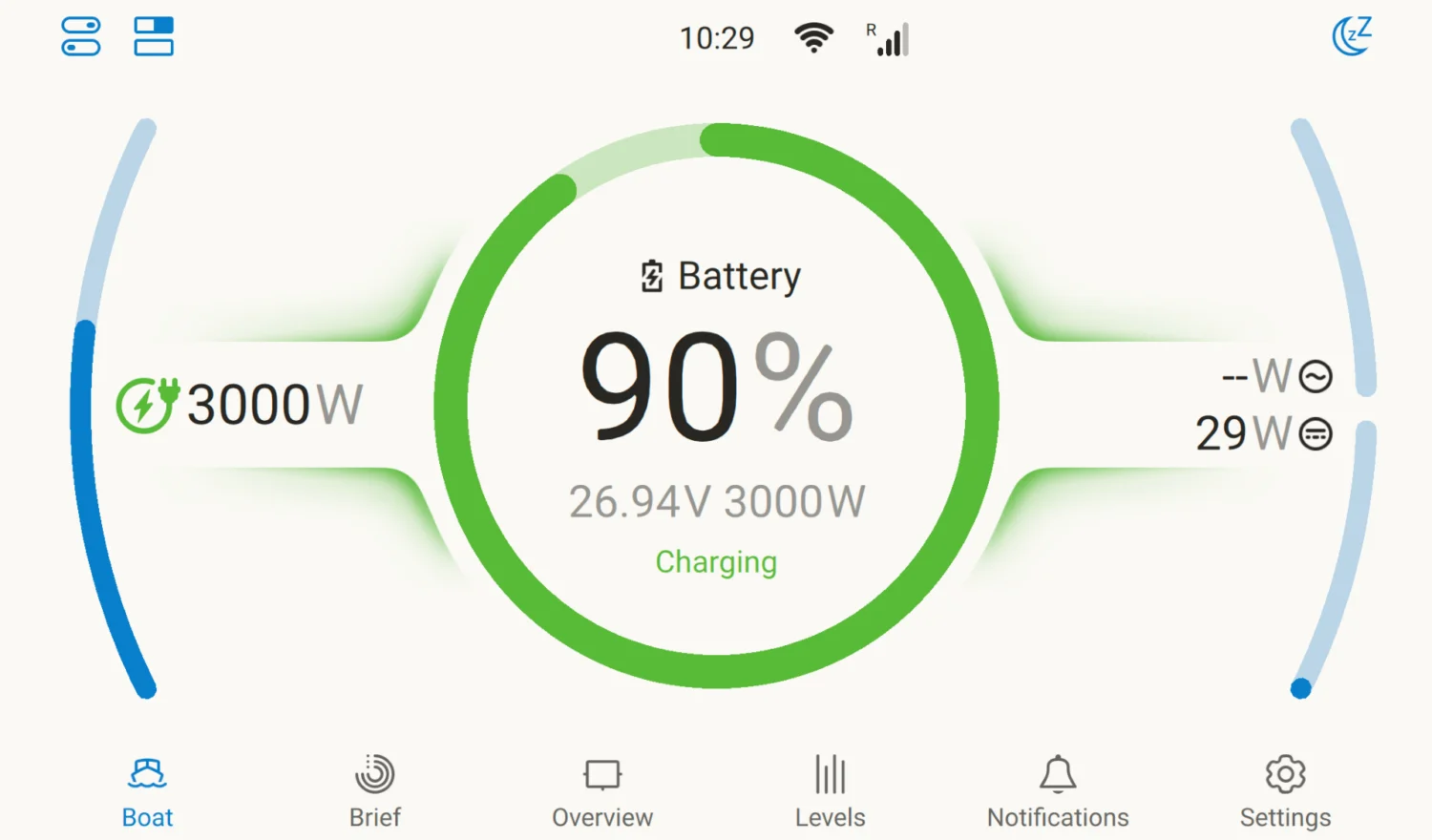
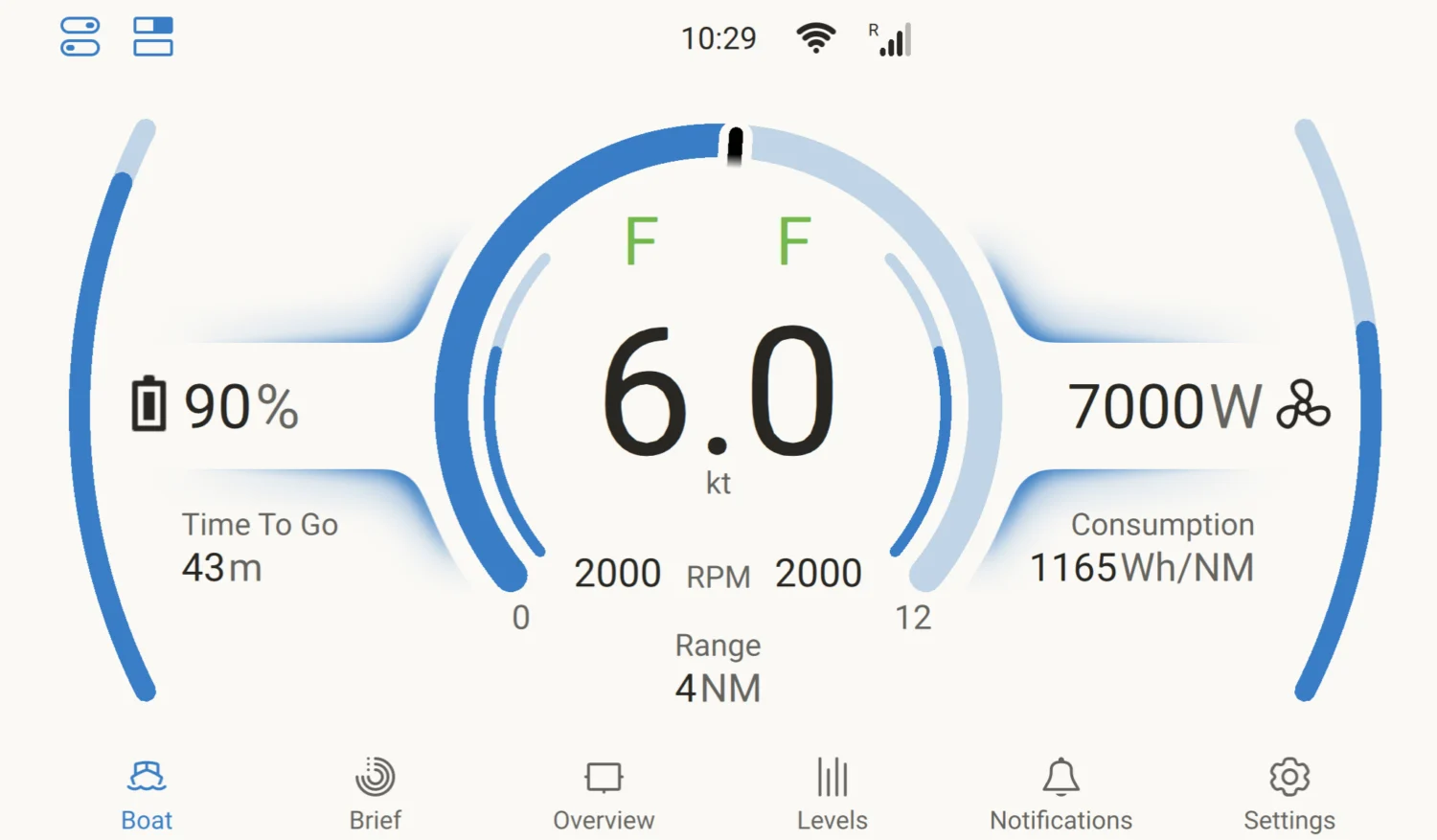
On an electric boat the battery percentage is useful, but the number I’d also want at the helm is how far that charge is likely to take me. Venus OS 3.80 added estimated range to the GX Boat Page, along with shore power information, regeneration and temperatures. If you’ve got twin drives, you can see port and starboard RPM and direction separately, with combined propulsion power and regeneration where the equipment reports it.
How does it get that figure? It uses the energy you’ve used over the last nautical mile, your battery capacity, the charge remaining and the minimum charge you want to keep in reserve. That’s why the estimate changes when you speed up or run into wind or current. The GX needs GPS and propulsion data. A SmartShunt set up as an Electric Drive DC Energy Meter can provide drive power. Compatible NMEA 2000 or CANopen drives can also provide RPM, direction and other readings.
The page can be enabled under Settings → General → Display & Appearance → Boat page. The setup menu can also assign twin drives, turn on temperature values and set display units. Victron identifies supported gateways and motor controllers in the GX manual.
GX Opportunity Loads — what can you run with spare solar?
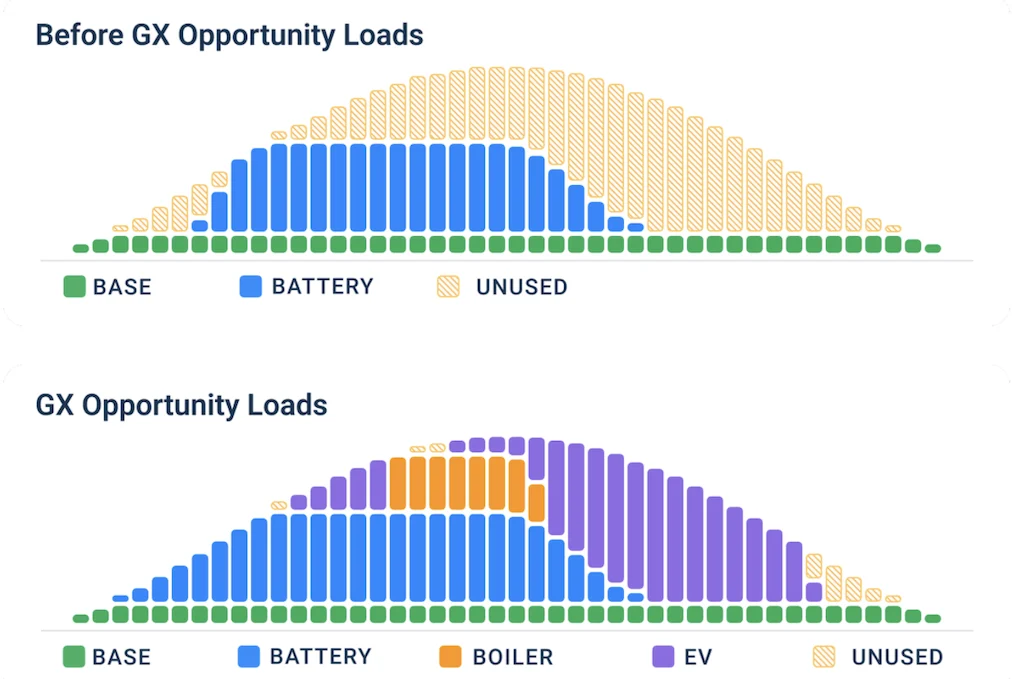
If you regularly have spare solar in the middle of the day, this is worth a look. You can tell the GX to heat water, run a pool pump or send power to the EV when there’s enough left over. It looks at what the panels are producing, what’s already running, what the battery needs and how much the inverter can supply. Then it works through the loads in the order you’ve set.
On a supported GX device, it requires Venus OS 3.80 or later and the New UI, a compatible inverter/charger, battery state-of-charge data and monitoring of all solar production. Both AC- and DC-coupled solar can contribute. Victron EV Charging Station and NS models, including V2, can adjust their power when paired by MQTT. Supported Shelly devices can switch a fixed AC load. Victron has also published a Node-RED integration for custom virtual loads.
Say you want the battery to charge first, then you want to heat water when there’s spare solar. Put the water heater below the battery in the priority list. If hot water matters more, move it above the battery and it can run while the battery is still charging. The GX can also run a smaller load when there’s enough spare power for that load. On a system using Dynamic ESS, you choose which of the two modes to run.
Product references
Smart Alternator Sense — why tell the Orion XS your engine RPM?
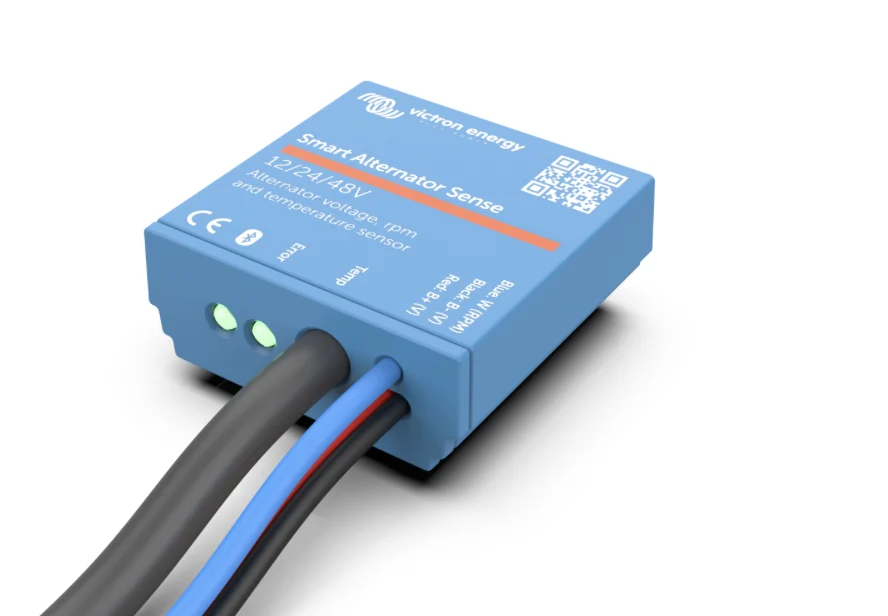
If you charge a house battery from the alternator, two things are useful to know. Is the engine actually running, and how hard can the alternator work right now? A smart alternator can drop its voltage while you’re still driving. On a boat, you may want to take less current from the alternator at idle or when it’s running hot.
Smart Alternator Sense sends engine RPM, alternator temperature and voltage to an Orion XS through VE.Smart Networking. The charger can use RPM to detect that the engine is running, adjust the current with engine speed and ease off when the alternator heats up. Victron announced it for the Orion XS family. If you’ve already got an Orion XS, I’d check the exact model and firmware requirements when Victron publishes the fitting instructions. Price and release timing are still to come.
Product references
VE.Can BMS NG — which batteries is it for?
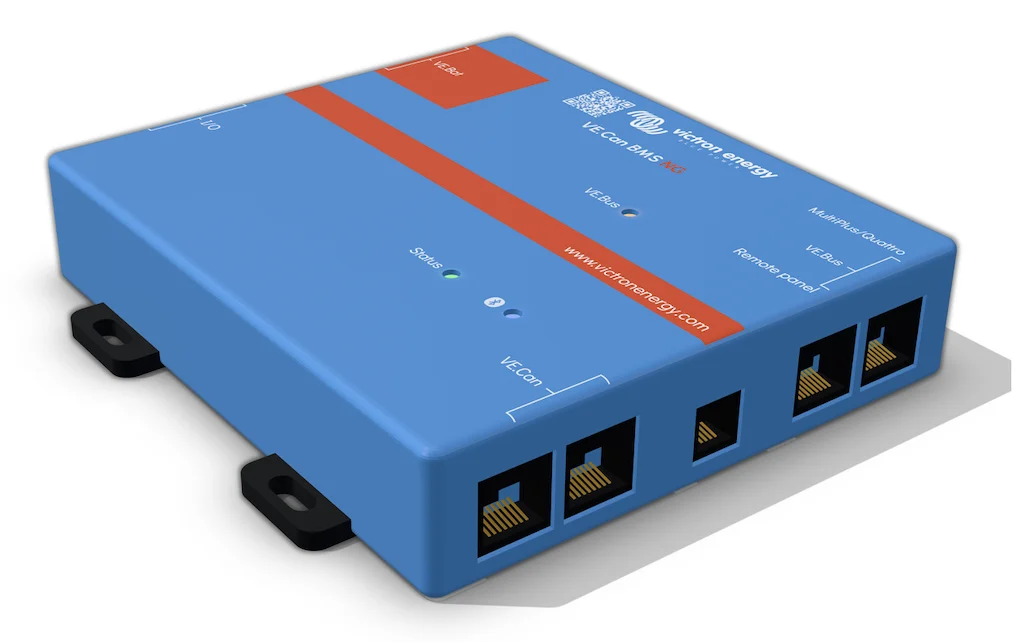
Check the battery name first. Victron is bringing this BMS out for its Lithium NG LiFePO₄ batteries in systems with a GX device, with availability announced from March 2027. The older Lithium Battery Smart and the SuperPack NG are separate ranges. The new unit has isolated VE.Can, and Victron also lists VE.Bus and Bluetooth.
What can it do in the system? If the battery asks for a lower charge current, the GX can use DVCC to pass that limit to compatible inverter/chargers and solar chargers. The solid-state allow-to-charge and allow-to-discharge contacts are potential-free, so they can signal equipment that uses a different ground reference. The 4 A auxiliary output can signal an alternator or shut down a load you can do without when the battery is getting low.
If you’re building with Lithium NG now, smallBMS NG gives you basic wired control, and VE.Bus BMS NG fits compatible VE.Bus inverter/chargers. If you need a battery monitor and a built-in 500 A or 1,000 A main contactor, look at the Lynx Smart BMS NG. The finished VE.Can BMS NG specifications will tell us what it can handle on the main battery circuit and whether it has its own contactor or shunt.