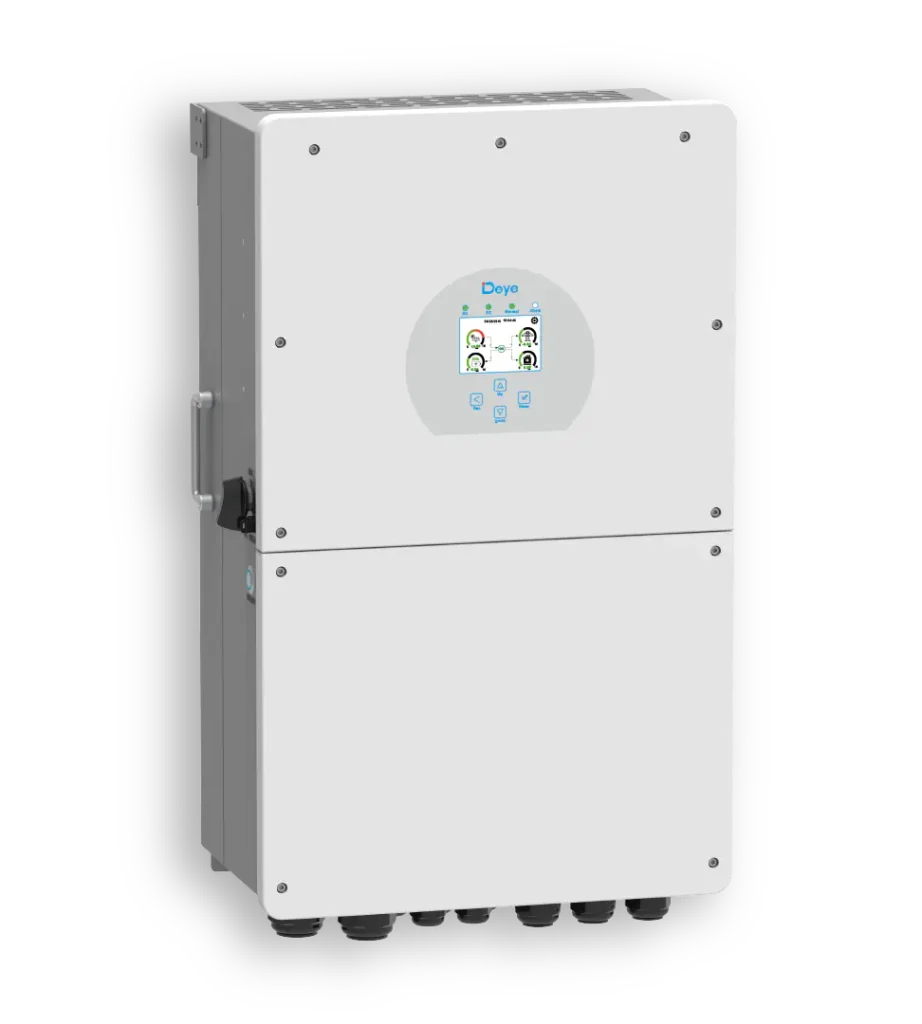
Can a non-CEC Inverter be connected to the Australian grid?
Lets use a Victron Multi RS Solar PMR482602020 as example
Report date: 11 February 2026 (Australia/Brisbane)
Scope: Whether the Victron PMR482602020 (Multi RS Solar 48/6000/100-450/100) can be legally/technically connected in parallel with the Australian distribution grid when it is not on the Clean Energy Council approved inverter list (“CEC-approved” in common installer shorthand). This report focuses on electricity-network connection rules and published DNSP requirements. Local council/planning rules are not assessed (unspecified; varies by council and local planning schemes).
General information only — not legal advice. Always confirm with the local DNSP and state/territory electrical safety regulator before purchasing or installing equipment.
This report was compiled with the help of Artificial intelligence on 11/02/2026, it should not be used other than to do your own research, to assist you in your own research, you must verify all claims made here, by the AI before proceeding, and you should be a qualified person to perform any electrical work.
Executive summary
In Australia, the entity that decides whether an inverter energy system may be connected to the distribution grid is the local distribution network service provider (DNSP) via the connection application/offer and connection agreement — not the Clean Energy Council (CEC). However, in practice, DNSPs overwhelmingly require inverters to be on the CEC Approved Inverter List (or equivalent “approved/onboarded” lists derived from it), because CEC listing is the most common way DNSPs verify compliance to the relevant inverter standards (especially AS/NZS 4777.2). Many DNSPs also build their application portals so that installers can only select inverters drawn from the CEC-supplied list.
Consistent with that, every major Australian DNSP reviewed in this report publishes a requirement that grid-connected inverters be CEC-listed (or “CEC approved”), with only two DNSPs (Ausgrid and Endeavour Energy) explicitly publishing a pathway for a “CEC unlisted inverter proposal” via written approval. Even under those “written approval” pathways, the inverter still needs to meet the technical requirements (AS/NZS 4777.2/4777.1 and DNSP-specific settings/controls), and DNSPs warn installers they may be required to replace non-compliant inverters at their own cost if installed without meeting requirements.
For the Victron PMR482602020 specifically, Victron’s own public documents for the Multi RS Solar show extensive international certifications, but do not show an AS/NZS 4777.2 certificate on the product’s certificate list, and the product datasheet’s standards list also does not include AS/NZS 4777.2. By contrast, Victron does publish AS/NZS 4777.2 certification for some other models (e.g., MultiPlus-II), demonstrating what an Australian certificate looks like. This strongly suggests the Multi RS Solar PMR482602020 is not presently certified/listed for Australian grid-parallel connections. (It may still be suitable for off-grid or generator-only use, but that is a different compliance pathway.)
Bottom line: if your PMR482602020 is not CEC-listed, you should assume it will be rejected for grid connection by most DNSPs. The only realistically arguable pathway is a case-by-case written approval with a DNSP that explicitly allows proposals for CEC-unlisted inverters (published only for Ausgrid and Endeavour Energy), supported by full third‑party compliance evidence and any DNSP communications/export-control requirements. For all other DNSPs, the published position indicates no non-CEC pathway for new grid-parallel connections (unless an exemption is explicitly published by a government technical regulator for a defined purpose, such as South Australia’s dynamic export regime — and those exemptions are time- and model-specific).
Legal and regulatory framework
Who has the “yes/no” authority to connect to the grid?
The practical permission to connect comes from the DNSP connection process: you apply (often via an installer portal), receive a connection offer/approval subject to conditions, and connect/commission in accordance with that agreement and the DNSP’s technical requirements. Some DNSPs state explicitly that approval is only granted after entering into a connection agreement, even for zero-export systems.
Where does the CEC “approved inverter list” fit?
The CEC is not the grid connection decision-maker, but its “Approved Inverter List” is the key reference dataset used across Australia. The CEC itself describes permitted API use cases including “Network Service Providers confirming that an inverter is listed on the CEC’s Approved Inverter List prior to connection”, which is an unusually direct statement of how the list is used in DNSP practice.
The CEC’s inverter listings are also structured around evidence of compliance: the CEC notes that model numbers with an “(AS4777-2 2020)” suffix indicate approval supported by an AS/NZS 4777.2:2020 certificate issued by a JAS‑ANZ accredited certifier or state electrical regulator. Separately, Energy Networks Australia notes that most DNSPs use the CEC approved inverter listing as their approved product list and many use it to populate their customer portals.
Why CEC listing matters even beyond DNSPs: STCs and the Clean Energy Regulator
If the installation is intended to create Small‑scale Technology Certificates (STCs) under the Small‑scale Renewable Energy Scheme, the federal Clean Energy Regulator states that newly installed small generation units must have their panels/batteries/inverters listed on the CEC list of approved components (among other requirements). So a non‑CEC inverter may not only jeopardise DNSP grid approval; it can also remove STC eligibility (which impacts economics and retailer finance).
AS/NZS 4777.2 and the National Electricity Rules context
The inverter behaviour standard at the centre of Australian grid‑connected DER is AS/NZS 4777.2. AEMO explains that AS/NZS 4777.2 specifies expected low‑voltage inverter performance/behaviour and compliance tests, and links compliance to secure operation under high DER penetration. AEMO also describes work with the Clean Energy Regulator and the CEC to incorporate inverter settings checks into CER inspections, reflecting enforcement attention on not just hardware certification but actual commissioning settings.
Multiple DNSPs explicitly describe AS/NZS 4777.2 as “mandated by the National Electricity Rules” in their installer guidance. For example, Ausgrid and Endeavour Energy state that AS/NZS 4777.2:2020 (‘Inverter Requirements’) is mandated by the National Electricity Rules. SA Power Networks also references National Electricity Rules amendments commencing 18 December 2021 requiring grid-connected inverters to comply with AS/NZS 4777.2:2020.
AEMO DER Register: an additional compliance “paper trail”
Australia’s DER Register (operated by AEMO) is a national database of installed DER devices; AEMO explains it launched in March 2020 and that DER device information is typically requested from installers/contractors at installation time. DNSPs commonly require installers to submit DER details within 20 days of commissioning, and DNSP pages in NSW explicitly reference this requirement and provide installer contacts.
Verification of the Victron Multi RS Solar certification status
What Victron publishes for the Multi RS Solar
On Victron’s public Multi RS Solar product page, the “Certificates” section lists multiple country/region certifications (e.g., VDE‑AR‑N 4105, EN 50549 variants, IEC safety standards, etc.). The list shown does not include an Australian AS/NZS 4777.2 certificate for the Multi RS Solar.
The Multi RS Solar datasheet lists technical specifications and a “STANDARDS” line showing safety and EMC standards (e.g., IEC 62109, IEC 62040, IEC 62477) but does not list AS/NZS 4777.2 in that standards block. The datasheet also shows the unit’s PV characteristics (450 V open-circuit maximum, MPPT operating range up to 450 V, and PV input current limits), but these electrical specs do not substitute for Australian grid‑connection certification.
What an Australian AS/NZS 4777.2 certificate looks like for Victron (comparison)
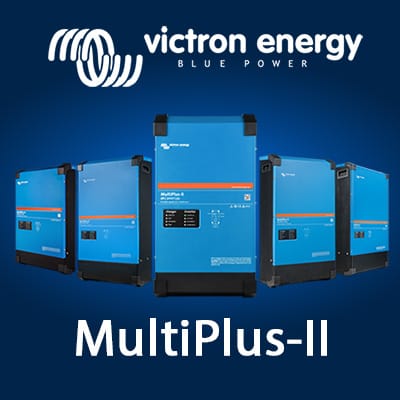
Victron does publish an Australian certificate example for other products: a “Certificate of Suitability” (issued by SGS Australia under a JAS‑ANZ accredited scheme) for MultiPlus‑II models that explicitly lists compliance including AS/NZS 4777.2:2020 (and related standards). This demonstrates that Victron’s public documentation can include Australian certification where it exists.
Implication for grid connection
CEC listings commonly rely on recognised certification evidence (including JAS‑ANZ accredited certification or state regulator certification) and distinguish AS/NZS 4777.2:2020 compliant models via the “(AS4777-2 2020)” suffix. If the Multi RS Solar lacks AS/NZS 4777.2 certification evidence, it is difficult to see how it could be accepted for grid‑parallel connection under DNSP rules that require CEC listing.
DNSP implementation in Australia
Coverage and summary chart
The table below covers the standard electricity DNSPs for the ACT, NSW, VIC, QLD, SA, TAS, WA and NT (the same DNSPs consumers typically see on their network/distributor details). Chart: DNSP published requirement for CEC-listed inverters (Australia-wide, reviewed DNSPs) Total DNSPs reviewed: 16 ■ CEC required (no explicit non-CEC exception published): 14 (87.5%) ■ Conditional (CEC or explicit “written approval” pathway for unlisted inverter): 2 (12.5%) 14 2
Interpretation note: “Conditional” here means the DNSP’s published guidance explicitly offers a written-approval pathway for a “CEC unlisted inverter proposal”. It does not mean the DNSP accepts uncertified equipment; technical compliance still applies.
DNSP-by-DNSP table
| DNSP | Published DG / connection policy (primary link) | CEC approval required? | Explicit wording / clause (excerpt) | Does DNSP allow non‑CEC inverters? | Contact / process to request approval | Typical technical conditions highlighted in policy |
|---|---|---|---|---|---|---|
| entity[“company”,”Evoenergy”,”act electricity distributor”] | LV Embedded Generation Technical Requirements (PDF) | Yes | IES “shall comprise of inverters that are registered with CEC as approved grid connect inverters or multiple mode inverters”. | No (no published exception pathway found) | General DNSP contact details via Evoenergy website; ENA identifies contact email for embedded generation enquiries. | AS/NZS 4777.2 + accreditation number; CEC registered; Australia A settings tables; DNSP may require written approval before changing power quality settings. |
| entity[“company”,”Ausgrid”,”nsw electricity distributor”] | Information for solar installers | Conditional | Inverter must be AS/NZS 4777.2 compliant and either “be of a type approved by the Clean Energy Council” or “have written approval from Ausgrid… discuss your CEC unlisted inverter proposal”. | Yes — case-by-case written approval (published pathway) | Email published for “CEC unlisted inverter proposal”: [email protected] | Australia A settings; DNSP settings per NS194; warning that non‑compliant inverters may need replacement at installer cost; NSW Emergency Backstop (mid‑2026) expects CSIP‑AUS compliance and capability testing, with low-export fallback for poor internet. |
| entity[“company”,”Endeavour Energy”,”nsw electricity distributor”] | Information for solar installers | Conditional | Inverter must either be “approved by the Clean Energy Council” or have “written approval… to use the make and model… (contact us to discuss your CEC unlisted inverter proposal)”. | Yes — case-by-case written approval (published pathway) | Endeavour instructs “please contact us” for unlisted inverter proposal; ENA provides DNSP contact email list for general enquiries. | Australia A settings; NS194 set-up; DER Register reporting within 20 days; warning that non‑compliant inverters may need replacement. |
| entity[“company”,”Essential Energy”,”nsw electricity distributor”] | Essential Connections Portal Guide (PDF) | Yes | Portal requires users to “search and select precise inverters from the Clean Energy Council supplied list”. | No (portal design implies no unlisted selection for basic applications) | Connection via Essential Connections Portal; ENA provides a DNSP contact email for Essential Energy. | Export limits (e.g. auto-approval constraints); inverter selection from CEC list; evidence uploads depending on application type. |
| entity[“company”,”AusNet Services”,”vic electricity distributor”] | SOP 33-06 Export limits up to 200 kVA (PDF) | Yes | Defines “Approved Inverter” as AS/NZS 4777 compliant and listed on Clean Energy Council tested/approved inverters; also states all EG systems require a Connection Agreement (even zero export). | No (no published “unlisted inverter” exception pathway found) | Pre-approvals/connection via AusNet processes; ENA provides pre-approvals email contact. | Connection agreement required even for zero export; limited export control accuracy requirements; commissioning test reports for limited export; capability testing / utility-server interactions and fallback export limits in some cases. |
| entity[“company”,”CitiPower”,”vic electricity distributor”] entity[“company”,”Powercor”,”vic electricity distributor”] | Rooftop solar connection steps Installer steps (CSIP-AUS / portal guidance) | Yes | Customers “must have a reliable internet connection and select a CEC approved and CitiPower/Powercor onboarded inverter.” | No (must be CEC-approved and also “onboarded”) | Email contacts published in DNSP materials and ENA contact list for CitiPower/Powercor new energy services. | Victorian emergency backstop: CSIP‑AUS communications, internet connectivity, export limiting, commissioning/capability test, commissioning sheet/CES validation before meter changes. |
| entity[“company”,”Jemena Electricity Networks”,”vic electricity distributor”] | Jemena approved list of inverters | Yes | “The inverter selected must be on the Clean Energy Council list of compliant inverters” and (from 1 July 2025) must also be on Jemena’s approved list; non-listed inverters “cannot connect and commission”. | No (must be on CEC list and Jemena list) | Jemena connection process and “approved list” pathway; ENA provides contact email for generation enquiries. | Emergency backstop: active comms link; CSIP‑AUS compliant inverter; internet connectivity. |
| entity[“company”,”United Energy”,”vic electricity distributor”] | Smart inverter compliance factsheet (PDF) Approved devices for solar installers | Yes | Factsheet: “Ensure the inverter… is Clean Energy Council (CEC) approved.” Also: “Our validation steps check that a CEC approved inverter has been used.” | No | Factsheet publishes embedded generation contact email; ENA provides DNSP emails for basic/negotiated connections. | Australia A settings; export cap to pre-approval (typical 5 kW); internet connection; for export, systems under 200 kW must be CSIP‑AUS compatible and connected to utility server; only onboarded devices eligible to export. |
| entity[“company”,”Energex”,”qld electricity distributor”] | Standard for LV EG Connections (PDF) Dynamic Connections overview | Yes | Standard: “The inverters should be registered with CEC as approved grid connect inverters.” Dynamic Connections page: generating products “will need to be listed with the Clean Energy Council” and connected to utility server via Wi‑Fi internet. | No (no published non-CEC pathway found) | Energex connection process; ENA provides Energex contact email. | Australia A settings; DNSP connection agreement; export limits; for dynamic exports: utility-server communications and fallback export limits if comms fail. |
| entity[“company”,”Ergon Energy Network”,”qld electricity distributor”] | Connection information for installers | Yes | Installer guidance includes: “Confirm the equipment you are installing is CEC approved.” | No (no published non-CEC pathway found) | Ergon connection portal/process; ENA provides Ergon contact email. | Emergency Backstop Mechanism in QLD applies from 6 Feb 2023 for selected systems (GSD requirement); technical standards referenced and listed for installers. |
| entity[“company”,”SA Power Networks”,”sa electricity distributor”] | AS/NZS 4777.2:2020 change notice SA dynamic export limits requirement (government) | Yes | SA Power Networks: uses the CEC “Approved Inverter” listing to verify inverter compliance; select AS/NZS 4777.2:2020 compliant inverter from the list for applications. | Generally no for new export-capable systems. Government dynamic export regime notes time‑limited transitional/exemption arrangements; after 1 April 2024, certification and CEC listing mandatory for prescribed dynamic export equipment. | SA Power Networks publishes contact email for new energy services; government OTR contact details also published for dynamic export guidance. | Dynamic export capable equipment (for export-capable connections) and capability testing; zero-export sites exempt from dynamic export compliance but still must meet general connection rules; government/policy timelines matter. |
| entity[“company”,”TasNetworks”,”tas electricity distributor”] | Basic Micro EG Connection Technical Requirements (PDF) | Yes | IES must include inverters “registered with CEC as approved grid connect inverters” (and AS/NZS 4777.2 certification with accreditation number). | No | TasNetworks connection application process; ENA provides new supply applications email. | Australia C regional setting environment (see ENA region table); export limits and inverter settings per TasNetworks requirements. |
| entity[“company”,”Western Power”,”wa electricity distributor”] | AS/NZS 4777.2 transition requirements Technical guidance for solar installers | Yes | Western Power states it “uses the Clean Energy Council (CEC) inverter list, and inverters must be accredited with the CEC to be deemed to comply.” | No (no published CEC‑unlisted approval pathway found) | Western Power embedded generation application process; ENA lists Western Power contact link. | Australia Region B settings; firmware updates; technical review if criteria not met; CEC-approved product list influences streamlined approvals. |
| entity[“company”,”Horizon Power”,”wa regional electricity distributor”] | Basic EG Connection Technical Requirements (PDF) | Yes | IES must include inverters “registered with CEC as approved grid connect inverters” and included on the SGD compatible inverter list; CEC listing must not have expired. | No (must be CEC-listed and SGD-compatible) | Horizon Power installer processes; ENA provides renewables contact email. | Secure Gateway Device (SGD) and hardwired ethernet requirements; DERMS control; Australia C setting; export limits and operating envelopes; compatible inverter list governance. |
| entity[“company”,”Power and Water Corporation”,”nt electricity distributor”] | Basic Micro EG Technical Requirements (≤30 kVA) (PDF) PV class requirements (download links) | Yes | IES must include inverters “registered with the Clean Energy Council (CEC) as approved grid connect inverters.” | No | Power and Water “connect me” email listed by ENA. | Australia A setting; inverter certification to AS/NZS 4777.2 with accreditation number; (Power & Water appears in both region A and region C mapping guidance depending on network context); plus commissioning form requirements. |
Interpretation notes on the table:
1) “CEC approval required” means the DNSP’s published guidance requires selection of a CEC‑listed inverter (or defines “approved inverter” as one listed on the CEC list), or requires the inverter be CEC‑registered/approved as a grid‑connect inverter. In Victoria, several DNSPs additionally require the inverter to be “onboarded” to the DNSP’s utility server (CSIP‑AUS / IEEE 2030.5 context).
2) “Conditional” is used only where the DNSP explicitly publishes a “written approval” pathway for a CEC‑unlisted inverter proposal (Ausgrid and Endeavour Energy).
3) Some technical documents use the word “should” for CEC registration; however, DNSP portals, related installer guidance, STC rules, and emergency backstop/dynamic export regimes frequently make CEC listing a practical prerequisite to approval and commissioning.
So can PMR482602020 be grid-connected if it’s not CEC-approved?
For a grid-parallel connection (exporting or capable of exporting in normal operation), the published DNSP position across Australia is effectively “no”, unless a DNSP explicitly grants an exception. Most DNSPs state their inverter must be CEC-approved/registered, and their portals and commissioning regimes (CSIP‑AUS onboarding, utility server capability tests, export limiting, regional settings) are built around that assumption.
In NSW, Ausgrid and Endeavour Energy are notable because they explicitly publish a written‑approval pathway to propose a CEC‑unlisted inverter. That pathway is not automatic approval: it simply means the DNSP is willing to assess the proposal. If assessed and rejected (or if installed without meeting requirements), the installer may be required to replace the inverter at their own cost. Given the Multi RS Solar’s apparent lack of AS/NZS 4777.2 certification evidence in Victron’s public materials, obtaining approval would likely require strong third‑party certification evidence and DNSP-compatible control/communications.
For non-export / off-grid configurations: Many standards and DNSP rules treat systems as “grid connected” if they can operate in parallel with the distribution system; true off-grid or break-before-make changeover arrangements may fall outside embedded generation connection rules, depending on design. This is highly technical and jurisdiction-dependent — if the intent is any form of grid interaction, assess it with the DNSP and a suitably licensed electrician/engineer before purchase.
Practical steps for installers and system owners
Before you buy or install (the “don’t get stuck with an unconnectable inverter” checklist)
- Identify the DNSP first (your distributor). Use regulator resources (AER) or check the electricity bill.
- Confirm the inverter is on the CEC Approved Inverter List (and check the listing is current/not expired). Also confirm the correct AS/NZS 4777.2 standard version and regional setting apply.
- Confirm state/DNSP-specific mandatory controls:
- Victoria: emergency backstop / CSIP‑AUS utility server onboarding requirements are explicit for several DNSPs.
- Queensland: emergency backstop mechanism / Generation Signalling Device requirements are documented for certain systems.
- South Australia: dynamic export capable equipment/commissioning tests and timelines are governed by government technical regulator guidance and SA Power Networks processes.
- Western Australia (SWIS): Western Power requires Australia Region B settings; CEC listing is used to deem compliance.
- Horizon Power: SGD compatibility list and hardwired comms to DERMS are mandatory for relevant connection classes.
- Confirm STC / rebate implications early: if STCs are part of the commercial model, check the Clean Energy Regulator eligibility rule requiring CEC-listed components.
If you still want to pursue a non-CEC inverter grid connection
In practice, this only makes sense where the DNSP explicitly allows an “unlisted inverter proposal” pathway (published for Ausgrid and Endeavour). For those DNSPs, engage before purchase and be prepared to supply:
- Independent certification evidence to AS/NZS 4777.2 (current applicable version) and anti-islanding evidence (IEC 62116), plus installation compliance to AS/NZS 4777.1. DNSPs commonly require an accreditation number and/or recognised test evidence.
- Evidence that the unit can be configured to the DNSP required regional settings (Australia A/B/C) and that those settings are locked/verified.
- Evidence of compliance with communications/export control obligations if applicable (CSIP‑AUS/IEEE 2030.5, utility server connectivity, capability tests, fallback export behaviour).
- A clear single-line diagram and export-limiting method (where limited export applies), plus any commissioning test report required by the DNSP.
If you cannot supply the above, the probability of approval is low, and installing anyway risks forced replacement and/or inability to legally energise/export.
Post-install obligations that commonly apply
- AEMO DER Register submission (commonly within 20 days of commissioning), either by the installer or via DNSP-integrated workflows depending on jurisdiction.
- Commissioning evidence: many DNSPs require commissioning sheets/capability test results and validate certificates of electrical safety before enabling metering / export.
Alternative compliant ways to achieve a Victron-based system
If the goal is “Victron ecosystem + legal grid connection”, the simplest path is to choose a CEC-listed inverter/charger or hybrid inverter suitable for your topology and DNSP requirements, and confirm listing status before purchase. Victron has published AS/NZS 4777.2 certification for some products (e.g., MultiPlus‑II certificate shown), and many other mainstream brands are listed on the CEC approved inverter list used by DNSPs and STC eligibility rules.
Important: “CEC-approved” can mean different things in casual conversation (installer accreditation vs product listing). Here it means the product is listed on the CEC approved inverter list used by DNSPs and STC eligibility rules.
Primary sources linked in this report
- entity[“organization”,”Clean Energy Council”,”australian clean energy body”] — Approved inverter list and product program pages: CEC approved inverters and Products program FAQ.
- entity[“organization”,”Clean Energy Regulator”,”australian government renewable regulator”] — STC eligibility and CEC list requirement: Small-scale renewable energy systems.
- entity[“organization”,”Australian Energy Market Operator”,”australian energy market operator”] — AS/NZS 4777.2 context and inverter inspections: AS/NZS 4777.2 – Inverter Requirements standard; DER Register: About the DER Register.
- entity[“organization”,”Energy Networks Australia”,”australian energy networks industry body”] — DNSP region settings mapping and “most DNSPs use CEC list” note: FAQ: Changes to Inverter Standards.
- entity[“organization”,”Australian Energy Regulator”,”australian energy regulator”] — Distributor identification: Who is your distributor?.
- entity[“company”,”Victron Energy”,”power electronics manufacturer”] — Multi RS Solar product page: Multi RS Solar; datasheet: Datasheet – Multi RS Solar (PDF); example AS/NZS 4777.2 certificate (other model): Certificate of suitability (SGS) (PDF).