Lithium Battery-school Blog
Which LFP Cell Should You Choose?

EVE MB31 vs EVE LF334 vs REPT 345Ah: Which LFP Cell Should You Choose?

Not all LiFePO4 battery cells are the same. Two cells can both be “LFP” and still be designed for very different use cases. Capacity, cycle life, current rating, internal resistance, compression requirement, formation process, electrolyte additives, electrode design, and intended application all affect how a cell behaves in the real world.

That is why it is not enough to say, “It is LFP, so it should last X cycles.” LFP is a chemistry family. The exact cell variant matters.

In this comparison, we look at three high-capacity prismatic LFP cells:

EVE MB31 314Ah EVE LF334 334Ah REPT 345Ah CB84

Each one can be an excellent choice, but they suit different systems.


Quick Recommendation

Choose the EVE MB31 if you want the safest all-round ESS choice: long cycle life, proven 314Ah format, moderate charge/discharge rate, and strong suitability for residential, off-grid, telecom, commercial, and utility energy storage. EVE’s official MB31 page lists 314Ah capacity, 3.2V nominal voltage, 8000 nominal cycles, and 0.5P/0.5P charge/discharge power, with applications including commercial, industrial, utility, telecom, and residential ESS.

Choose the EVE LF334 if you want more usable capacity and stronger power capability in a similar footprint. It is the better choice for high-demand 12V, 24V, and 48V systems where inverter surge, high current loads, or faster charge/discharge capability matter. Public listings commonly show 334Ah, 4000 cycles to 80% capacity, and up to 3C discharge capability, though the exact continuous-versus-pulse rating should always be confirmed against the batch datasheet.

Choose the REPT 345Ah if you want maximum capacity per cell for a low-to-moderate power ESS system. It is ideal for large solar storage, off-grid battery banks, long-duration backup, and systems where the discharge current is relatively gentle. The REPT CB84 datasheet lists 345Ah, 3.2V, 1104Wh nominal energy, 0.25P standard charge/discharge, and 8000 cycles to 70% SOH at 25°C under 0.25P/0.25P cycling.


Comparison Table

CellNominal CapacityNominal EnergyBest Use CaseCycle RatingRate Character
EVE MB31314Ah~1005WhLong-life ESS, solar, residential/off-grid, commercial storage8000 cycles to 70% SOH under 25°C 0.5P/0.5P conditionsModerate power, 0.5P standard
EVE LF334334Ah~1075WhHigher-power DIY packs, RV, marine, mobile power, larger inverter systemsCommonly listed around 4000 cycles to 80% capacityHigher power; verify continuous vs pulse rating
REPT 345Ah CB84345Ah1104WhMaximum energy storage, low-rate ESS, large solar banks8000 cycles to 70% SOH at 25°C under 0.25P/0.25PConservative standard rate, 0.25P standard

The main lesson is simple: the biggest Ah number is not automatically the best cell. The correct choice depends on how much power the battery needs to deliver, how fast it needs to charge, how long you expect it to cycle, and how hard the system will be used.


Why Cell Variant Matters, Even Inside LFP

LFP cells share the same broad cathode chemistry, but that does not mean they have the same internal design. Manufacturers tune cells for different priorities: long cycle life, high energy density, high power output, low impedance, low swelling, lower cost, faster charging, or better thermal stability.

A cell optimized for ESS usually prioritizes long-term stability, lower side reactions, predictable swelling behavior, and long cycle/calendar life. A cell optimized for power applications may prioritize lower internal resistance, better high-current delivery, improved heat handling, and stronger pulse performance.

Battery formation also matters. Formation is not just a factory charge cycle; it activates the cell and helps establish protective interphase layers. Research reviews describe formation as a production step that can significantly affect capacity, power capability, lifetime, and safety, and note that material design, cell design, pressure, wetting, temperature, and process conditions all interact.

Cycle life is affected by several degradation mechanisms, including loss of lithium inventory, loss of active material, impedance growth, SEI growth, lithium plating, and electrode particle damage. These mechanisms do not occur equally in every cell design, which is why two LFP cells can have very different cycle ratings and current limits.


Cell 1: EVE MB31 314Ah

The EVE MB31 is the best choice for customers who want a proven, long-life energy storage cell rather than the highest possible current output.

It is a 314Ah, 3.2V prismatic LFP cell designed around ESS applications. EVE lists the MB31 as a commercial, industrial, utility, telecom, and residential ESS cell, with 0.5P/0.5P standard charge/discharge power.

The MB31’s headline strength is its cycle-life positioning. EVE’s product page describes the MB31 as “up to 8000 cycles; 70% SOH” under 25°C 0.5P/0.5P conditions.

This makes the MB31 a very strong option for:

  • Home solar storage
  • Off-grid battery banks
  • 48V server-rack style systems
  • Commercial and industrial ESS
  • Telecom backup
  • Long-duration daily cycling
  • Customers who value long service life over maximum current output

The MB31 is not necessarily the best cell for every high-current application. Its 0.5P rating is perfectly suitable for many ESS systems, but if someone wants a small 12V pack running a large inverter, or a high-power mobile application with big surge loads, the LF334 may be the better match.

MB31 in plain English

The MB31 is the “long-life ESS workhorse.” It is the cell to choose when the customer wants a dependable battery bank that cycles every day without being pushed hard. It is not the most aggressive power cell, but that is exactly why it makes sense for many solar and storage systems.


Cell 2: EVE LF334 334Ah

The EVE LF334 is the higher-capacity, higher-power option. It gives more Ah than the MB31 and is better suited to systems where current delivery matters.

The LF334 is a stronger power cell than the MB31. Public listings show maximum discharge capability up to 3C, while also listing 4000 cycles to 80% capacity.

Standard discharge as 0.5C and maximum instantaneous discharge as up to 3C for 30 seconds. (LiFePo4 Australia)

That means LF334 should be advertised carefully. It is fair to describe it as a higher-power cell, but unless the exact datasheet for your batch states that 2C or 3C is continuous, the safer wording is:

“Higher-power capable, with up to 3C pulse discharge depending on datasheet conditions.”

The LF334 is a good choice for:

  • High-power 12V builds
  • RV and caravan systems with large inverters
  • Marine systems
  • Mobile power systems
  • EV conversions or traction-style use cases
  • Large 24V and 48V inverter systems
  • Customers who want more capacity than MB31 and stronger current capability
  • Applications where 4000 cycles to 80% SOH is acceptable

LF334 in plain English

The LF334 is the “higher-output” option. It stores more energy than the MB31 and is better suited to customers who may run higher inverter loads or need stronger surge capability. The trade-off is that its commonly published cycle rating is lower than the MB31’s headline ESS cycle rating, and its high-current claims must be matched to the correct datasheet conditions.


Cell 3: REPT 345Ah CB84

The REPT 345Ah is the largest-capacity cell in this comparison. At 345Ah and 3.2V, it stores approximately 1104Wh per cell, which means a 16-cell 48V nominal pack is around 17.7kWh before system losses. The REPT datasheet lists 345Ah nominal capacity, 3.2V nominal voltage, and 1104Wh nominal energy.

Its main attraction is capacity. For customers building a large energy storage bank, the REPT 345Ah can reduce the number of parallel strings needed compared with lower-capacity cells.

The important limitation is current rate. The datasheet lists 0.25P standard charging and 0.25P standard discharging. It also shows 8000 cycles to 70% SOH at 25°C under 0.25P/0.25P cycling.

The REPT 345Ah is a good choice for:

  • Large off-grid solar banks
  • Home ESS with moderate inverter loads
  • Long-duration backup systems
  • Energy-focused builds rather than power-focused builds
  • Customers who want maximum Ah per cell
  • Systems designed around lower C-rate operation
  • Parallel battery banks where current is shared across multiple strings

It is not the best choice for a single-string high-current system. For example, a single 16S REPT 345Ah pack at 0.25P is roughly a 4.4kW-class standard-rate battery. That can be excellent for gentle ESS operation, but it is not ideal for a customer expecting one battery string to support a large inverter continuously at high load.

REPT 345Ah in plain English

The REPT 345Ah is the “big capacity, gentle discharge” option. It is excellent when the goal is maximum stored energy, but it should not be chosen purely because it has the highest Ah rating. It is best when the system is designed around lower current per cell.


Power Comparison: Why Ah Is Not Everything

A common mistake is comparing only Ah:

  • MB31: 314Ah
  • LF334: 334Ah
  • REPT: 345Ah

On capacity alone, the REPT looks like the winner. But battery selection is not only about capacity. It is also about how much power the cell can safely deliver.

Approximate single-string 16S figures:

Cell16S Nominal EnergyConservative Standard Power
EVE MB31 314Ah~16.1kWh~8.0kW at 0.5P
EVE LF334 334Ah~17.1–17.2kWhDepends on datasheet; potentially much higher than MB31 if 1C continuous is allowed
REPT 345Ah~17.7kWh~4.4kW at 0.25P standard

This is why a 345Ah cell can be the best choice for a large low-rate storage bank, while a 334Ah cell can be the better choice for a high-power inverter build.

For 12V systems, this matters even more. A 3000W inverter on a 12V battery can draw well over 230A before losses. That is a heavy current load for a single string. In that type of system, LF334 may make more sense than REPT 345Ah, or the customer may need parallel strings.

For 48V systems, the current is much lower for the same power, so MB31 and REPT become more practical. But even then, a 5kW inverter can still exceed the conservative 0.25P standard rate of a single REPT string once inverter losses and surge are considered.


Cycle Life: Do Not Compare the Numbers Blindly

Cycle-life ratings are only meaningful when the test conditions are known.

A cell rated for 8000 cycles to 70% SOH is not directly comparable with a cell rated for 4000 cycles to 80% SOH. The endpoint is different. The current rate may be different. The temperature may be different. The compression force may be different. The charge/discharge profile may be different.

That matters because cycle life depends heavily on how the cell is used. Higher current, higher temperature, poor compression, charging at low temperature, repeated high SOC storage, poor balancing, and weak thermal management can all reduce practical service life.

For this comparison:

  • The MB31 is the best long-cycle ESS option.
  • The LF334 is the best higher-power option.
  • The REPT 345Ah is the best high-capacity low-rate storage option.

There is no single “best” cell. There is only the best cell for the application.


Which Cell Should You Buy?

Choose EVE MB31 if you want long-life solar storage

The MB31 is the best general recommendation for most home ESS and off-grid users. It has strong cycle-life positioning, good current capability for normal storage use, and a well-established application fit.

Best for:

  • Daily solar cycling
  • Residential ESS
  • Off-grid homes
  • 48V battery banks
  • Long service life
  • Moderate inverter loads
  • Customers who want a proven ESS cell

Avoid it if:

  • You need very high current from a small pack
  • You are building a high-power mobile system
  • You need the absolute highest Ah per cell

Choose EVE LF334 if you need more power

The LF334 is the better fit when the system may demand high current. It is especially attractive for mobile applications, RVs, marine builds, and high-output inverter systems where a conservative ESS cell may feel limiting.

Best for:

  • High-power DIY builds
  • Large 12V systems
  • RV and marine inverters
  • Mobile work vans
  • Fast charge/discharge applications
  • Customers who want more punch than MB31
  • Applications where 4000 cycles to 80% SOH is acceptable

Avoid it if:

  • The customer only cares about maximum cycle life
  • The system is low-power and does not need the extra output capability
  • The datasheet does not confirm the continuous current rating being advertised

Choose REPT 345Ah if you want maximum capacity

The REPT 345Ah is best when the goal is a large, efficient, low-rate storage bank. It is an excellent choice for customers who want more kWh and are not trying to pull huge current from one string.

Best for:

  • Large solar storage
  • Off-grid battery banks
  • Low-to-moderate current ESS
  • Long-duration backup
  • Parallel battery systems
  • Customers who want maximum Ah per cell

Avoid it if:

  • You need high current from one string
  • You are running a large inverter from a small 12V or 24V pack
  • You want the highest power capability per cell
  • The system cannot be designed around the conservative 0.25P standard rate

Final Verdict

The EVE MB31 is the best all-round long-life ESS cell. It is the one to choose for most customers who want reliable solar storage and long daily cycling.

The EVE LF334 is the best high-power choice. It gives more capacity than the MB31 and is better suited to demanding inverter loads, mobile applications, and customers who need stronger charge/discharge capability.

The REPT 345Ah is the best high-capacity storage choice. It gives the most energy per cell, but it should be used in systems designed around lower current per cell.

The correct question is not “which cell has the biggest Ah rating?” The correct question is:

How much energy do you need, how much power do you need, and how hard will the battery be cycled?

Once you answer that, the right cell becomes much clearer.
News
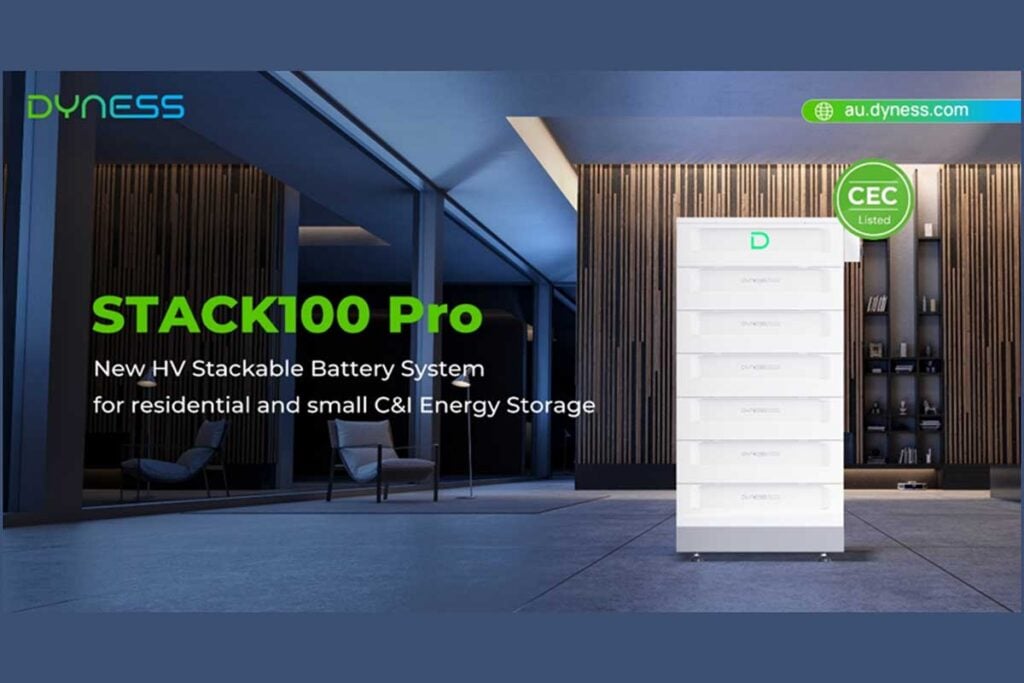
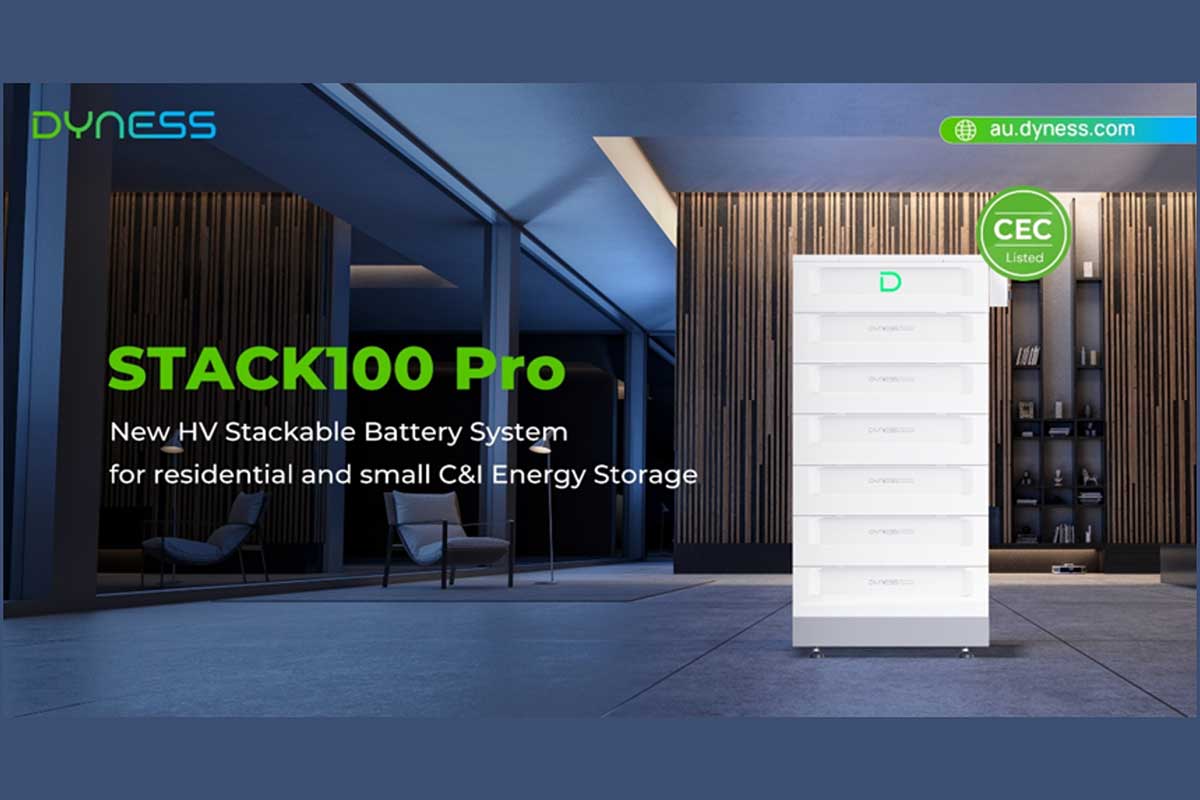
Dyness STACK100 Pro Battery System — Coming Soon to Australia

High-capacity modular battery storage for homes, farms and small commercial sites

LiFePO4 Australia is currently reviewing the Dyness STACK100 Pro as a potential future product for Australian customers who need a serious, expandable battery system with strong safety features, high-capacity options and a weather-resistant design.

The STACK100 Pro is a high-voltage lithium iron phosphate battery system designed for larger residential, rural, off-grid, backup and small commercial energy storage applications. It has recently been listed by the Clean Energy Council, supporting its use in the Australian market and helping installers and project partners meet local certification expectations.

image of the Stack 100 Pro
Dyness STACK100 Pro Battery System — Coming Soon to Australia

Why we are interested in the Dyness STACK100 Pro

Many Australian homes and businesses are moving beyond small 10–15kWh battery systems. With larger solar arrays, higher daytime energy use, electric vehicles, workshops, pumps, air conditioning, machinery and time-of-use tariffs, many customers now need a battery system that can scale properly.

The STACK100 Pro is interesting because it is designed as a modular stacked system, starting from around 15.36kWh and scaling up to 76.8kWh per cluster, with the ability to parallel up to 12 clusters for larger systems up to approximately 921kWh.

That makes it potentially suitable for:

  • Large homes with high energy use
  • Farms and rural properties
  • Small commercial buildings
  • Workshops and sheds
  • Solar self-consumption
  • Backup power systems
  • Peak shaving
  • Load shifting
  • Energy trading and grid-support applications

Built for Australian conditions

One of the standout features of the STACK100 Pro is its IP66-rated enclosure. This is important in Australia because battery systems are often installed in garages, carports, plant rooms, sheds, covered outdoor areas and sometimes tougher site environments.

An IP66 rating means the enclosure is designed to provide strong protection against dust and powerful water jets. In practical terms, this gives installers and customers more flexibility when selecting a suitable installation location, subject to Australian standards, manufacturer instructions and site-specific electrical design.

Dyness has promoted the STACK100 Pro as suitable for indoor and demanding outdoor environments, with a design aimed at harsh local conditions.


Quality battery chemistry: lithium iron phosphate

The STACK100 Pro uses lithium iron phosphate battery chemistry, commonly known as LiFePO4 or LFP. This is the chemistry we generally prefer for stationary energy storage because it is known for strong thermal stability, long cycle life and good suitability for solar battery applications.

According to published product information, the STACK100 Pro uses 5.12kWh battery units and is listed with a cycle life of more than 8,000 cycles at 95% depth of discharge.

For customers, this means the system is designed for frequent daily cycling, which is exactly what you want from a solar battery used for self-consumption, time-of-use optimisation or backup support.


Scalable from residential to commercial

A small battery system can be fine for basic backup or evening use, but it can quickly become undersized for properties with large loads.

The STACK100 Pro is designed to scale. A single cluster can be configured from approximately 15.36kWh to 76.8kWh, and larger installations can use multiple clusters in parallel.

This gives customers a more flexible pathway:

You can start with a properly sized system today, then potentially expand later if your energy use increases, your solar system grows, or your site adds larger loads such as EV charging, refrigeration, pumps, air conditioning or machinery.

Dyness also states that the system supports module mixing within a three-year window, which may help with lifecycle flexibility when expanding a system.


Fast charge and discharge capability

The STACK100 Pro is listed with 1C charge and discharge capability, making it suitable for applications where the battery needs to respond quickly to changing loads or electricity pricing conditions.

This may be useful for:

  • Peak shaving in commercial sites
  • Running larger household loads
  • Supporting backup loads
  • Charging during cheap electricity periods
  • Discharging during expensive tariff periods
  • Future energy trading or VPP-style applications, where supported by the inverter and retailer

Actual charge and discharge performance will depend on the inverter, site design, grid approval, wiring, configuration and battery sizing.


Quiet, practical and installer-friendly

For residential customers, noise matters. The STACK100 Pro has been described as having fanless natural convection cooling, which supports quiet operation in suitable environments.

The system is also promoted as having a plug-and-play stackable design, with Dyness stating that a single cluster installation can be completed in as little as 30 minutes under suitable conditions.

That does not mean every installation is simple. Australian battery installations still require correct electrical design, compliant isolation, inverter compatibility checks, switchboard assessment, backup circuit planning, DNSP approval where required, and installation by appropriately qualified professionals. But a well-designed stackable battery system can reduce on-site complexity compared with traditional rack systems.


Safety features

Safety is one of the main reasons we are interested in this product. Dyness promotes the STACK100 Pro with a five-layer safety protection system and has described the system as having advanced safety features for indoor and demanding outdoor environments.

The broader STACK100 product information from Dyness also refers to module-level safety features and fire protection concepts, including independent fire extinguishing arrangements in the battery pack design.

As with all battery systems, final suitability depends on the exact model supplied in Australia, the installation location, applicable standards, inverter pairing, battery clearances, enclosure requirements and manufacturer documentation.


Potential applications

Large residential solar battery systems

For homes with large solar systems and high electricity bills, the STACK100 Pro may provide enough storage to shift a meaningful amount of solar energy into the evening and night.

It may be suitable for customers who want more than a basic battery and are looking for a larger, more expandable energy storage platform.

Backup power

When paired with a compatible hybrid inverter and correctly designed backup circuits, a large battery system can help keep selected loads running during outages.

Backup performance depends heavily on inverter capability, battery size, surge loads, wiring design and whether the system is configured for partial-home or whole-home backup.

Farms and rural properties

Rural sites often have high energy demands, pumps, sheds, refrigeration, workshops or unreliable grid supply. A scalable high-voltage battery can be useful where standard residential batteries are too small.

Small commercial and industrial sites

The STACK100 Pro may suit businesses that want to reduce peak demand charges, store solar energy, improve resilience or shift energy use away from expensive tariff periods.


Key features at a glance

FeatureSTACK100 Pro Highlights
Battery chemistryLithium iron phosphate / LiFePO4
System typeHigh-voltage modular stacked battery
Capacity rangeApprox. 15.36kWh to 76.8kWh per cluster
Maximum expansionUp to approx. 921kWh with 12 clusters
Protection ratingIP66
Charge/discharge capability1C listed capability
Cycle lifeListed as more than 8,000 cycles at 95% DoD
ApplicationsResidential, rural, backup and small commercial
CoolingDescribed as fanless natural convection cooling
Australian market statusCEC listed according to public announcements

Our view

The Dyness STACK100 Pro appears to be a serious battery platform for customers who need more than a small residential battery. The main reasons we are considering it are:

  • Strong scalability
  • IP66 weather-resistant enclosure
  • LiFePO4 chemistry
  • High-voltage architecture
  • Large residential and small commercial suitability
  • CEC listing for the Australian market
  • Potential for fast installation
  • Compatibility with leading inverter brands, subject to confirmation

Before we offer this product, we will be checking the practical details that matter: inverter compatibility, warranty support, Australian stock availability, service support, monitoring, installation requirements, real-world performance, and how it compares against other high-value battery options.


Interested in the STACK100 Pro?

LiFePO4 Australia is currently assessing the Dyness STACK100 Pro for future supply in Australia.

If you are planning a larger solar battery system for your home, farm, workshop or business, contact us and we can help compare suitable options, including currently available battery systems and upcoming products like the STACK100 Pro.

Contact LiFePO4 Australia to discuss your site, energy usage and battery sizing.

Contact Us
News
Deye Review 2026 and Beyond Products and Features

Here is a comprehensive and technical deep dive into DEYE’s newest lineup of hybrid inverters and all-in-one energy solutions, based on the insights revealed at their recent All-Energy showcase.


DEYE’s Next-Gen All-In-One Hybrid Inverter Ecosystem

The energy storage and hybrid inverter landscape is shifting rapidly from modular, decentralized components to highly integrated, all-in-one ecosystem architectures. DEYE, a manufacturer heavily embedded in the global solar market (often white-labeled under various brand names), has unveiled its next generation of hybrid energy systems.

Moving far beyond simple solar inversion and battery charging, DEYE’s new hardware operates as a holistic Energy Management System (EMS). Let’s break down the technical specifications and architectural advantages of their latest product suite.

1. Smart Load Integration & LoRaWAN Connectivity

Most traditional inverters focus purely on supply-side metrics—managing generation and storage. DEYE’s new generation flips this by actively controlling demand-side loads.

The new inverters feature a built-in EMS with natively integrated LoRaWAN (Long Range Wide Area Network) protocols.

  • Complete Wireless Control: Using LoRaWAN wireless dongles, the inverter can communicate with remote hardware—like EV chargers, smart relays, and smart meters—up to 200 meters away without requiring physical cable runs.
  • Network Independence: Unlike typical IoT smart home ecosystems, DEYE’s communication protocol does not rely on the customer’s local Wi-Fi router. The inverter creates its own self-contained mesh, ensuring uninterrupted load control (e.g., scheduled EV charging based on Time-of-Use tariffs or excess PV production) even during localized network outages.

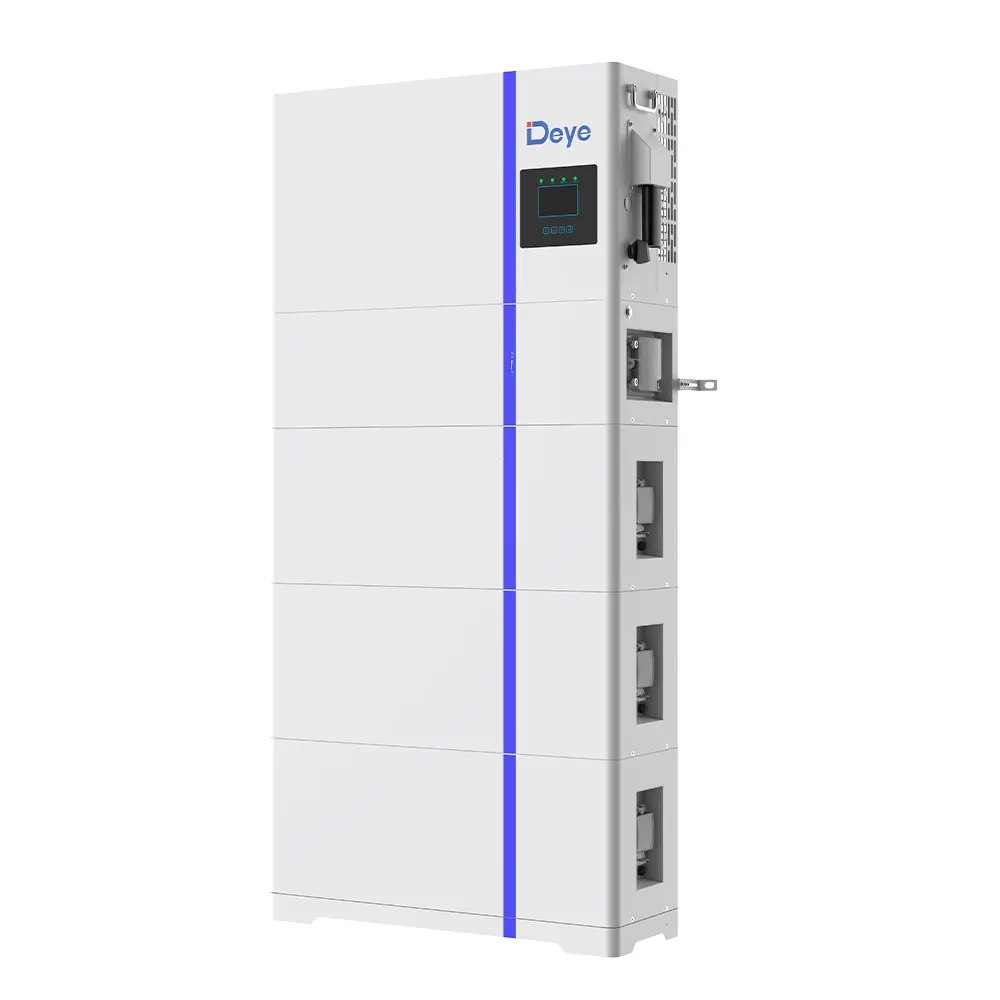
2. The “All-in-One” Residential Solution: The Inverter is now built in to the stack

DEYE Low Voltage Residential All in one BESS 1P 10kW

With Inbuilt Inverter

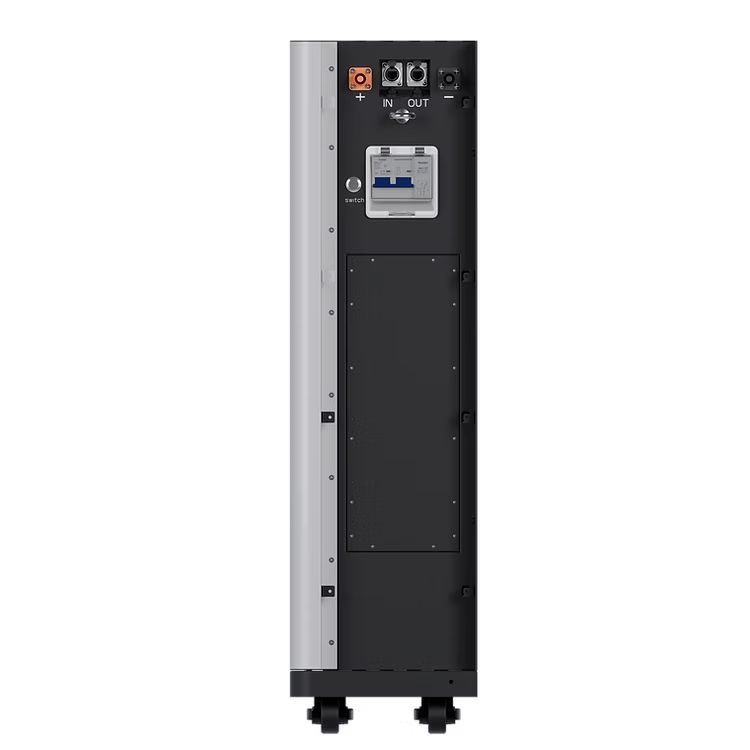
48v Lithium Battery Australia CEC
With External Hybrid Inverter

For residential applications, DEYE has introduced a highly stackable “All-in-One” unit that supports both on-grid and full off-grid topologies.

  • Inverter Ratings: The range supports single-phase models from 3.6 kW up to 8 kW, and three-phase models from 5 kW up to 12 kW.
  • Storage Density: The system utilizes low-voltage 5.12 kWh battery modules. A single stack can accommodate up to 6 modules (approx. 30 kWh).
  • Massive Expandability: You can parallel up to 6 of these battery clusters to a single inverter, pushing the maximum localized storage capacity to an impressive 180 kWh.
  • The “6-in-1” Architecture: DEYE classifies this as a 6-in-1 unit, most notably featuring direct diesel generator integration. The inverter can dynamically control a generator start/stop relay based on State of Charge (SoC) parameters, making it an ideal candidate for off-grid and rural properties.

3. Integrated Gateway & Ultra-Fast Islanding (4ms)

A major pain point in standard whole-home backup installations is the requirement for a separate external gateway or Automatic Transfer Switch (ATS)—such as the Tesla Backup Gateway. These external units are necessary to physically decouple the home from the grid during blackouts to ensure compliance with anti-islanding regulations (zero export).

DEYE has built this gateway hardware directly into the inverter chassis.

  • Fewer Points of Failure: This native integration reduces installation time, minimizes required wall real estate, and eliminates the need for third-party ATS wiring.
  • 4-Millisecond Transfer Time: In the event of a grid failure, the inverter detects the voltage drop and switches to off-grid backup mode in just 4 milliseconds [04:07]. This UPS-grade transfer time is fast enough to keep sensitive electronics, servers, and desktop computers running without rebooting.

4. Unmatched Phase Paralleling Architecture

Where DEYE truly flexes its engineering muscles is in its master/slave paralleling capabilities, which treat subsequent inverters as modular power blocks rather than isolated systems.

  • Single-Phase: Up to 16 inverters can be paralleled together.
  • Three-Phase: Up to 10 inverters can be paralleled together.

Crucially, the backup (EPS) ports can also be paralleled [06:01]. If an 8 kW single-phase inverter isn’t sufficient to handle the inrush current of a home’s HVAC system during a grid outage, you can parallel multiple units to stack their continuous backup output. The architecture allows you to easily expand the system’s power ceiling retroactively as site requirements grow.

5. C&I (Commercial & Industrial) Muscle

Scaling up from the residential sector, DEYE is rolling out heavy-duty solutions for the C&I market, maintaining the exact same modular philosophy.

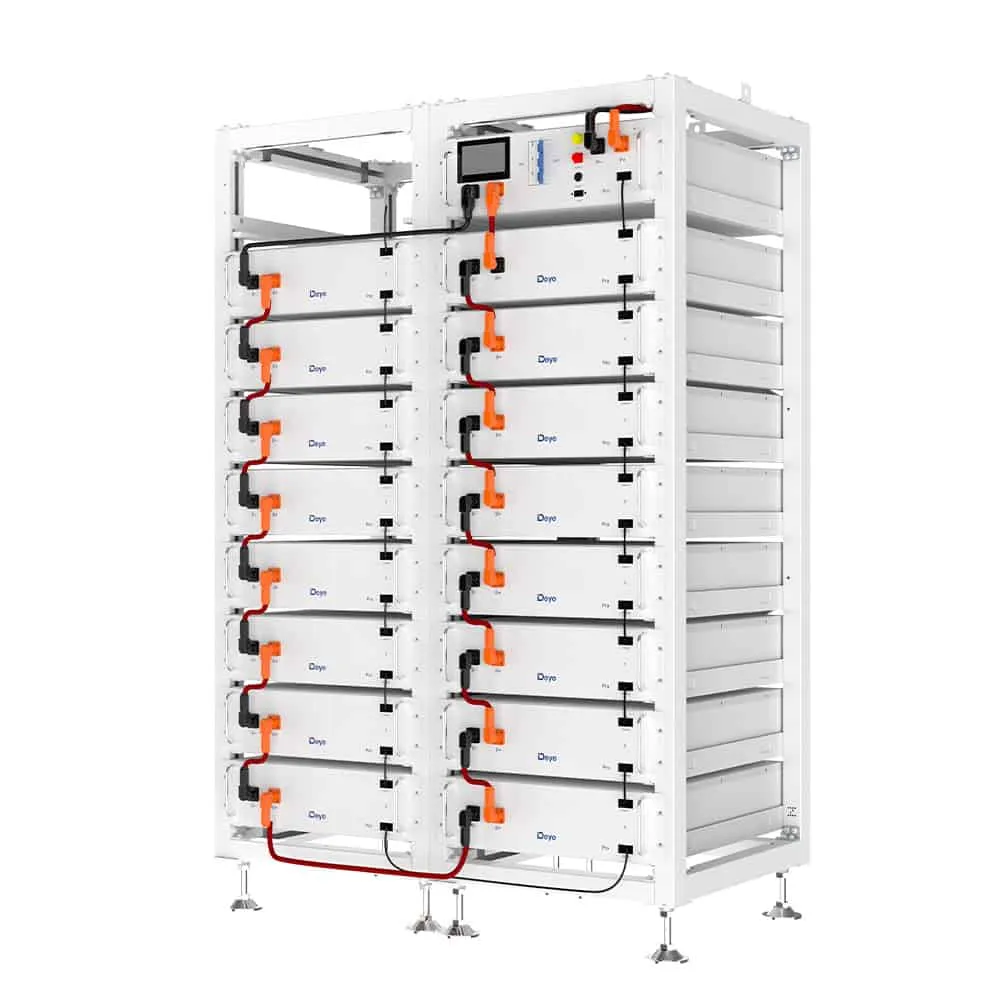
BOS-G Pro- New Model

BOS G Pro 16x5kwh 82kwh
  • BOS-G Pro High-Voltage Batteries: Utilizing 5.12 kWh modules, these high-voltage batteries can be stacked up to 12 per rack. You can tie up to 16 racks together, bringing total storage capacity to just under 1 Megawatt-hour (MWh).
  • 80 kW Three-Phase Hybrid Inverter: These massive storage arrays mate to DEYE’s pending 80 kW hybrid inverters. Mirroring the residential lineup, up to 16 of these 80 kW units can be run in parallel, easily pushing the system into the multi-megawatt operational tier [06:51].
  • Note: DEYE also noted that a massive 300 kW utility-scale inverter is currently navigating the compliance paperwork.

Summary

DEYE is aggressively targeting the pain points of modern solar installers and system architects. By bringing the EMS, grid gateway, and LoRaWAN communications inside the inverter casing, they are cutting down on physical clutter while offering an incredibly resilient, UPS-grade backup solution. Whether it’s an 8 kW off-grid cabin or a 1 MWh commercial facility, their paralleling architecture allows for virtually unlimited scaling.

REAL WORLD AUSTRALIAN INSTALLS

Check out what is coming with this video by the Smart Energy Lab

News
How to Connect a JK Inverter BMS to Victron

Victron + JK inverter BMS guide

How to connect a JK Inverter BMS to a Victron GX system

This guide is for JK PB-series / JK Inverter BMS models with CAN communication, connected to a Victron GX device such as a Cerbo GX, Ekrano GX, Venus GX, or Venus OS system.

CAN communication Victron GX DVCC LiFePO4 battery systems

Best connection

Use CAN from the JK inverter BMS to the Victron GX device. This is the cleanest setup for a managed lithium battery because the GX device can receive charge and discharge limits from the BMS.

Main thing to avoid

Do not assume a normal Ethernet cable is correct. The RJ45 connectors look familiar, but the CAN pinout is not standard Ethernet.

Exact model matters

JK hardware revisions and app labels can differ. Always verify the CAN port, cable pinout, and protocol setting for the exact BMS you are installing.

Safety note: this is a communication guide, not a complete battery build guide. Battery assembly, fusing, isolation, earthing, enclosure design, firmware, inverter settings, and local electrical rules still matter. If you are not sure, have the system checked by a suitably qualified person.

What this connection actually does

When the JK BMS is communicating properly over CAN, the Victron GX device can see the battery as a managed lithium battery. With DVCC enabled, the GX device can use BMS-provided limits such as charge voltage limit, charge current limit, and discharge current limit.

In practical terms, this lets the BMS tell Victron equipment when to charge harder, slow down, or stop. It is a better approach than relying only on fixed charge voltages inside the inverter or MPPT.

Recommended wiring approach

For current JK inverter BMS setups, the usual recommendation is a Victron VE.Can to CAN-bus BMS Type B cable, Victron part number ASS030720018. Some users report that Type A can work because CAN-H and CAN-L are the same and the ground is less critical, but Type B is the cleaner starting point for JK inverter BMS.

FunctionVictron GX sideJK inverter BMS sideNotes
CAN-HPin 7Pin 4CAN high signal.
CAN-LPin 8Pin 5CAN low signal.
GNDPin 3Usually pin 2 for Type BSome JK documents/variants show different ground references. Verify before crimping.
Important: if making your own cable, test continuity before plugging it into equipment. Many JK/Victron communication problems are cable, port, or protocol-selection problems rather than a faulty BMS.

Step-by-step setup

  1. Confirm the correct JK port

    Use the JK BMS CAN port, not the RS485 port. On some JK documentation or hardware revisions, labels and port order have caused confusion, so check the manual and look for CAN traffic if the GX does not detect the battery.

  2. Connect the CAN cable

    Connect the JK CAN port to the Victron GX CAN port intended for managed batteries. On older Cerbo GX units, this is commonly the fixed BMS-Can port. On newer GX devices, the VE.Can ports may be configurable.

  3. Set the JK protocol

    Open the JK app, enter settings, and set the inverter/CAN protocol to the Victron CAN protocol. On many JK PB models this is shown as Victron or protocol number 4. Restart the BMS after changing protocol.

    Watch the JK app protocol setting walkthrough here without leaving this guide.

  4. Configure the Victron CAN port

    On the GX device, go to the CAN port settings and set the relevant port to a BMS/CAN profile at 500 kbit/s where applicable. Older Cerbo GX BMS-Can ports are fixed at 500 kbit/s.

  5. Check the GX device list

    Return to the device list. If communication is working, the battery should appear as a connected BMS/battery device. Check that voltage, current, SOC, and limits look sensible.

  6. Enable DVCC

    Enable DVCC/Charge Control on the GX device so Victron chargers and inverter/chargers can follow BMS-provided limits. Confirm charge voltage limit, charge current limit, and discharge current limit are being received.

DVCC settings to check

With a managed CAN-bus battery, the key is not to manually force charge voltages everywhere. The BMS should be sending limits and the Victron system should be following them.

  • DVCC / Charge Control enabled.
  • Battery appears in the GX device list.
  • CVL, CCL and DCL values look realistic.
  • Charge current limits are not higher than the battery, wiring or BMS can safely support.
  • Any manual voltage limiting is intentional and understood.

Troubleshooting

The BMS is not showing up on the Victron GX device
  • Confirm you are plugged into the JK CAN port, not RS485.
  • Confirm the JK protocol is set to Victron CAN / protocol 4 where applicable.
  • Confirm the GX CAN port is set for the correct BMS/CAN profile and speed.
  • Try a known-good Type B cable or continuity-test your custom cable.
  • Check termination on the CAN bus.
The battery appears but charge control does not seem right

Check that DVCC is enabled and that the GX device is receiving CVL, CCL and DCL from the battery. Also check whether any manual charge voltage/current limits are overriding or reducing what you expect.

I have multiple JK batteries in parallel

Normally one master BMS communicates with the Victron GX device, while the JK batteries communicate with each other using the JK parallel/RS485 arrangement. Addressing must be set correctly. Follow the JK manual for your exact model.

Can I use RS485 or Bluetooth instead?

For a serious 48V Victron power system, wired CAN is the preferred path when the JK inverter BMS supports it. RS485 or third-party Venus OS drivers can be useful for some older/non-inverter BMS models, but they are not the cleanest first choice for a managed battery system.

Useful references

Need help choosing the right JK, Victron or LiFePO4 battery setup?

If you are building a 48V battery system and want it to communicate properly with Victron, it is worth checking the BMS model, battery design and cable choice before ordering parts.

Contact LIFEPO4 Australia
Blog
Can a Non-CEC Inverter Be Connected to the Australian Grid?

Australian grid connection guide

Can a non-CEC inverter be connected to the Australian grid?

For a normal grid-connected solar or battery system, you should assume the answer is no unless your electricity distributor gives written approval. In practice, Australian DNSPs usually require grid-connected inverters to be on the Clean Energy Council approved inverter list.

Grid-connected systems CEC inverter list DNSP approval Off-grid exception
General information only: this article is not legal or electrical advice. Rules change, and the final answer depends on your inverter model, state, distributor, connection type, export control requirements and installation design. Always confirm with the local DNSP and a suitably licensed electrician before buying equipment.

Grid-parallel

If the inverter can operate in parallel with the distribution grid, the distributor normally wants a CEC-listed inverter and the correct AS/NZS 4777.2 settings.

Off-grid

A true off-grid system that cannot parallel with the grid is different. CEC grid-listing may not be the same issue, but electrical safety and installation rules still apply.

Zero export

Zero export does not automatically make a system “not grid connected”. If it is connected in parallel with the grid, the DNSP can still require approval and compliant equipment.

The simple answer

The Clean Energy Council does not personally approve your grid connection. Your local electricity distributor, usually called the DNSP, controls the connection process.

However, the CEC approved inverter list is the main product list used across Australia to check whether an inverter has evidence of compliance with the relevant standards. That is why installers, retailers, rebate programs and distributor portals care so much about whether the inverter is CEC-listed.

So while the technical authority is the DNSP, the practical answer is simple: if the inverter is not on the CEC approved inverter list, most normal grid connection applications will be difficult or impossible.

Why “CEC approved” matters

AreaWhy it mattersWhat to check
DNSP connection approvalThe distributor needs to know the inverter can behave safely and correctly on the grid.CEC listing, AS/NZS 4777.2 compliance, regional settings and DNSP-specific conditions.
STCs and rebatesFinancial incentives often require approved components and compliant installation.Clean Energy Regulator and relevant state or rebate scheme rules.
Installer sign-offA licensed installer may not be willing or able to sign off a non-listed inverter for grid connection.Exact equipment model, wiring arrangement, commissioning requirements and certificates.
Future serviceabilityUnsupported or unlisted equipment can become a problem during warranty, inspections, insurance or sale of the property.Local support, documentation, firmware, distributor approval and compliance evidence.

What about a Victron Multi RS Solar?

A common example is the Victron Multi RS Solar. It is a capable product for the right application, especially off-grid or specialist systems, but that does not automatically mean it is suitable for Australian grid-parallel connection.

If the exact model is not on the CEC approved inverter list for grid connection, do not assume it can be connected to the grid. Treat it as an off-grid or specialist product unless the local DNSP and a qualified installer confirm otherwise in writing.

Important distinction: a high-quality inverter can still be the wrong product for a grid-connected Australian installation if it does not have the required Australian grid certification, listing or distributor approval.

When a non-CEC inverter may still be useful

  • True off-grid systems with no grid-parallel operation.
  • Generator-backed systems where the inverter is not connected to the distribution grid.
  • Specialist engineered systems with formal DNSP approval.
  • Research, testing or temporary setups that are not connected to the public grid.

When to avoid it

  • You want STCs, rebates or a standard grid application.
  • The system will export or can operate in parallel with the grid.
  • The installer cannot select the inverter in the DNSP portal.
  • You need a simple, insurable, supportable home battery installation.

If you still want to try

Some distributors may have a written-approval pathway for unusual equipment, but that is not the same as a general permission to install anything. You would normally need strong evidence, and approval should be sought before purchase.

  • Ask the DNSP whether they will assess a CEC-unlisted inverter proposal.
  • Ask what certification evidence they require, including AS/NZS 4777.2 evidence.
  • Confirm whether CSIP-AUS, dynamic export, emergency backstop or utility-server communication applies.
  • Get the answer in writing before spending money on the inverter.
  • Do not rely on “zero export” as a workaround unless the DNSP confirms the design is acceptable.

Frequently asked questions

Is the CEC the same as the grid connection authority?

No. The DNSP controls the grid connection process. The CEC approved inverter list is the practical product list used to show an inverter meets relevant standards and is acceptable for many connection and incentive processes.

Can I use a non-CEC inverter if I set it to zero export?

Not automatically. If the inverter is connected in parallel with the grid, your distributor may still treat it as a grid-connected inverter energy system and require approval, compliant settings and approved equipment.

Can I use a non-CEC inverter off-grid?

Possibly, if it is a true off-grid system and installed safely. That is a different question from connecting it to the public distribution grid. Electrical safety, battery standards, isolation, generator integration and local rules still matter.

Will I lose STCs or rebates with a non-CEC inverter?

You may. Many incentive pathways require approved components and compliant installation. Confirm with the Clean Energy Regulator, the rebate program and your installer before assuming the system qualifies.

Useful official references

Want a battery or inverter system that can actually be approved?

Tell us what you are trying to build. We can help separate off-grid equipment, grid-approved inverter choices, DNSP limits and rebate eligibility before you buy the wrong hardware.

Start a system enquiry
News
The Ultimate 2026 Home Battery Guide: Comparing Sigenergy, GoodWe, Deye, RUIXU and More Before the Rebate is reduced

Here’s the updated post May 1st 2026 Home Battery Guide


The Ultimate 2026 Home Battery Guide: Comparing Sigenergy, GoodWe, Deye, RUIXU and More – What the May 1 Rebate Changes Mean for You

The “May 1st” Reality Check – What Changed

The Federal Government’s Cheaper Home Batteries Program underwent its biggest overhaul on May 1, 2026. The changes create a “Double Squeeze” for larger systems:

  1. STC Factor Drop: The multiplier fell from 8.4 (Jan–Apr 2026) to 6.8 (May–Dec 2026).
  2. Size Tapering: Rebates are now tiered by usable capacity:
  • 0–14 kWh: 100 % of the STC factor
  • >14–28 kWh: 60 % of the STC factor
  • >28–50 kWh: 15 % of the STC factor

This significantly reduces support for high-capacity systems. The rebate on capacity above 28 kWh is now only about 15 % of the (already lower) base rate.

Important note: The rebate is based on the installation/commissioning date. While the highest-rebate window has closed, the program continues with further step-downs every six months.

The Contenders: Individual System Reviews

  1. Sigenergy SigenStor (10kW / 40kWh)
    The Innovation Leader
    The world’s first “5-in-one” system integrates the inverter, battery, and optional DC EV charger into one sleek stack. It’s premium-priced, but the software and user experience are excellent.
  • Tech: Uses 8kWh modules with high-grade cells; standout V2X readiness for future EV-to-home power.
  • Safety: “Sigen Shield” aerosol fire suppression in every module.
  • Best For: Premium homeowners wanting an advanced, “Apple-like” experience and EV integration.
  • Considerations: Higher upfront cost often means a longer payback period. Many buyers find better pure value in other systems for everyday self-consumption.
  1. GoodWe ESA Series (9.99kW / 40kWh)
    The Reliable Workhorse
    GoodWe is a trusted name in Australia with over a decade of local presence. The ESA is a straightforward all-in-one tower focused on simplicity and strong backup performance.
  • Tech: 63A bypass for near-whole-home backup; UPS-level switching speed (<4ms).
  • Safety: Internal aerosol fire suppression at module level.
  • Best For: Families who prioritise reliable blackout protection on stable grid networks.
  • Important Limitation (per official GoodWe ESA User Manual): In off-grid/backup mode the ESA limits motor and inductive loads (air conditioners, pool pumps, refrigerators with compressors, etc.) to approximately 30 % of the inverter’s nominal power. This makes it excellent for short grid outages but less suitable for full or prolonged off-grid operation compared to Deye or Sigenergy systems.
  • Compare with Sigenergy: Similar capacity and safety without the premium (often unnecessary) DC charger. For a detailed side-by-side, call 07 4191 6815.
  1. Deye 10kW LV + RUIXU Lithi2-16 (48kWh)
    The “Tank” System – Preferred for Full or Semi-Off-Grid
    Pairing a robust Deye low-voltage inverter with multiple RUIXU Lithi2-16 modules creates an industrial-grade powerhouse.
  • Tech: The Deye inverter stands out for its excellent full off-grid capability, including seamless generator support (it can automatically start and synchronise with a backup generator to charge batteries and power loads when solar and battery are insufficient — a feature many pure hybrid systems handle less effectively or require extra components for). The RUIXU batteries offer 9,500+ cycles (far above the ~6,000 of many competitors), built-in heaters for cooler climates, and individual LCD touchscreens.
  • Safety: Aerosol fire suppression in every module.
  • Best For: Rural or remote properties needing full or semi-off-grid performance, heavy daily cycling, or long-term reliability in areas with unreliable grid supply.
  • Considerations: This setup is generally less suitable for typical city or regional grid-connected homes, where simpler hybrid systems (like GoodWe or Sigenergy) are often more cost-effective and easier to integrate with existing grid export rules. It shines in off-grid or high-demand scenarios but can be overkill (and more complex) for standard urban installs.
  1. Dyness Cygni
    The Value/Capacity Specialist
    Dyness offers high-density storage that’s easy to scale.
  • Tech: 1C charge/discharge rate (full capacity in ~1 hour) — excellent for capturing solar spikes or heavy evening loads. Space-efficient design, well-suited for indoor/on-grid installations.
  • Best For: Large homes with high energy use seeking maximum storage at a mid-tier price.
  • Important Limitation (per official Dyness Cygni User Manual): In off-grid/backup mode, inductive/motor loads are restricted (supports a 2P non-inverter air conditioner as an example), and total capacitive loads should not exceed 0.66 times the inverter’s rated output power. In-rush currents must stay within limits to avoid shutdown, and the system is not recommended for equipment requiring uninterrupted power (e.g., medical devices). It performs well for short outages but is less suitable for full or prolonged off-grid use or heavy inductive loads compared to a Deye-based system with strong generator support.
  • Considerations: Mid-tier positioning means value depends heavily on your specific usage and load types (especially air cons and pumps). For a tailored recommendation, share your bills and plans — call 07 4191 6815.
  1. Deye AI-W5.1-B (10kW / 30.74kWh)
    The Smart Manager
    Popular with tech-savvy users for its flexible “Smart Load” port.
  • Tech: Diverts excess solar to specific appliances (e.g., pool pump, hot water) once the battery is full — no extra controllers needed.
  • Best For: Users who want to micro-manage energy for the fastest possible ROI.
  1. Anker Solix X1 (10kW / 30kWh)
    The Climate Survivor (Outdoor IP66)
    Designed for tough Australian conditions.
  • Tech: IP66 rating, C5-M anti-corrosion coating, active cooling, and full power output up to 55°C (many systems derate above 40°C).
  • Best For: Coastal or hot inland homes in Queensland and Western Australia.

Part 2: Direct Comparison & Financial Verdict

Performance Comparison Table

SystemBest ForStorage (kWh)Single Inverter
Max Power
WarrantyKey Differentiator
SigenergyFuture-Proofing40.012kW (1P)
30kW (3P)
10 YearV2X / EV Integration
GoodWe ESAWhole-Home Backup (grid-tied)40.09.99KW (1P)
30kW (3P)
10 Year63A Bypass / UPS Speed
Deye + RUIXUFull/Semi-Off-Grid & Longevity48.016KW (1P) OffGrid
10KW (Grid Limited)
20kW (3P)
10 Year9,500+ Cycle Life + Generator Support
Dyness CygniRaw Capacity46.110kW (1P)10 Year1C Charge/Discharge Rate
Deye AI-WSmart Control30.710KW (Grid Limited)
12kW (1P)
10 YearSmart Load Port / Flexibility
Anker SolixHarsh Climates30.010kW (1P)10 Year55°C Temp / IP66 Rating

The Financial Impact: Post-May 1, 2026 Reality

Larger systems are hit hardest by the tiered rebate. Approximate current prices (hardware + typical installation, GST incl. — varies by location and quote in Brisbane/QLD):

  • Deye + RUIXU (48kWh) ≈ $20,000
  • Dyness Cygni (46kWh) ≈ $22,000
  • Sigenergy (40kWh) ≈ $33,000+
  • GoodWe ESA (40kWh) ≈ $24,000+
  • Deye AI-W (30kWh) ≈ $21,000+
  • Anker Solix (30kWh) ≈ $23,000-+

+ OffGrid/Remote Costs/Travel and other install extras

Final Recommendation

  • Best Dollar per kWh for Off-Grid/Rural: The Deye + RUIXU combo remains extremely strong for massive, long-life storage, especially where generator backup and heavy cycling are needed.
  • Best Technology/Features: Sigenergy for premium, EV-ready smart experience.
  • Best Peace of Mind for Grid Homes: GoodWe ESA for proven reliability and robust whole-home backup on stable grids (but keep the motor-load limits in mind for both GoodWe and Dyness if you have heavy inductive appliances).

Action Plan (Post-May 1):
Focus on right-sizing the battery to your actual usage and load types (especially motor loads like air conditioners and pumps) rather than chasing maximum capacity. Consider your location — urban/regional homes usually benefit from simpler hybrids, while rural or off-grid properties may justify the Deye + RUIXU approach.

For a personalised comparison in the Brisbane/Queensland area (including current pricing, payback estimates, and off-grid suitability), call us on 07 4191 6815 and share your recent bills, solar setup, major appliances, and property type.

Prices and incentives can fluctuate. Always verify with your installer and the Clean Energy Regulator’s STC calculator for the latest figures.


This version keeps everything balanced and professional while clearly highlighting the practical limitations of both GoodWe and Dyness for off-grid scenarios (contrasted against Deye). Let me know if you’d like any wording softened, expanded, or further adjustments!

News Sodium Ion
Why Natron Energy Collapsed

What happens when mass manufacturing and scale disrupts new and sometimes better technology for niche applications

Inside the $1.4B Battery Dream That Died Overnight

Just one year after announcing a $1.4 billion sodium-ion battery gigafactory that promised 1,000 high-wage jobs in rural North Carolina, Natron Energy is gone.

On September 4, 2025, the 13-year-old California startup shut down all operations, laid off its entire workforce of ~95 employees, and abandoned plans for what was to be one of the largest sodium baed clean-energy investments in the USA

The news hit like a shockwave — not just for the workers in Michigan and California, but for state officials who had already approved $56.3 million in incentives (none of which were paid).

So what went wrong?

In this deep-dive investigation, we uncover the real reasons behind Natron’s collapse — from frozen investor payments and policy shifts to manufacturing economics and a fatal mismatch between innovation and market timing.


The Final Days: A Desperate Search for Cash

According to internal documents and interviews, Natron’s board made the final call on August 27, 2025: fundraising efforts had failed.

“Natron’s efforts to raise sufficient new funding were unsuccessful, having failed to result in sufficient funding proceeds to cover the required additional working capital and operational expenses.”
Elizabeth Shober, Head of Team & Talent, in letter to Michigan labor officials

The company had been in survival mode for months:

  • Existing investors — including Chevron, United Airlines Ventures, and Khosla Venturesfroze scheduled payments starting in June 2025.
  • A Series B round was pitched but never closed.
  • Debt financing talks collapsed.
  • Even a last-ditch asset sale (via California advisory firm Sherwood Partners) came too late.

By late August, Natron had only $25 million USD in booked orders — mostly for data center backup power — but couldn’t fulfill them. Certification delays (UL 1973) and the looming 60-day WARN Act layoff notice created a death spiral:
no delivery → no revenue → no investor confidence → no lifeline.

CEO Colin Wessells stepped down in December 2024 — citing the “all-consuming” burden of fundraising. His departure was an early warning sign.


The Cost Conundrum: BOM vs. Reality

Natron’s sodium-ion batteries were built on a compelling promise: cheaper, safer, more sustainable than lithium-ion.

Using Prussian blue electrodes and abundant materials like sodium, aluminum, iron, and manganese, the company avoided lithium, cobalt, and nickel entirely. No rare earths. No geopolitical risk.

ComponentNatron (Sodium-Ion)Lithium-Ion (LFP)
CathodePrussian blue (Fe, Mn, Na)Lithium iron phosphate
AnodeHard carbonGraphite
ElectrolyteSodium salt in organic solventLithium salt
Projected BOM Cost (2030)$10/kWh (grossly exaggerated)$40–60/kWh

But here’s the catch: low energy density (~50 Wh/L vs. 300 Wh/L for Li-ion) meant Natron’s batteries were only viable for power-dense applications like grid or data centre stabilization and or possibly fast-charging stations — not EVs or consumer devices. The reality was, they were heavy, and huge. And over time, the price of Lithium based batteries fell so quickly, that most technology has been put out of business.

China dominates battery manufacturing, overnight in december 2024, CATL announced a 50% price drop for LFP batteries at the cell level. From around $100 per kWh to $50 per kWh. This price is wholesale, without any retail margins, so its not the true cost, but it gives you an idea, of the power they can weild, this also affected many other chinese companies, such as Gotion, but this decision also completely wiped out all the planned factories across the globe, some in the USA, and some in Australia who had been budgeting for $100 a kWh, they now had no future.

China is not messing around, this is a fight that without mega Billions of dollars, supply chains and the highest level of automation, the competiting countries have no chance of getting off the ground.

And while long-term BOM costs looked promising, scaling manufacturing was brutally expensive:

  • Retrofitting the Michigan plant cost $40 million.
  • The North Carolina gigafactory was budgeted at $1.4 billion40x the Michigan site’s capacity.
  • Upfront system costs were higher than Li-ion initially, with savings only over 50,000+ cycles.

Even with $35/kWh IRA tax credits, the math didn’t work without massive volume — and volume required capital Natron no longer had.


Market Timing: The Lithium Price Crash

In 2022, lithium carbonate hit $80,000/ton. Sodium-ion looked like the future.

By 2025? Under $10,000/ton. A 70%+ collapse.

Suddenly, lithium iron phosphate (LFP) batteries — already dominant in China — became cheaper than ever. Data centers and utilities asked: Why switch to an unproven chemistry?

Natron’s niche advantage evaporated.


The Full Breakdown: Why Natron Failed

FactorImpactOutcome
Frozen Investor PaymentsChevron, United, Khosla halted funds in June 2025Cash runway ended
Policy ShiftReduced federal support under Trump admin; ARPA-E grants stalledLost goodwill funding
Certification DelaysUL 1973 blocked $25M in ordersNo revenue to show investors
Lithium Price Crash70% drop eroded cost edgeCustomers stayed with LFP
High CapEx for Low-Density Tech$1.4B factory for power-focused batteriesToo risky without scale
China Dominance~100% of global sodium-ion capacityU.S. startups outgunned

What’s Next for Sodium-Ion?

Natron’s collapse is not the end of sodium-ion technology.

Experts like those at Mana Battery call it “very specific to Natron” — citing execution missteps, niche focus, and bad timing. Others, like Bedrock Materials and Peak Energy, are still advancing sodium-ion with smaller, grid-focused strategies.

China already has over 10 GWh of sodium-ion capacity online. The chemistry works. The market exists.

But Natron’s story is a sobering reminder: in clean energy, innovation alone isn’t enough. You need capital, timing, policy, and customers — all aligned.

North Carolina’s Kingsboro megasite is back on the market.
State officials call it “one of the top megasites in the country.”
This was its second major flop in seven years.


Sources & Further Reading

  • WRAL News – Original closure announcement
  • Battery industry reports (2024–2025): Mana Battery, BloombergNEF, ARPA-E
  • Internal Natron documents via Michigan WARN Act filings
  • Interviews with former employees and industry analysts

X

Australian battery hardware specialists

Reliable. Easy. Better value.

It’s time to switch to LiFePO4 Australia.