
Description
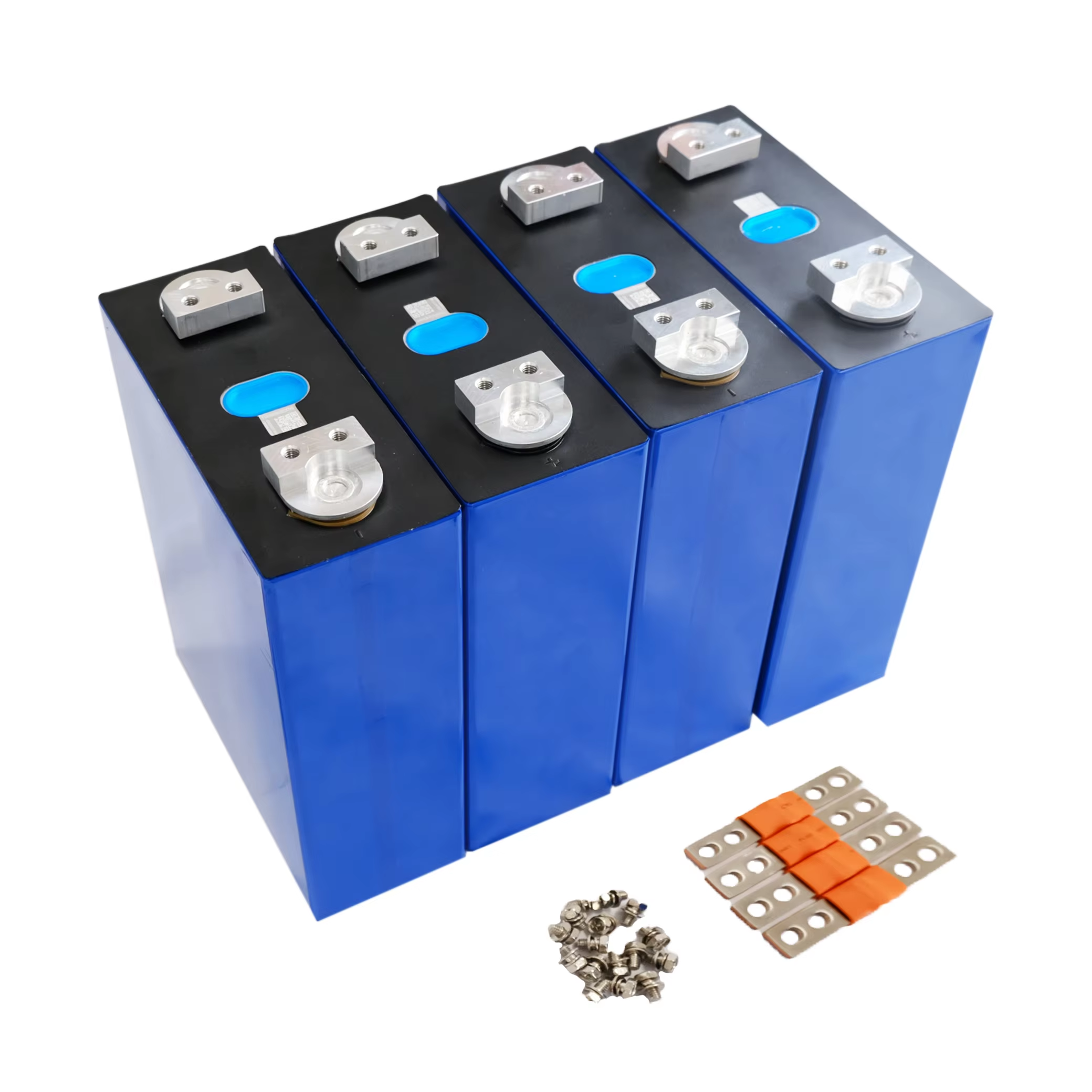
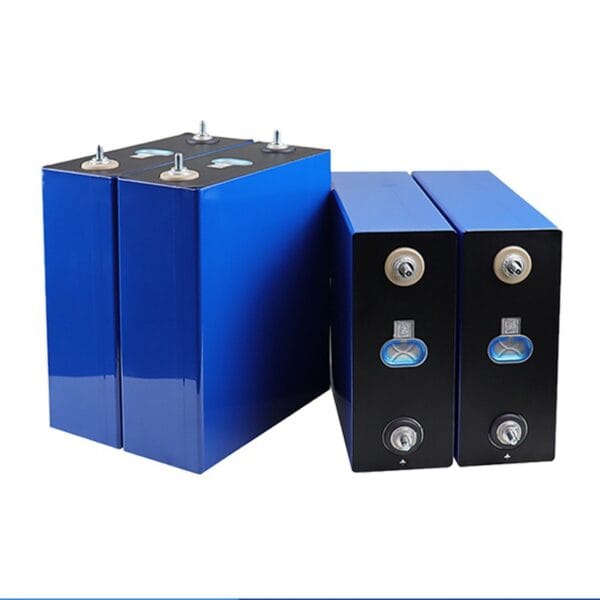
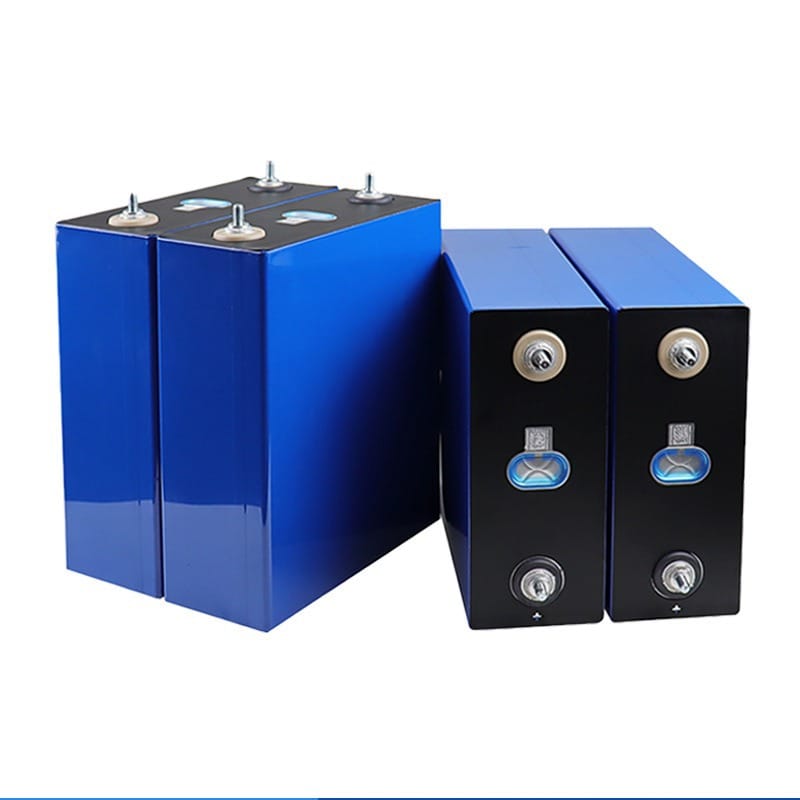
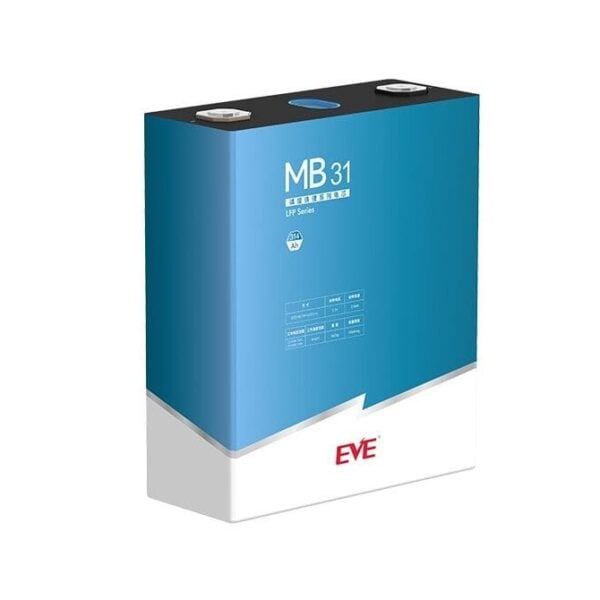
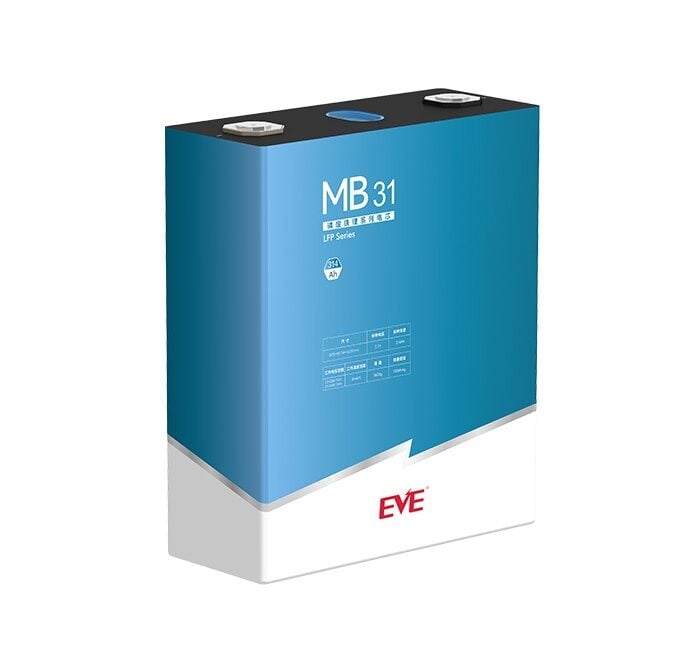
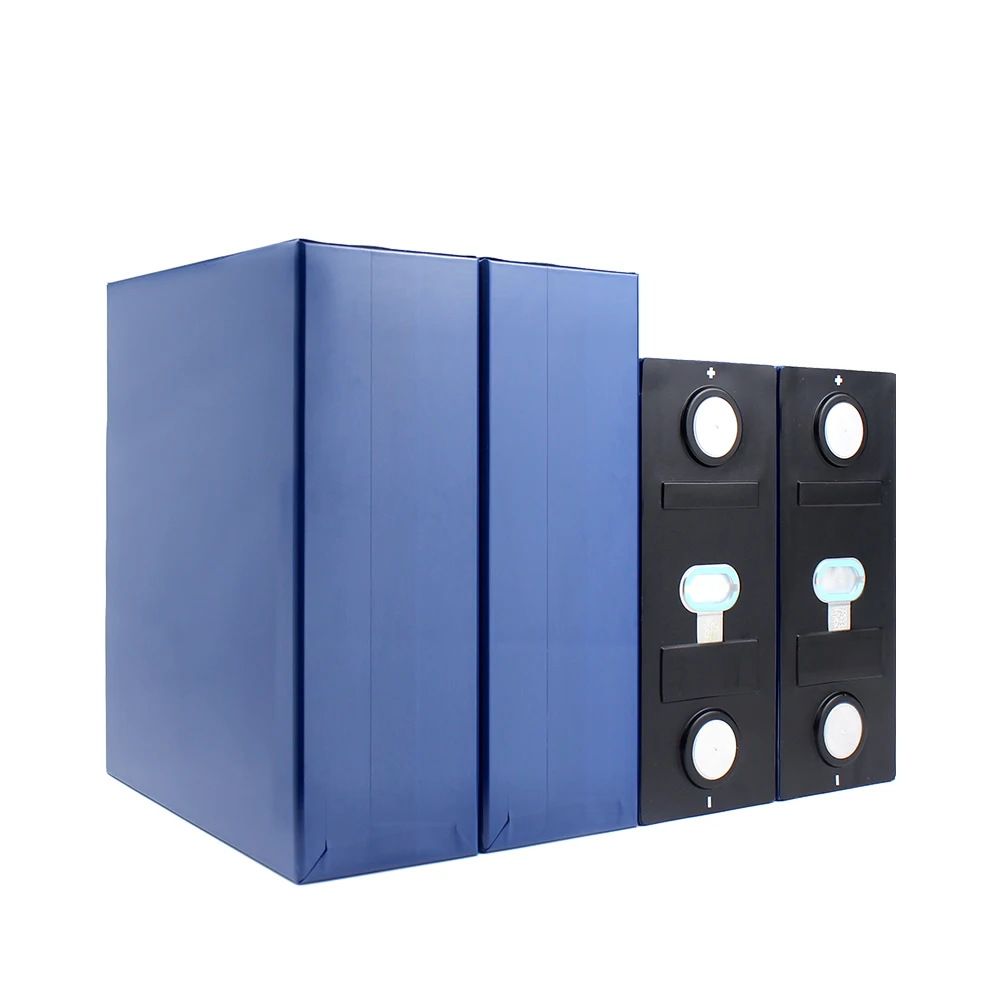
The CALB L173F314A is a high-capacity 3.2V 314Ah LiFePO4 prismatic cell developed for stationary energy-storage systems. Each cell stores approximately 1.005kWh of nominal energy, giving builders a practical route to compact 12.8V, 25.6V and 51.2V battery banks without using an unusually large number of cells.
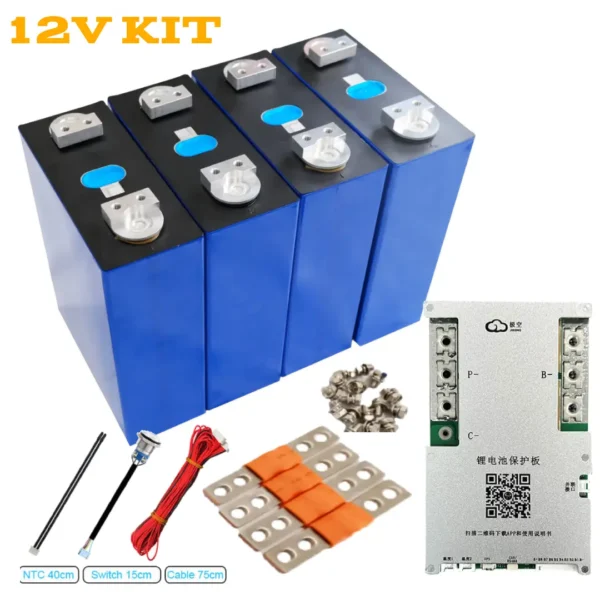
This listing is for new CALB L173F314A A-grade cells in 16-cell or 32-cell quantities. These are individual cells for integration into a properly engineered battery system—not finished, drop-in batteries. A suitable BMS, fusing, insulation, enclosure, mechanical support and correctly designed busbar system are required.
Why the CALB 314Ah format is popular
- Approximately 1.005kWh per cell: 314Ah nominal capacity at 3.2V.
- High space efficiency: the manufacturer specification lists 180.7Wh/kg gravimetric and 394Wh/L volumetric energy density.
- Low AC resistance: specified at no more than 0.23mΩ at 40% state of charge, room temperature and 1kHz.
- Long-life LFP chemistry: suited to frequent cycling in solar, off-grid and stationary storage applications.
- Large-format prismatic construction: fewer series connections than a pack made from many small cells.
- Known CALB model: L173F314A with manufacturer DMC/ID identification on the cap plate.
Typical pack configurations
| Configuration | Nominal voltage | Nominal energy | Typical use |
|---|---|---|---|
| 4 cells in series (4S) | 12.8V | Approx. 4.02kWh | Professionally designed 12V-class storage systems |
| 8 cells in series (8S) | 25.6V | Approx. 8.04kWh | 24V-class off-grid systems |
| 16 cells in series (16S) | 51.2V | Approx. 16.08kWh | 48V-class solar, inverter and stationary storage systems |
| 32 cells total | Depends on series/parallel design | Approx. 32.15kWh total | Larger or parallel energy-storage builds |
Calculated figures use the cell’s nominal 3.2V, 314Ah and 1004.8Wh ratings. Final system voltage, usable energy and current capability depend on the pack design, BMS settings, temperature and operating limits.
What “A grade” should mean
“A grade” is widely used in the cell market, but it is not a single independent retail certification. A credible A-grade claim should mean new production cells that meet the manufacturer’s specification and retain traceable, consistent identification. It should be supported by the actual batch—not only by a clean case, a normal resting voltage or an online advertisement.
For a serious pack build, buyers should look for consistent production-lot and DMC/ID information, measured capacity, AC or DC resistance, self-discharge screening and sensible matching across the cells supplied. Please ask us for the current batch information and available test data before ordering if your project requires documented matching tolerances.
Cycle-life information: specification versus product-family claims
The L173F314A technical specification lists at least 6,000 cycles to 80% state of health at 25°C under its defined 0.5P charge/discharge test procedure between 2.5V and 3.65V, including rest periods. At 45°C, the same document lists at least 2,500 cycles to 80% state of health. These controlled test conditions matter; real service life depends on temperature, depth of discharge, charge/discharge rate, compression, BMS limits and cell matching.
Separately, CALB’s official material for its newer second-generation 314Ah energy-storage cell family states up to 15,000 cycles, energy efficiency above 96% and no capacity degradation during the first 1,000 cycles. Those are CALB product-family claims and should not be treated as a blanket guarantee for every 314Ah cell or every operating condition. For procurement and pack design, we recommend using the specification for the exact batch and model as the baseline.
See an overview of CALB’s newer second-generation 314Ah 15,000-cycle energy-storage cells. This linked article describes the newer long-cycle version; it does not replace the specification for the L173F314A cells offered on this page.
Suitable applications
- Residential and commercial stationary energy storage
- Off-grid solar battery banks
- 48V-class inverter and ESS builds
- Telecommunications and backup-power systems
- Custom battery projects designed by experienced builders or qualified integrators
Important design and safety notes
- Use a correctly configured BMS with cell-level over-voltage, under-voltage and temperature protection.
- Do not charge below 0°C; the listed charging operating range is 0–55°C.
- Use appropriate fusing, insulated tools, terminal protection and a non-conductive enclosure.
- Follow the manufacturer’s limits for voltage, current, terminal load and module compression.
- Do not use swollen, leaking, dropped, overheated or otherwise damaged cells.
- Large-format cells contain substantial energy. Assembly and commissioning should be performed by a competent person.
Manufacturer and technical references
- CALB: 314Ah high-energy, long-life energy-storage cell announcement
- CALB L173F314A product specification, revision A1 (reference PDF)
CALB L173F314A specifications
| Manufacturer | CALB Group Co., Ltd. |
|---|---|
| Model | L173F314A |
| Chemistry | Lithium iron phosphate (LiFePO4 / LFP) |
| Format | Large-format prismatic cell, aluminium can |
| Rated capacity | 314Ah |
| Rated voltage | 3.2V |
| Rated energy | 1004.8Wh |
| Operating voltage | 2.5–3.65V above 0°C; consult the specification for low-temperature limits |
| AC resistance | ≤0.23mΩ at 40% SOC, room temperature, 1kHz |
| Weight | 5.56 ± 0.15kg |
| Dimensions | 174.7 ± 0.3mm wide × 71.46 ± 0.3mm thick × 207.2 ± 0.4mm high including terminals |
| Cell volume | 2.55L excluding terminals |
| Mass energy density | 180.7Wh/kg |
| Volumetric energy density | 394Wh/L |
| Charging temperature | 0–55°C operating range |
| Discharging temperature | -30–55°C operating range |
| Storage temperature | -30–60°C operating/storage limit stated in the specification |
| Standard test rate | 0.5C / 0.5P at 25 ± 2°C under the manufacturer’s defined procedure |
| Datasheet cycle requirement | ≥6,000 cycles to 80% SOH at 25°C under the specified 0.5P test conditions |
| Quantity options | 16 cells or 32 cells |